

The short answer
Cleaning robot ROI in Dallas comes from the janitorial hours a leased robot takes over, not from cutting headcount. The savings range depends on the share of floor work the robot realistically handles, the staff hours that share frees up, and the lease quote that follows a free site assessment. Treat any single figure as a starting point until the site has been measured.
Key takeaways
- Cleaning robot ROI in Dallas comes from janitorial hours a leased robot takes over, not from cutting staff.
- The share of floor work a robot realistically handles sets most of the savings range.
- Overtime and shifts that are hard to fill are where freed hours show up most clearly, so measure them.
- The lease quote follows a free site assessment, so the range firms up once the floor is measured.
- Savings are ranges, never promises.
Run the numbers for your site
Auto-detected from your location - we use the real BLS wage here. Not right? Pick your city or state above.
What do you want to automate?
The robot runs the open floor overnight; your crew keeps detail and edges.
How does cleaning robot ROI in Dallas work?
The return on a cleaning robot is the janitorial time it takes off your schedule, valued at the local wage for this job, minus the lease cost and any service fees you would otherwise pay. In Dallas, the government wage data panel on this page gives that local wage. Because that data covers janitors and building cleaners, the labor side of the math is always framed as hours of that kind of work, even where the people who mainly work the site do other jobs.
The occupation is large and steady. According to the Bureau of Labor Statistics Occupational Outlook Handbook, janitors and building cleaners held about 2,447,700 jobs nationally in 2024. Employment is projected to grow 2 percent from 2024 to 2034, slower than the average for all occupations, and the handbook projects about 351,300 openings a year. For the Dallas-Fort Worth-Arlington area, the Bureau of Labor Statistics Occupational Employment and Wage Statistics for 2023 listed 46,070 jobs in this occupation.
How much of the cleaning work can a robot take over?
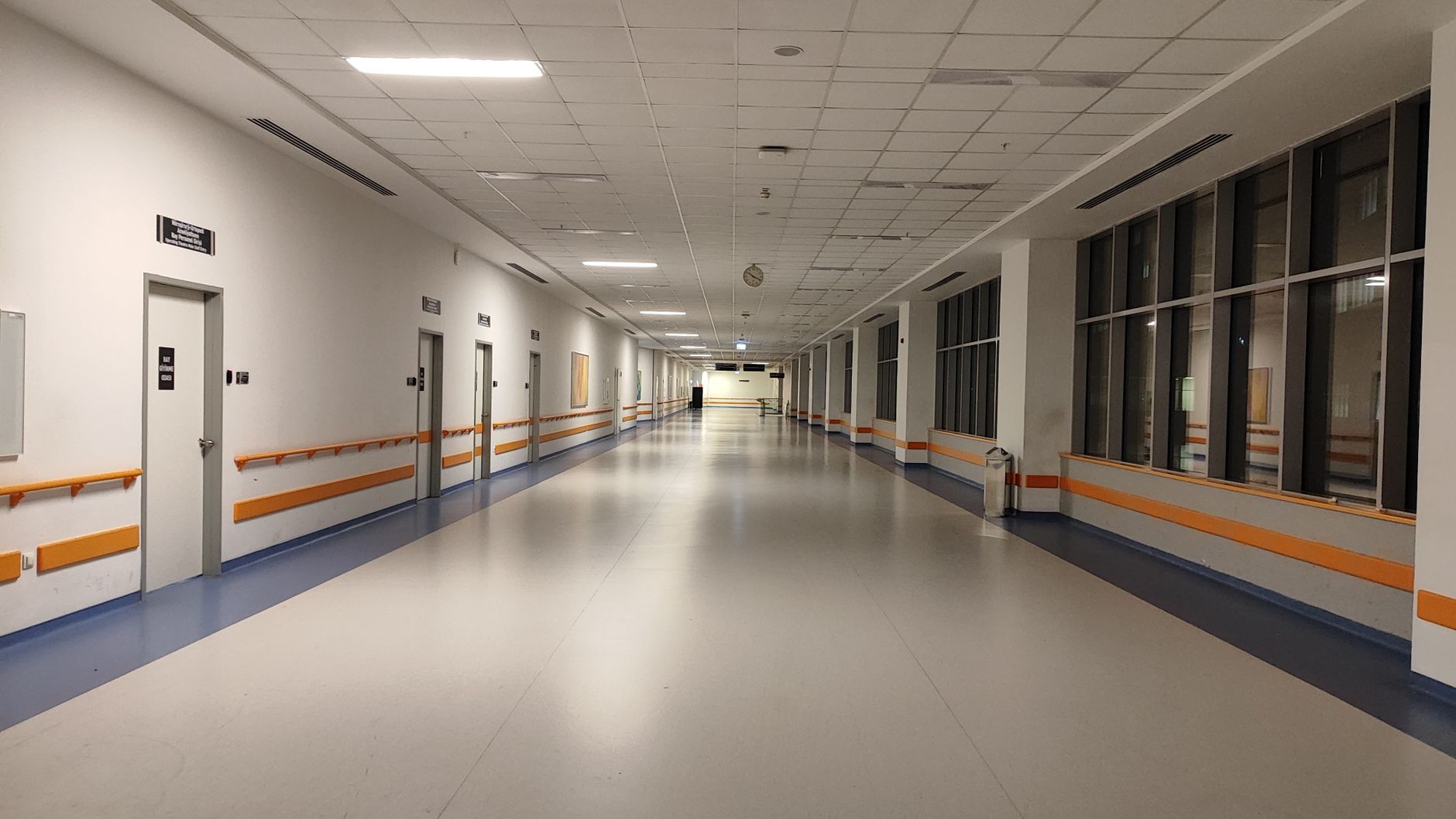
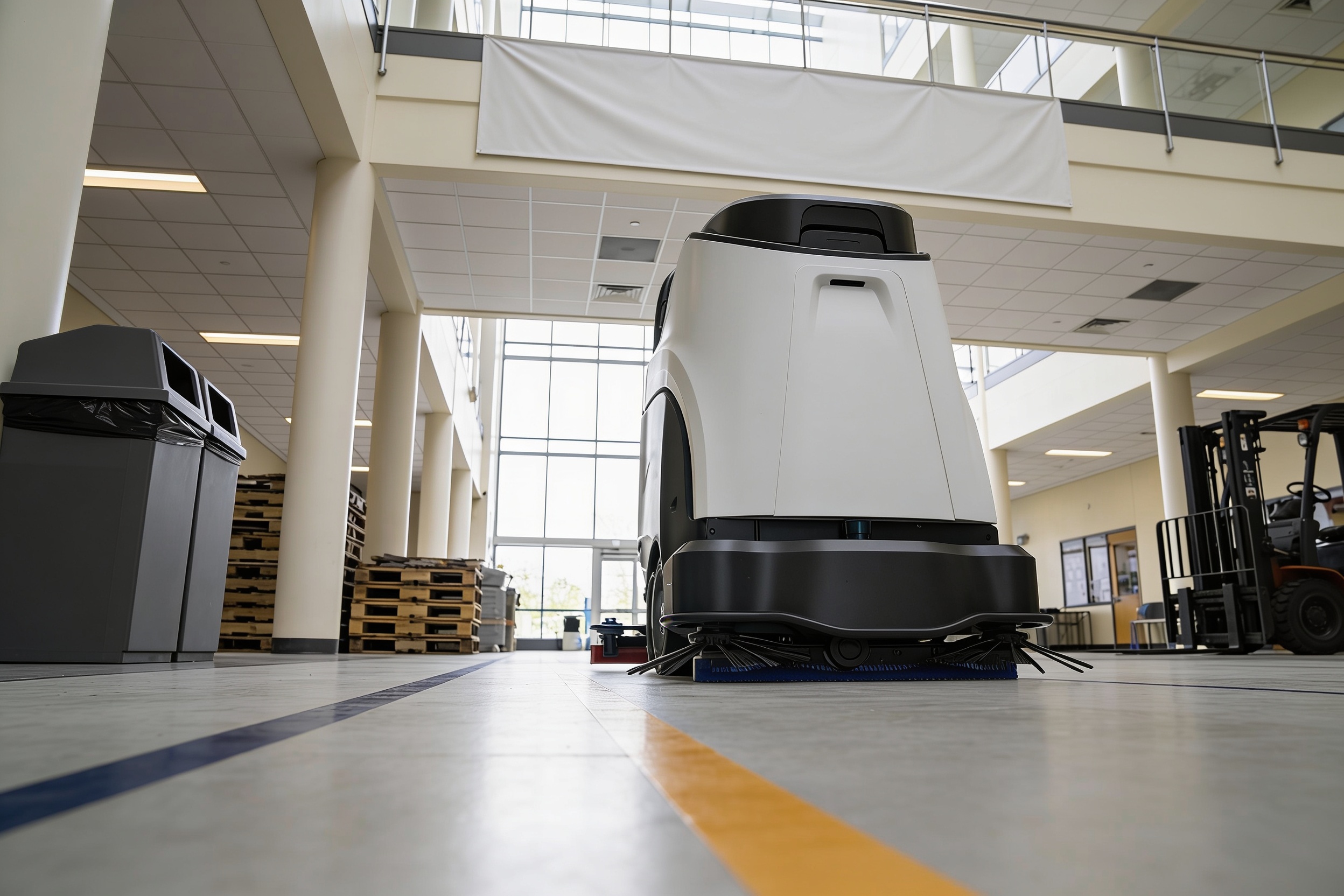
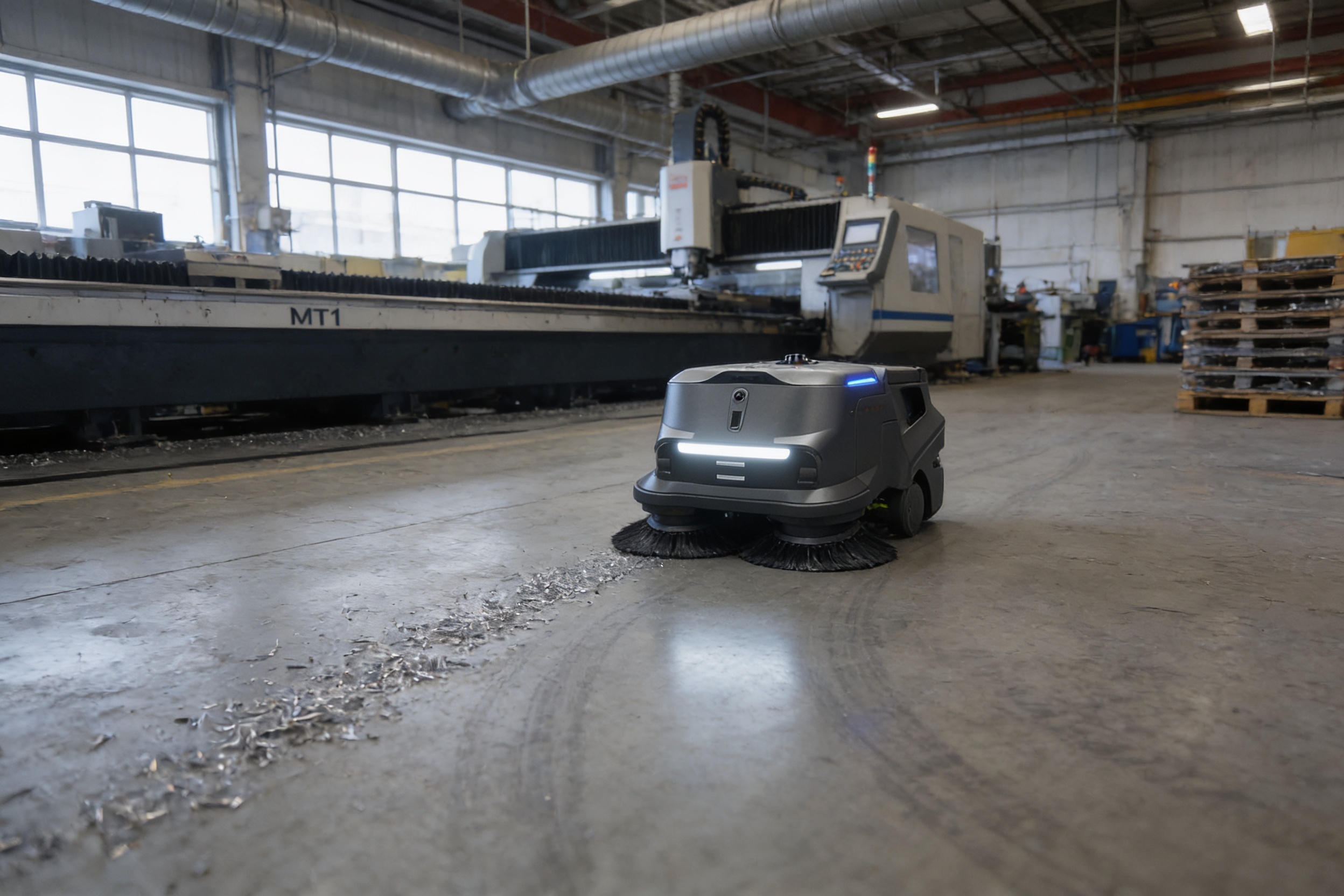
The return depends less on a robot's specifications than on the share of floor work it realistically takes. Most commercial cleaning is a mix. Scrubbing and sweeping large, open, reasonably clear floors suits a robot well. Detail work, restroom cleaning, moving furniture, wiping touchpoints and handling wet spills or trash do not. Those tasks stay with staff, and the hours they consume should be counted separately rather than assumed away.
Start by listing each task on the opening and closing routines. Mark whether it can run unattended, then add up the hours on each side. The table below shows the form we use. This page does not give hour counts for a typical Dallas building, because they depend on floor area, layout and how the crew works today. The free site assessment is where those hours get timed and the robot's share gets set.
Median hourly wage, Janitors and Building Cleaners
$3,887
Monthly cost of one full-time worker in Dallas, TX, at the median wage plus payroll costs (an estimate, not a quote).
What does the savings math look like?
Start with the hours. Take the weekly hours of floor work the robot can run unattended and multiply them by the local wage for this job from the government wage data. Add any overtime or agency cover those hours trigger now, then subtract the lease cost and any service fees. What remains is the savings range before adjustments. Be strict about what changes. A robot that runs at night does not reduce day staff unless their schedules actually change.
A vendor-reported case study shows what a well-matched deployment can look like. In a 2023 healthcare floor care case study covering a single hospital, hours spent scrubbing fell by 50 percent, and total floor-care manhours per night fell from 16 to 5. That is one site and one vendor report, so it illustrates the method rather than forecasting a Dallas office or warehouse. Your range should be built from your own floor, your own timed routine and your own wage line.
Where does the labor saving come from in Dallas?

Labor savings show up in three places: scheduled hours, overtime and the cost of shifts that are hard to fill. Turnover is the wild card. An undated janitorial industry article puts turnover in professional and business services at about 64 percent, and the sources reviewed for this page did not include a Bureau of Labor Statistics turnover rate for janitors and building cleaners as an occupation. Treat that industry figure as background, not as a measured rate for your site. What matters more is whether your night and weekend shifts are covered by overtime or contract labor today.
Safety is another line that is easy to overlook. According to Bureau of Labor Statistics injury snapshots, janitors and cleaners, except maids and housekeeping cleaners, had a days-away-from-work rate of 191.6 per 10,000 full-time equivalent workers in 2020, about 21,100 cases, with 42 fatal work injuries that year against 45 in 2019. An earlier snapshot for 2015 to 2019 reported 18,680 nonfatal cases with days away in 2019, a rate of 157.4 per 10,000. These are national figures. They do not measure what any one robot avoids, but they show the trade carries real exposure that deserves weight in your review.
How does a robot compare with staff on this work?
A robot and a person are not interchangeable, and the comparison should say so. A robot runs the same route on the same schedule, does not call in sick, and works hours when no crew is on site. A person can spot a spill the map missed, move a cart out of the way, handle a restroom, and adjust when the layout changes overnight. The useful question is which tasks each does better, and whether a robot can take the bulk of repetitive floor work so your people spend their time on the rest.
Adoption is rising. A 2026 Building Service Contractor market study, reported by a floor-care vendor, found about 32 percent of building service contractors planned to adopt robotic floor equipment within 12 months, and planned adoption roughly doubled from 2025. A 2019 AACEM and ISSA autonomous cleaning survey found about one-third of non-adopters expressed some likelihood to adopt within a year. Those figures show the practice is becoming ordinary. They do not report hours saved, so do not use them as a return estimate.
- Overnight coverage
Cleaning Robot
Runs the same route on a schedule, including hours with no crew on site
Staff
Available on shift and can adjust on the spot
- Consistency
Cleaning Robot
Same route and coverage on each run
Staff
Quality varies with the individual and the day
- Restrooms and detail work
Cleaning Robot
Not suited, stays with staff
Staff
Handles it well
- Spills, obstacles and judgment
Cleaning Robot
Routes around known obstacles and needs staff for wet spills
Staff
Responds at once and makes judgment calls
- Absences and turnover
Cleaning Robot
No sick days or training gap on the route
Staff
Absences and turnover add cover and onboarding time
- Scaling up hours
Cleaning Robot
Adds runs and zones within the plan
Staff
Means more hires, schedules and supervision
What changes the number up or down?
Several factors move the range more than any other. Floor area and open layout push it up, since a robot works best on large, clear and predictable floors. Clutter, stairs, frequent furniture changes and heavy traffic during the run window push it down. The number of hours you can actually take off the schedule matters too. A robot that only replaces a short task saves less than one that takes a long overnight routine off the books. The service level you choose and the lease term also shift the net figure.
Two other factors are easy to miss. Existing cleaning contracts may already cover part of the work, and changing a contract takes time. Remaining staff often take on new duties such as charging, daily checks and keeping the robot's path clear, which returns some freed hours to the schedule. Net those out before reading the range as savings.
What are the risks to the return and how do you avoid them?
The biggest risk is overestimating the share of work the robot takes. A plan that assumes full coverage will show its gap in the first month, when staff are still doing tasks the model left out, and the return will look weaker than promised. Avoid this by mapping the floor and running a pilot on one zone before scaling. The second risk is a poorly sized deployment, which wastes lease cost or leaves part of the floor untouched. Ask for a site map and a coverage plan that lists the runs and the zones each run covers.
Operational risks are real. A robot can stall at a blocked aisle, a closed door or a spill it cannot read, so plan a staff check at the start and end of each run and a clear escalation path. People who work around the machine still need training and clear rules. Insist on a service plan with on-site dispatch and remote triage, and get response times in writing before you sign.
What is the timeline from assessment to payback?
The sequence is short but not instant. The free site assessment comes first, where the floor is mapped, the routine is timed and the robot's share is set. A lease quote follows with the deployment plan, then financing and ordering. Installation, integration and staff training come next, and the first runs are watched closely. A single leased unit covering one zone is a practical way to start, because it measures real hours before the plan grows. Lead times depend on the facility, approvals and the site's own schedule.
Payback is the point where cumulative net savings cover the lease and any setup costs. Because the range rests on measured hours, payback cannot be stated responsibly until the first runs have been reviewed. Expect a tuning period in which routes and run times are adjusted before the numbers settle. Plan a review after the first few weeks and another after the first full year, and compare each review against the assumptions in the original range.
How do you get a precise figure from a free site assessment?
A precise figure comes from measuring your floor, not from a national average. The free site assessment maps floor area, identifies zones where a robot can run unattended, times the routine, and records shift and staffing patterns. We then set the robot's share of the work, build the savings range from the local wage data and your timed hours, and quote the lease after that. Our team picks the robot that fits the site, leases it through financing with maintenance included, deploys and integrates it, trains the staff and services it nationwide. Nothing on this page replaces that work.
Bring the records that make the assessment fast: floor plans, the cleaning schedule, overtime records and any service contracts. Ask for the range in writing with each assumption shown, so you can challenge each one. The calculator on this page uses an assumption of two people doing this kind of work at a typical site. Treat that as a placeholder, not a sourced count, and replace it with your real number during the assessment.
Frequently asked questions
Put a robot to work in Dallas.
We walk your site, learn the job, and recommend the unit that fits. Then we quote the lease, deploy it, and keep it serviced.
Sources
- US Bureau of Labor Statistics, Occupational Employment and Wage Statistics (OEWS May 2024)
- BLS Occupational Outlook Handbook, janitors and building cleaners
- BLS Occupational Employment and Wage Statistics, May 2023, Dallas-Fort Worth-Arlington
- BLS injury and illness snapshot, janitors and cleaners, 2016 to 2020
- BLS injury and illness snapshot, janitors, 2015 to 2019
- Janitorial industry article on turnover (undated)
- Building Service Contractor market study coverage, 2026
- Healthcare floor care case study, 2023 (vendor-reported)
- AACEM and ISSA autonomous cleaning survey, 2019