
The short answer
Cleaning robot ROI in Denver comes from janitor hours a robot takes over on large, repeatable floors, mostly on evening and overnight shifts when the building is empty. The return is a range, not a promise, and it moves with the share of floor work the robot can realistically cover, the lease quoted after a site assessment, and whether the freed hours are reassigned or cut. A free site assessment turns those inputs into a site-specific range and payback estimate.
Key takeaways
- Cleaning robot ROI in Denver comes from janitor hours the robot takes over, not from a fixed saving.
- Overnight floor work on a repeatable route is where the labor return is easiest to capture.
- Floor area sets the hours, and published cleaning rates give a starting point for the math.
- Net hours after checks and exceptions matter more than gross floor hours.
- The lease is quoted after a free site assessment, so the range firms up at that stage.
Run the numbers for your site
Auto-detected from your location - we use the real BLS wage here. Not right? Pick your city or state above.
What do you want to automate?
The robot runs the open floor overnight; your crew keeps detail and edges.
What is cleaning robot ROI in Denver?
Cleaning robot ROI in Denver is the return a business gets when an autonomous floor cleaner takes over work that janitors and building cleaners would otherwise do by hand or with a walk-behind machine. The return shows up as freed labor hours, fewer uncovered shifts and floors that stay cleaned on a fixed schedule. It is a range, not a fixed saving, because it moves with floor area, the share of the route a robot can run alone and the lease quoted for the site.
The math compares the hours of janitor-type work the robot covers with the cost of the lease and the staff time the robot still needs. The calculator on this page is set for Denver, and the savings range it shows is a planning estimate. IFR's World Robotics Service Robots 2025 report, based on a sample of 294 suppliers, says professional cleaning robots were the third-largest professional service robot segment by units sold, with sales up 34% to more than 25,000 units in 2024. Those are sales figures, not US installation counts, so they show direction rather than local demand.
Where does the labor return come from in a Denver building?
The labor side is janitor and building cleaner work. The Bureau of Labor Statistics Occupational Outlook Handbook counts about 2.4 million janitor and building cleaner jobs in the US in 2024, with about 351,300 openings a year on average, most of them from workers leaving and needing replacement. Most of these jobs are full time, part-time work is common, and many cleaners work evening hours because offices are cleaned while empty.
The local pool is harder to read. The BLS Occupational Employment and Wage Statistics table for building cleaning workers, all other, in the Denver-Aurora-Lakewood metro lists 350 jobs in May 2023, down from 510 in May 2021. That is the closest occupation code the metro table gives us, not the janitor code itself, and a Denver count for janitors in May 2024 was not available when this page was prepared. The panel beside this text shows the government wage data for janitors and building cleaners in Denver, and that local hourly rate is the price of each hour the robot takes over.
Median hourly wage, Janitors and Building Cleaners
$4,200
Monthly cost of one full-time worker in Denver, CO, at the median wage plus payroll costs (an estimate, not a quote).
How many floor hours can a robot take over?
Hours come from floor area and cleaning rate. The ISSA 540 Cleaning Times report, reproduced by a supplies distributor, puts a 24-inch walk-behind automatic scrubber at about 8,357 square feet per hour, or 7.18 minutes per 1,000 square feet, and a 20-inch wheel-propelled model at about 9,274 square feet per hour. The report says actual rates depend on facility factors such as layout, obstacles and stops, so treat these as starting points, not guarantees.
The hours table below uses example floors of 50,000 and 100,000 square feet, not a Denver site. To read your own building, multiply the floor area by the rate your crew actually achieves, then compare that with the hours staff spend on the same floor. Manufacturers publish much higher coverage rates on their product pages, but those are vendor claims rather than independent tests, so this page does not use them in the payback math.
How is the payback math worked out?

The core is simple. Take the janitor hours the robot covers over a year, value them at the local hourly rate from the government wage data on this page, and set that against the lease payment and any staff time the robot still needs. What remains after the lease is the labor return. Payback is the point at which cumulative return covers setup and the early lease periods.
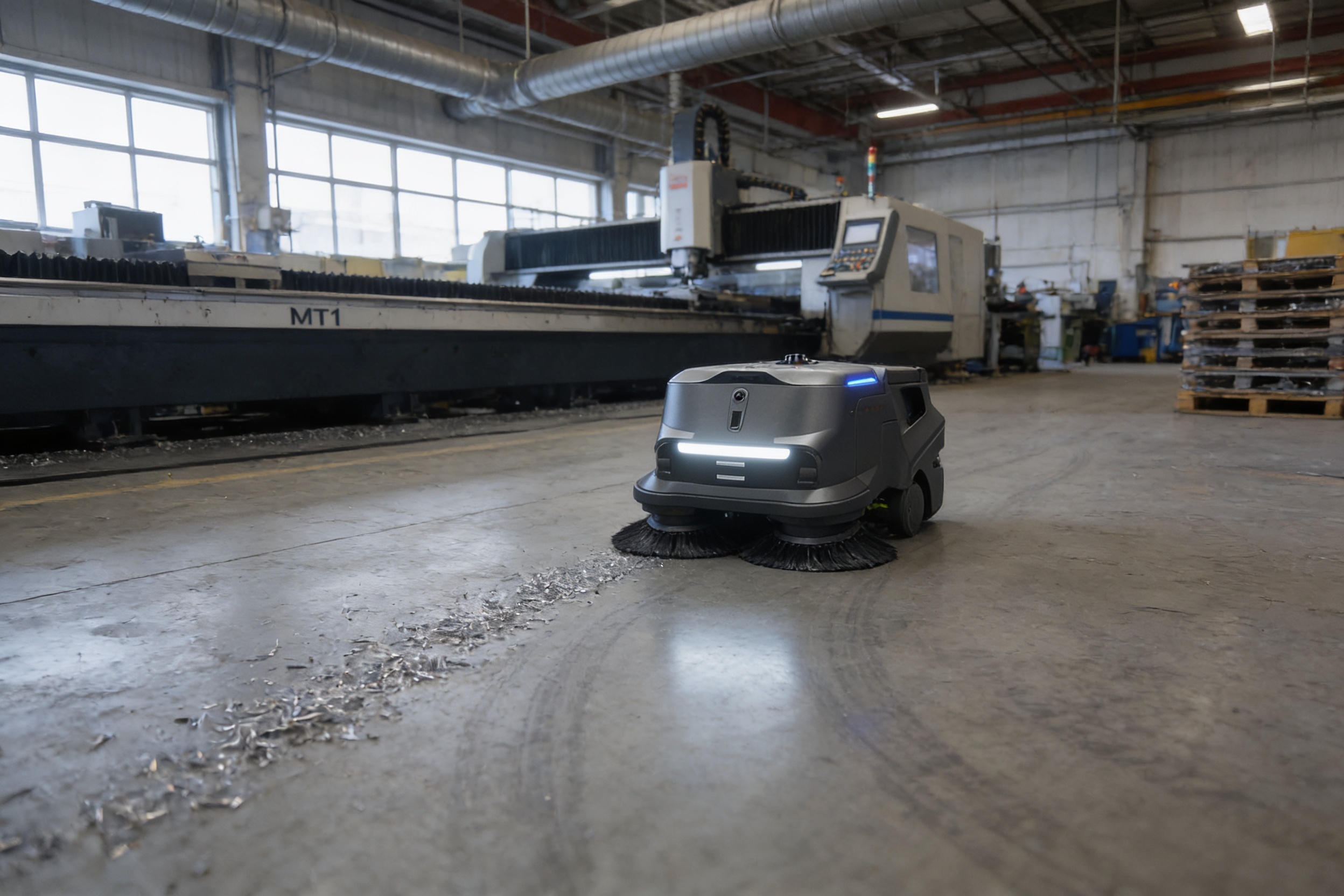
Net hours matter more than gross floor hours. A robot does repeatable floor passes well, but it rarely takes the whole janitor job. Restrooms, spills, glass, trash and high dusting stay with people, and checks, refills, charging and exception handling eat into the freed time. Use the net figure when you read a savings range, and ask whether the number assumes staff time is reassigned or removed from the schedule. Cleaning robot ROI in Denver is most sensitive to that net figure, so the assessment measures it floor by floor.
What changes the number up or down?
Three inputs move the range most: how much of the floor is a repeatable route, how many janitor hours fall inside an empty window the robot can use, and how often staff must step in. Setup scope and lease terms move it too, which is why the quote follows the site assessment rather than preceding it.
What are the risks to the return, and how do you avoid them?
The most common risk is counting hours that never leave the schedule. If the freed time is not reassigned or cut, no labor return appears on the books. Set the target before go-live, and write down which shift or task the freed hours will cover.
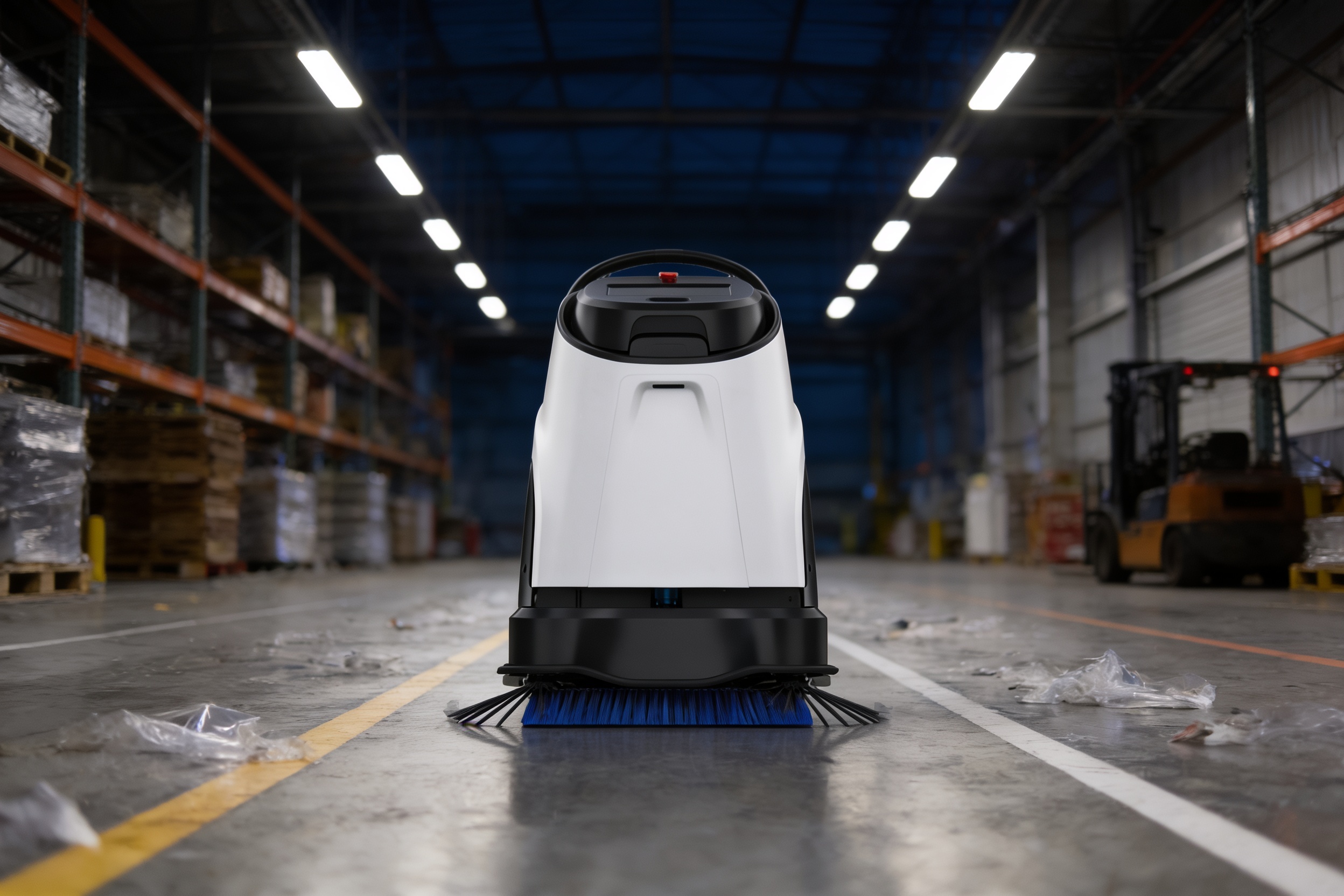
The second risk is a route the robot cannot finish. Loose cords, pallets left in aisles, unmarked obstacles and wet floors stop runs, and a stopped unit does not clean. A site survey and mapping before deployment catch most of this, and a route change made at assessment costs far less than a repeat visit.
The third is safety. A secondary summary of the BLS Survey of Occupational Injuries and Illnesses for 2024 reports 2.5 total recordable cases per 100 full-time workers in janitorial services, against 2.3 per 100 full-time equivalent workers across all private industry. The janitorial figure has not been checked against the primary BLS table, so confirm it there before citing it internally. A robot taking over heavy repetitive passes may reduce exposure, but that is a reason to review the work, not a measured saving on this page.
Robot or people: who does what in a Denver building?
The robot is good at the same route, at the same time, with no breaks, after hours. People are better at judgment, spills, restrooms, glass and rooms that change every day. Most sites end up with a hybrid: the robot runs the open floor overnight, and staff handle the rest during the day.
A simple check is whether the site has a repeatable route and a window when the floor is empty. A building busy around the clock, or one whose layout changes weekly, returns less, and a people-led plan may fit better. Denver winters bring grit and salt into vestibules, so those entry areas often keep a daytime staff task even where the main floors are robot routes.

How long does it take to reach payback?
A realistic path runs in phases: site assessment and mapping, lease quote and financing, deployment and integration, staff training, then a go-live period while the route and schedule are tuned. The early weeks carry the most setup time, so payback depends on when the robot reaches a steady routine rather than the day it arrives.
We do not publish one payback month, because it depends on floor area, schedule and the quote. The assessment produces the timeline for your building, and the calculator gives the range to test it against. We deploy and integrate the robot, train the staff who will run it and provide go-live support, so the steps are scheduled around the building's own operations.
How do I get an exact figure from a free site assessment?
A free site assessment measures the floor, maps the route, logs the janitor hours in the existing schedule, and notes obstacles and exceptions. Those are the inputs for the payback math above. The lease payment is quoted after the assessment, so the range shown here becomes a site-specific figure only once the measurements are in.
Bring your cleaning schedule, floor plans with areas, the hours the building is empty, and a count of the people who clean it. Published data did not give a typical crew size for this type of site, so the working headcount behind this page is two cleaners, to be replaced by your own count at assessment. We pick the robot that fits the site, lease it through financing, deploy and integrate it, train the staff who run it, and service it nationwide.
Frequently asked questions
Put a robot to work in Denver.
We walk your site, learn the job, and recommend the unit that fits. Then we quote the lease, deploy it, and keep it serviced.
Sources
- US Bureau of Labor Statistics, Occupational Employment and Wage Statistics (OEWS May 2024)
- BLS Occupational Outlook Handbook, Janitors and Building Cleaners
- BLS Occupational Employment and Wage Statistics, Denver-Aurora-Lakewood, May 2023
- BLS Occupational Employment and Wage Statistics, Denver-Aurora-Lakewood, May 2021
- Trade press summary of BLS Survey of Occupational Injuries and Illnesses, 2024 data
- IFR World Robotics Service Robots 2025 press release
- ISSA 540 Cleaning Times report, reproduced
- Manufacturer floor scrubber product page (vendor claims)