
The short answer
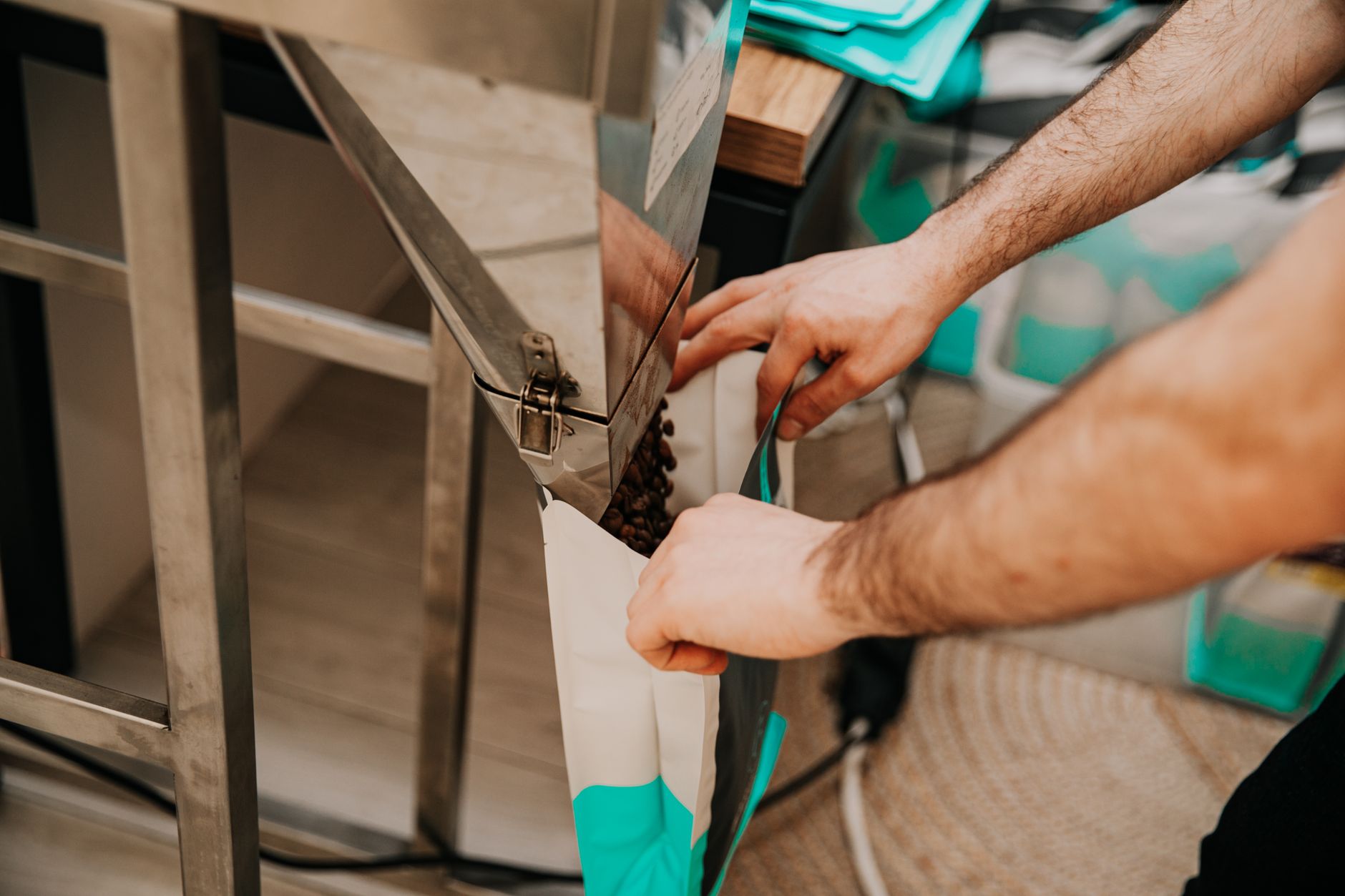
Cobot ROI for coffee roasters comes mainly from the bagging, case packing and palletizing hours a mid-volume roastery needs covered on each run, offset against a fixed lease payment for one arm and its integration. The savings range depends on how much of that work the robot realistically takes over, not on the full task list. Run the calculator on this page with your own shift records, and a lease quote follows a free site assessment.
Key takeaways
- The return comes from packing hours the robot takes over, valued at the wage data shown on this page.
- The share of work the arm realistically handles moves the savings range more than any other input.
- Mid-volume roasters often fit one cobot cell where a fixed line would be too large for the floor.
- Rising turnover in materials handling makes unfilled packing shifts more costly to cover.
- The lease quote comes after a free site assessment, and this page does not state a lease amount.
Run the numbers for your site
Pick your city or state for a real regional number - we use the real BLS wage there. (On the live site this auto-detects from your location.)
What do you want to automate?
The cobot stacks the repetitive end-of-line pallets; your team handles changeover and QA.
What is cobot ROI for coffee roasters?
Cobot ROI for coffee roasters is the return from putting a collaborative robot arm on the packing end of the roasting floor, mainly on bagging, case packing and palletizing. The return is the labor hours the arm takes over, set against the lease cost of the arm and its integration. It is not a claim that a roastery needs fewer people on the roaster itself.
The back end of a roastery is repetitive and physically hard. Bags are filled, sealed, placed in cases and stacked on pallets, and the hours grow as orders grow while the same few people stay on the line. A cobot does not replace roasting judgment. It takes the repeated pick and place that eats the hours and leaves the decisions with staff.
Service Robot Co. works on sites like this. We pick the arm for the floor, lease it through financing, deploy and integrate it, train the staff and service it nationwide. The calculator on this page is set for this industry, and the text explains what sits behind its figures.
How many coffee roasters are there in the US?
The count depends on who is counting. POI Data, a third-party aggregator, reports 6,091 coffee roasters in the US as of June 2026. Other counts from the same search run are narrower because they cover specialty or independent roasters only, so a single national total should be read as a range of definitions, not a settled figure.
For labor sizing, the Census-based figure is more useful. A market-data summary attributed to Census County Business Patterns 2023 reports 1,155 establishments and 23,998 employees in NAICS 311920, Coffee and Tea Manufacturing. Dividing employees by establishments gives about 21 people per establishment across coffee and tea makers together. The packing crew at one site is a share of that total, and the site assessment measures it.
Size tells you how many roasters could benefit, but not how many hours a single roastery spends on bags and pallets. That number comes from your own station logs.
Median hourly wage, Laborers and Freight, Stock, and Material Movers, Hand
$4,380
Monthly cost of one full-time worker, at the median wage plus payroll costs (an estimate, not a quote).
Where do coffee roasters lose hours on packing?
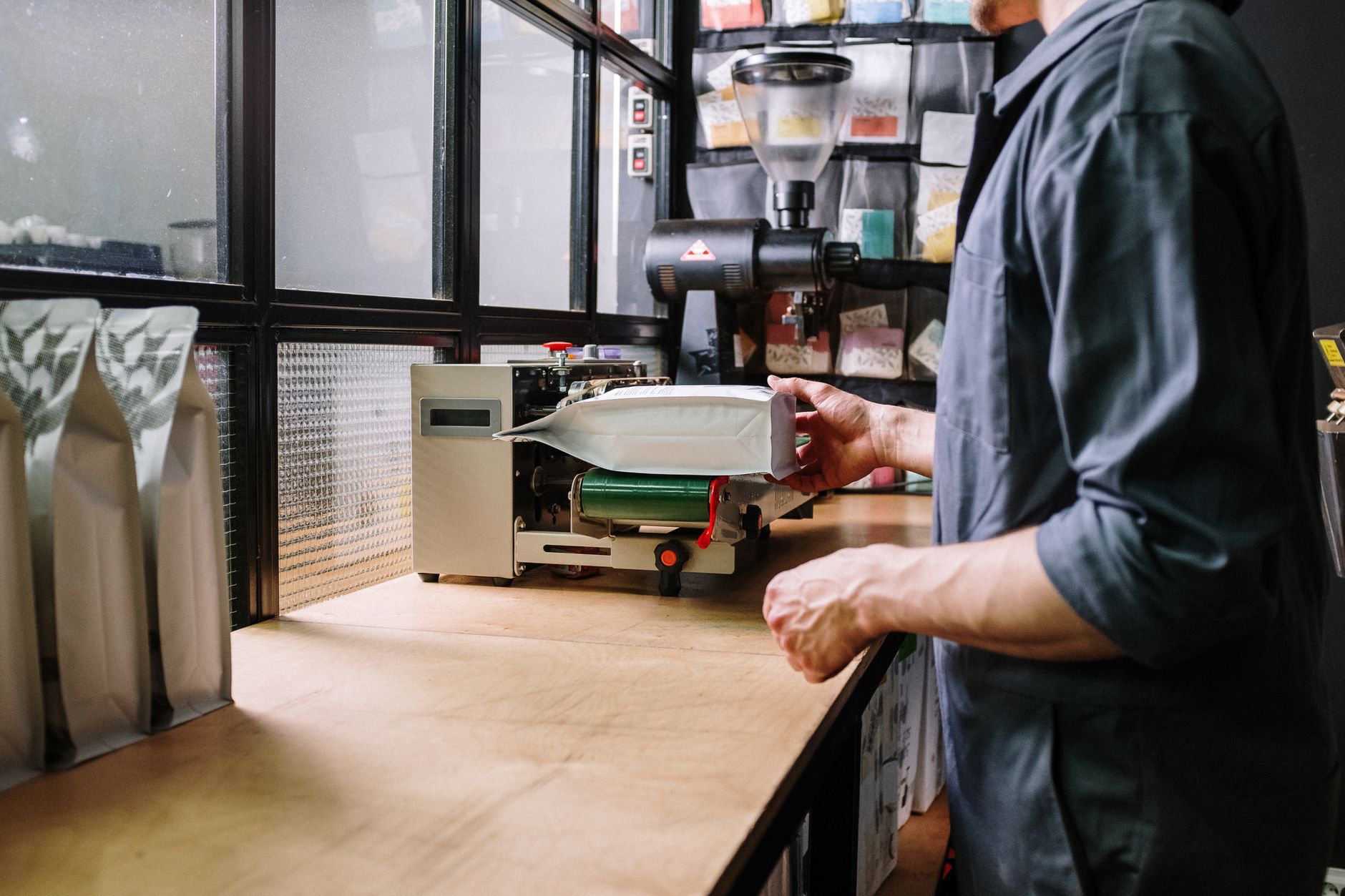
The labor sits in four moves: filling and sealing bags, moving them into shipping cases, building case pallets, and staging the pallets for the dock. At low volume one person runs all four in rotation. As volume rises the rotation breaks, and roast schedules start waiting on the packing station.
These are the hours the cobot takes. The work is the lifting, placing and stacking described in the laborers and freight, stock, and material movers, hand group, the same type of work priced by the government wage data on this page. Roasting, blending, cupping and quality checks stay with roasting staff.
The job is common and needs little formal education. According to O*NET, about 2,988,900 people were employed as laborers and freight, stock, and material movers, hand in 2024, and that occupation is projected to grow 2 percent from 2024 to 2034, slower than average, with about 384,300 openings a year covering growth and replacement. The Bureau of Labor Statistics handbook puts the wider hand laborers and material movers group at about 6,917,800 jobs in 2025, projected to grow 4 percent over the decade. Staffing the packing line is therefore a hiring and retention question more than a skills question.
How does the cobot payback math work?
The math has three inputs. First, the hours of bagging, case packing and palletizing that the arm can take over each week. Second, the share of that work it realistically handles, since the arm stops for jams, bag changes and product outside its grip range. Third, the annual lease cost of the arm and its integration, which is quoted after a site assessment and is not shown on this page.
Labor value is the offset hours multiplied by the wage for this job, the figure shown in the panel beside this text. Payback is the point where cumulative labor value covers the lease cost. The savings range on this page runs that calculation across a low and a high share of hours taken. It is a band, not a promise.
The lease amount is fixed, so most of the swing sits in the share and the hours. A roastery that runs more than one shift and bags most days gives the same arm far more offset hours than one that runs a single short shift on a few days.
What changes the number up or down?
Volume and shift pattern move the number most. Work that runs on more shifts, or in longer runs, gives the arm more hours to offset. Format count matters as well. Each change of bag size, seal type or case format adds setup time that the arm does not take over, so a line that changes formats often will show a smaller share.
Layout sets the reach. A packing station with a clear path to a fixed pallet position leaves the arm room to work. A station where staff walk across the floor to reach the palletizer leaves hours on the table, and the assessment maps those walks so they can be counted.
What are the risks to the return and how do you avoid them?
The main risk is over-counting hours. If the arm takes only a small share of the work, the offset falls and payback stretches. Avoid this by measuring the share on the floor across several production days before the lease is sized, and by counting only the hours that move to the arm, not the whole station.
The second risk is downtime. A cell that stops mid-run returns the work to people, and the labor offset for that run drops to zero. Keep a manual path that staff know, and make sure the service terms set how quickly a fault is answered.
The third risk is churn in the crew. According to the 2025 Modern Materials Handling salary survey, average departmental turnover rose to 11.6 percent from 8.6 percent the prior year. Churn is a reason to automate, but people trained on the cell may leave, so train more than one person on each shift.
Injury exposure is a reason to look closely too. According to a Bureau of Labor Statistics analysis of 2008 data, food manufacturing had 1.4 cases with days away from work per 100 full-time workers, about 27 percent above the all-private-industry rate of 1.1. That figure is old, so use it to check the lifting load at your station, not as a present benchmark. According to BLS data summarized by J.J. Keller, all private industry recorded 2.5 million nonfatal injuries and illnesses in 2024, down 3.1 percent from 2023.
- Steady pace over a full run
Cobot
Holds one pace once set, with no drift from fatigue
Staff
Varies pace, which can also be an advantage when a run needs catching up
- Odd bags or damaged product
Cobot
Needs staff to clear it, and fails on formats outside its setup
Staff
Spots and handles unusual bags and damage on the spot
- Hours covered
Cobot
Runs the scheduled hours with planned breaks
Staff
Covers the shift, but absence, sick days and breaks reduce cover
- Quality judgment
Cobot
Runs the pattern it is taught and reports faults
Staff
Notices weight drift, seal quality and product issues by sight and feel
- Turnover and onboarding
Cobot
Its setup holds when staff change, so turnover does not reset its work
Staff
Each new hire needs training before a full run is covered
How long does it take to reach payback?
Payback follows a fixed path from site assessment to a running cell. The assessment maps the floor, logs packing hours and measures the share of work the arm can take. The quote is built from those results. Once it is signed, the cell is deployed and integrated, staff are trained, and the cell goes live with support on hand. Payback starts once the arm runs at its planned share, not on install day.
No single timeline applies to every roastery. It depends on how quickly the lease is signed, how much layout work the floor needs, and how fast the staff reach steady running. A station with a clear path and a steady run pattern reaches steady running sooner than one that changes formats every day.
- Free site assessment: map the floor, log packing hours, measure the share of work the arm can take.
- Lease quote: built from the assessment, then reviewed and signed.
- Deployment and integration: arm installed, tied to the packing line, and set up for your formats.
- Staff training: operators and backup staff learn the cell and the manual path.
- Go live support: the cell runs with support on call until it reaches steady running.
Why do mid-volume roasters fit cobots better than fixed lines?
A fixed automation line is built for high, steady volume. It takes floor space, a long install and a run that keeps the line busy most of the year. A mid-volume roastery has bursts of orders and a limited set of formats, so one cobot cell can fit a floor that a line would overrun, and it can be moved or reset as volume changes.
Adoption supports the idea. According to a market statistics page, more than 64,500 cobots were sold in 2024, nearly 12 percent of new installations. The page does not clearly name its underlying source, so treat the figure as directional rather than measured.
The fit still depends on the floor and the format list. A cell suits a station with a few main pack formats and a clear reach. Where formats multiply, the case for a cell weakens, and the assessment will say so.
How do you get a precise figure from a free site assessment?
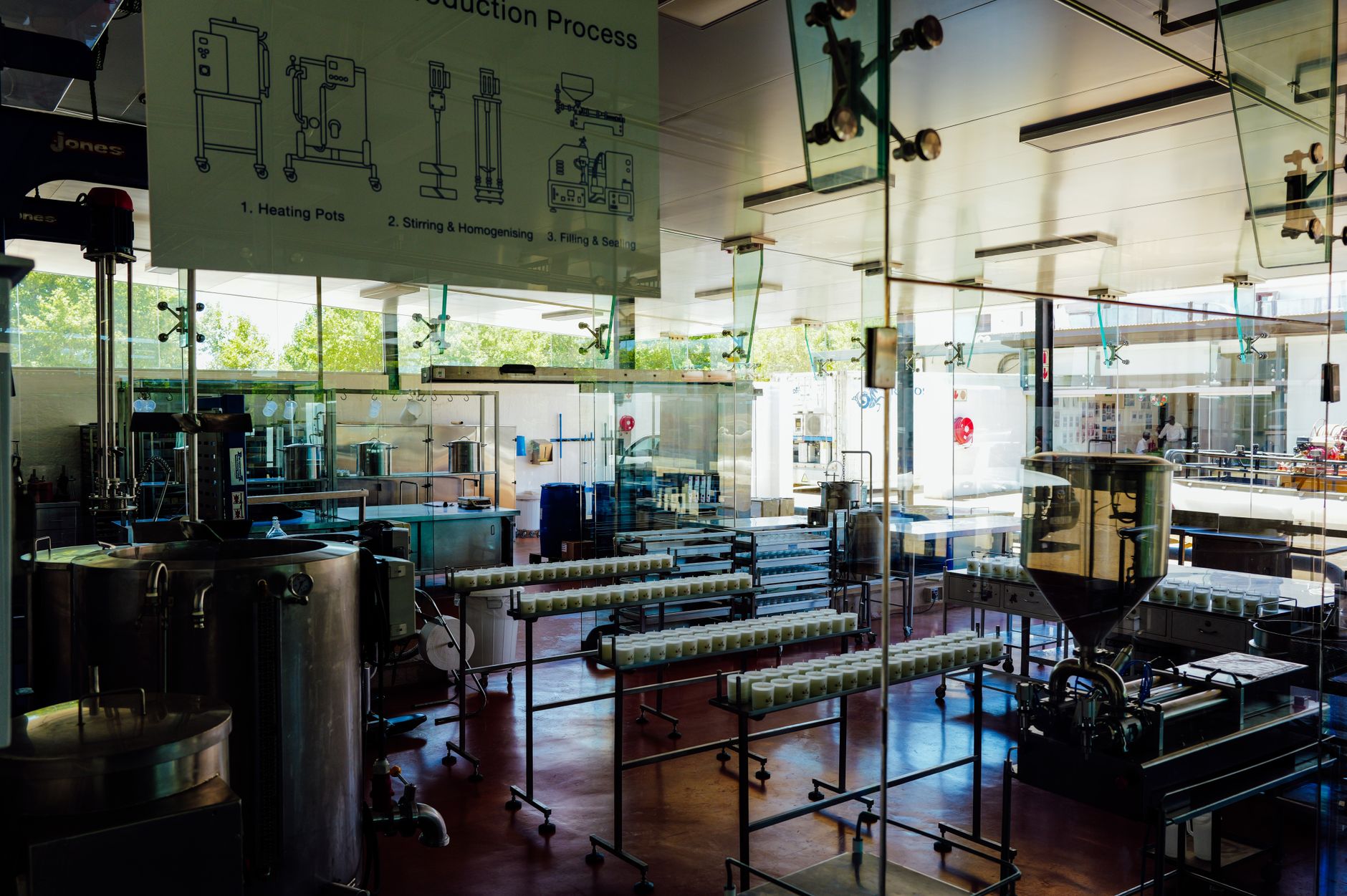
The calculator on this page gives a savings range from defaults for this industry. A precise figure needs your own numbers: packing hours by shift, the formats you run, the layout of the station, and the local wage for this job from the panel. A free site assessment collects those, and the lease quote follows from them.
Service Robot Co. is a US commercial robot integrator. We pick the robot for the site, lease it through financing, deploy and integrate it, train the staff and service it nationwide. The arm is chosen for your packing station, not from a fixed catalog of uses.
Bring your recent packing logs, your format list and a sketch of the station to the assessment. Ask the quote to state what the lease covers, what service is included and how a fault is answered. Those terms change the net return more than any default in a calculator does.
Frequently asked questions
Want a cobot at your coffee roaster?
Tell us about your site. We will recommend the robot, quote the lease, and keep it serviced.
Sources
- US Bureau of Labor Statistics, Occupational Employment and Wage Statistics (OEWS May 2024)
- POI Data coffee roaster report
- Grata NAICS 311920 market summary
- O*NET OnLine occupation trends 53-7062
- BLS Occupational Outlook Handbook, hand laborers and material movers
- Modern Materials Handling 2025 salary survey
- BLS Monthly Labor Review, food manufacturing injuries 2008
- J.J. Keller summary of BLS 2024 injury data
- Market statistics page on collaborative robots