
The short answer
Cobot ROI for spice packagers comes from packing more pouches and jars per shift without adding shifts, because a collaborative robot takes steady loading, counting and casing work off the line. The savings range on this page is built from the hours of laborers and freight, stock, and material movers, hand type of work the robot takes over, net of the lease payment, and it is a band, not a promise. A free site assessment measures your own line and turns that band into a precise figure and a fixed robot lease payment quote.
Key takeaways
- The return comes from more pouches and jars packed per shift, not from removing shifts.
- Hours of laborers and freight, stock, and material movers, hand work set the savings range.
- Format changes, uptime and line speed move the number more than the robot itself does.
- Measured hours from your own line matter more than any published average for this setting.
- A free site assessment turns the range into a quote with a fixed robot lease payment.
Run the numbers for your site
Pick your city or state for a real regional number - we use the real BLS wage there. (On the live site this auto-detects from your location.)
What do you want to automate?
The cobot stacks the repetitive end-of-line pallets; your team handles changeover and QA.
What is cobot ROI for spice packagers?
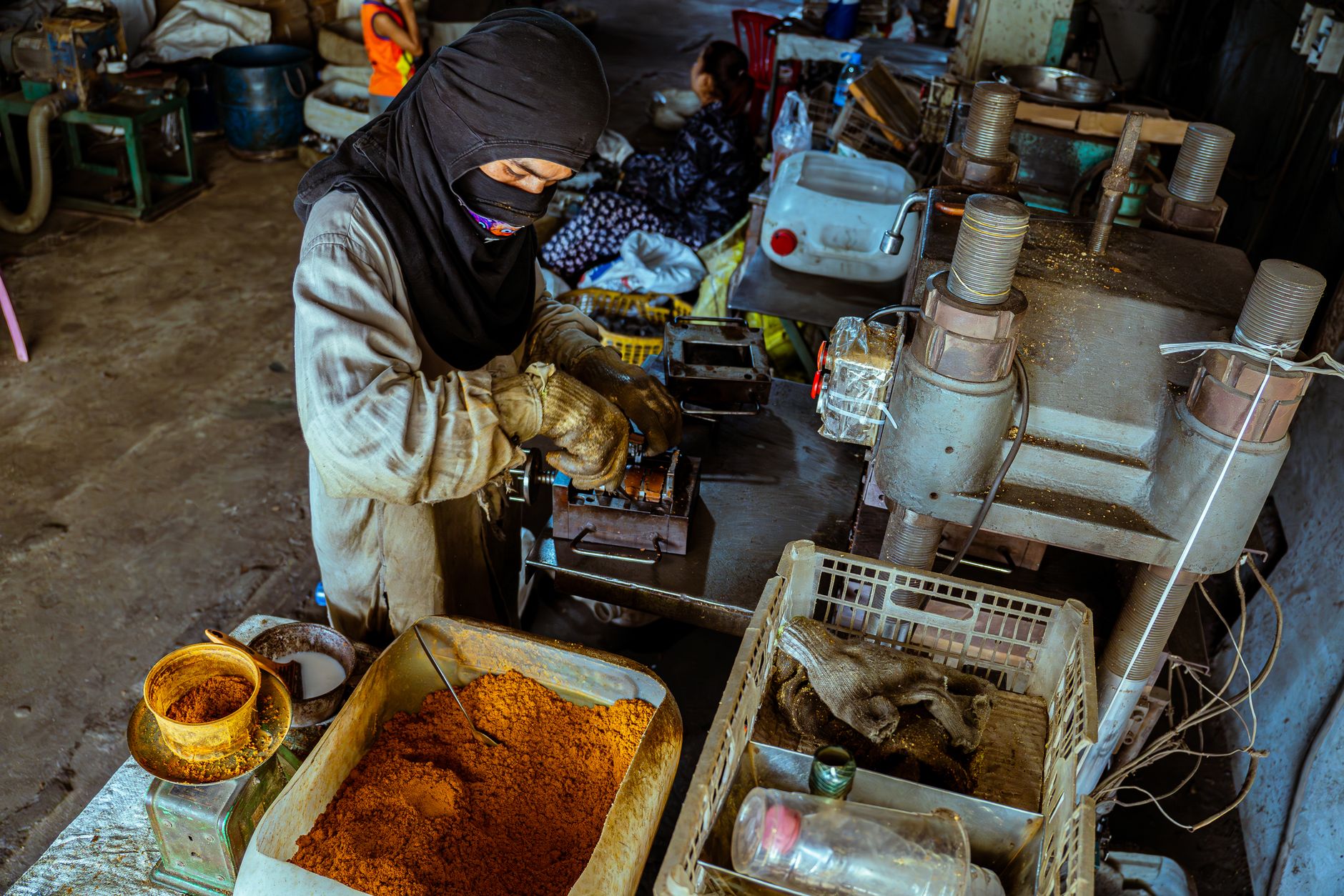
Cobot ROI for spice packagers is the return a plant gets when a collaborative robot takes over the steady, repetitive part of a packing line, so more pouches and jars leave the line in the same shift pattern. The plant does not add shifts. It adds units per shift and keeps trained staff on the work that needs judgment, such as setup, fault clearing and checks.
This page covers one kind of site: a spice operation that fills and packs small pouches and jars on repeat, with blending and grinding work upstream. The research for this page did not verify a national count of spice packing sites, so the case rests on the work itself and the hours it takes, not on how many plants exist.
Read the numbers below as sector context and as inputs to your own assessment. The page does not promise a result. The savings range shown beside this text is a band built from typical inputs for this setting.
Where does the return come from on a spice packing line?
Most of the return comes from throughput at the repetitive end of the line. A cobot can load pouches or jars into trays, count them against an order and case them at a steady rate across a full shift, where the same motion repeats all shift long and manual pace varies from hour to hour.
Consistency is the second source. A fixed count and casing rate makes output easier to plan, and it frees staff from the packing stations to run changeovers, check seal and fill, or cover a station during breaks instead of pulling someone off a second task.
A cobot is built to work near people. Its speed and force are limited so a person can share the workspace, which suits a line where staff still feed product, clear jams and inspect fill weight. The return is highest where the robot owns a clear, repeatable station and staff own everything around it.
Median hourly wage, Laborers and Freight, Stock, and Material Movers, Hand
$4,380
Monthly cost of one full-time worker, at the median wage plus payroll costs (an estimate, not a quote).
How common are cobots in food and consumer goods?
Adoption is past the trial stage. According to A3, the robotics trade association, collaborative robot orders reached 7,212 units in 2025, which is 19.6% of total robot orders for the year, and overall robot orders rose 6.6% in units from 2024. A3's first quarterly cobot tracking, for Q1 2025, found cobots made up over 20% of total demand in the segments where it reported food and consumer goods.
Demand in food and consumer goods moved faster still. A3 reported food and consumer goods robot orders up 105% year over year in Q3 2025, according to secondary coverage of its data by The Robot Report. A3 does not break out packaging-only cobots, so treat these figures as sector signals rather than a forecast for one plant.
The International Federation of Robotics, IFR, reports 66,000 new collaborative robot installations globally in 2025, which it puts at 11% of all industrial robot installations. For the US, IFR reports robot installations reached 38,000 units in 2025, up 11% year over year, and says food-sector adoption rose 30%. For a plant, the open question is less whether the equipment is proven and more whether a specific line has enough repetitive hours to justify it.
How does the ROI math work?
The math has four parts. The first is the hours of work the robot takes over, counted as hours of laborers and freight, stock, and material movers, hand type of work: loading, counting, casing and moving cases to staging. The second is the share of those hours the robot realistically takes, since a cobot rarely covers every minute of a station.
The third part is the value of those hours, priced on the government wage data on this page for that job, not on the wages of the packing staff. The fourth is the lease cost, a fixed robot lease payment quoted after the site assessment, which covers the lease term and the service plan.
The savings range shown with this page is that calculation run on typical inputs for this setting. The low end assumes the robot takes a smaller share of the work and runs fewer hours. The high end assumes steady uptime and few changeovers. Neither end is a promise.
Net return is the offset minus the lease payment and any staff time for setup, oversight and fault clearing. If the net is small, the honest result is that the line is a weak candidate, and a good assessment will say so.
Where do the labor hours come from?
The labor offset is only as good as the hour count behind it. The research for this page did not find published hours per shift for spice packing tasks, so the hours should come from your own line, measured over several shifts rather than estimated from one run.
The table below is the task-by-task view used when a line is mapped. The left column shows the work as it runs now, and the right column shows what the robot takes over and what stays with staff. Fault clearing, resets for a new pouch or jar size and quality checks stay with people.
Count the hours that actually move. A worker who walks to pick up cases saves that time only if the case handoff is automated too, so the map has to cover the full path from filled container to pallet.
What do workforce and turnover figures tell you?
According to O*NET, 381,200 people were employed as packaging and filling machine operators and tenders in 2024, with 398,200 projected for 2034. That job title runs many packing lines. The robot takes the laborers and freight, stock, and material movers, hand type of work off their plate, and the operator role stays on the line for setup, checks and fault clearing.
Turnover shapes the case too. According to Seramount, manufacturing annual turnover was 28.6%, with the sub-industry not shown. No food subsector turnover figure was found in the research for this page, so that figure is a general manufacturing signal only.
High turnover helps the case for steady work, because each new hire needs time before packing at pace. It also makes training a shared task, so the plant keeps its fault clearing and changeover knowledge when someone leaves.
For this page, the typical number of people doing this kind of work at one packing site is planned at six. That is a planning assumption, not a sourced count, and the site assessment replaces it with your actual roster.
What changes the number up or down?
Four things move the range more than anything else: line speed, the number of format changes each week, uptime, and how much of the packing work is truly repetitive. A line that runs one pouch size most of the week returns more than a line that switches formats every few hours.
Pouch and jar variety sets the grippers, trays and count routine, so every format adds a reset with staff time attached. Changeovers take time either way, so the question is how many the line makes today and how long each one takes.
Shift pattern matters too. A line running more hours gives the robot more hours to offset, and the lease term should match how long you expect the line to run in its present layout.
What are the risks to the return, and how do you avoid them?
The biggest risk is overestimating the share of work the robot takes. A cobot that handles counting and casing but still needs a person to feed every tray gives back less than the headline hours suggest, so the assessment maps each station rather than the line as a whole.
Injury exposure is the second thing to read carefully. According to Novara's summary of the BLS 2024 Survey of Occupational Injuries and Illnesses release, there were 2.34 million nonfatal injury cases in 2024, down from 2.37 million in 2023. Overexertion and repetitive motion was the leading days-away or restricted-work category, at about 946,000 cases across 2023 and 2024 combined, although the classification changed during that period.
Repetitive motion is the injury pattern this kind of cell is often used to address, but only if it is set up well. A cell with awkward reach, heavy totes or a poor layout can move the strain rather than remove it, so the risk assessment is part of the return, not a side task.
To protect the return, confirm the cell passes a risk assessment before go live, train staff on fault clearing, write uptime targets into the quote, and avoid spreading one robot across too many stations at once. Each step protects the hours you measured.
What is the realistic timeline from assessment to payback?
Timelines depend on the line, but the sequence is predictable. It starts with the site assessment, then the quote, then mapping and integration, then staff training and go live support, and then a running period that produces the measured hours the payback depends on.
Payback is the point where cumulative hours offset, net of the lease payment and setup time, reach break even. Because the savings range is a band, payback is also a band. The early weeks usually carry the most setup and fault clearing, so the first months tend to be the slowest part of the return.
Start with one cell on one line rather than the whole plant. A single leased unit produces measured hours after a short running period, and those hours set the scale up decision. Ask about spare unit coverage in the quote, since it can keep one station running during a repair.
How do you get a precise figure from a free site assessment?
A free site assessment is where the range becomes your number. We map the packing area, time each step over several shifts, record format changes and uptime, and note where staff hands touch the product. Bring your changeover log, shift schedule and any jam or scrap records you keep, because those shorten the mapping.
Service Robot Co. picks the robot for the site rather than fitting the site to one model. We are a vendor neutral robot integrator, so the recommendation follows your line. After the assessment we quote a fixed robot lease payment with the term, the service and the training written out, so you can check each assumption against your measured hours.
Service Robot Co. deploys and integrates the cell, trains your staff, and services the unit nationwide, with on-site dispatch and remote triage for faults. Ask for the hour count by station, the share of work the robot takes, the lease term and exactly what the service covers. A good quote lets you test every assumption before you sign anything.
Frequently asked questions
Want a cobot at your spice packager?
Tell us about your site. We will recommend the robot, quote the lease, and keep it serviced.
Sources
- US Bureau of Labor Statistics, Occupational Employment and Wage Statistics (OEWS May 2024)
- A3 full-year 2025 robot orders release
- A3 Q1 2025 North American robot orders release
- The Robot Report on A3 Q3 2025 orders
- IFR President's Report 2026, global installations
- IFR President's Report 2026, US installations
- O*NET OnLine local trends, packaging and filling machine operators
- Novara summary of BLS 2024 injury data
- Seramount manufacturing turnover, October 2025