
The short answer
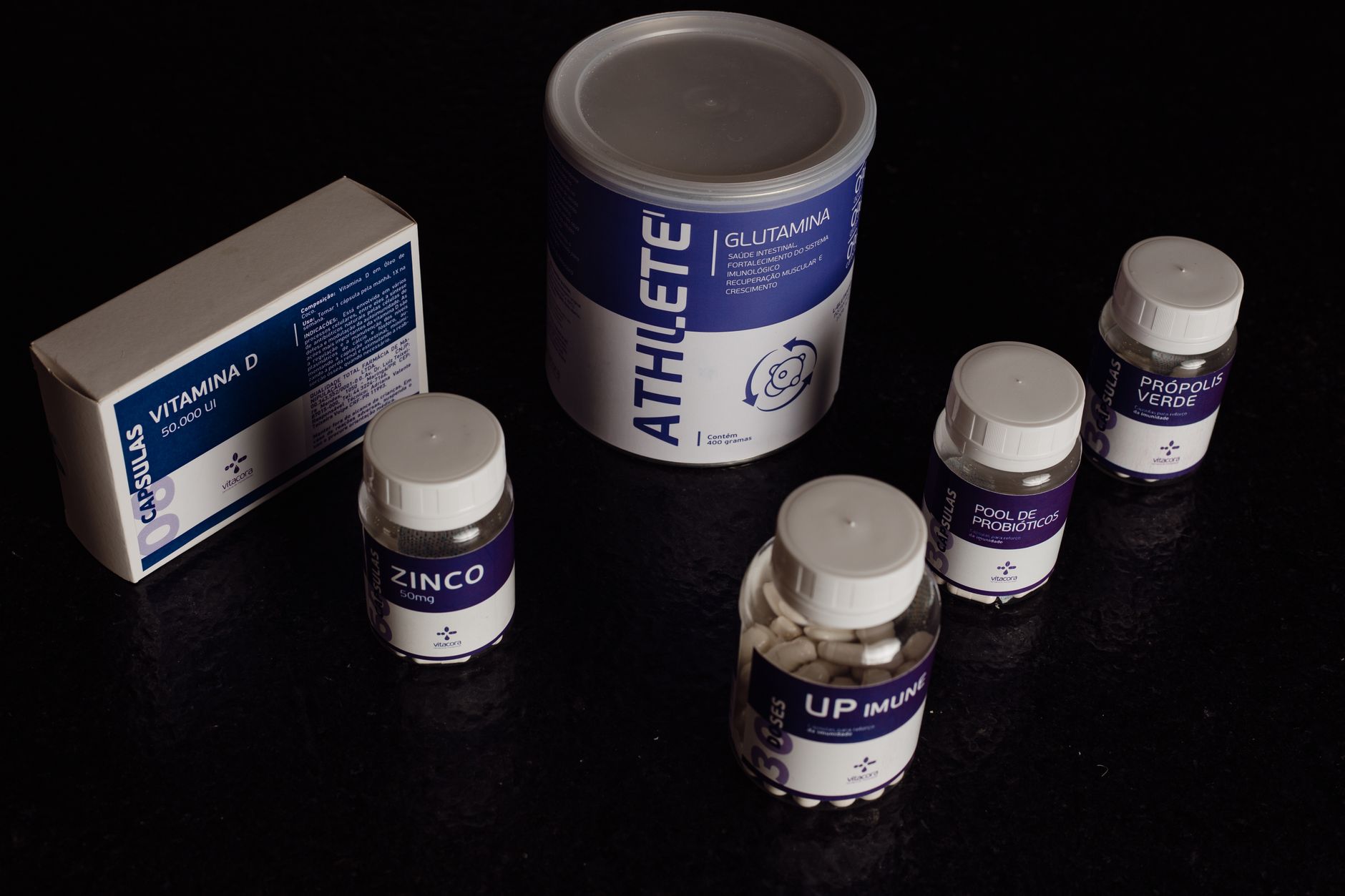
Cobot ROI for supplement manufacturers comes from fewer hours of hand work on repetitive jobs such as bottle feeding, capping support and case packing, on lines that change over often enough that full automation does not pay. The savings range is the labor hours a collaborative robot realistically takes over, priced at the local wage for this job, minus the fixed lease payment and service terms. A lease quote follows a free site assessment, so treat any range on this page as a starting estimate, not a promise.
Key takeaways
- The return comes from repetitive hand work on short-batch lines, not from replacing the whole packaging crew.
- The share of each task a robot realistically takes matters more than its rated speed.
- Changeover time and batch count can make or break the payback.
- Your lease quote comes after a free site assessment that uses your own line data.
- Injury and ergonomic data support the case but should not be booked as savings on their own.
Run the numbers for your site
Pick your city or state for a real regional number - we use the real BLS wage there. (On the live site this auto-detects from your location.)
What do you want to automate?
The cobot stacks the repetitive end-of-line pallets; your team handles changeover and QA.
What is cobot ROI for supplement manufacturers?
Cobot ROI for supplement manufacturers is the return a plant gets from putting collaborative robots on the repetitive hand work of its packaging line, measured against the fixed lease payment and the labor hours the robot takes over. The industry is made up of many smaller and mid-sized plants. According to IBISWorld, a paid market research firm rather than a government count, there were 375 businesses in US vitamin and supplement manufacturing, with business count growing at a 2.3 percent annual rate from 2021 to 2026.
IBISWorld also reports employment of about 52,000 to 54,000 workers for this industry in 2025 and 2026, depending on which page of its series you read, with employment growing at a 2.7 percent annual rate from 2021 to 2026. Spread across the businesses, that works out to roughly 143 workers per company. That is an average across every role, not a count of packaging staff at one site, so use it for context rather than as a staffing plan.
Where does the return come from on a supplement line?
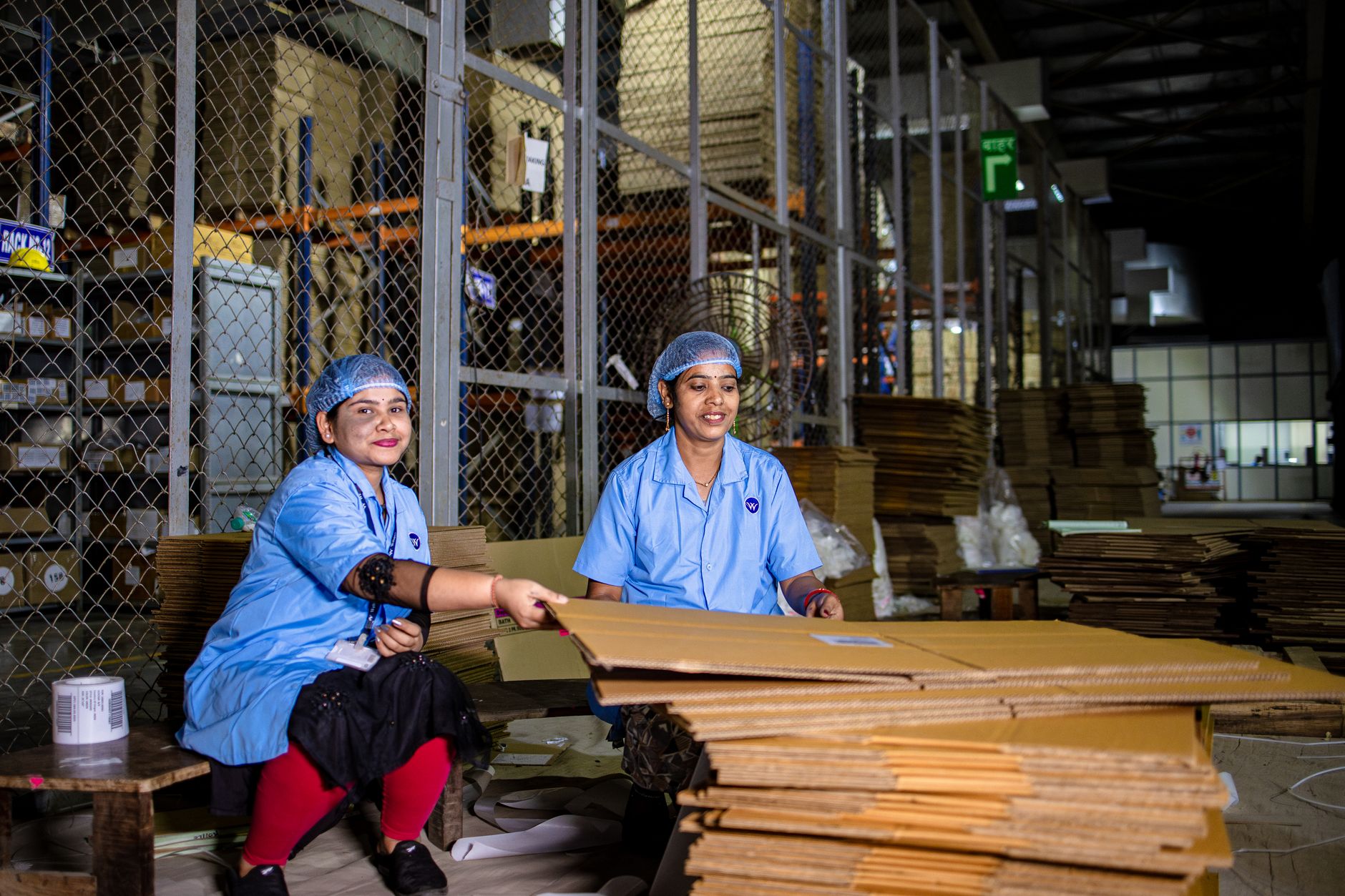
The return sits in hand work that repeats the same motion all shift: feeding empty bottles to a filler, supporting capping, packing finished units into cases and moving those cases to the palletizing point. On a small-batch line these tasks restart with every product change, so crews spend time on setup and handling instead of steady running. That is the gap a cobot can fill, working beside people rather than inside a fenced machine.
The people most often on that line are packaging and filling machine operators. The work a cobot takes over is mainly the laborers and freight, stock, and material movers, hand type of work: carrying cases, stacking, loading totes and keeping the cell supplied. According to the Bureau of Labor Statistics occupational page for packaging and filling machine operators and tenders, about 371,600 workers hold that job nationally, which gives a sense of how large the group is. We do not price the time of the operators on the line. The savings math prices the hours the robot takes over at the local wage for this job from the government wage data on this page.
Median hourly wage, Laborers and Freight, Stock, and Material Movers, Hand
$4,380
Monthly cost of one full-time worker, at the median wage plus payroll costs (an estimate, not a quote).
How does the savings math work?
The savings range starts with hours. Take the weekly hours your crew spends on the target tasks, multiply by the share of that work a cobot can realistically take, and price those hours at the local wage for this job from the government wage data on this page. That is the labor offset. The range then comes down by the fixed lease payment, the service terms, and the time staff spend on training and supervision in the first months.
The lease is the second half of the math. A commercial robot lease is a fixed payment set through financing, and the figure is quoted after a free site assessment, because it depends on the cell, the tooling, the work area and the service terms. The range is shown instead of a single figure because two inputs, the realistic share and your measured hours, are not known until the line has been timed. Treat the range as a planning tool, not a promise.
How much of the work can a cobot realistically take?
Not all of a task is repetitive. A cobot suits steady, predictable motion and handles variable product, damaged containers and steps that need judgment less well. The realistic share is the fraction of a task's cycles the robot can finish without a person stepping in. We estimate that share from your SKU count, batch sizes, container types and fault history, not from the robot's rated speed.
Cobots work next to people, which keeps an operator in the loop for checks and exceptions. That matters on lines where people still do the quality inspection. It also means the cell's output is paced by the robot and by the staff working beside it, so the offset should be measured on a running line, not on a bench test.
Where does a person still beat a cobot?
People win on judgment, quick changes between formats and handling irregular or damaged product. A person can notice a short fill, a cracked seal or a misprinted carton and react to it. A robot repeats the program it was given. That is why the case for a cobot is strongest on the steady middle of the job, with a person still covering the start of the run, the checks and the exceptions.
The side-by-side table below is meant to be fair to both sides. The robot takes the repetitive part of the work and holds its pace across long runs. The person keeps the flexible part. A plan that tries to remove people from the line entirely is a different kind of project, usually full automation, and it should be scoped and priced separately.
- Steady repetitive motion over a long run
Cobot
Holds the same cycle without fatigue, within its rated envelope
Staff
Tires over a shift and needs breaks, rotation and ergonomic care
- Quality judgment
Cobot
Follows its program and sensor checks only
Staff
Spots short fills, cracks and misprints and reacts to what looks wrong
- Product changeover
Cobot
Needs reprogramming, fixtures and a tested change procedure
Staff
Adjusts by hand quickly to a new format, with more variation
- Unattended running
Cobot
Runs while a tender is present, and unattended running depends on the cell and process being validated
Staff
Needs a scheduled shift, training and supervision
- Physical exposure
Cobot
Takes on the lifting and repetitive reach of the task
Staff
Still needed for setup, checks and exception handling
- Cost basis
Cobot
Fixed lease payment set through financing, quoted after a site assessment
Staff
Hours priced at the local wage for this job from the government wage data on this page
What do injury rates mean for the return?
According to the Bureau of Labor Statistics, the all manufacturing total recordable injury and illness rate was 2.7 per 100 full-time workers in 2024. The BLS industry profile for food manufacturing shows a total recordable rate of 3.3. Manufacturing Dive, reporting BLS data for 2023, put food manufacturing at 3.6, down from 4.6 in 2022.
Repetitive lifting and reach are the kinds of exposure safety teams usually target, so the share of those tasks a cobot takes over is worth measuring in your own logs. Fewer recordable cases can lower the cost of injury to the plant, but that effect is supporting evidence, not a line item in the savings range, unless your incident history shows it clearly. Complete the risk review and guarding plan before the cell goes live.
How fast is cobot adoption growing in North America?
According to the Association for Advancing Automation, known as A3, collaborative robots made up 11.6 percent of robot units ordered in North America in the first quarter of 2025, the first quarter A3 tracked cobots as their own category, with 1,052 units ordered. Quarterly figures in that series do not sum neatly to the full year, so compare them with care.
The Robot Report, reporting the full year 2025, puts about 7,212 cobot units ordered, or about 19.6 percent of robots ordered, out of 36,766 total North American robot orders, which rose 6.6 percent in units. Growing order volume shows the technology is being ordered at scale. It does not show whether the return works on your line.
What are the main risks to the return?
The biggest risk is an underused robot. If a line runs too few batches, or changeovers eat up the time the robot would have saved, the cell sits idle while the lease payment keeps coming. The lease is fixed, so a slow quarter raises the effective cost of each hour the robot saves. The second risk is scope creep, where a cell quoted for one product line is asked to cover three and the hours offset no longer matches the setup.
Integration and uptime are the other two. Fixturing, sanitation access, batch record documentation and staff training all take time and belong in the schedule before go-live. We start with a pilot scope on one line, so the cell is tested on the work it will actually do, and we set the service terms before the lease is signed. Ask for them in writing, including what happens to a timed batch during a repair.
What is a realistic timeline from assessment to payback?
The timeline runs in phases. First is the site assessment, where we map the line, time the target tasks, log changeovers and check the floor, power and clearances. Next come the quote, the cell design and integration, crew training, and go-live with support. Each phase carries its own risk, so agree the schedule in writing before signing.
Payback depends on the savings range in your quote and on how quickly the robot reaches its planned share of the work. A cell that runs frequent, short batches should reach that share sooner than one that sits between programs, so the first months matter most. Ask for a payback estimate built from your measured hours and shown as a range, not a single date.
How do you get an exact figure from a free site assessment?
A precise figure comes from your own data. Bring the packaging schedule, the number of product changes per week, the minutes lost to each changeover, crew size by shift and the hours spent on the target tasks. Floor plans, power locations and any incident or ergonomic logs for those tasks help as well.
Cobot ROI for supplement manufacturers is only as precise as the data behind it. During the free assessment we measure the work, check the floor and the space around the cell, and select the robot that fits the site rather than defaulting to one model. You receive a lease quote with the fixed payment, the service terms and a savings range built from your numbers. We handle deployment, integration, staff training and nationwide service after go-live.
Frequently asked questions
Want a cobot at your supplement manufacturer?
Tell us about your site. We will recommend the robot, quote the lease, and keep it serviced.
Sources
- US Bureau of Labor Statistics, Occupational Employment and Wage Statistics (OEWS May 2024)
- IBISWorld
- IBISWorld employment
- BLS OEWS packaging and filling machine operators and tenders
- BLS chart of nonfatal injuries and illnesses by industry
- BLS industry profile for food manufacturing (NAICS 311)
- Manufacturing Dive
- A3 North American robot orders Q1 2025
- The Robot Report, North American robot orders 2025