
The short answer
Cobot ROI in Baltimore is a savings range built from three inputs: the hours of laborer and freight, stock, and material movers, hand work the robot takes over, the local wage for that job, and the share of those hours a cobot can realistically handle. The fixed robot lease payment, with service included, is quoted after a free site assessment, and the offset has to cover it. Payback arrives when cumulative offset value covers the lease over its term, and utilization decides how fast that happens.
Key takeaways
- Cobot ROI in Baltimore is a range set by logged hours, the local wage for this job, and the share of work the robot takes.
- About 26,380 people hold this job in the Baltimore metro, according to a third-party estimate, so the local labor pool is deep.
- Hiring and separation rates are steady nationally, so stable hours on one station matter more than peak output.
- Utilization, not the robot itself, decides whether the lease pays back.
- Get the exact figure from a free site assessment, with the hours and assumptions written out.
Run the numbers for your site
Auto-detected from your location - we use the real BLS wage here. Not right? Pick your city or state above.
What do you want to automate?
The cobot stacks the repetitive end-of-line pallets; your team handles changeover and QA.
What is cobot ROI in Baltimore, MD?
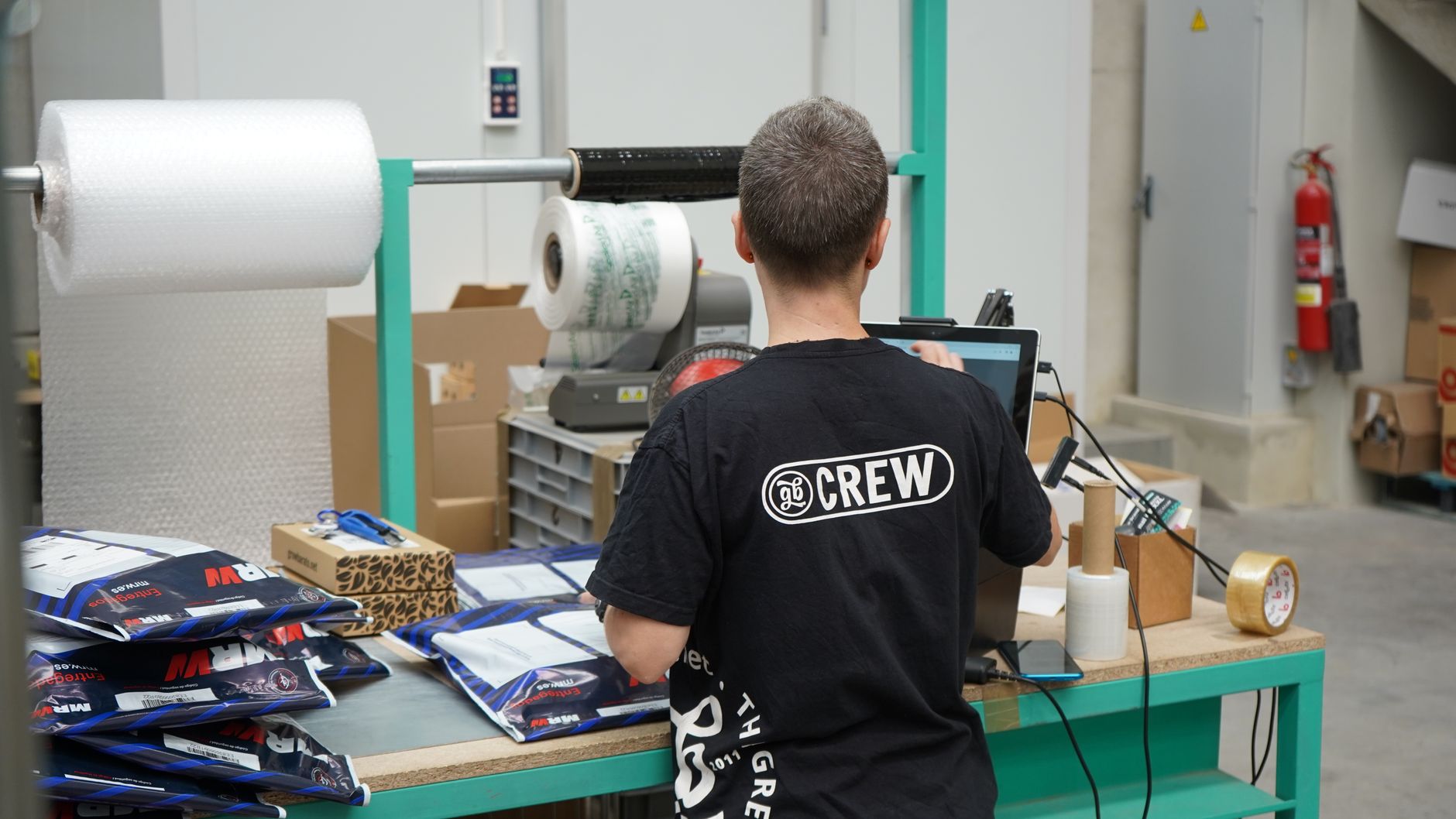
Cobot ROI in Baltimore comes from one place: the hours of laborer and freight, stock, and material movers, hand work that a collaborative robot takes off the floor. Those hours are priced at the local wage for this job, shown in the government wage data panel beside this text. The result is a range, because the hours a site can really offset depend on its own shift records.
The local labor pool is large. According to a third-party jobs estimate built on 2024 government wage data, about 26,380 people work in this occupation across the Baltimore-Columbia-Towson metro. That figure is a sizing estimate, not an official count, so use it to judge how deep the labor market is rather than to set your own numbers.
Nationally, the U.S. Bureau of Labor Statistics Occupational Outlook Handbook reports about 6,950,000 hand laborers and material movers jobs in 2024, with projected growth of 4 percent, or about 258,400 jobs, from 2024 to 2034. Slow growth means the pool of workers changes slowly, so a site should plan for the staff it has, not the staff it expects.
No verified headcount for a single Baltimore site was found for this page, so the page does not state a typical number of workers per site. The site assessment establishes that figure from your own shift records.
Where does the return come from in a Baltimore warehouse?
The return comes from three places. The first is hours of repetitive handling that a cobot takes off a shift. The second is overtime and temporary coverage used to fill open slots. The third is training time lost each time a worker leaves and a replacement learns the station. The robot addresses the first directly and the other two indirectly, through steadier staffing on the station it runs.
Turnover is the cost most sites underestimate. According to the U.S. Bureau of Labor Statistics JOLTS annual data, the all-industry hires rate was 3.3 percent in 2025, down from 3.4 percent in 2024, and the total separations rate was 3.3 percent in 2025, unchanged from 2024. JOLTS does not break out material-moving occupations, so these are all-industry rates. For the transportation, warehousing, and utilities group, a third-party data site citing BLS reports a hires rate of 2.50 percent for February 2026, against a long-term average of 3.60 percent.
A cobot does not remove the need for a trained person. It takes over the repetitive part of a station, so the people who stay can cover setup, exceptions, and quality checks. That split is where the offset comes from, and it is the part to verify against the site's own labor records.
Median hourly wage, Laborers and Freight, Stock, and Material Movers, Hand
$4,565
Monthly cost of one full-time worker in Baltimore, MD, at the median wage plus payroll costs (an estimate, not a quote).
How does the payback math work for a cobot lease?
Start with the weekly hours of laborer and freight, stock, and material movers, hand work the cobot will take over, measured on the station it will run. Multiply those hours by the local wage for this job from the panel. Add avoided overtime and avoided training time only where your records show them. That total is the yearly offset value.
Then compare the offset with the fixed robot lease payment, plus the service included in the lease. Payback is the point where cumulative offset covers the lease over its term. A longer term lowers each payment but ties the decision to the same hours for more years, so test the offset at low, expected, and high utilization before you choose a term.
The calculator on this page for cobot ROI in Baltimore is pre-filled for the city and returns a savings range, not a promise. Widen the range when hours are uncertain, and narrow it only after the site assessment has logged them.
Do cobots cut injuries on warehouse jobs?
The sector baseline is high. According to the U.S. Bureau of Labor Statistics, warehousing and storage (NAICS 493) recorded a total recordable case rate of 4.8 per 100 full-time workers in 2024. Cases involving days away from work, job restriction, or transfer ran at 4.1 per 100 full-time workers, and days-away cases alone ran at 1.5 per 100.
Sector fatalities rose to 32 in 2024 from 28 in 2023, according to the same BLS series. BLS notes a series break from 2023 data because of the NAICS 2022 change, so compare the 2024 count with care.
A cobot takes over repetitive lifting and handling, which is where many strain injuries start, but the sector rate does not prove a reduction at your site. Track the site's own recordable rate for a year before and after go-live, and treat any ergonomic gain as a measured result rather than a forecast in the lease case.
What changes the number up or down?
Utilization is the largest lever. A cobot that runs every shift on a steady station returns its full offset. A unit that waits for product or sits in fault recovery returns much less, even though its lease payment stays the same. Changes in product mix and layout move the repeatable share, and both should be tested before signing.
Adoption is rising. According to the International Federation of Robotics, US industrial robot installations reached 38,000 units in 2025 on a preliminary basis, up 11 percent from the prior year. Automotive remained the largest US user, at about 13,500 units, 1 percent below the year before. Industry news coverage of the same IFR data places the US eighth globally, up two places. Rising adoption shows that more sites run this equipment, but it does not change a local offset.
What are the risks to a cobot return, and how do you avoid them?
The main risks are low utilization, a late integration, unplanned downtime, a product change that cuts the repeatable share, and an overestimate of hours. Each one reduces the offset while the lease payment stays fixed. Most of them can be controlled before go-live.
Avoid them by starting small. Begin with one leased unit on the highest-volume station, and confirm the logged hours before adding another. Maintenance included in the lease keeps service inside the quote, and remote triage with on-site dispatch shortens fault time. Spare unit coverage keeps a critical station running during service. Our team handles deployment, integration, and training for the staff who will run the unit, so the offset starts at go-live rather than after a long fix period.
Set the review point in the lease case. After the ramp, compare the measured offset against the logged hours. If they match, plan a second unit. If they do not, check the share, the layout, and the fault record before blaming the equipment.
How long does it take from assessment to payback?
The timeline runs in sequence, and the slowest step is usually site readiness rather than the robot itself. The stages below set the order.
Payback comes after the ramp, not on the first day. The offset builds as the station reaches its logged hours, so set the business case to the ramp curve, not to peak output. Floor changes and shift changes both move the timing, which is why the assessment sets the timeline rather than a general estimate.
- Free site assessment and site mapping, with cycle times and reach recorded.
- Quote with a fixed robot lease payment and the service included, reviewed against the logged hours.
- Robot deployment and integration, with training for the staff who will run the station.
- Go live support during the ramp, with remote triage and on-site dispatch in place.
- Offset review at the end of the ramp, compared with the lease term and the payback point.
How do I get an exact figure from a free site assessment?
Bring records, not estimates. Useful inputs include shift logs for the task, cycle times for each station, the product list with case and pallet variations, a floor plan, the area's injury log, overtime records, and turnover counts for the job. The more measured the inputs, the narrower the savings range.
The assessment returns a site-specific range built from the logged hours, the local wage for this job, and a lease quote for the unit, the term, and the service plan. The fixed robot lease payment is quoted after the site assessment, and no lease figure appears on this page because it depends on those choices. We also offer lease financing programs for businesses that want to avoid upfront capital.
Ask for the offset at low, expected, and high utilization, with the assumptions written out. A proposal that gives one figure without the hours and the share behind it is guessing, and a careful reader should treat it that way.
Frequently asked questions
Put a robot to work in Baltimore.
We walk your site, learn the job, and recommend the unit that fits. Then we quote the lease, deploy it, and keep it serviced.
Sources
- US Bureau of Labor Statistics, Occupational Employment and Wage Statistics (OEWS May 2024)
- U.S. Bureau of Labor Statistics, Occupational Outlook Handbook: Hand Laborers and Material Movers
- U.S. Bureau of Labor Statistics, injury and illness data for warehousing and storage (NAICS 493)
- U.S. Bureau of Labor Statistics, JOLTS annual release
- International Federation of Robotics, US robot industry returns to double-digit growth
- City-Stats, laborers and freight, stock, and material movers, hand (third-party estimate)
- YCharts, US hires rate, transportation, warehousing and utilities (citing BLS)
- The Robot Report, US robotics industry saw double-digit growth in 2025 (IFR)
- Maryland Department of Planning, 2018 County Business Patterns, Baltimore County