
The short answer
Cobot ROI in Boston comes from the paid hours a robot takes over from laborer and freight, stock, and material movers work, measured against a fixed lease cost. The return is a range that depends on how much of the task is repeatable, how many shifts the cell runs and the lease quote, which follows a free site assessment. Treat any figure as an estimate until measured hours from your own floor confirm it.
Key takeaways
- The return comes from paid laborer hours the robot covers, not from a headcount cut.
- The share of the task that is fixed and repeatable sets most of the range.
- Shift count multiplies the hours saved, so a two-shift cell usually returns more than a single-shift cell.
- Repair response terms can matter as much as the lease cost.
- A free site assessment replaces the estimate with measured hours from your floor.
Run the numbers for your site
Auto-detected from your location - we use the real BLS wage here. Not right? Pick your city or state above.
What do you want to automate?
The cobot stacks the repetitive end-of-line pallets; your team handles changeover and QA.
What is cobot ROI in Boston and where does it come from?
Cobot ROI in Boston comes from hours. A collaborative robot arm, usually fixed at a station, takes over a share of repetitive handling work such as palletizing finished cases, tending a machine that loads and unloads parts, or packing at the end of a line. Every hour the robot covers is an hour that staff no longer have to fill with overtime, a temporary worker, or a person pulled off other work.
The return is a comparison between two sides. One side is the value of the hours the robot takes over, priced at the local wage for this job in the government wage data on this page. The other side is the fixed lease cost and the service that comes with it. When the first side is larger, the robot pays back, and the size of the gap sets how fast.
Savings are always a range here, never a promise. The low end assumes the robot covers a modest share of a task on one shift. The high end assumes a steady, repeatable cycle that runs on several shifts. The calculator on this page sets the range from your inputs, and the site assessment replaces those inputs with measured ones.
What does the Boston labor market look like for this work?
The job this page prices is Laborers and Freight, Stock, and Material Movers, Hand. The government wage data on this page gives the local wage for that job in Boston, so the labor side of the math rests on public figures. According to the Bureau of Labor Statistics, the Boston-Cambridge-Nashua area had about 25,810 people employed in this occupation in May 2023.
The area has since been redefined. The Bureau's May 2025 Boston release covers Boston-Cambridge-Newton, which includes five Massachusetts counties (Essex, Middlesex, Norfolk, Plymouth and Suffolk) and two New Hampshire counties (Rockingham and Strafford). A plant in the city and one in a suburb may draw on the same regional labor pool, so staffing pressure should be read at the regional level as well as the local one.
State data shows the manufacturing base where many cobot cells sit. According to the Bureau of Labor Statistics, Massachusetts manufacturing employment was about 229,700 in December 2025, with a 0.1% year-over-year change. Within the Greater Boston division, computer and electronic product manufacturing employed about 33,400 in December 2025, according to a Federal Reserve Economic Data series.
Median hourly wage, Laborers and Freight, Stock, and Material Movers, Hand
$5,127
Monthly cost of one full-time worker in Boston, MA, at the median wage plus payroll costs (an estimate, not a quote).
How is the cobot payback calculated?
The math has four inputs. The first is the hours of laborer and material-mover work the robot takes over each shift, measured in a site walk. The second is the share of that work the robot can realistically handle, since a cobot rarely takes every cycle. The third is the value of those hours at the local wage for this job, plus any overtime or open-shift hours the cell closes. The fourth is the lease cost over the term.
Payback is the point where the cumulative value of the hours covers the lease payments over the term. Because the hours and the share are both ranges, the payback is a range too. A fixed, repetitive cycle on two shifts sits near the favorable end of that range. Frequent changeovers and irregular loads sit near the other end.
The calculator counts only hours that the business already pays for or cannot staff. It does not add value for faster throughput or fewer injuries. Both matter, but they are harder to price honestly, and a planning case should hold up without them.
Which tasks can a cobot take, and how much of them?
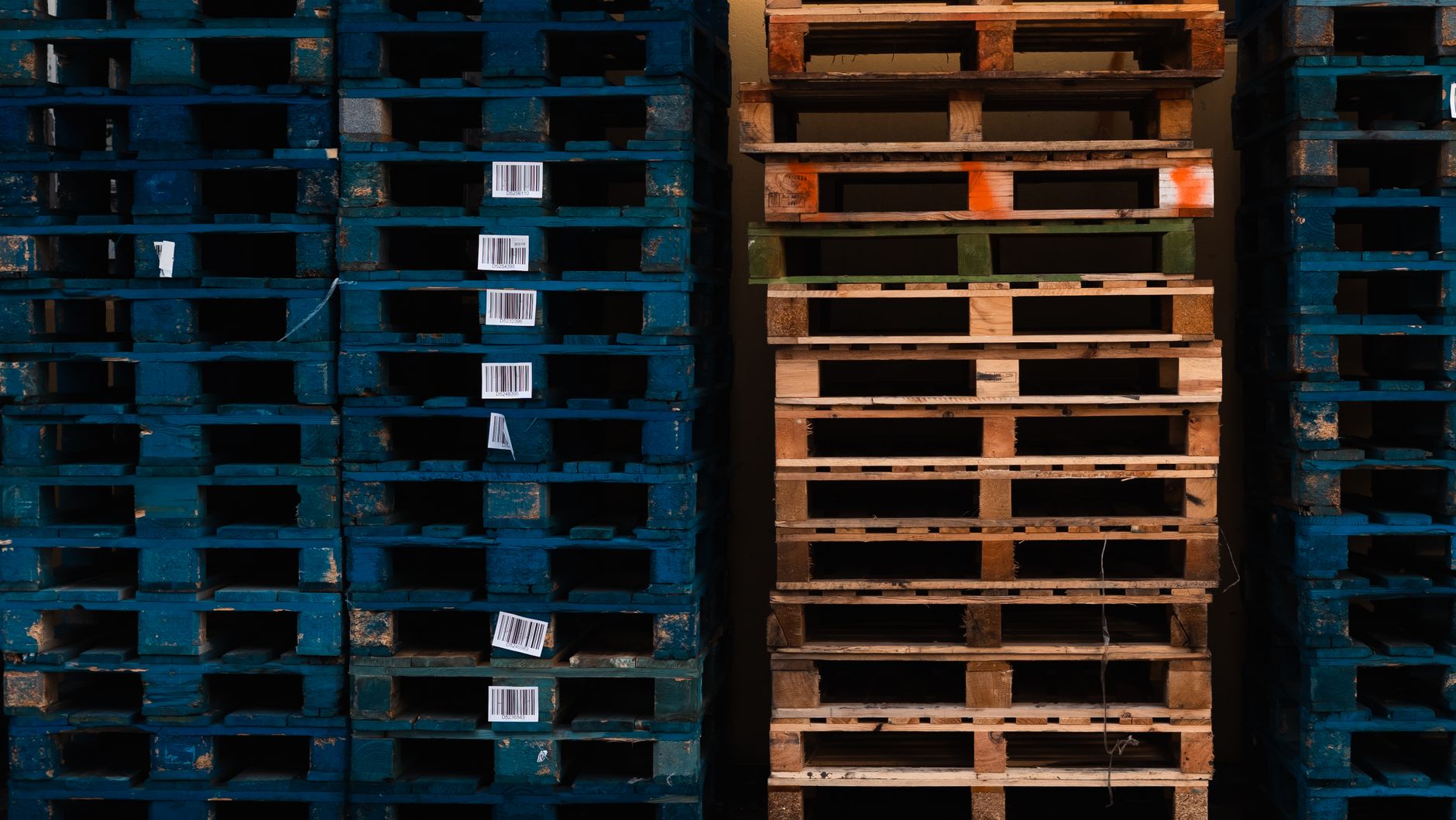
Cobots fit fixed-path, repeatable handling. The common fits are palletizing finished cases, machine tending for parts that load and unload on a set cycle, case packing and bagging, and end-of-line work where the same motion repeats through a shift. They are a weaker fit where every load differs, where packages are often damaged, or where a person must decide what to do next.
Most sites end up with a partial share. A robot may run the repeating cycle for most of a shift while a person handles infeed, exceptions and checks. That split is what the site assessment measures. It is why the table below shows what the robot takes over, not a full replacement of one job.
Ask for the share in writing, along with the assumptions behind it. A range you can defend in a budget meeting is worth more than one optimistic figure.
Are other plants adopting cobots?
Adoption is growing but remains a minority of new industrial robots. According to the International Federation of Robotics, collaborative robots made up about 10% of installations in 2023, while traditional robots made up about 90%. The figures cover installations across all industries, so they show direction, not what any single plant will return.
The better test is local and specific. Ask any integrator, including us, for references from plants with similar tasks, floor conditions and shift patterns. A reference that runs a palletizing cell on two shifts tells you more than a national adoption share.
Adoption also means the market has integration and service experience. Use it. Ask how the integrator handles a failed unit, a changed product and a floor layout change, since those events decide how the return holds up over time.
What are the main risks to the return, and how do you avoid them?
The biggest risk is an under-used cell. A robot that sits idle while parts are short, waits on a person to clear jams, or runs one shift when the plan assumed two returns less than the model predicted. Check that the cycle, staffing and material supply match the assumptions before the lease starts.
Injury data shows why task choice matters for safety as well as hours. According to the National Safety Council, transportation and warehousing had 23.6 days-away cases per 10,000 full-time workers, and the council named that industry the most at risk for days-away injuries. Handling-heavy work carries that exposure, so cell design, guarding and staff training belong in the return analysis, not after it.
Other risks are a poor task mix, staff who do not trust the robot, and slow repairs that leave a cell down. Each is addressed in the site assessment and in the service terms of the lease, covered below.
- Repeating cycle over a long shift
Cobot
Runs the same motion at a steady pace with no breaks, if the cell is supplied
Staff
Gets tired and needs breaks, but can slow down and speed up as the work requires
- Off-shift coverage
Cobot
Can run the cycle when no one is on the line, if the site plan allows it
Staff
Needs scheduling, breaks and supervision on each shift
- Irregular or damaged loads
Cobot
Struggles with loads it has not been set up to handle
Staff
Reads a damaged package, adjusts and decides what to do next
- Product changeover
Cobot
Needs reprogramming or new grippers for a new product
Staff
Adapts within a shift with little setup
- Quality judgment
Cobot
Repeats the same checks it was given, consistently
Staff
Notices what the checks miss and flags it
What should a Boston operator check before deciding?
Before any quote, check the inputs that move the number most. They are simple to gather, and they decide whether your range sits at the top or the bottom of what the calculator shows.
Then check what the lease covers. Ask for service response terms in writing, what happens during a repair, and who handles integration changes when the product or floor changes. A lower cost quote with slow repairs can return less than a higher cost quote with on-site dispatch.
How long does it take from assessment to payback?
The timeline runs in stages, and the length of each depends on the site. Plan it during the assessment rather than assuming a standard duration.
Payback is measured, not assumed. Track the hours the cell covers, and the overtime or open shifts it closes, for the first months after go-live. Compare them against the lease payments. A site that tracks its own hours can tighten its range quickly.
To get a precise figure, book a free site assessment. We walk the floor, time the task, map the cell and send a lease quote with the savings range the measured inputs support. The range will reflect your shifts and task mix rather than a generic average.
- Site assessment: task timing, floor mapping and the share of work the robot can take
- Quote: lease terms and service plan, set after the assessment
- Deployment and integration: install, connect to the line and test the cycle
- Staff training and go-live support on the floor
- Payback period: measured hours compared against lease payments
How does the lease and service work after go-live?
We pick the robot that fits the site, lease it through financing, deploy and integrate it, train the staff and service it nationwide. The lease is a fixed robot lease payment with the service terms written into the quote, so the cost you model is the cost you carry. Lease terms and financing options are confirmed in the quote.
Two things protect the return after go-live. The first is spare unit coverage, so one failure does not stop the cell. The second is remote triage and on-site dispatch, so a fault is diagnosed quickly and the right technician arrives. Ask for response times in writing before you sign.
Start small where it makes sense. A single leased unit on one line proves the hour figures before a second cell is added, and the measured results carry into the next decision.
Frequently asked questions
Put a robot to work in Boston.
We walk your site, learn the job, and recommend the unit that fits. Then we quote the lease, deploy it, and keep it serviced.
Sources
- US Bureau of Labor Statistics, Occupational Employment and Wage Statistics (OEWS May 2024)
- Bureau of Labor Statistics, Occupational Outlook Handbook: Hand Laborers and Material Movers
- Bureau of Labor Statistics, OEWS May 2023 table for Laborers and Freight, Stock, and Material Movers, Hand
- Bureau of Labor Statistics, Boston occupational employment and wages release
- Bureau of Labor Statistics, Massachusetts economy at a glance
- Federal Reserve Economic Data, Greater Boston computer and electronic product manufacturing series
- International Federation of Robotics, World Robotics 2024 press conference
- National Safety Council, 2026 injury fact sheet