
The short answer
Cobot ROI in Knoxville comes from the laborer and material mover hours a robot takes over at a station, weighed against the lease cost and the share of that work the robot can realistically complete. The calculator on this page shows a savings range for Knoxville, TN built on those inputs, and a fixed lease payment is quoted only after a free site assessment. Treat the range as an estimate, since floor layout, shift coverage and the share of repetitive work move it up or down.
Key takeaways
- Cobot ROI in Knoxville depends on the laborer and material mover hours the robot takes over, not on headcount alone.
- The share of each task a robot can complete reliably is the input that most often decides the result.
- Shift coverage sets how many hours a robot can offset, so a single day shift caps the benefit.
- The payback clock starts at go-live, after setup and a stabilization period, not at signing.
- Get the lease quote and a savings range from a free site assessment built on your own timed cycle.
Run the numbers for your site
Auto-detected from your location - we use the real BLS wage here. Not right? Pick your city or state above.
What do you want to automate?
The cobot stacks the repetitive end-of-line pallets; your team handles changeover and QA.
What is cobot ROI in Knoxville, and what return can a business expect?
Cobot ROI in Knoxville, TN is mostly a labor question. A collaborative robot arm earns its place when it takes repetitive handling work that would otherwise keep laborers and material movers busy across a shift. The return is the value of those hours, less the lease cost and any upkeep that stays with your site. The result is a range, never a promise.
Most businesses ask for one number. A more useful question is which tasks run at the station, how many hours each one takes, and how much of that time a robot can complete without a person standing by. Those three inputs decide whether the return is modest, solid or hard to reach. The rest of this page explains each one so you can check the calculator against your own floor.
Where does the return come from in a Knoxville warehouse or plant?
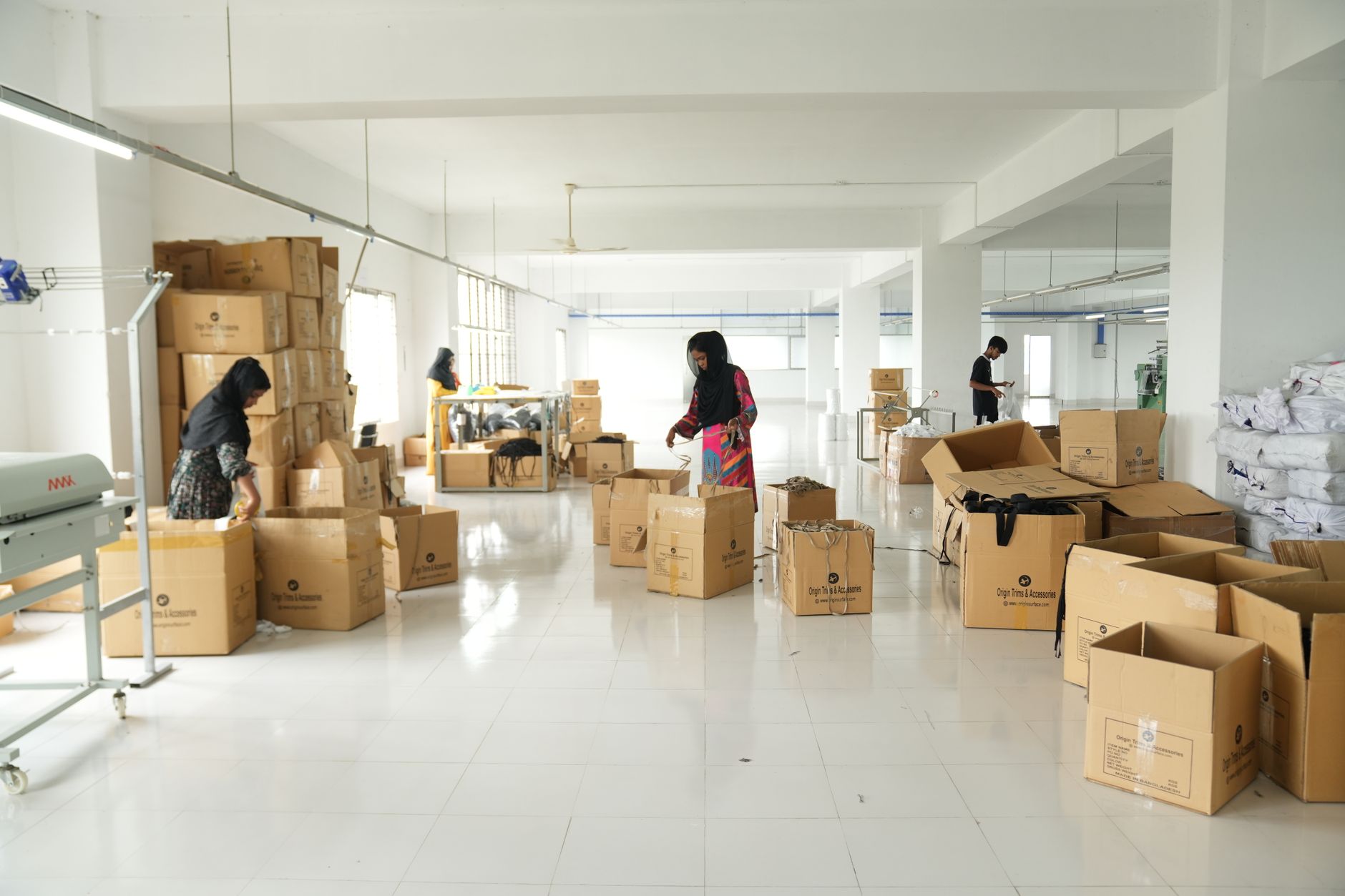
Cobots in material handling usually work at a fixed station. Typical jobs include palletizing cases, tending a machine, or moving parts off the end of a line. The motion repeats, stays within a known reach, and sits in one place, which is what makes a fixed arm practical. Mobile robots and floor machines follow other math and are assessed separately.
The national data shows how large this work is. According to the BLS Occupational Outlook Handbook, national employment for this occupation was 2,940,300 in 2025, projected to reach 2,991,900 by 2035. Adoption is growing as well. According to the International Federation of Robotics, collaborative robot installations in 2025 were about 66,000 units, about 11% of all industrial robot installations. A group of this size holds many repetitive stations, so one station is a reasonable place to test the math first.
Warehousing and storage is where much of this work happens. The BLS Industry Profile for NAICS 493 reports a 2024 total recordable case rate of 4.8 per 100 full-time workers. The same profile notes a series break starting with 2023 data, so year-to-year comparisons need care. A rate like this is a reason to review stations with repeated lifting, but it does not prove a robot will lower injuries at your site.

Median hourly wage, Laborers and Freight, Stock, and Material Movers, Hand
$4,186
Monthly cost of one full-time worker in Knoxville, TN, at the median wage plus payroll costs (an estimate, not a quote).
How does the ROI math work?
Start with hours. Take the laborers and freight, stock, and material movers, hand work done at the station and measure it in hours per shift and shifts per week. Multiply that by the share of the work a robot can complete reliably. Some steps still need a person for exceptions, restocking or inspection, so that share is almost never the whole job. The product is the labor the robot offsets, and the government wage data shown next to this page prices those hours for Knoxville, TN.
Then subtract the costs that continue after installation. These include the lease payment, the time a person spends supervising or clearing faults, and any consumables or upkeep the agreement does not cover. The difference, compared across the lease term, is the savings range. A robot maintenance service plan can cover upkeep, which removes one of the less visible costs, but confirm exactly what the quote includes.
The calculator runs this arithmetic with your inputs. Change the covered share and the result moves more than any other input. That is why the assessment times the real cycle rather than accepting an estimate. The hours table below shows the kind of breakdown the assessment produces.
What changes the number up or down?
Shift coverage matters most. A station that runs two or three shifts gives a robot more hours to work than one that runs a single day shift, and the offset scales with those hours. Feed rate matters next. If upstream or downstream equipment cannot supply the arm steadily, the robot waits, and the hours it offsets shrink.
Product variety pulls the number down. An arm that handles one product family at one station is simpler to justify than one asked to handle many packaging formats. Changeovers, fixture swaps and reprogramming take time that a quick estimate tends to miss. Floor layout adds install time too, especially when a station sits far from power or network drops.
Wage level changes the labor side of the math, but it does not change the physical work a robot can take over. Treat the local wage as a multiplier on the hours. A higher or lower wage scales the savings range, while the covered share and the shift count decide whether there is enough work to take.
What are the risks to the return, and how do you avoid them?
The biggest risk is overestimating the share of work the robot can do. Teams often price the whole station when only the repetitive steps are automatable. Avoid this by timing the full cycle, including exception steps and fault clearing, before accepting any savings range.
Downtime is the second risk. A stopped robot leaves the station unstaffed unless someone is trained to cover it. Ask how remote triage works, how fast on-site dispatch can reach you, and whether a spare or loaner unit covers repairs. These terms decide how much of the planned hours you actually keep.
The third risk is what happens to the people. If the staff who did the work move to other tasks, the hours do not turn into value unless there is a plan for them. Train the people who will watch the cell, and name who handles faults on each shift. The return depends on that handoff as much as on the hardware.
How many people do this work, and what do the national figures show?
The national figures are large and consistent. The BLS OEWS May 2023 estimate puts employment in this occupation at about 3.0 million, according to the BLS occupation profile for May 2023. O*NET, which draws on BLS data, reports 2,988,900 employed in 2024, projected to reach 3,033,100 in 2034, according to O*NET OnLine.
Knoxville-specific counts were not verified for this page. The government wage table for the Knoxville, TN metro area is in the panel beside this text, and that wage is the one the labor side of the calculator uses. We did not find a verified count of these workers at one Knoxville site, so the typical headcount on this page is set to the minimum of one until your site assessment confirms the real number.
Warehousing and storage employment is also tracked. According to FRED, which publishes BLS-based series from the Federal Reserve Bank of St. Louis, national NAICS 493 employment was about 1,861.8 thousand in 2024, up from 1,845.4 thousand in 2023. Turnover for this occupation was not verified, so this page does not rely on a turnover rate.
What is a realistic timeline from assessment to payback?
The path runs in phases. First comes the free site assessment, where the cycle is timed and the station is mapped. Next is the quote, then installation and integration, then training and go-live. The payback clock starts when the station runs steadily, not when the agreement is signed.
Length depends on site access, network and power, and how many stations are included. This page does not give one timeline for every site. Ask for a phased schedule in the assessment report that shows a date for each step and who owns it on your side.
Expect a stabilization period after go-live. Staff need time to handle exceptions, and throughput often needs adjustment before the arm runs at its planned rate. Judge the return on the stabilized weeks, not the first days, and compare those weeks against the hours in the original calculation.
How do you get a precise figure from a free site assessment?
The assessment replaces estimates with measured inputs. We time the cycle at the station, record shifts and coverage, map the floor, and check power and network at the location. The output is the labor offset and the lease quote in one report, with each assumption written out.
Bring what already exists: shift schedules, a recent throughput count, the list of tasks at the station, and any log of repeat faults or overtime. Having these ready shortens the visit and narrows the range. Missing data widens it, and the report will say which inputs were measured and which were assumed.
Ask the assessor to show which inputs drive the result and what happens if the robot covers less of the work than planned. A range you can test against your own records is worth more than a single figure. Once the numbers hold up, the lease quote follows, with service, training and repair terms listed.
Is a cobot the right tool for this kind of work?
A cobot fits steady, repeatable handling at a fixed spot. It does not fit work that changes every hour, travels across a building, or needs judgment about what to do next. A person handles variation and problem solving well. A fixed arm repeats the same motion through a full shift without tiring, and that is the trade you are making.
If the work moves around the site, a mobile system is a separate product. Autonomous mobile robots and floor machines have their own assessment, so do not let a fixed-arm estimate stand in for them. If the station is repetitive and the hours are measurable, a cobot is worth testing with one unit before any wider plan.
Start small. One leased station gives you real cycle data, a working fault process and a measured offset. That data lets the calculator swap estimates for measured hours, which is the whole point of the test.
Frequently asked questions
Put a robot to work in Knoxville.
We walk your site, learn the job, and recommend the unit that fits. Then we quote the lease, deploy it, and keep it serviced.
Sources
- US Bureau of Labor Statistics, Occupational Employment and Wage Statistics (OEWS May 2024)
- BLS Occupational Outlook Handbook, Hand Laborers and Material Movers
- BLS OEWS May 2023, Laborers and Freight, Stock, and Material Movers, Hand
- O*NET OnLine, 53-7062.00 Laborers and Freight, Stock, and Material Movers, Hand
- BLS Industry Profile, NAICS 493 Warehousing and Storage
- FRED, BLS-based NAICS 493 employment series
- International Federation of Robotics, President's Report 2026
- BLS OEWS occupational wage data