

The short answer
Cobot ROI in Las Vegas comes from the hours of laborers and freight, stock, and material movers, hand work that a cobot takes over at a fixed station, less the fixed lease payment and running costs. The savings range depends on how much of that repeat work a cobot can realistically take on your floor, not on how many machines could fit. Use the calculator on this page for a range, then get a lease quote after a free site assessment.
Key takeaways
- The return comes from repeat labor hours a cobot takes over, not from headcount cuts alone.
- Savings are ranges that move with shifts, cycle time and the share of work the cobot can do.
- Las Vegas metro logistics employment more than doubled between 2015 and 2025, so the labor base for this work is large.
- The lease cost comes from a quote after a free site assessment, not from this page.
- Downtime is the main risk to plan for, because idle hours add nothing to the offset.
Run the numbers for your site
Auto-detected from your location - we use the real BLS wage here. Not right? Pick your city or state above.
What do you want to automate?
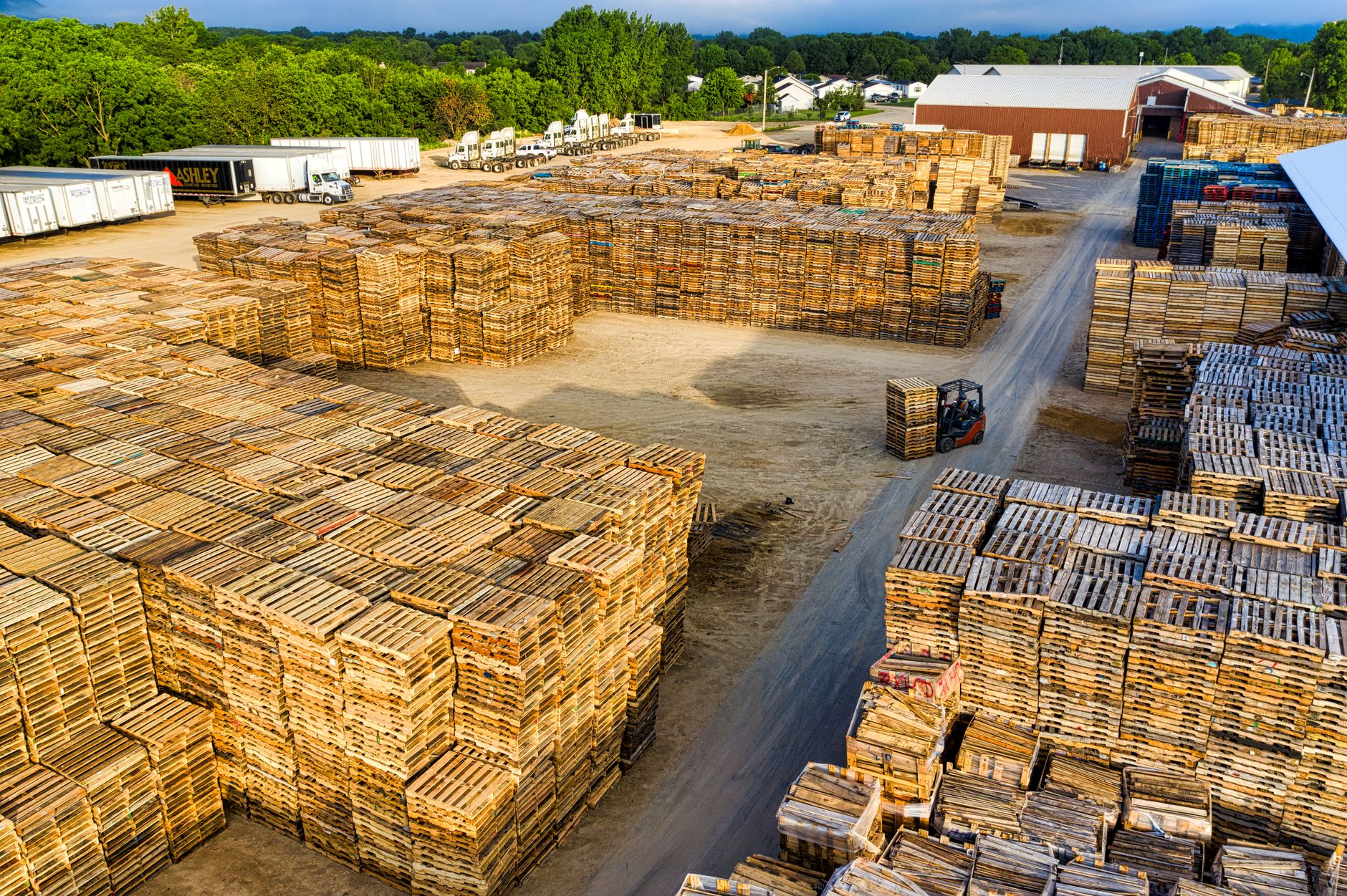
The cobot stacks the repetitive end-of-line pallets; your team handles changeover and QA.
How does cobot ROI in Las Vegas work?
Cobot ROI in Las Vegas is a simple comparison. On one side is the labor the cobot takes over: repeat hours of laborers and freight, stock, and material movers, hand work that would otherwise be done by people. On the other side is the fixed lease payment for the cobot, plus the cost of keeping it running. The gap between the two, counted over the months the cell runs, is the return.
This page values the labor side with the government wage data for this job, shown in the panel beside the text. The calculator turns hours, share of work and lease terms into a savings range. A range is the honest output here, because a single number would hide the assumptions that matter most.
Why does Las Vegas suit cobot labor?
Las Vegas has a large logistics base. According to the Nevada Governor's Office of Economic Development (GOED), the Las Vegas metro had 81,093 jobs in its logistics and operations sector in 2025, up from 37,934 in 2015. The October 2024 edition of the same table listed 80,992 jobs for 2024, so the level was already near that figure before the latest update.
The sector is broader than warehouse work alone, so these jobs are not all laborers. Still, it shows how much freight and goods handling sits in the local economy. Statewide, GOED reported 123,065 jobs in this sector in 2025. A Las Vegas news report citing GOED data said Nevada added 19,400 jobs in the sector from 2019 to 2023, reaching 97,700 employed across the state.
For a cobot, this matters because repeat material handling is common across many local employers. A cobot that fits one station on one site can often be planned in the same way at another site with similar work.
Median hourly wage, Laborers and Freight, Stock, and Material Movers, Hand
$4,322
Monthly cost of one full-time worker in Las Vegas, NV, at the median wage plus payroll costs (an estimate, not a quote).
What does the local wage for this job mean for the math?
The labor side of the math uses the local wage for this job, which the government wage data panel on this page shows for Las Vegas. Nationally, the Bureau of Labor Statistics counted about 7.0 million hand laborers and material movers in 2024, and laborers and freight, stock, and material movers, hand at 2,988,900 jobs nationally, according to its Occupational Outlook Handbook.
A national count tells you the job is common, not what it costs in your building. For that, use the wage panel and your own hours. The calculator multiplies the hours a cobot takes over by that wage, then subtracts the fixed lease payment and running costs. Savings figures are always priced on this one job, so a cobot does not earn credit for work that is not in this category.
How do labor hours offset the lease cost?
The offset starts as a count of hours. Begin with the repeat hours per shift that the cobot will run at its station, then multiply by the shifts per year it runs. A cell that runs two shifts takes over twice the hours of one that runs a single shift, provided the work is there to take. Those hours are then valued at the local wage for this job.
Subtract the fixed lease payment for the same period, plus service and running costs, and you have the net. Payback is the point where the cumulative net turns positive. Hours that a person still needs to supervise, check or reload do not count as offset, so the net is always smaller than the raw hours suggest.
- Repeat motion at a fixed station
Cobot
Holds the same cycle from shift to shift, provided it is maintained
Staff
Works steadily but tires, takes breaks and varies between people
- Irregular or damaged loads
Cobot
Needs a fixed pattern and can stop when items fall outside it
Staff
Adjusts by feel, sets damaged items aside and makes exception calls
- Changeovers
Cobot
Needs programming or setup time for each new product
Staff
Switches tasks quickly and can learn a new product in the same shift
- Nights and weekends
Cobot
Runs when the cell is scheduled, with supervision
Staff
Needs shift coverage, overtime and breaks
- Turnover and training
Cobot
Keeps the same cycle when staff change, but still needs someone to supervise
Staff
Each new hire needs training and time to reach full speed
- Cost basis
Cobot
Fixed lease payment plus running costs
Staff
Wages plus the cost of scheduling, overtime and turnover
What changes the number up or down?
Five factors move the range most: shifts per day the cell runs, cycle time per unit, how often the product or pallet pattern changes, how much idle time the cell has, and the length and terms of the lease financing. Each one changes either the hours the cobot takes over or the cost of holding it.
Changeovers deserve close attention. A cell that runs one product all week shows a stronger result than one that switches setups several times a shift, because each switch costs time that never appears as offset. Ask for the changeover count at the site assessment, and ask for the share of shifts that will run the same product.
What are the risks to the return and how do you avoid them?
The biggest risk is downtime. A cobot that waits for a pallet, a part or an operator takes over no hours, and the lease payment still applies. Plan cover for planned outages, and set a clear rule for who clears a stopped cell and how fast.
Safety is the second risk. According to the Bureau of Labor Statistics, private industry recorded 2.3 cases per 100 full-time equivalent workers in 2024, down from 2.4 in 2023. A secondary summary of the same agency's data puts warehousing at 4.8 per 100 full-time workers, but that figure could not be confirmed against the primary release. Fewer hours of repeat handling can help, but only if the cell has its own risk assessment and guarding plan before go live.
How long does it take from assessment to payback?
The timeline runs in stages: a free site assessment, a lease quote, the financing decision, installation and integration, staff training, then go live support. Each stage depends on floor work, power, network access and product samples, so the calendar is set in the quote for your building, not by a standard number of weeks.
Payback starts at go live, not at signing. Count from the day the cell runs its planned hours, because setup time produces no offset. A simple check is to compare the offset earned in each month with the fixed lease payment for that month. When offset exceeds the payment, the cell is paying back.
Does staff turnover change the cobot case?

Turnover raises the hidden cost of manual repeat work. Each new hire needs training and time to reach full speed, and a cell run by a steady operator avoids much of that churn. A secondary industry analysis gives typical annual warehouse turnover of 20 to 60 percent, a range that could not be confirmed against a primary dataset.
A cobot does not remove the need for people. It takes the repeat hours off the schedule, so staff can cover inspection, changeovers and exceptions. When hiring is slow, the cobot covers hours that would otherwise go unfilled, which can make the lease case clearer than the wage math alone.
How do I get an exact figure from a free site assessment?
We pick the cobot for the site, lease it through financing, deploy and integrate it, train your staff and service it nationwide. The assessment starts with the work itself: which station, which cycle, how many shifts, and what the current hours look like in your timecards and production logs.
Bring shift schedules, cycle times, changeover counts and product or pallet samples if you have them. The assessment maps the floor, checks power and network access, and sets the share of work the cobot can take. The fixed lease payment comes in a quote after that assessment, and it is the figure to compare against the savings range from the calculator.
Frequently asked questions
Put a robot to work in Las Vegas.
We walk your site, learn the job, and recommend the unit that fits. Then we quote the lease, deploy it, and keep it serviced.
Sources
- US Bureau of Labor Statistics, Occupational Employment and Wage Statistics (OEWS May 2024)
- U.S. Bureau of Labor Statistics, Occupational Outlook Handbook: Hand Laborers and Material Movers
- Nevada GOED, Logistics and Operations sector table (November 2025)
- Nevada GOED, Logistics and Operations sector table (October 2024)
- Las Vegas local news report citing Nevada GOED data (December 2023)
- U.S. Bureau of Labor Statistics, Survey of Occupational Injuries and Illnesses, 2024
- Chalmers University of Technology research paper citing International Federation of Robotics data (2023)
- Secondary summary of BLS warehousing injury data (unverified)
- Secondary industry analysis on warehouse turnover (unverified)