
The short answer
Drone ROI for bridge inspection firms comes mainly from fewer people working at height or over water on the deck underside, bearings and steel, plus shorter field days. According to Oregon DOT field tests, in-field inspection time was estimated to fall about 20 percent on suitable bridges, but office time rose about 30 percent and the net personnel time reduction was estimated at 10 percent. The return is therefore a savings range that depends on where flight is allowed, and a lease quote follows a free site assessment.
Key takeaways
- Most of the return comes from fewer people working at height or over water on the deck underside and steel.
- Oregon DOT field tests estimated a net personnel time reduction of 10 percent, so plan on a range rather than a windfall.
- Flight authority decides how much of a bridge a drone can photograph, and that share sets the offset.
- Office time for flight planning and imagery review grows with drone work, so count it in the savings math.
Run the numbers for your site
Pick your city or state for a real regional number - we use the real BLS wage there. (On the live site this auto-detects from your location.)
What do you want to automate?
The unit runs the repetitive patrol and watch; guards handle the judgment calls.
What is drone ROI for bridge inspection firms?
Drone ROI for bridge inspection firms is the labor and time a drone takes off the inspection, measured against what it costs to lease and fly. The gain is clearest on the deck underside, the bearings and the steel members, which a person would normally reach by lift, rope or boat. Where flight rules allow, a drone photographs those parts from safe positions, so fewer inspectors must work at height or over water.
The return is not the same on every structure. A short overpass over dry ground with clear sightlines gives a drone wide room to work. A long river crossing with deep water and few launch points does not. This page explains where the return comes from, how the savings range is built, what moves it up or down, and how to get a figure for your own bridges.
Drones are no longer unusual on public bridge work. A 2016 AASHTO survey reported 35 of 44 responding state DOTs used drones, with 20 incorporating them into daily operations and 15 testing them. Bridge inspection was one of several uses. The survey is old, but it shows the method is established enough to plan around.
How many bridges in the US need inspection?
The Federal Highway Administration's 2025 National Bridge Inventory lists about 624,193 bridges in the United States, excluding Guam. Of those, 41,685 are rated in poor condition. The American Road and Transportation Builders Association's 2025 Bridge Report, drawing on the same inventory database, puts bridges in poor condition at 6.7 percent of the 2025 inventory.
Inventory size tells you the potential pipeline, not your share of it. A firm's return depends on how many structures it inspects each year, how many of those fall in airspace where flight is allowed, and how much of each structure a drone can photograph from safe positions. Count those three numbers before any lease discussion.
A repeatable photo record from each visit helps compare one inspection to the next, which is most useful on structures already flagged for attention.
Median hourly wage, Security Guards
$4,317
Monthly cost of one full-time worker, at the median wage plus payroll costs (an estimate, not a quote).
Where does the time savings come from on a bridge?
The clearest published example is a 2016 estimate for a standard bridge deck inspection, reported in press material from the American Association of State Highway and Transportation Officials. It took eight hours with a crew of four and heavy equipment. With a drone, two people did the work in about two hours. That is one job from an older period, so use it as an illustration of the mechanism, not a forecast.
Oregon DOT field tests from 2015 to 2017, reported in 2021, give a more sober view. The study estimated in-field inspection time falling about 20 percent on suitable bridges, while office time for flight planning and data processing rose about 30 percent. The net personnel time reduction was estimated at 10 percent. Plan around that net figure, not the field figure alone.
The gap between field and office time is the central lesson. Savings look large when you measure only the day on site, and smaller once imagery review and planning are counted. A firm that sizes its return on field hours alone will overstate it.
| Task | Today | With a robot |
|---|---|---|
| Deck underside inspection | about 8 hours with a crew of four (2016 example) | about 2 hours with two people (2016 example) |
| In-field inspection time on suitable bridges | the baseline field day | estimated about 20 percent less (Oregon DOT) |
| Flight planning and data processing | the baseline office load | estimated about 30 percent more (Oregon DOT) |
| Net personnel time | the baseline | estimated about 10 percent less (Oregon DOT) |
Hour figures come from a 2016 deck inspection example reported in AASHTO press material, and from Oregon DOT field tests run from 2015 to 2017 and reported in 2021. Results vary by structure.
How does the savings math work?
The calculator starts with the hours a drone takes over on each inspection, mainly time spent at height or over water on the underside and steel. It then subtracts the office hours the drone adds for flight planning and imagery review, since the Oregon work shows that office time grows. Bridge inspectors do a different job from security guards, and this page never puts a value on inspector time. The labor side is priced on the watch, document and monitor hours the drone takes over, at the government wage data for Security Guards shown beside this text, because that is the labor reference the calculator uses.
The second term is the share of work a drone realistically takes. Not every element qualifies. Drones handle surfaces visible from safe positions, while hands-on tests and close verification still need a person. Multiply the offset hours by that share, then net the result against the lease. The lease is quoted after a site assessment, not estimated on this page.
The result is a savings range. Two firms with the same bridges can land at different points in that range, depending on their waiver status and their office load. The range is the honest output, and a single point figure would hide the assumptions that matter.
What changes the number up or down?
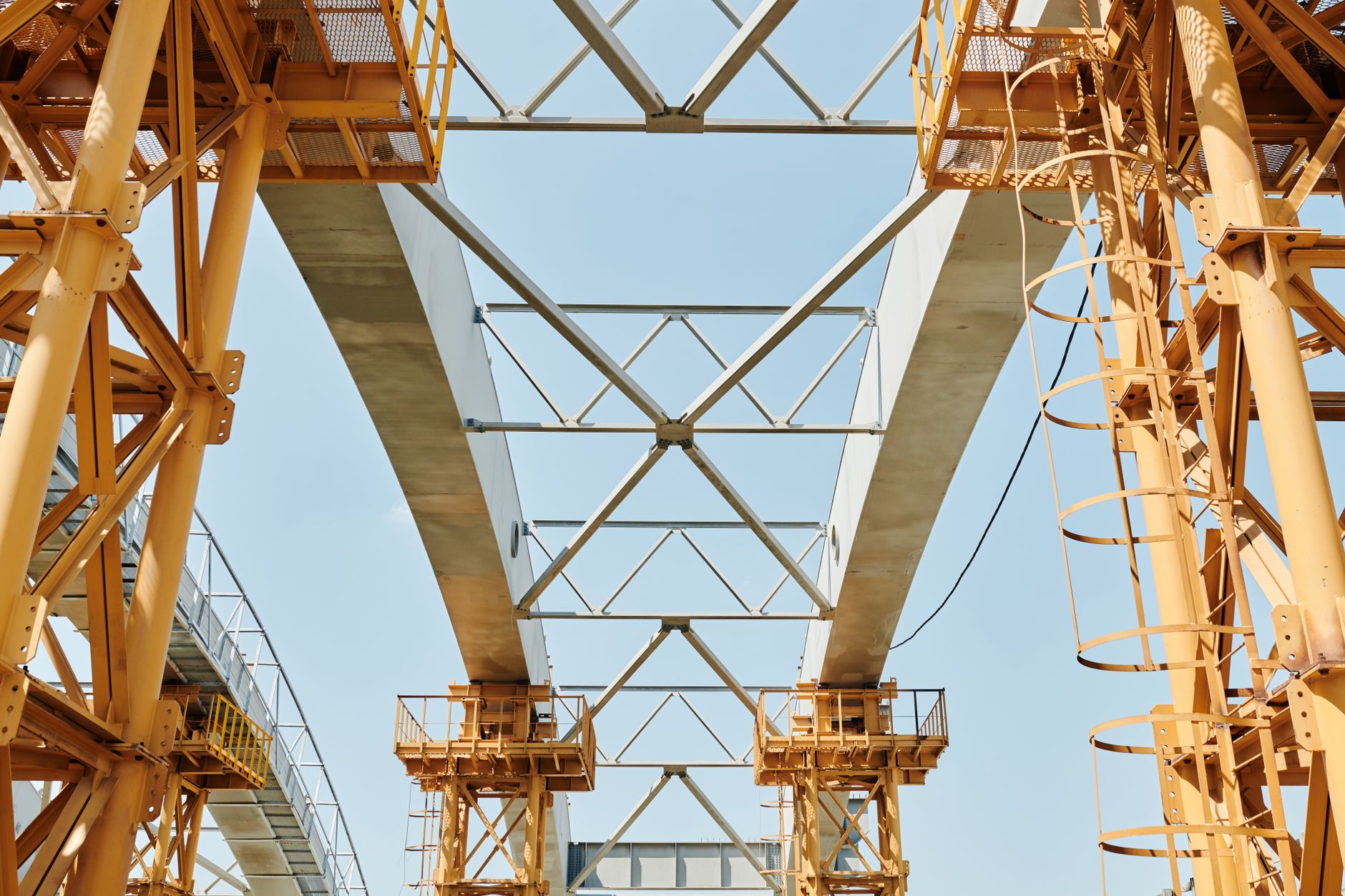
Bridge geometry and access move the figure most. A short structure with clear sightlines and no traffic beneath gives the drone wide room and few hazards. A long span over deep water, with limited launch points, narrows the drone's share and can push the return down. Wind and rain also cut usable flight days, which matters more in exposed locations.
Flight authority is the second driver. Where a waiver or a valid operation covers the structure, more of the deck can be photographed from the air. Where it does not, the drone's share of the job falls, and so does the offset. The crew size and access equipment you already use set the labor side, so record both before the assessment.
The checklist below lists the items to confirm before a quote. Each one moves the range, and most can be checked from your own inspection records.
What are the risks to the return and how do you avoid them?
The safety case is the strongest part of the return, but it is not automatic. According to the Bureau of Labor Statistics, construction had 1,034 private-sector workplace deaths in 2024, and falls, slips and trips caused 389 of them, about 38 percent. Of those falls, slips and trips deaths, 95.9 percent were falls to a lower level. The construction fatality rate was 9.2 per 100,000 full-time equivalent workers, down 0.4 from 2023.
The same BLS review reports nonfatal cases. Construction recorded 30.0 falls, slips and trips cases with at least one day away from work per 10,000 full-time workers, against 22.6 for all private industry. Falls to a lower level ran 13.9 for construction against 4.1 for all private industry. Those figures are the reason to keep people off exposed positions where a drone can capture the same photography.
Regulation is the main constraint on the return. The FAA granted North Carolina DOT a statewide waiver in October 2020 for bridge inspection without visual observers, with the drone kept 50 feet from the bridge and within 1,500 feet of the pilot. A Chicago firm received a Part 107.31 BVLOS waiver in 2021 tied to bridge sites. We did not find a current source on changes to those rules, so confirm their status before committing.
- Confirm flight authorization for each structure before the quote, since authorization limits the share a drone can cover.
- Keep people on the deck and over the water in the plan, because a drone does not remove the need for hands-on verification.
- Count office time for planning and imagery review, which grows as drone work grows.
Drone or inspector: where does each win?
A drone wins on positions a person must reach by lift, rope or boat, on repeatable photo records, and on keeping people off exposed steel. An inspector wins on touch, on judgment about a defect that needs closer examination, on weather that keeps the drone grounded, and on the record and signature that the inspection requires.
Most firms end up with a mixed crew. The drone shoots the underside and the steel, the inspector reviews the imagery and marks what needs hands-on work, and the crew carries out the close tests. The table below compares the two point by point.
- Access to the deck underside
Drone
Photographs from a safe position with no lift or scaffold needed for the images
Staff
Reaches the surface by lift, rope or boat, and can touch it
- Weather tolerance
Drone
Grounded by high wind, rain and some low visibility
Staff
Works in more conditions, with protective gear and a longer day
- Repeatable photo record
Drone
Same flight path and camera angles on each visit
Staff
Varies with the inspector and the access point
- Hands-on tests
Drone
Cannot sound concrete or check a bearing by touch
Staff
Performs these tests directly
- Judgment on defects
Drone
Flags areas for review but does not decide severity
Staff
Decides severity and the next step
- Sign-off and paperwork
Drone
Supplies imagery for the record
Staff
Carries the inspection record and the signature
What is a realistic timeline from assessment to payback?
The path runs in stages. The site assessment comes first, reviewing bridge types, flight authority, launch points and the inspection calendar. A pilot on a small set of structures follows, to measure the real offset rather than a desk estimate. The savings range is firmed up from that pilot, and payback arrives when accumulated offset covers the lease and the added office time.
Expect the first season to be a learning period. Crews learn the flight workflow, the imagery review and the office load, and early visits take longer than later ones. We handle deployment and integration, train the staff who fly and review, and service the drone nationwide, so the first season goes to the bridges rather than the setup. Payback depends on how many structures a year the drone can cover, which is why the pilot matters.
How do I get a precise figure from a free site assessment?
A precise figure comes from your own structures. Bring the list of bridges you inspect, with type, span, clearance, traffic below and water conditions. We check flight authority for each one, estimate the share of the work a drone realistically takes, and convert the offset hours into a savings range. The pilot then tests those assumptions before any full rollout.
We are a US commercial robot integrator. We pick the right robot for the site, lease it through financing, deploy and integrate it, train your staff and service it nationwide. The lease payment is quoted after the free site assessment, so the return and the cost come to you together, with no hidden fees, before you commit.
Frequently asked questions
Want a drone at your bridge inspection firm?
Tell us about your site. We will recommend the robot, quote the lease, and keep it serviced.
Sources
- US Bureau of Labor Statistics, Occupational Employment and Wage Statistics (OEWS May 2024)
- Federal Highway Administration, 2025 National Bridge Inventory
- American Road and Transportation Builders Association, 2025 Bridge Report
- Oregon DOT drone field test study, reported 2021
- AASHTO state DOT drone press material, 2016, via Mass Transit
- Bureau of Labor Statistics, falls, slips and trips in construction (2024)
- AASHTO Journal, FAA waiver for North Carolina DOT bridge inspection
- Unmanned Systems Technology, Chicago BVLOS waiver for bridge inspection (2021)