
The short answer
Drone ROI for insurance claims adjusters comes mainly from fewer ladder climbs and faster exterior imaging during storm surges, while adjusters keep judgment and sign-off on every file. The return is a range that depends on inspections per week, the share of work a drone can document without a roof walk, and the lease cost quoted after a free site assessment. Vendor-reported figures put roof capture at about 5 to 15 minutes per roof, but no independent time study was found, so the model should be tested on your own files first.
Key takeaways
- Drone ROI for insurance claims adjusters is mostly labor and speed on high-volume storm days.
- Vendor-reported capture times of about 5 to 15 minutes per roof need local testing before you rely on them.
- The share of files a drone can document without a roof walk moves the range more than any other input.
- Night flight can extend the properties covered per period, but airspace and crew rules still apply.
- Adjusters keep judgment and sign-off, so review hours stay in the model.
Run the numbers for your site
Pick your city or state for a real regional number - we use the real BLS wage there. (On the live site this auto-detects from your location.)
What do you want to automate?
The unit runs the repetitive patrol and watch; guards handle the judgment calls.
What return can insurance claims adjusters expect from drone ROI?
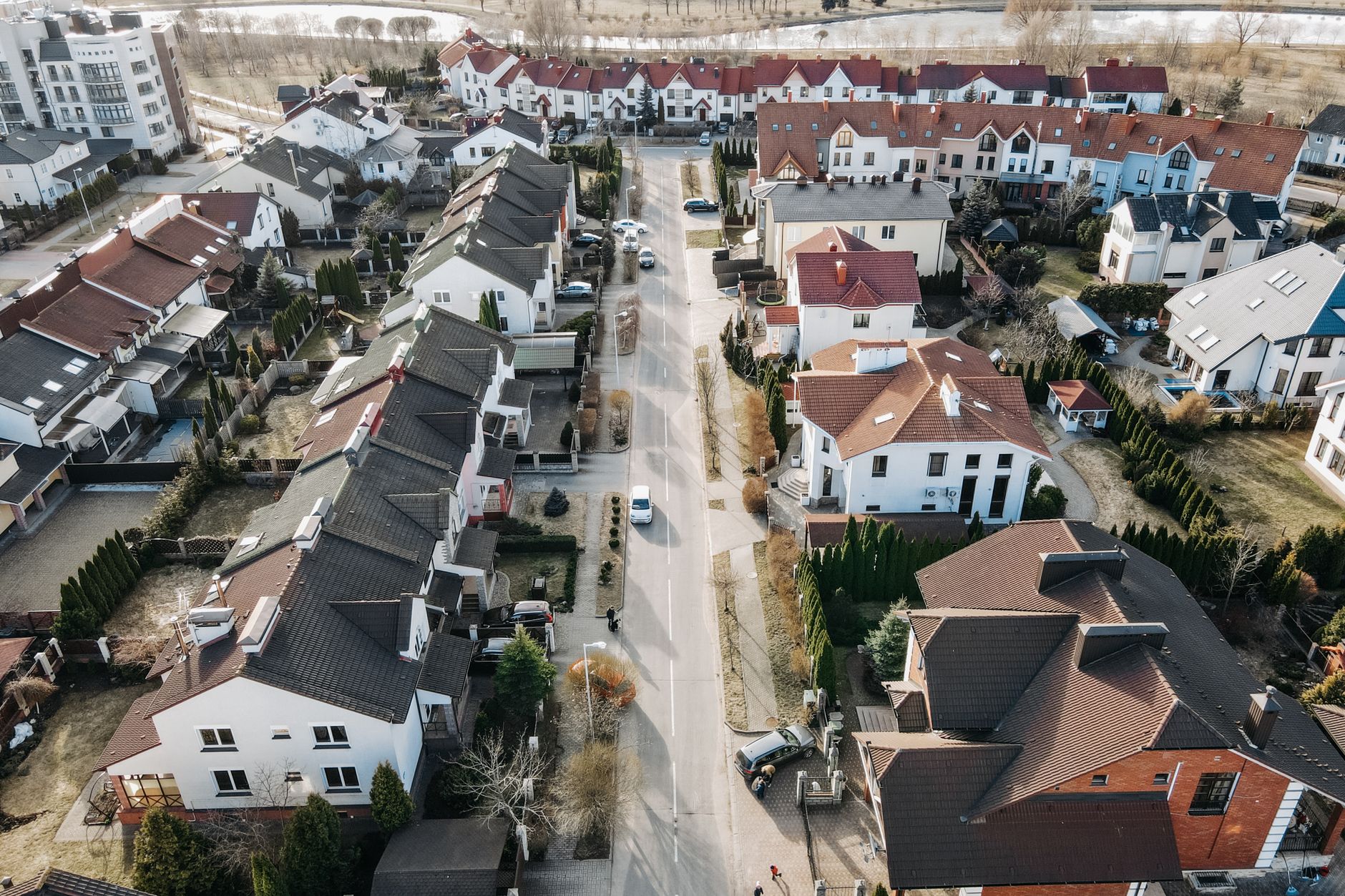
Drone ROI for insurance claims adjusters is mostly a labor and speed return. A drone flies over the roof and exterior of a damaged property, captures imagery and measurements, and hands the adjuster a file that would otherwise need a ladder crew or a long site visit. The return shows up on high-volume days after a storm, when the same team has to move more files through the same week.
Expect a range, not a fixed savings figure. The number depends on how many properties your team inspects each week, how many of those can be documented from the air, and what the lease costs once a site assessment sets the scope. The sections below cover where the return comes from, how the calculator works, what moves the number, and how to get a precise figure.
How heavy is the storm claim load?
Severe weather keeps the workload high. The Insurance Information Institute reports in its April 2026 issues brief that U.S. insured losses from tornadoes, hail and other severe storms in 2025 marked the third straight year at that scale. Hail alone accounts for as much as 80% of severe convective storm claims in a given year, and it is the damage type that depends most on roof and exterior imaging.
Global figures point in a mixed direction. Business Insurance reported, citing an industry estimate, that global insured catastrophe losses in 2025 were 24% lower than in 2024. Estimates differ by source and method, so treat these as planning context, not a forecast of your own storm season.
For an adjuster team, the operational issue is clustering. Claims arrive in waves after a single event, and the file count can jump well above a normal week. Anything that shortens the site visit matters most in those waves, when the limit is how many people can get onto a roof.
Median hourly wage, Security Guards
$4,317
Monthly cost of one full-time worker, at the median wage plus payroll costs (an estimate, not a quote).
Where does the time savings come from?
The clearest independent result is a 2017 test reported by Claims Journal. Automated drone roof areas came within about 0.6% of manual measurements across 13 roofs. The practical effect is that the measurement is captured from the air once, instead of being taken again on a ladder.
Time claims mostly come from vendors. A drone manufacturer's enterprise interview describes complete inspections in about 5 to 15 minutes per roof on a single battery, compared with hours previously. That is capture time, not a closed file, and it does not include the review that follows.
No independent study of drone time savings for property claims adjusters was found. A 2016 Claims Journal piece reported insurers paying around 40 to 50 percent of prior spend for roof inspections, and noted that quality assurance adjusters were still needed. That figure comes from an early vendor era and was not independently verified, so use it as a direction, not a benchmark.
No published headcount per site was found for drone inspection work. The night waiver conditions described in the section on night flight call for a pilot and a visual observer, so two people is the working assumption for one flight crew. Your own staffing will set the real figure.
How does the ROI math work?
The calculator works in hours. It takes the hours a drone takes over for each inspection, multiplies them by the number of inspections in a period, and then applies the share of those hours the drone can realistically cover. The result is the labor side of the return.
Labor is priced as security-guard-type work. The drone takes this kind of work off the adjuster team's plate: time walking exteriors, photographing, and documenting damage from ground level and from the air. The calculator prices those hours at the government wage data for security guards shown beside this text. Adjuster time itself is not priced here, because judgment and sign-off stay with the adjuster.
The lease cost is then set against the labor offset. A fixed robot lease payment, quoted after a site assessment, gives the second half of the math, and the output is a savings range. The range is wide on purpose, because the share of work a drone realistically takes changes with property type, weather and how often the team can fly.
The calculator comes pre-filled for this industry, but the inputs that matter most are yours: inspections per week, the share of files that need a roof walk anyway, and how many flights your locations allow in a day.
Drone or adjuster on the roof: where does each one win?
A drone does not replace a trained adjuster on site. It wins on repeatable exterior capture and speed. The adjuster wins wherever judgment, access and interior conditions matter. The comparison below is meant to set the scope of each role, not to rank the two.
- Roof access after storm damage
Drone
Captures roof planes without a ladder, weather permitting
Staff
Can walk the roof, check decking and find soft spots a camera misses
- Roof measurements
Drone
Automated roof area from imagery, close to manual in one 2017 test
Staff
Manual measurement is slower, but the adjuster can confirm what the image shows
- Time per roof
Drone
About 5 to 15 minutes of capture, vendor-reported
Staff
Takes longer per roof once a crew climbs and sets up
- Interior and safety conditions
Drone
Cannot enter the structure
Staff
Can judge interior water, mold and unsafe conditions
- Hours of operation
Drone
Can fly at night under the rules described above
Staff
Works within crew hours and daylight
- Judgment and sign-off
Drone
Produces images and measurements, not coverage decisions
Staff
Makes the call and signs the file
Can drones work at night after a storm, and what rules apply?
Night flight can extend the number of properties examined in a given period. According to Roofing Contractor, the Property Drone Consortium, a group of insurance carriers and roofing leaders, obtained a 2018 FAA night waiver. Its conditions were a visual observer, anti-collision lighting on the platform, and Class G airspace, and a consortium co-chair said night flight extends the number of properties that can be examined in a given period.
The rules have changed since then. Pilot Institute reports that Part 107 was amended in January 2021 to permit routine night small-drone operations, and that night waivers were cancelled on May 17, 2021 under 14 CFR 107.29(d). Its 2024 article notes that a waiver is usually not needed for night flight, but confirm the requirements that apply to your operation with counsel before you plan a night schedule.
A Federal Register notice dated April 1, 2026 concerns waivers under Section 927 of the 2024 FAA Reauthorization Act. Its details were not reviewed for this page, so check it before you assume how it affects your operations.
What are the risks to the return, and how do you avoid them?
The largest risk is a file that needs a second visit anyway. Imaging a roof does not show interior water, wet insulation or unsafe framing, so a drone-only file can add a site visit rather than remove one. Set a rule in advance for which claim types always need a person on site.
Weather and airspace are the next risk. Wind, rain and low visibility stop flights, and storm days are often the worst flying days. Plan a backup for cancelled flights, and check permissions for each location before the event rather than during it.
Review is the third risk. The 2016 Claims Journal piece noted that quality assurance adjusters were still needed, and that remains true. Keep review hours in the model and track how often drone files need correction, so the return reflects real output.
Idle capacity is the fourth risk. A lease that sits unused between storm seasons costs money with no return. Match the number of units to realistic storm-day demand, and ask how spare unit coverage works for critical periods.
What is a realistic timeline from assessment to payback?
Start with a site assessment that maps your territory, storm history and file mix. It sets the flight plan, the data handling and the lease quote. Nothing gets deployed until those numbers are agreed.
Next comes a pilot on a small set of files. The pilot checks capture times, measurement agreement and review hours at your own locations, which is the only way to replace vendor-reported figures with your own. Plan the pilot before a storm season so the first live event is not the test.
After the pilot, the drone is deployed and integrated with your workflow, staff are trained, and go-live support covers the first storm cycle. Payback is measured against that first full cycle, using the labor offset and the lease cost, and it moves with how often weather clusters your files. Training covers both the pilot and the observer roles, so the crew does not depend on one person.
How do you get a precise figure from a free site assessment?

A free site assessment turns the range into a figure for your team. We choose the drone and flight plan that fit your territory and airspace, measure your file mix and storm exposure, and estimate the labor offset from your own hours rather than from published averages.
The lease payment comes in a quote after the assessment, as a fixed robot lease payment through lease financing programs, with maintenance included in the plan. Compare that quote with the labor offset from the calculator, using the government wage data for security guards shown beside this text as the labor reference, and keep adjuster review hours in the model.
Bring four things to the assessment: storm claim volume by month, the share of files that already need a roof walk, your flight permissions, and the staff who would fly and observe. We integrate the drone with your claim intake, train the crew and service the unit nationwide, so you work with one partner for the whole cycle.
Frequently asked questions
Want a drone at your insurance claims adjuster?
Tell us about your site. We will recommend the robot, quote the lease, and keep it serviced.
Sources
- US Bureau of Labor Statistics, Occupational Employment and Wage Statistics (OEWS May 2024)
- Insurance Information Institute, April 2026 issues brief (via BusinessWire)
- Business Insurance, global insured catastrophe loss estimate
- Claims Journal, 2017 roof measurement test
- Claims Journal, 2016 roof inspection cost report
- Roofing Contractor, Property Drone Consortium night waiver
- Pilot Institute, Part 107 waivers overview
- Federal Register, FAA Section 927 waiver notice