
The short answer
Drone ROI for hospitals comes mainly from fewer roof climbs, since a drone can photograph rooftops, mechanical penthouses and exterior HVAC equipment so crews plan repairs before they climb or lift parts. The savings range is built from the security-guard-type hours the drone takes over, minus the lease cost, and it moves with roof count, survey frequency and how many climbs the drone prevents. A free site assessment turns that range into a lease quote for your buildings and a payback estimate you can check against your own numbers.
Key takeaways
- Most of the return is avoided roof climbs, where fall exposure is concentrated.
- The savings range is priced on security-guard-type hours, never on maintenance crew time.
- Published hour figures for hospital roof work were not found, so a site survey measures them.
- Flight rules, hospital access and infection-control limits set the pace of any rollout.
- The lease quote and payback estimate come after a free site assessment.
Run the numbers for your site
Pick your city or state for a real regional number - we use the real BLS wage there. (On the live site this auto-detects from your location.)
What do you want to automate?
The unit runs the repetitive patrol and watch; guards handle the judgment calls.
What is drone ROI for hospitals, and where does the return come from?
Drone ROI for hospitals is the return from flying a drone over roofs, mechanical penthouses and exterior HVAC equipment before maintenance staff climb or haul parts up. The return is mostly better planning. A crew that has already seen a failed fan, a corroded curb or a torn membrane brings the right parts and tools on the first trip.
Roof work is where the fall exposure sits. A hospital crew that climbs a ladder, crosses a parapet or steps onto a roof hatch to check one unit takes on the same risk as any roof crew, even when the job is only a look. Each climb the drone prevents removes one exposure, including trips that still end in a repair.
This page prices the savings on the hours of security-guard-type work the drone takes over, such as rounds of roof hatches, penthouse access points and perimeter edges. The maintenance crew's time is real, but we do not price it. The government wage data on this page is for the security guard job, and that is the labor basis for the range.
How many hospitals in the US could use a drone survey program?
According to the American Hospital Association Fast Facts 2025 edition, based on 2023 AHA Annual Survey data, the US had 6,093 total hospitals, including 5,112 community hospitals. A 2026 Fast Facts edition republished by ASHE puts the total at about 6,100. The count moves between editions because AHA changes its definitions, so size any program from the latest edition and your own building list.
The hospital count is a starting point, not the sizing unit. A health system with several campuses has several roof sets, and each penthouse adds its own survey route. We size the program per building and per campus, then add up the routes.
Median hourly wage, Security Guards
$4,317
Monthly cost of one full-time worker, at the median wage plus payroll costs (an estimate, not a quote).
Who does this work, and how many people are involved?
The Bureau of Labor Statistics Occupational Outlook Handbook reports about 1.6 million general maintenance and repair workers in 2024, across all industries. Projected growth is 4 percent from 2024 to 2034, about as fast as the average for all occupations. Those are national figures, not hospital counts, but they show how wide the job is.
Hospital staffing is harder to pin down. A Hospital Operations Survey run by ASHE and Health Facilities Management in late 2024 sampled 6,451 facilities professionals and reached a 7 percent response rate. Among more than 400 respondents whose staffing needs had grown over three years, 23 percent said their maintenance staff had shrunk over the same period. The survey was vendor-run and self-selected, so read it as a sign of strain, not a precise trend.
We did not find a published count of facilities staff per hospital. The headcount used on this page is therefore a planning assumption of two people doing the rooftop and perimeter rounds at one site. Your site assessment replaces it with the real number for your buildings.
Why do roof climbs drive the risk a drone reduces?
A CDC/NIOSH document citing the BLS Census of Fatal Occupational Injuries reports that roof-involved fatal injuries rose from 144 in 2021 to 165 in 2022, a 14.6 percent increase. Those figures cover all occupations, so they describe roof risk in general, not risk in hospitals.
Roofing is the sharpest case. A roofing trade article summarizing BLS data gives a 2018 fatal injury rate of 51.5 per 100,000 full-time equivalent roofing workers, against an average of 3.5 across all occupations. A hospital crew is not a roofing crew, but it climbs the same ladders and parapets when it services equipment.
A NIOSH summary of 1997 BLS data found that about one-third of fatal construction falls involved roofs. That is older data covering construction only, so we use it to show the pattern, not a current rate. The practical point stands: fewer unplanned roof trips means fewer exposures.
How does the savings math work?
The savings math has three parts: the hours of security-guard-type work the drone takes over, the realistic share of those hours a drone can handle, and the lease cost of the drone and its service. The range is those hours, priced on the government wage data on this page, multiplied by the realistic share, then reduced by the lease cost over the same period.
The realistic share matters more than the headline. A drone handles the look and the first-pass check well. It does not replace a hands-on diagnosis, a torque check or a part carried up by hand. So the share is usually a portion of the rounds and climbs, and the range should stay honest about that.
Vendor material says a survey that takes technicians hours can be done in minutes. A consultancy case report describes a drone under 250 grams surveying one hospital's roof and gutters in a single day, and the survey supported a repair funding request. Those are vendor and consultancy claims, not audited outcomes, so we build the range from measurements on your own buildings.
Which tasks does the drone take off the crew's plate?
A roof or penthouse survey involves more steps than the walk itself. Crews schedule access, sign in, set up ladders or lifts, inspect each unit, decide whether a second trip is needed and then load tools. A drone pass covers the look and the photo record, which removes the blind climb for the first inspection.
The table describes these tasks in general terms. We have not verified hour figures for hospital roof surveys, so the hours in the savings range come from your site assessment, where we time a survey on your own roofs and penthouses.

What changes the number up or down?
The range moves most with the number of roofs and penthouses surveyed, how often each one needs a look, and how many climbs the drone actually prevents. A campus with many low roofs and frequent exterior equipment checks gives the drone more work than a single tower with long service intervals.
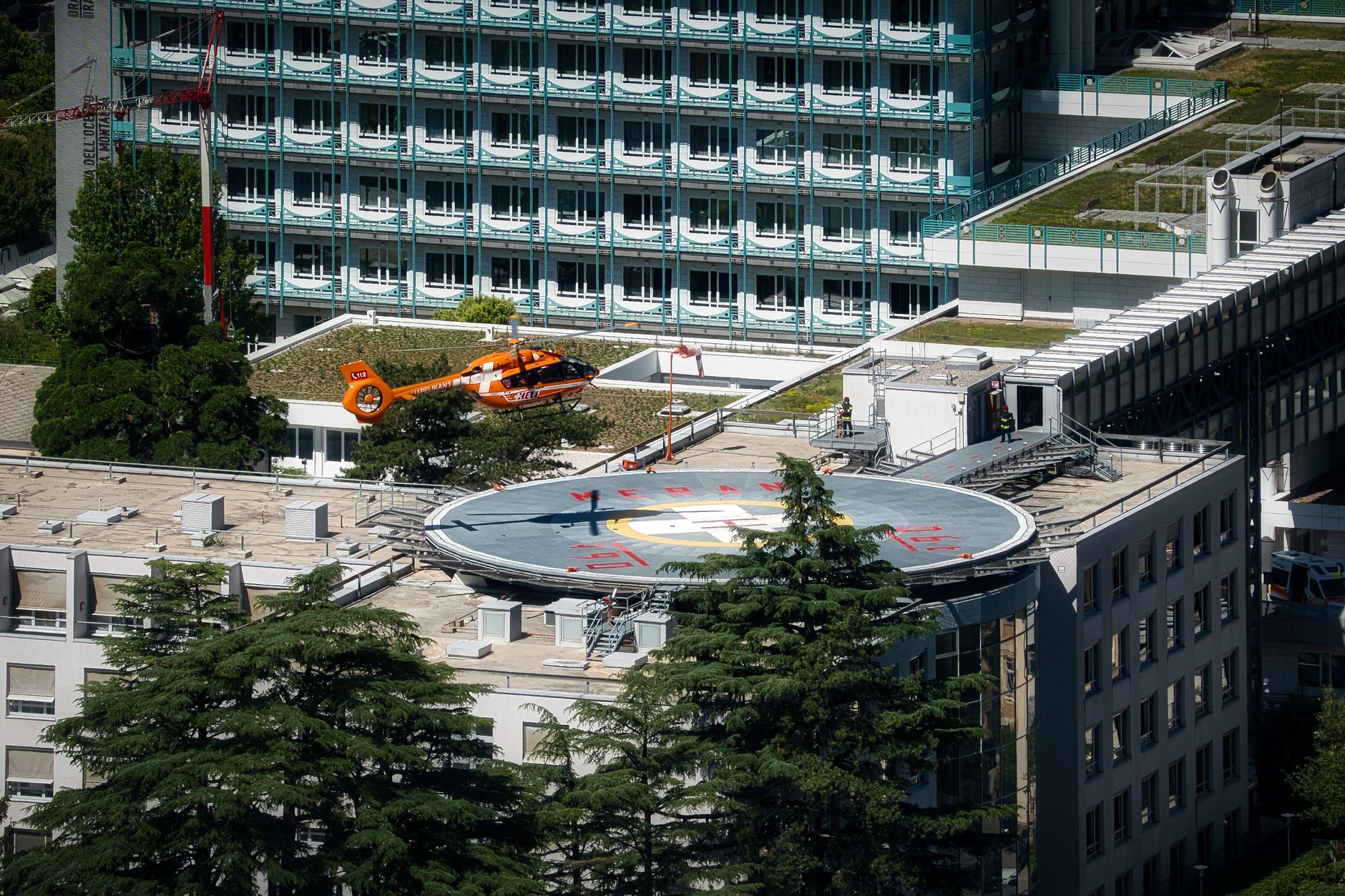
Airspace, weather and clinical operations reduce the share the drone can take. Flights near helicopter landing areas, air intakes or occupied areas need planning and sometimes a pause, and wind or rain closes the window. Each limit lowers the realistic share, so the assessment sets it before any range is shown.
What are the risks to the return, and how do you avoid them?
The biggest risk is counting hours the drone does not take. If staff still climb every unit after the drone pass, the savings never appear. Set the realistic share during the assessment, then check actual climbs against it in the first months.
The second risk is records nobody uses. A photo set helps only when it is dated, tied to each unit and sent to the crew that plans the repair. Name one owner for survey records and link each finding to a work order.
The third risk is liability and access. A flight over occupied areas, a damaged unit or a missed flight window can cost more than the savings. Confirm pilot certification, insurance and access rules before the first flight, and put liability coverage and response terms in the lease quote rather than assume them.
- First look at roofs and penthouses
Drone
Photos of every unit from one flight, repeatable on a schedule
Staff
Walks the roof and notices sound, smell and vibration directly
- Repair decision
Drone
Shows visible condition and heat patterns
Staff
Diagnoses the cause, checks torque and tests the part
- Access and clearances
Drone
Needs flight planning and clearance for each route
Staff
Already has badge access and knows the building's rules
- Fall exposure
Drone
No one climbs for the first look
Staff
Still climbs for any repair that needs hands on the equipment
- Records
Drone
Dated, indexed photos for every survey
Staff
Notes depend on the technician who wrote them
- Weather and timing
Drone
Limited by wind, rain and flight rules
Staff
Works through weather with appropriate protection
What is the timeline from assessment to payback, and how do you get a precise figure?
The sequence runs from a free site assessment to a survey of your roofs and penthouses, then a pilot on one building, then a wider rollout across the campus or system. We do not give a payback date before the site numbers are in, because the range depends on roof count, climb frequency and flight rules.
The site assessment maps the surveys in scope, times today's climbs with your crew, reviews airspace and access rules, and sets the realistic share the drone takes. It produces a lease quote with service, insurance and spare coverage stated, and a payback estimate built from your numbers.
Payback is the point where lease cost is covered by the realistic hours taken over, priced on the government wage data on this page. The first months of real climb counts are the test. If counts match the assessment, the range holds. If they do not, we adjust the scope before the lease runs long.
Frequently asked questions
Want a drone at your hospital?
Tell us about your site. We will recommend the robot, quote the lease, and keep it serviced.
Sources
- US Bureau of Labor Statistics, Occupational Employment and Wage Statistics (OEWS May 2024)
- AHA Fast Facts on US Hospitals 2025
- ASHE republication of 2026 AHA Fast Facts
- BLS Occupational Outlook Handbook: general maintenance and repair workers
- Hospital Operations Survey, Health Facilities Management
- CDC/NIOSH document citing BLS Census of Fatal Occupational Injuries data
- Roofing trade article summarizing BLS fatal injury data
- NIOSH summary of 1997 BLS fatal falls in construction
- Consultancy hospital roof survey case report