
The short answer
The robotic lawn mower ROI for airports comes mainly from crew hours freed on large, regularly mowed grass areas, set against a fixed lease payment. Savings are a range, not a promise, and the range depends on the mowing hours a site really has, the share of that work a unit can take over under airfield rules, and the lease cost quoted after a site assessment.
Key takeaways
- Airport mowing is a repeat crew task on large, open ground, which is the pattern robotic mowers handle well.
- The best published benchmark is one airport's own unaudited estimate of an 8% to 20% labor-hour cut on mowing.
- Fenced areas, runway safety areas and grass height targets set the limits of what a unit can take over.
- The return is freed hours, multiplied by the share of work taken, minus supervision, set against a fixed lease payment.
- A free site assessment replaces the savings range with a quoted figure built on your measured hours.
What return can airports expect from robotic lawn mowers?
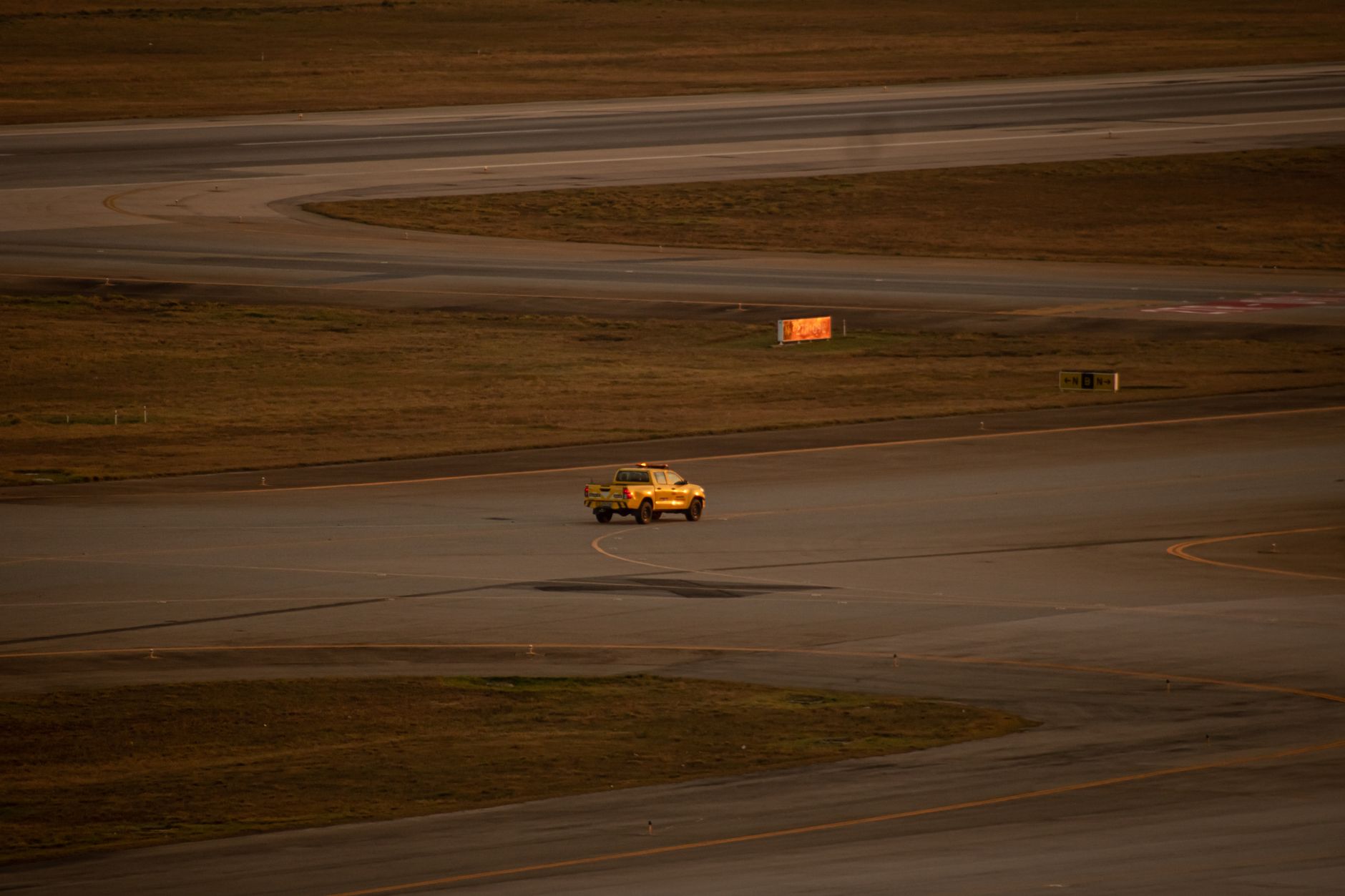
This page explains the robotic lawn mower ROI for airports. For most airports the return is crew time, not a single large saving. Grass on the airfield and around the terminal gets mowed on a repeat schedule, often weekly at peak season, and every cut takes hours from people who have other work. A robotic lawn mower takes over part of that cutting, which frees staff for edges, drainage, inspections and the areas a robot cannot reach. The return is the value of those freed hours, set against a fixed lease payment.
The honest answer is a range. The best published benchmark is an airport's own estimate of an 8% to 20% labor-hour reduction on mowing, reported in trade coverage and not audited. Where a given airport lands in that range depends on how much of its grass is open, how often it is cut, and how much ground the robot can work without a person stepping in.
Think of the return as a bundle. Hours matter most, but value also shows up in schedule reliability, fewer cuts missed in peak weeks and crews kept on the work that needs judgment. Those benefits are real but harder to price, so this page counts only the hours.
How much grass does an airport have to mow?
According to the AAAE summary of the FAA National Plan of Integrated Airport Systems, the FAA lists 3,310 existing public-use airports, with 396 Primary Commercial Service airports and about 2,535 general aviation airports. That summary covers an older edition of the plan, so use these counts as scale checks rather than the latest totals. Airports range from small general aviation fields to large commercial hubs, and each carries its own mowing load.
Acreage shows how wide that load can be. One Texas regional airport reports about 639 acres, of which about 400 need weekly mowing, according to Airport Improvement coverage. Measure your own mowable acreage against that kind of benchmark rather than assuming a size from the airport's name or category.
Fenced perimeters, lighting fields and wildlife areas also shape the scale. Two airports with the same total acreage can carry very different mowable areas, because the fence line and restricted zones decide how much grass is open to a robot. Measure mowable acres, not total acres, before you estimate anything.
How many crew hours does mowing take?
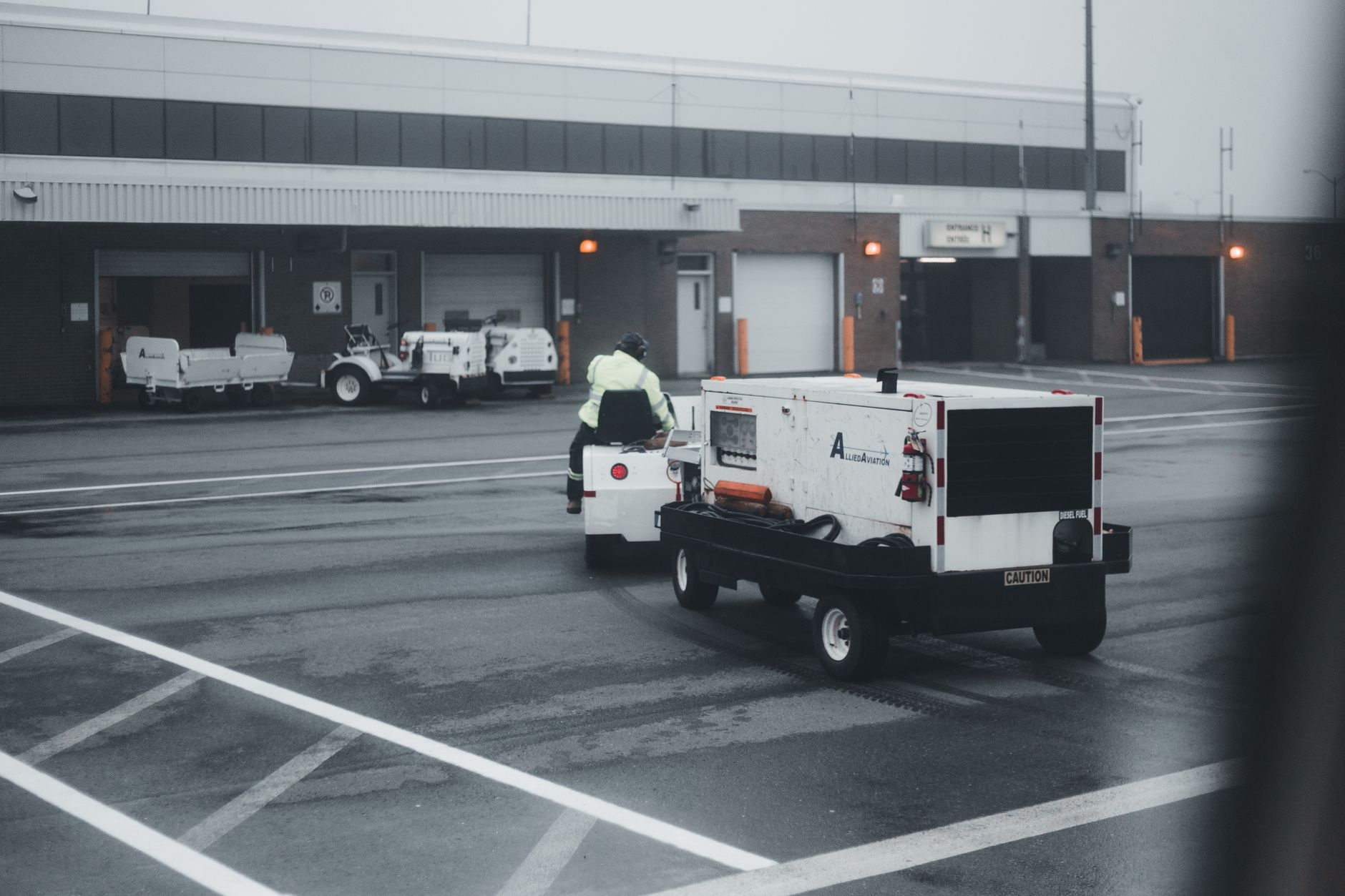
Mowing is often a large share of a small grounds crew's week. At the Texas regional airport above, nine maintenance staff covered all grounds work, and mowing typically took five to six of them, according to AviationPros. That makes mowing the single largest recurring task for a crew of that size.
Mowing staffing is often seasonal. One airport job posting for summer grounds work focused mainly on mowing, and the Bureau of Labor Statistics counts about 1.3 million grounds maintenance worker jobs in 2024, according to its Occupational Outlook Handbook. BLS also notes that these workers may be busier or work longer hours in spring, summer and fall, when mowing is most frequent. Your hours figure belongs in your own timesheets, because season and crew size change the number sharply.
Look at timing as well as totals. Mowing peaks in the warm months, which is often when other grounds work also peaks. Freed hours that land in those weeks are worth more to the operation than the same hours on a quiet week.
Where does the return come from?
The return comes from three inputs: crew hours moved off mowing, the share of the work the robot takes over, and the lease cost offset against those hours. Freed hours are the largest lever. The 8% to 20% labor-hour cut and the mowing rate above 1.4 acres per hour in the Texas regional airport's estimate are the closest published benchmarks, though the figures are not audited.
Freed hours only count if they are used. Some airports move crew time to edge trimming, drainage and inspections. Others reduce seasonal hours. Decide which applies before the lease starts, because the same freed hours carry much less value when they go unused.
Some airports also count avoided overtime and seasonal hiring as part of the return, since the robot reduces the extra people needed in peak weeks. Count those only when the airport will actually avoid the added hiring. A plan that assumes a hire never cut from the budget will not show up as a return.
How does the ROI math work?
Start with the mowing hours your crew spends each week over a full season. Multiply by the share of that mowing a robot can realistically take over, since fenced zones, obstacles and airfield boundaries keep part of the ground out of reach. Subtract the time people spend on setup, boundary checks and service visits. What remains is the net hours freed each week, which you convert to value at your own labor rate.
Set that value against the fixed robot lease payment for the term. The payment does not rise with hours worked, so the return improves as the mowing load grows and as more ground sits inside the robot's working area. A simple worked example shows the logic without a fixed figure: if a crew spends a set number of hours each week on mowing and a robot takes over a planned share of that time, the difference after supervision is the weekly hours freed. Multiply by the weeks in the season and the labor rate to get an annual value to compare with the lease.
The savings range on this page uses the same logic, with the calculator pre-filled for airports. We provide commercial robot leasing and quote the lease after a free site assessment, with the financing program included in that quote.
- Hours covered
Robotic Lawn Mower
Repeat cutting inside its mapped boundary, on a set schedule
Staff
Flexible, and can cover any ground including gaps the map misses
- Obstacles and changing conditions
Robotic Lawn Mower
Works around mapped obstacles, but struggles with unmapped or changed ones
Staff
Handles new hazards, debris and access changes on the spot
- Edges and tight corners
Robotic Lawn Mower
Limited where the boundary runs close to structures and lights
Staff
Trims by hand with control near equipment
- Judgment and reporting
Robotic Lawn Mower
Reports run status and flags faults
Staff
Decides, escalates and inspects with full context
- Cost behavior
Robotic Lawn Mower
Fixed lease payment for the term, whatever the hours
Staff
Labor cost moves with hours, season and overtime
- Seasonal flexibility
Robotic Lawn Mower
Steady output in peak weeks, though supervision is still needed
Staff
Seasonal staff can be added, with hiring and training time
What changes the number up or down?
A few inputs move the range more than the rest. Check them before you read the output, because a sound-looking figure built on estimated hours can overstate the return. The checklist below lists the inputs to verify first.
Mowing frequency and acreage matter most. A site cut weekly at peak and monthly off peak has a very different hours profile from one cut twice a month all year. Grass height also matters. A tighter target means more passes, which keeps the robot busy but also narrows the ground it can take without a crew check. Verify each input against records before trusting the range.
What are the airfield rules for grass height?
Airfield rules set the boundaries before any cost math starts. A Nebraska DOT airport flyer gives a 6 to 8 inch target for runway safety areas, marked high priority, and a maximum of 12 inches for other wildlife-management areas. A National Academies publication gives a recommended range of 6 to 12 inches, with the preferred height varying by airport.
The FAA does not set one grass-height rule, and it advises airports to write vegetation management plans. Your plan, your fencing and your wildlife guidance decide what a robot can cut and how often. Map those zones with operations and safety staff before deciding how much ground is in scope.
Height targets also change how often a robot cuts. A tighter target means more frequent passes, while a taller wildlife target allows longer intervals between cuts. Confirm the target for each zone before the boundary map is finished.
What are the risks to the return, and how do you avoid them?
The main risks are a mismatch between the mowing area and the robot's working area, grass that drifts outside the airport's height target, and supervision time that erodes the hours saved. Plan each one at assessment rather than finding it later. Keep a backup plan for a unit out of service, so mowing does not slip in peak season, and confirm who covers the work during repairs.
Safety belongs in the math too. The CDC, citing BLS data, gives 2018 rates of 176.8 per 10,000 full-time workers for landscaping services, against 89.7 for all private industry. A BLS snapshot counts 12,380 nonfatal landscaping and groundskeeping cases with days away from work in 2019, a rate of 185 per 10,000 full-time-equivalent workers. Taking routine mowing hours off crews may lower exposure, but only if those crews are not pulled into hands-on fixes at every stop.
Put the handover between robot and crew in writing. Name who checks the boundary after storms, who clears debris, who handles a unit that stops mid-cut, and who signs off on height. A clear split of duties prevents the common failure where everyone assumes someone else is watching the grass.
What is the timeline from site assessment to payback?
A typical path runs from site assessment to a quoted lease, then deployment, crew training and go-live support, then a first full mowing season of measured hours. The payback point depends on the hours measured in that season, so early months should track real hours against the range rather than a promise. Setup usually focuses on boundary mapping, grass height checks and training the staff who keep the hands-on tasks.
A free site assessment is the fastest route to a precise figure. We map the mowing area, mark fenced and restricted zones, record crew hours as they stand today and check them against your height targets. The output is a lease quoted after the assessment, with service and maintenance scoped in, and a recalculated savings range. Run the calculator on this page for an early range, then bring your mowing schedule and timesheets to the assessment.
After the first season, compare measured hours against the assessment baseline. If the offset is close to the range, the plan is working. If it falls short, the usual causes are a boundary drawn too tight, a height target applied too broadly, or supervision time that was never counted. Each cause can be fixed before the next season begins.
Frequently asked questions
Want a robotic mower at your airport?
Tell us about your site. We will recommend the robot, quote the lease, and keep it serviced.
Sources
- AAAE summary of FAA National Plan of Integrated Airport Systems
- Airport Improvement: Sugar Land Regional on the cutting edge with autonomous mowers
- AviationPros: Sugar Land Regional Airport uses autonomous mowing to stretch maintenance resources
- Bureau of Labor Statistics: Grounds maintenance workers
- Bureau of Labor Statistics: Injuries and illnesses snapshot for landscaping and groundskeeping workers, 2015-19
- CDC: Document citing BLS data on injury rates by industry
- Nebraska Department of Transportation: Airport reminder flyer on turf management
- National Academies: Airport grass and wildlife management chapter