

The short answer
The robotic lawn mower ROI for self-storage facilities comes from staff or contractor hours that stop going to scheduled mowing, trimming and edge work on grassed perimeters and drive lanes. The savings range is the share of those hours a robot realistically takes over, valued against a fixed lease payment that is quoted after a free site assessment. Published mowing hours for self-storage sites were not found, so the range is built from hours logged on your own property.
Key takeaways
- The return comes from hours already spent on scheduled mowing and edge work, not from replacing site staff.
- Use your own logged hours and a timed walk-through, because no published weekly mowing hours for self-storage sites were found.
- The lease payment is fixed and quoted after a free site assessment, which replaces the estimate with a measured figure.
- Keep an inspection step and a standby plan, since the mower does not check fences, drains or lighting.
How does the robotic lawn mower ROI for self-storage facilities work?
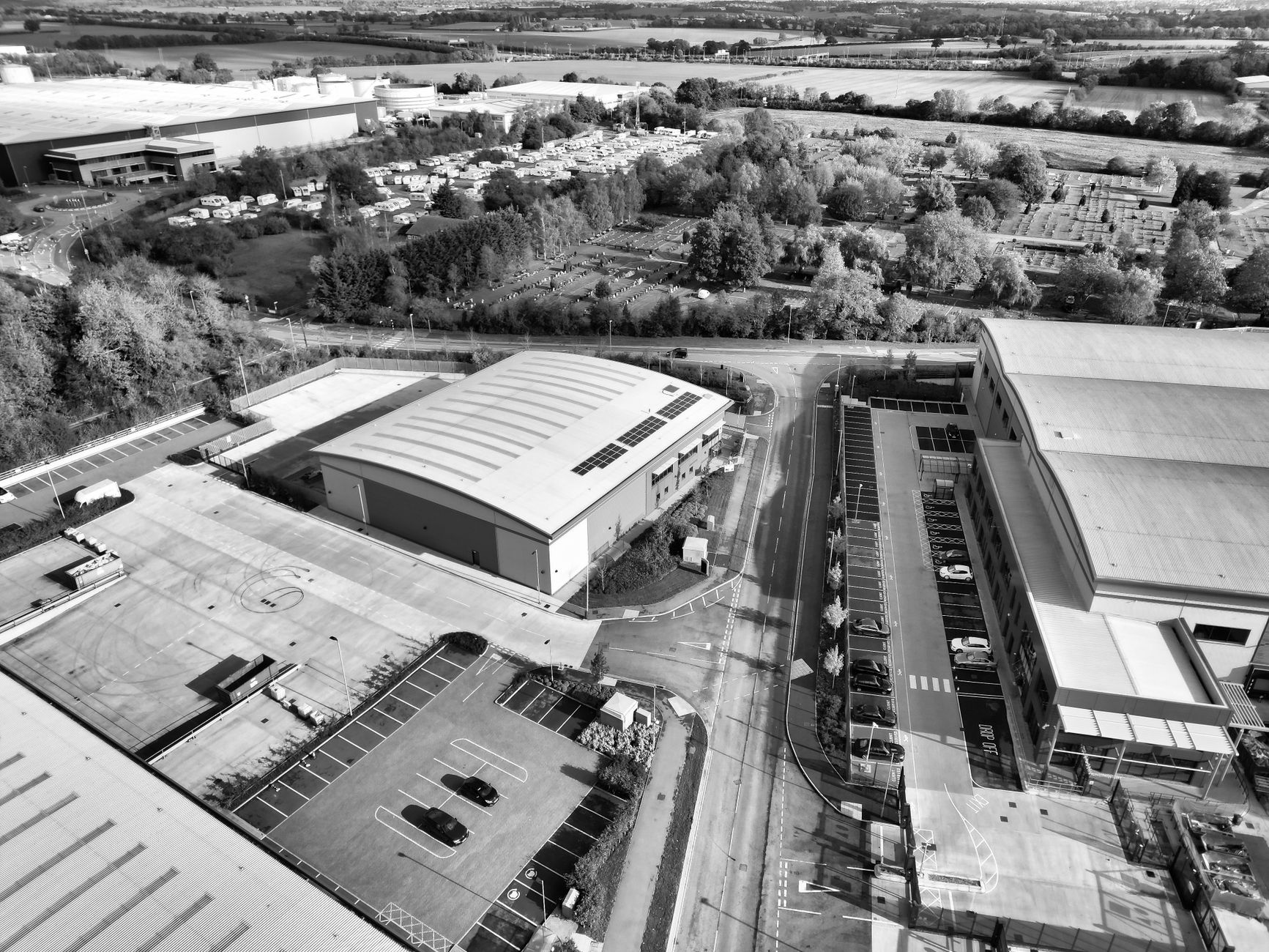
The return comes from one place: hours that stop going to scheduled mowing and edge work. A self-storage site is flat, fenced and largely grassed along the perimeter and drive lanes, so a robot can run a set schedule without anyone on site. The robot does not replace the manager, the gate or the unit walk, so the saving is limited to the grounds task itself.
Expect a range, not a headline. Every site differs in turf area, obstacles and how often it is cut, so the calculator on this page is pre-filled for self-storage and returns a savings range built from the inputs you enter. Treat that range as a planning tool until a free site assessment replaces the estimates with measured figures.
The math is straightforward once the inputs are real. Hours come from logs, the share of work comes from a walk, and the lease comes from a quote. Each input can be checked on its own, which keeps the decision from resting on a single assumption.
How big is the self-storage industry and where are the sites?
According to the Self-Storage Almanac 2025 as summarized by Modern Storage Media, the US facility count rose from 52,301 to 57,981, a gain of 5,680. The IRR Self Storage Report 2026 estimates 58,000 to 65,000 facilities nationally, depending on source. The spread between those counts is a reminder that the total is measured loosely, so treat any single national number as approximate.
Neighbor's 2024 snapshot reports 2.1 billion square feet of storage space across 52,301 facilities, and Sparefoot's 2026 statistics page also puts total space above 2.1 billion square feet. Sparefoot says five public companies own 37.6% of the space. A large share of sites therefore sits inside multi-site portfolios, which makes a multi-site rollout worth raising at the assessment stage.
We could not verify typical acreage or weekly mowing hours for a self-storage site. The rest of this page shows how to measure those figures on your own property instead of quoting an industry average.
How many staff and hours does grounds work take at a self-storage site?
FEDESSA's European annual industry report, summarized by Stora, puts the average facility at 1.34 full-time staff, down from 1.77 in 2015. That is European data, so use it as a signal about lean staffing rather than a US benchmark. Lean staffing means mowing competes with office, leasing and unit duties for the same few hours of the day.
The wider grounds workforce is large. The BLS Occupational Outlook Handbook reports about 1.3 million grounds maintenance workers in 2024, including 1,192,500 landscaping and groundskeeping workers. Outside crews are a normal way to get this work done, and that is the baseline a robot has to beat on cost and reliability.
We found no published figure for mowing hours per week at a self-storage site. The practical method is to log every mow, trim and blow session for four weeks, then divide the total by the number of visits to get a typical cycle length. We also did not verify turnover for grounds roles at self-storage sites, so the calculator does not assume that a resignation changes the schedule. If your site changes contractors often, add the time needed to re-brief each new crew to your inputs during the assessment.
| Task | Today | With a robot |
|---|---|---|
| Open perimeter passes | Staff or contractor time on every scheduled cut | Runs on the set schedule with a short check afterward |
| Drive lane edge passes | Crew time walking or driving the edges | Covered by the route, with a visual check |
| Gate approach and corners | Hand trimming with a trimmer | Still done by a person |
| Debris clearing before cuts | Pickup during the same visit as mowing | Done by a person before the scheduled run |
| Travel and equipment checks | Driving to the site and loading equipment | Remote status check, with site visits only when needed |
No published hour figures for self-storage grounds work were found, so this table carries no hour values. Fill in your own logged times from the four-week log described above.
What is the labor math behind the lease and the savings range?
The calculator runs three steps. First, it takes the labor hours you pay for, whether staff time or a contractor invoice, and multiplies them by visits per week and weeks per year. Second, it applies the share of that work a robot realistically takes over. Third, it values the hours saved and subtracts the lease.
The share is the number that matters most, and it is the one people overestimate. A robot handles open turf and most straight perimeter passes. It usually does not handle the gate approach, tight corners around signs and posts, or debris that needs a person to pick up. Build the share from a timed walk-through of the route, count only minutes that fall into open-turf mowing, and use the lowest of your estimates when you first compare.
The lease is a fixed payment over the lease term. The number is quoted after a free site assessment, so the math runs against your site rather than a generic one. Repair and service visits sit inside the program under maintenance included, so the offset is not reduced by surprise service charges, which keeps the range easier to check against your books.
Where does a robot beat a person on the grounds, and where does it not?
A robotic mower wins on consistency and on hours. It runs the same route on the set schedule, does not need a shift built around a holiday or a staffing gap, and keeps the perimeter pattern steady week to week. For a site with a regular layout, that predictability produces most of the saving.
A person wins on judgment. Someone walking the grounds notices a fallen limb, a soft patch near a drive lane, a loose fence section or a clogged drain. The mower does not inspect the property, so keep a short walk on the schedule and treat it as part of the grounds routine.
Injury exposure belongs in the case too. According to OSHA's enforcement directive, citing BLS 2024 data, landscaping services recorded a total recordable incidence rate of 3.0 per 100 full-time workers, against 2.3 for all private industry. The DART rate was 2.0 against 1.4. Those figures cover landscaping services, not self-storage, and we did not find a self-storage incident rate. Taking the mowing out of a worker's day still removes that exposure from the person who would otherwise carry it.
- Consistency
Robotic Lawn Mower
Runs the same route on the set schedule each week
Staff
Depends on who is on shift and what else the day holds
- Labor on site
Robotic Lawn Mower
Runs unattended once the boundary and schedule are set
Staff
Needs a crew on site, with travel time to the property
- Obstacles and debris
Robotic Lawn Mower
Needs the turf cleared of items before it runs
Staff
Picks up debris and resets the work as it goes
- Edge and corner detail
Robotic Lawn Mower
Good on straight boundaries, weaker on tight corners and fixtures
Staff
Trims by hand around posts, signs and gate hardware
- Site inspection
Robotic Lawn Mower
Does not check fences, drains or lighting
Staff
Notices damage and reports it on the same visit
- Weather and hours
Robotic Lawn Mower
Works within the windows and limits you set
Staff
Adjusts for the day and can change plans on the spot
How long does it take from assessment to payback?

The timeline runs in stages. The free site assessment maps the boundary, measures the grassed areas, notes obstacles and records the hours you give us. The lease is quoted from that work, and deployment starts only after you accept the terms.
We pick the right robot for the site, lease it through financing, deploy and integrate it, train your staff and service it nationwide. A first deployment can start with one leased unit, run a pilot period, and expand only when logged hours match the estimate. A phased rollout also lets you test the schedule before committing to a second unit.
Payback depends on how fast the offset shows up in your records. A site that already logs grounds hours can compare results against its own baseline soon after go live. A site with no history needs one or two full cycles of data before the payback figure means much, and that data is worth collecting before any decision on a second unit.
In the first weeks, the work is mostly setup and observation. The integrator confirms the boundary, runs the schedule through several full cycles, and compares the route with your walk-through notes. Staff learn the routine checks, the reset steps after a stop, and who to contact through remote triage before the unit runs unattended.
What changes the return up or down?
Four things move the range most. Mowing frequency comes first, because a weekly cut replaces more visits than a cut every few weeks. Turf area and shape come next, since large open lawns give the robot more covered ground per hour. Obstacles like light poles, signs and fixtures add hand work back, and the labor you are replacing sets the value of each hour saved.
The share of work is the lever you control most. Long straight drive-lane edges and a clean perimeter show a higher offset than a site with many islands, planters and tight spacing. Site cleanup is the other lever: if debris must be cleared before every cut, the offset falls until that routine changes.
The labor rate you replace is the last lever. A site paying a contractor for a fixed visit schedule will see the offset shaped by how many visits the robot removes, not by an hourly figure alone. A site using its own staff will see the offset in hours moved to other duties, which is worth recording separately so it does not get counted twice.
What are the main risks to the return and how do you avoid them?
The biggest risk is overestimating the offset. If the calculator assumes the robot takes all the mowing but the site still needs a crew for trimming, debris and corners, the result looks better on paper than in the logs. Set the share from a timed walk-through, not from a maximum coverage rate printed on a spec sheet.
Downtime is the second risk. A unit that stops for a week on a weekly schedule leaves the grounds unmowed unless someone steps in. Ask for on-site dispatch, remote triage and spare unit coverage in the lease terms, and keep the existing contractor on a standby arrangement through the first season.
Site condition is the third. Sprinkler heads, low spots and poorly placed boundary markers cause stuck units and damage. Walk the site with the integrator before go live, fix the surface problems you find, and confirm what liability coverage the lease includes before the first cut.
Plan for seasonal change as well. Growth slows and conditions shift between dry and wet periods, so the schedule may need adjusting. Review the calculator inputs after each season, not only at the start, so the range stays tied to the work the site actually needs.
How do you get a precise figure from a free site assessment?
Bring four things to the assessment: the grassed area in square feet or acres, the mowing, trimming and blowing hours your team or contractor logs, the labor cost you pay for that work from your own books, and a list of obstacles. If no hours are logged, time three full cycles and use the average.
The free site assessment maps the boundary, measures each grassed zone and tests the route. The lease payment is quoted after that, so the range on this page gives way to a figure that reflects your property. The quote is a fixed payment over the lease term, with maintenance included.
We are a US commercial robot integrator. We pick the right robot for the site, lease it through financing, deploy and integrate it, train the staff and service it nationwide. You deal with one partner and one number for the life of the lease.

Frequently asked questions
Want a robotic mower at your self-storage facility?
Tell us about your site. We will recommend the robot, quote the lease, and keep it serviced.
Sources
- Self-Storage Almanac 2025 via Modern Storage Media
- IRR Self Storage Report 2026
- Neighbor self-storage industry statistics
- Sparefoot self-storage industry statistics
- Stora summary of FEDESSA European annual industry report
- BLS Occupational Outlook Handbook, grounds maintenance workers
- OSHA enforcement directive BHM-CPL-04-00-003