
Key takeaways
- Autonomous forklifts take repeat pallet moves off manual lift truck shifts, which is where distribution centers feel labor pressure most.
- In a June 2026 Interact Analysis survey, two-thirds of respondents plan to increase forklift automation spending.
- Results depend on your aisles, routes and flow, so a free site assessment comes before any quote.
- Most sites run a robot plus a trained team, never a robot alone.
How do autonomous forklifts for distribution centers help?
Autonomous forklifts for distribution centers take over the repeated pallet moves that tie up manual lift trucks: receiving from dock lanes to reserve racking, feeding replenishment routes, and moving full pallets into staging. The main benefit is fewer manual forklift shifts spent on that work, so experienced drivers can focus on loading, exceptions and the moves that need a person.
The case rests on labor. DC Velocity quotes an analyst saying labor can represent 50% to 65% of warehouse operating costs, which is why high-throughput warehouses and distribution centers are considering driverless forklifts. Demand is moving too. In a June 2026 Interact Analysis survey of more than 270 forklift buyers, two-thirds said they plan to increase spending on forklift automation in the next 12 months.
Fit depends on your flow, aisle widths, pallet types and shift pattern, so the right answer differs from one building to the next. We start every conversation with a free site assessment before anyone discusses a quote.
What problem do distribution centers face today?
Many distribution centers still move pallets with manual lift trucks staffed shift by shift. A driver walks the same loop many times a day, and peaks such as seasonal volume or a surge of inbound trailers pull people off other work. When a shift runs short, moves wait, the dock backs up and the next crew starts behind.
The work is repetitive, measurable and easy to schedule badly. Turnover makes it hard to keep experienced drivers on the same routes, and every new driver has to learn the aisles, dock rules and pallet types. According to O*NET and BLS data reproduced by Boostpoint, 765,200 industrial truck operators were employed in 2025, with 76,400 projected openings per year from 2024 to 2034.
Interest in the technology is also growing. In a 2026 Modern Materials Handling study of 117 subscribers, 33% of respondents run distribution centers and 36% run manufacturing operations, and the study reports growing interest in autonomous lift truck technology. According to a 2024 freight blog citing an industry consultant, just over 14,500 US distribution centers meet a definition of 250,000 square feet or more, so a repeat pallet route is worth examining closely.
What are the main benefits?
The benefits are practical, and most of them show up on the dock and in the aisles rather than on a slide. Four stand out for distribution centers.
- Fewer manual forklift shifts spent on repetitive pallet moves, so drivers handle loading and exceptions.
- Steadier throughput across shifts, since a taught route runs the same way at 2 am as at 2 pm.
- Less wasted movement. A Modern Materials Handling article describes a customer who increased daily output after eliminating unnecessary movement, although it gives no figure.
- Replenishment that can run overnight without depending on a full crew being in the building.
How does the robot work day to day?
A site is mapped first, then routes are taught. According to a 2026 review of autonomous forklifts, semi-automated map creation can cut deployment time from months to hours. Once mapped, the truck follows set paths between pickup and drop points, slows for people and stops when a path is blocked.
A remote operator watches the fleet. Prologis Labs' 2020 experiments found that a single remote operator could control multiple autonomous fork trucks, with fork truck to operator ratios as high as 10:1. That operator is still needed when a truck must be manually taught a route.
Fleet sizes are still modest. The 2026 peer-reviewed review in Robotics says autonomous forklifts remain deployed at a small scale of 2 to 50 vehicles, so most sites start with a small group of trucks on their highest-volume routes and expand once those routes prove out.
Which areas of the building does it work in?
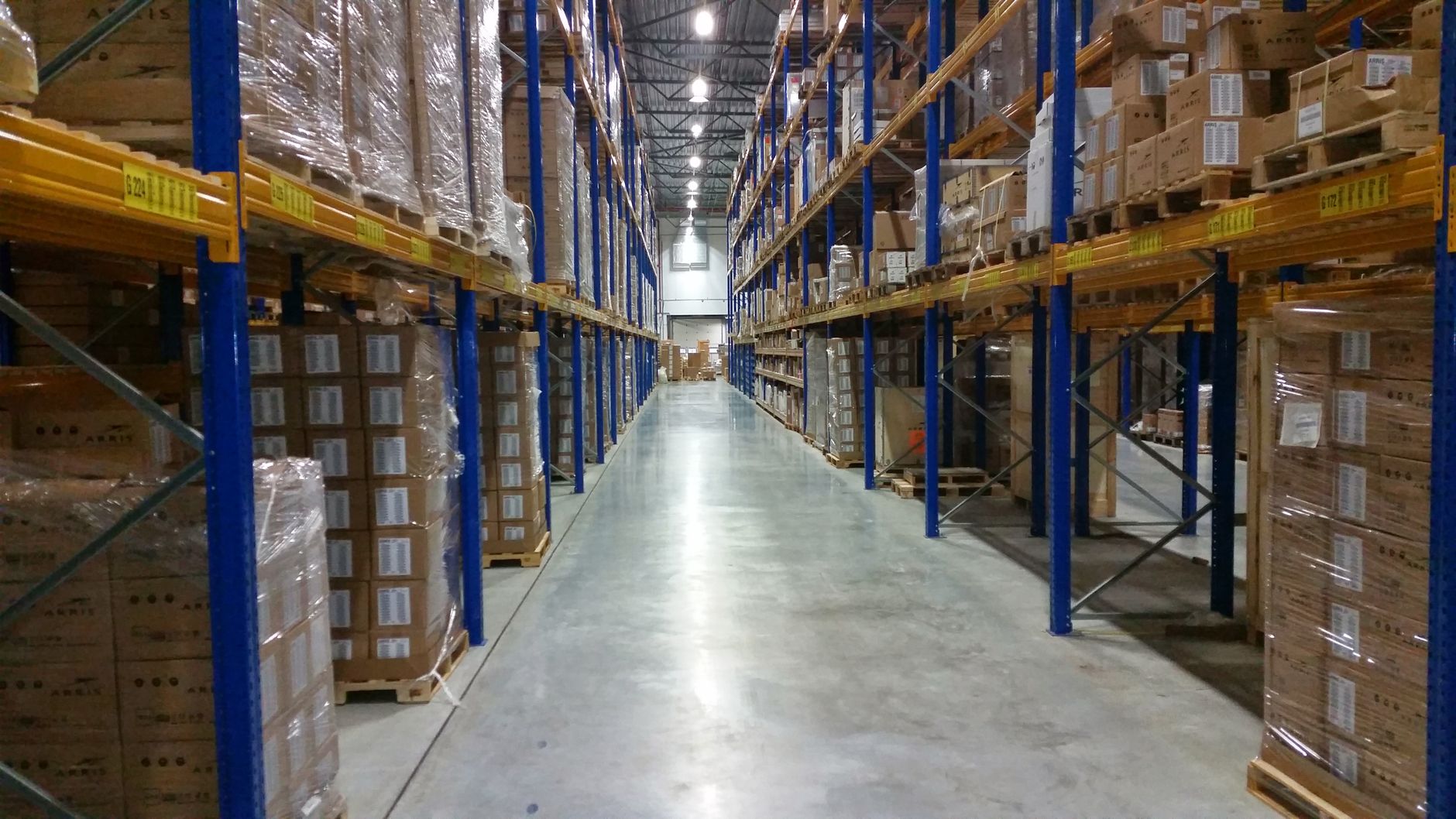
Autonomous forklifts work best where the path is repeatable. The zones below show the common areas, and the site assessment decides which ones fit your building. Staging lanes are often a strong candidate because pallets stack in predictable rows.
Aisle geometry matters more than the square footage on paper. Racking heights, cross-aisles and door positions decide the route count, so we map those conditions before we quote a plan.
How does it work alongside existing staff?
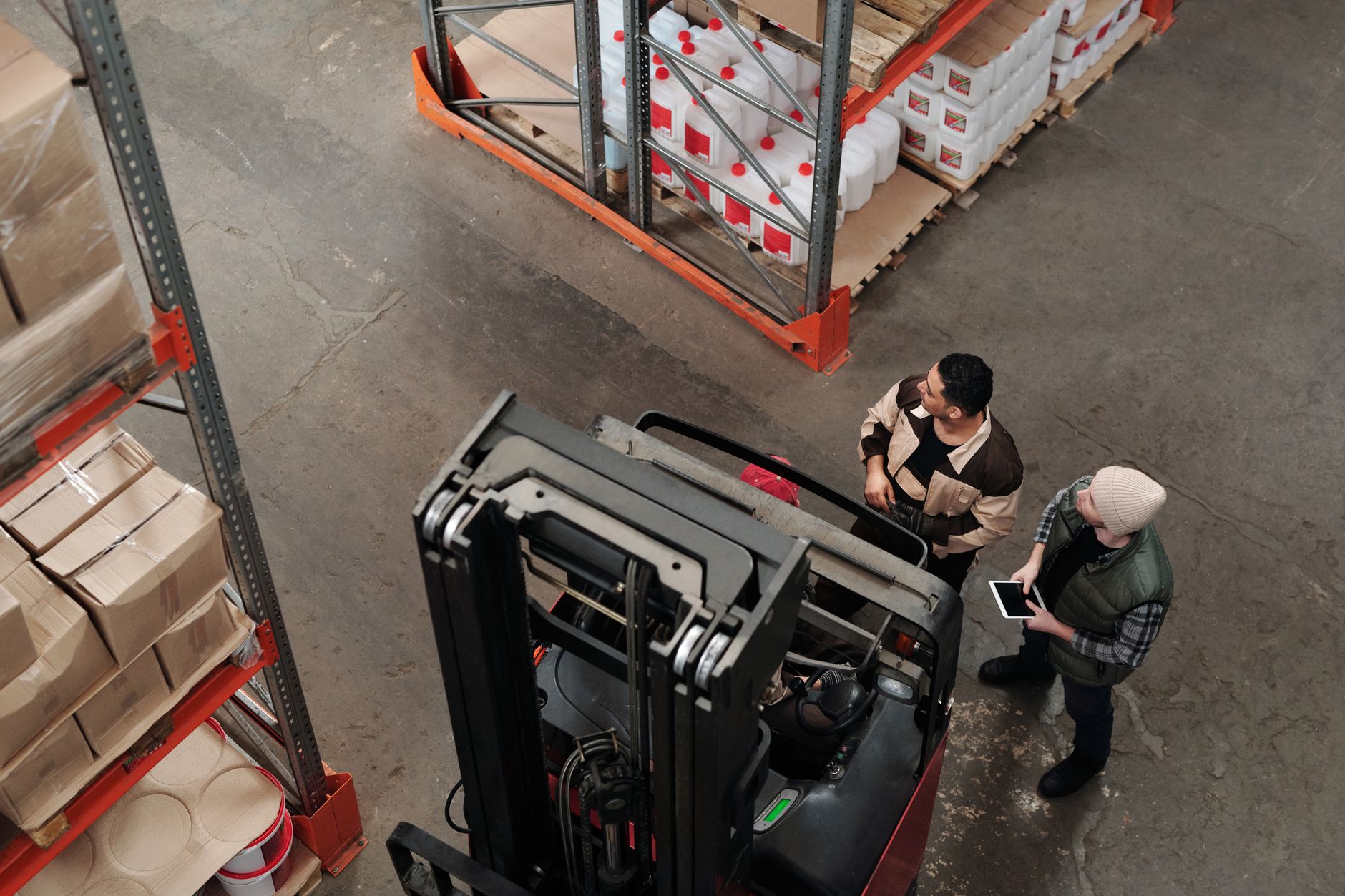
The robot does not replace the team. It takes a share of the repetitive moves, and people do the work that needs judgment: inspecting damaged loads, making loading decisions and solving the problems a route cannot. Every plan we build keeps a robot plus a smaller team on the floor, never zero staff.
A remote operator is part of the fleet, not an afterthought. The Prologis Labs experiments showed one operator can oversee several trucks, but that operator still steps in when a route has to be taught or a truck needs manual help. We train your staff on daily checks and exception handling before go-live.
The team changes shape rather than disappearing. Drivers who used to spend most of a shift on the repeat loop can move to loading, quality checks or dock coordination, and shift planning becomes less dependent on one person being present for every move.
What drives the savings?
The savings come from three places: manual truck hours moved off repeat routes, supervision hours added for the fleet, and throughput gained from steadier moves. Your net result depends on how many routes you automate and how many people stay on the floor.
Labor is the main lever. Analyst data quoted by DC Velocity puts labor at 50% to 65% of warehouse operating costs, so even a modest share of shift hours matters. Measure the hours your manual trucks spend on the repeat loop before a pilot, then measure again after go-live.
Vendor materials make larger claims. One vendor page states its autonomous forklift reduces labor by up to 33%, which we treat as a vendor claim until your own hours confirm it. An academic test of an outdoor autonomous forklift on a construction-type site, not a distribution center, reported over 233 minutes of autonomous operation with 12 minutes of manual control, under 5% of operation time.
What can an autonomous forklift not do?
It does not handle every task. In that same academic test, the truck needed 17 manual interventions during more than 3 hours of autonomous functionality, in which 60 pallets were loaded. Interventions are normal, and a plan that assumes zero interruptions will disappoint you.
It is not a general-purpose operator. Autonomous forklifts follow taught routes and mapped areas, so they need clear floors, consistent markings and reliable pallets. Damaged loads, unusual stacking and unplanned obstacles still need a person.
Deployments remain modest in size. The 2026 review in Robotics describes autonomous forklifts at a small scale of 2 to 50 vehicles, so expect a phased rollout rather than a whole-building switch overnight.
How do we get started?
We are a US commercial robot integrator. We pick the right robot for your site, lease it through financing, deploy and integrate it, train your staff, and service it nationwide. The first step is a free site assessment, where we map the route, check aisle and dock conditions, and identify which moves to start with.
After the assessment, you receive a quote. The payment comes in that quote, which reflects the routes we recommend, the training plan and the service coverage, so you see the full picture before deciding. You can also ask for a pilot route first to test one lane before a wider rollout.
Start with the route that repeats most, and let the first weeks of data decide the next step. Proof on your own floor is the most reliable guide you will have.
Frequently asked questions
Sources
- DC Velocity: Automated forklifts, hot or not
- Modern Materials Handling: 2026 Lift Truck Acquisition & Usage Study
- Prologis Labs case study: autonomous fork truck experiments
- Boostpoint: forklift operator job description
- Autonomous forklifts for warehouse automation: review (Robotics, 2026)
- Autonomous forklifts for warehouse automation: comprehensive review (ResearchGate)
- ADAPT outdoor autonomous forklift test (arXiv)
- Vecna autonomous forklift page