
Key takeaways
- Full pallets moving on fixed freezer routes are the work autonomous forklifts for seafood processing plants handle best.
- Staff hours shift from repeated cold trips to grading, quality checks and packing.
- Savings depend on your route length and handoff points, and a free site assessment measures them.
- The working model is a robot plus a smaller team on the freezer route, never zero staff.
- Loose bags and irregular bulk loads stay manual.
How can autonomous forklifts for seafood processing plants help?
Autonomous forklifts for seafood processing plants take over the repetitive pallet moves that keep experienced people working in freezers and cold rooms. Frozen product tends to travel the same routes every shift, from freezer racks to staging lanes, then on to the packing room and the dock. A forklift that follows a set path can handle much of that carry and staging work, which leaves your team free for the parts of the job that need a person.
The main benefit is fewer staff hours spent on cold, tiring pallet work. Seafood plants see heavy seasonal swings and high turnover, so keeping skilled people on grading, quality checks and packing matters as much as the pallet moves themselves. The robot is a tool for the crew. It does not replace the whole team.
The rest of this page covers the problem at a plant like yours, the benefits, how the robot works a shift, the areas it covers, how it fits with your staff, what drives the time savings, what it cannot do, and how a plant starts. Where we cite numbers, we name the source so you can check them.
What does pallet work cost a seafood plant today?
Seafood product preparation and packaging is a sizable job market. According to a Springer review citing BLS data, 32,100 people worked in the sector as of July 2024. The same review says BLS OEWS counted 29,340 workers in May 2022, and that 8,690 of them, about 30%, were meat, poultry and fish cutters and trimmers. The review also notes that CES and OEWS totals differ, so treat each figure as a snapshot.
Turnover makes the staffing problem harder. According to BLS JOLTS 2025 annual averages as republished by Boostpoint, manufacturing separations ran 28.8% across the year. Spotwork, a vendor blog, says many production roles see 30% to 40% annual turnover, with meat processing and produce packing higher. Each departure means training someone new on freezer routes and dock timing.
Seasonality adds strain. Vertical IQ reports that seafood employment typically peaks in July and fell 13.7% year over year in November, based on BLS data as cited. CDC NIOSH says peak-season shifts may run 8 to 16 or more hours a day, and that seafood processing workers are at high risk for injury and illness.
What are the main benefits for the plant?
The first benefit is labor time moved off the cold pallet route. When a robot carries and stages full pallets through freezer and cold room lanes, your staff make fewer trips in and out of the cold. That is the work that tires people fastest, and CDC NIOSH rates seafood processing workers as high risk for injury and illness, so fewer exposed trips help the crew as well as the schedule.
The second benefit is consistency on fixed routes. Autonomous forklifts are most effective in stable, palletized flows and dock staging with full pallets and predictable load centers, according to a paper on autonomous forklifts for cold storage. The same paper lists handoff criteria as design targets: lateral positioning within plus or minus 50 mm of a docking reference, vertical placement within plus or minus 10 mm for conveyor entry, and exchange acknowledgement typically under 2 seconds. These are design criteria, not measured results, but they show how tightly a well-set dock can be run.
The third benefit is cleaner staffing for quality work. An illustrative scenario in the same paper, which is not a measured result, describes a regional frozen seafood distribution center that used autonomous forklifts for routine dock staging. Human operators stayed on quality checks in ambient zones instead of repeated freezer exposure. Your plant will have its own numbers, and the site assessment measures them.
How does the robot work a shift?
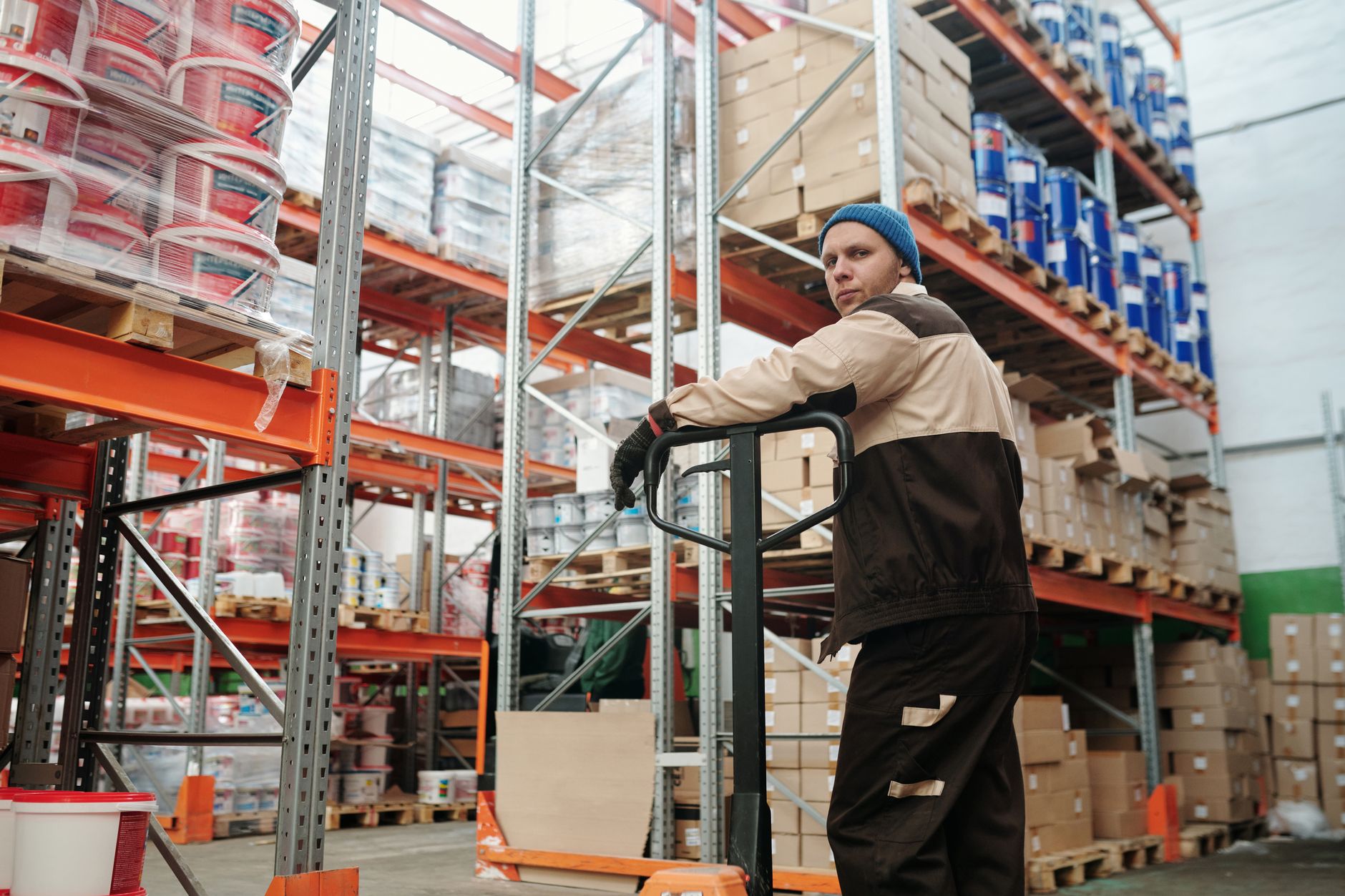
Each shift starts with the day's pallet list and the robot's route. Before the robot goes live, a site assessment maps the plant floor and sets the paths, dock positions and handoff points. Because the paths are fixed, your leads can read the day's moves ahead of time.
Most of the work is pallet pickup and drop. The robot lifts a full pallet from a freezer or staging lane, carries it along the set route, and places it at a marked position for the packing room, a conveyor or a truck. A person confirms each exchange, and the robot waits at the handoff until it is acknowledged.
Stops are part of the day too. If a path is blocked, a door is closed or a pallet is not square, the robot holds and alerts the lead. The lead clears the problem and the robot resumes. The timeline below shows a typical shift, though exact times depend on your schedule.
Which areas of the plant does the robot work in?
The robot works the lanes between cold storage and the places product has to go. It is most useful where pallets move the same way every shift. The areas below are the ones we see most often at this kind of plant, though your layout decides which of them apply.
It is less suited to areas where loads are loose or irregular. A paper on autonomous forklifts notes that loose bag handling and irregular bulk loads are less suitable than stable palletized flows, so plan for those areas to stay manual.
How does it work alongside your existing staff?
A plant with the robot still runs with people. Supervisors, quality staff, packers and graders stay on the line, and crew members still handle the exceptions the robot cannot. The goal is a robot plus a smaller team on the freezer route, never an empty building.
Most of the change is in how people spend their shift. Instead of repeated pallet trips into the cold, operators watch handoffs, grade and pack, and check quality. That work often needs more skill, so cross-training matters. Leads should learn how to clear a blocked route and how to read the robot's stop alerts.
Training is part of deployment. Staff learn the handoff routine, the stop alerts and the basic checks, so a lead can run the day's queue without calling for help at every stop.
What drives the savings in hours?
Savings come from hours taken off repetitive cold pallet work. They are not a promise tied to any single number. A plant's result depends on route length, pallets per shift, the number of handoff points and how many people now spend time on the cold route. The site assessment measures those inputs before anyone sets a target.
Peak season is where hours matter most. Because seafood employment typically peaks in July, according to Vertical IQ, plants that add temporary crews for summer also carry the training and turnover cost at the same time. A robot that holds the freezer route steady means fewer days when the pallet list falls behind.
Average plant size also shapes the math. Census County Business Patterns 2023, as aggregated by a benchmarking site, shows about 56.5 employees per establishment, while Vertical IQ puts the average plant at 72 workers. The averages come from different methods, so use your own headcount in the assessment.
How big is the sector and where are the plants?
The sector is spread across the country but concentrated in a few states. According to Census County Business Patterns 2023 as shown by a benchmarking aggregator, the industry had 516 establishments employing 29,132 workers. Alaska reported 6,945 workers, Washington 4,800 and California 1,666.
CDC NIOSH gives an earlier snapshot. In 2018 the US seafood processing industry had about 815 establishments and 35,000 workers. The 2018 and 2023 counts come from different sources and years, so they are not directly comparable, but both point to many plants running the same kind of freezer and dock routes.
What can an autonomous forklift not do in a seafood plant?
It is not a quality inspector, a grader or a packer. Judgment on product, temperature checks and food safety steps stay with your team. The robot moves pallets along set paths and reports stops. It does not decide what a load should look like.
Loads and layouts set the limits. Irregular loads, loose bags and bulk product are less suitable than stable palletized flows. Frequent layout changes mean re-mapping the paths, which takes time. A plant that changes its freezer racks every few weeks should say so early in the assessment.
Some areas and exceptions stay manual. Blocked aisles, damaged pallets, unusual loads and any task outside the mapped route need a person. A robot that stops for a reason is doing its job, and your lead should expect to clear stops during the shift.
How does a plant get started?
Start with a free site assessment. We pick the right robot for the site, map the floor and routes, and recommend the handoff points and zones that fit your flow. The assessment also confirms whether your loads are the stable palletized kind that autonomous forklifts for seafood processing plants handle best.
The robot is leased through financing, so the plant keeps its capital for the work around the line. The payment comes in the quote, which follows the site assessment once the scope is clear. We then deploy and integrate the robot with your dock and packing schedule, train your staff, and service it nationwide.
Precision matters at the handoff. A peer-reviewed review on autonomous forklifts for warehouse automation says task requirements range from transport-only path following to pallet pickup and drop at centimeter-level accuracy. The assessment checks which level your dock needs, so the quote reflects the work you actually have.
Frequently asked questions
Want an autonomous forklift at your seafood processing plant?
Tell us about your site. We will recommend the robot, quote the lease, and keep it serviced.
Sources
- BLS OEWS, cited in a Springer review
- Census County Business Patterns 2023, via plainbizbench
- Vertical IQ, seafood product preparation and packaging
- CDC NIOSH, seafood processing
- BLS JOLTS via Boostpoint
- Spotwork, food processing labor market 2026
- Autonomous forklifts for cold storage, operational realities paper
- Peer-reviewed review on autonomous forklifts for warehouse automation