
Key takeaways
- Repeated pallet moves between receiving, storage and the dock are the first candidates for an autonomous forklift.
- Short staffing stalls trucks at the dock, and that delay can be measured on your own yard.
- The robot covers routine moves while your team handles exceptions, supervision and loading.
- Savings depend on the hours your crew spends on pallet moves each shift, which a free site assessment measures.
- Robots are leased through financing, and the payment comes in the quote after a free site assessment.
Can autonomous forklifts for building supply distributors help?
Yes, for the right part of the operation. Autonomous forklifts for building supply distributors work best on the pallet moves that repeat all day: unloading inbound trucks at receiving, putting lumber and drywall into storage racks, and pulling staged loads to the outbound dock. When those moves wait on a driver or an operator, the whole yard waits. An autonomous forklift runs a set path with its own sensors and stops for people, so it can keep those moves going when the staffing sheet has an empty seat.
The main benefit is not a smaller headcount. Most operators using this equipment still need people on the floor for supervision, truck loading, exception handling and the unusual jobs that a fixed-path robot should not attempt. What changes is that a steady stream of routine pallet moves no longer depends on whether someone is free to take it. The robot covers the repeatable work, and the team covers everything else.
The sections below cover the yard problem, why building materials suit a fixed path, the benefits, a typical day, the areas it works in, how it fits with existing staff, what drives the savings, what it cannot do, and how to get started. The figures come from government statistics and industry surveys, plus vendor and dealer case studies that are labeled as such. No building supply case study with measured hours was found, so treat the operating numbers as a starting point for your own site assessment.
What problem does a building supply yard face today?
Building supply distribution runs on pallets. Lumber, sheet goods, drywall, insulation and roofing arrive on trucks, get staged, move into racks, and then get pulled for orders and outbound loads. Each of those moves needs a qualified operator, and the labor pool for that job is thin. According to the Instawork 2025 State of the Warehouse Industry, as cited by SPS Commerce, 78 percent of facilities report significant difficulty hiring and retaining warehouse staff, and nearly 500,000 warehouse and logistics jobs are open. Forklift operators are among the hardest roles to staff, according to the same survey.
The cost shows up at the dock. The same SPS Commerce article says understaffed receiving docks can reduce productivity by 25 percent during peak periods. In a building supply yard, peak often means the spring selling season, or any morning when a large lumber truck arrives and nobody is free to unload it. Pallets wait in the trailer, the truck waits in the lot, and the driver who hauled the load starts the next delivery late.
Turnover makes it harder to recover. Industry figures gathered in a warehouse automation statistics roundup put warehouse worker turnover at about 36 percent a year. Every replacement means training a new operator on the yard, the racks and the traffic rules, which takes time away from the experienced people you still have. The Modern Materials Handling 2026 MRO Survey adds that 56 percent of respondents report a shortfall of one to five forklift or automation technicians, so the skills gap extends to the people who keep the equipment running.
Why does a pallet flow suit a fixed-path robot?
Building supply yards have predictable moves. The same few aisles carry lumber from receiving to storage bays, the same dock doors take outbound orders, and the same staging lanes hold drywall. A fixed route with known stops is the kind of work autonomous forklifts handle well. The robot does not need to make novel decisions. It needs to take the next pallet along a route it has learned and stop safely when someone steps into the lane.
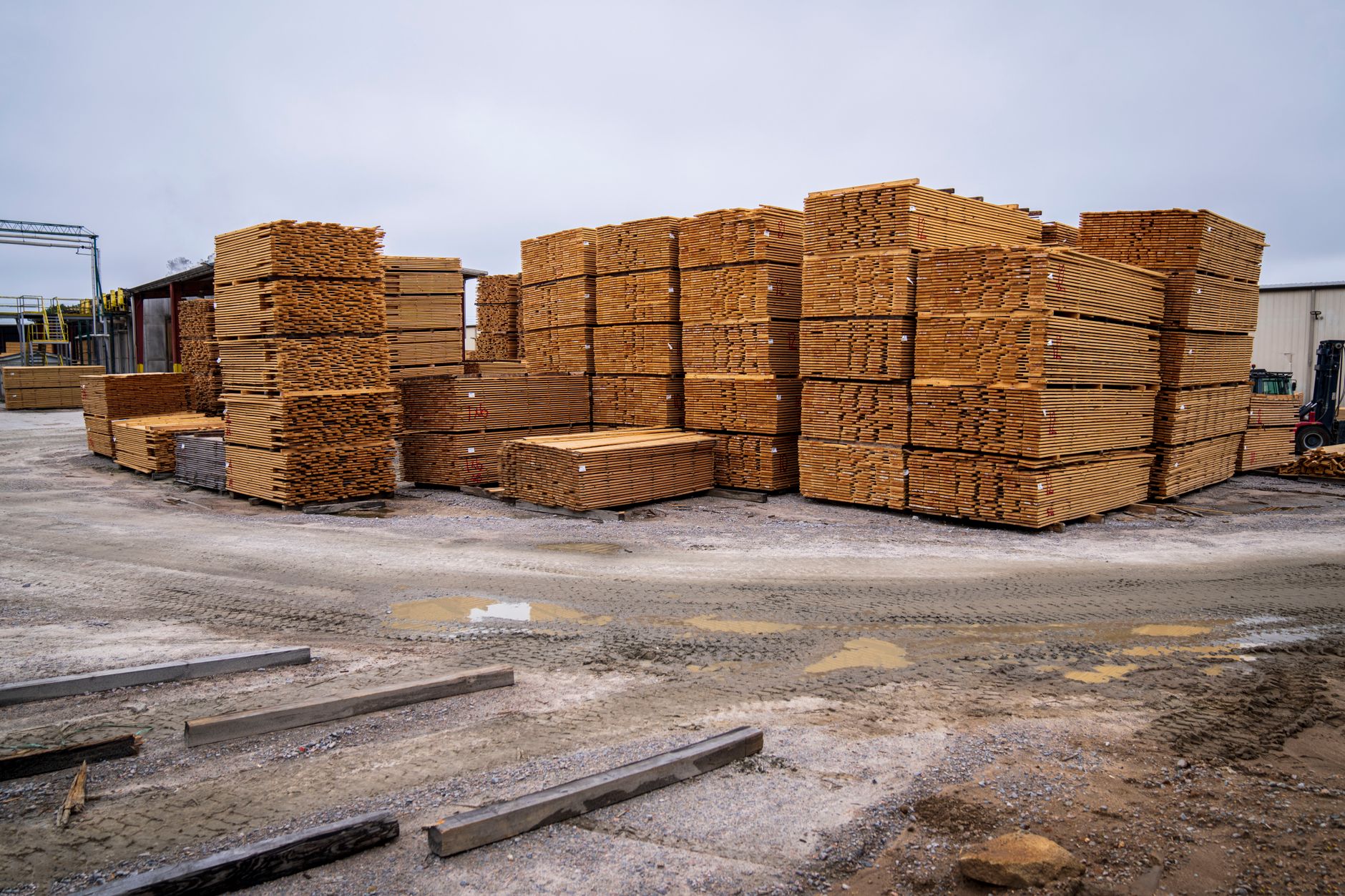
The scale of the sector makes the case. The Bureau of Labor Statistics, through its Quarterly Census of Employment and Wages, lists 72,041 private establishments in building material and garden equipment and supplies dealers for the fourth quarter of 2025. That is a large number of yards and branches, many of which move similar pallet volumes. A dealer-reported case study from a family owned lumber yard in Northern California describes about 18 forks running full time, roughly 12 hours a day, and 50 to 75 trucks loaded or unloaded each day. Those are dealer figures, but they show the shape of the work: long hours, many trucks and a steady stream of repeated lifts.
The product mix matters too. Lumber is heavy and long, drywall is bulky and easily damaged, and palletized bundles vary in size and weight. Autonomous forklifts differ in lift capacity, mast height and fork length, and a good integrator matches the unit to the actual loads. Not every move should go to the robot. Heavy cage moves, odd-sized loads and tight outdoor yards may stay with people, and the site assessment should say so plainly.
What benefits should an operator expect?
The first benefit is steadier flow at the dock. Routine pallet moves keep happening through a short-staffed shift, so trucks unload on time and the yard does not wait on one open seat. An integrator report from an adjacent site, a manufacturer feeding a warehouse rather than a distributor, describes about 200 lift truck trips eliminated per shift and labor reduced by 2 full-time equivalents per shift, with one lift truck removed. Those are vendor-reported results, but they show how much repeated trip work sits inside a busy receiving area.
The second benefit is fewer surprises on the floor. A robot on a fixed path does not get tired in the afternoon, does not cut a corner through a wet staging lane, and does not drift off route. Equipment makers describe their safeguards as meant to help operators avoid collisions, falling loads and tip-overs. Those safeguards work only as well as the site layout, which is why a layout review is part of any deployment.
The third benefit is coverage across shifts. An autonomous forklift can run a second or third shift without a second person in the cab, which matters when the yard's peak falls early in the morning or late in the day. Vendor marketing for building materials describes these machines as designed for continuous operation with automatic or semi-automatic battery charging. Treat that as a claim to test against your own schedule, not as a promise.
The fourth benefit is that experienced operators stay on higher-value work. When routine moves are covered, your best people can handle will-call pulls, cutting orders, damaged bundles and the outbound loads that need careful stacking. Those jobs use skill that is hard to replace, and they are the jobs most likely to suffer when the crew is thin.
How does the robot work through a typical day?
A typical day starts before the counter opens. The robot is checked for charge, its route map is matched to the day's receiving schedule, and the first inbound trailer is staged. The shift lead confirms that the first pallets are labeled and that the lanes between dock doors and storage bays are clear of stray material.
Through the morning, the robot follows its routes between dock doors, storage bays and staging lanes. It takes a pallet when a receiving or storage task is released to it. Staff unload trailers, check counts and handle paperwork. When a person walks into the aisle, the robot stops and waits until the lane is clear again, which keeps the people working the dock in control of the space they share with it.
Midday is often the busiest stretch. Outbound orders pull pallets toward the dock, and the robot takes the staged loads over. Charging can be scheduled between peaks, with the route layout planned so that the lanes stay open while the unit is away from its main work.
In the afternoon, exceptions go to people. A damaged bundle, a short order, or a load that needs a different lift is handled by the team. The robot's work log records what moved and when, which helps the closing count and gives the shift lead a clear view of the day's pallet volume.
Before close, the work log is reviewed, route updates are made where racks or staging lanes changed, and the charging plan for the night is set. Those small routine checks are what keep the robot predictable the next morning.
Which areas of the yard does it cover?
The robot works in the parts of the yard where pallet moves are routine and the traffic is predictable. Most sites start with a few areas and add more after the first routes run cleanly for a few weeks. Outdoor areas with weather exposure and uneven ground usually need a separate survey before any route is approved.
Choose the first zones by volume and predictability. Receiving to storage is often the first candidate, since it is the most repeated move. Staging and outbound dock moves come next. Open areas with heavy cross traffic, tight corners and frequent customer pickups usually wait for a later phase, once the team has learned how the robot behaves in the aisles.
How does it work alongside existing staff?

The robot works beside a team, never in place of one. A typical deployment keeps the drivers who unload trucks, the pickers who build orders, the yard supervisor who sets priorities and the operators who handle exceptions. The robot takes the repeatable pallet moves that otherwise pull those people away from their own tasks.
Training is what makes the arrangement work. Staff need to know the stop zones, how to clear a blocked route, how to call for help, and what the robot's status lights and sounds mean. An integrator usually trains the team on site and leaves a written procedure for the shift lead to keep at the dock.
Shift planning changes. Supervisors plan the robot's routes and charging the same way they plan a forklift schedule. Some operators find they can build a smaller crew for routine moves and keep experienced people on exceptions, but that decision is best made after the site data is in, not before.
What drives the savings, and how many hours are involved?
Savings come from hours of repeated work moved off the crew, from faster dock turns, and from fewer trucks waiting on a free operator. For the operator, the first question is how many hours per shift go to routine pallet moves today. The labor pool sets the stakes. The Bureau of Labor Statistics counts 765,200 industrial truck and tractor operators employed in 2025, with a projected change of 1 percent over 2025 to 2035, which it describes as slower than average. O*NET's summary of BLS data projects about 64,700 openings a year for these operators, so refilling a seat can take a long time.
The hours to measure are simple. Count the hours per shift spent on routine pallet moves, the minutes trucks wait at the dock, and the number of trips per shift. The adjacent-site report gives a sense of scale, with about 200 trips per shift and 2 full-time equivalents per shift in one manufacturing-to-warehouse case. Your yard may show a different number, and the site assessment measures it directly. Labor is also a large share of warehouse spending, with a logistics recruiting report citing labor at 50 to 70 percent of total warehouse operating expenses.
Turnover belongs in the same calculation. According to BLS JOLTS data, as cited by a recruiting firm, the quits rate for transportation, warehousing and utilities was 2.2 percent in July 2026 preliminary data, against 1.9 percent for all nonfarm jobs. Each quit means training time, and that training time is hours your experienced people are not spending on exceptions. Savings are not guaranteed, and the quote shows the figures for your own site.
What can an autonomous forklift not do?
It cannot replace the judgment of an experienced operator on a loaded, damaged or unusual move. It does not work outside a mapped route, and it does not handle a load that falls outside its rated capacity or mast height. It does not check paperwork, repair a damaged rack, or serve a customer at the counter.
Layout sets limits. Narrow or shifting aisles, floors with heavy wear or standing water, and outdoor yards with poor surfaces may need work before a route is approved, or they may stay manual. Mixed sites often keep human-driven forklifts for oversized loads and special handling, and that is a sound plan, not a failure of the robot.
Be honest about maintenance and backup. The robot needs charging, sensors kept clean, routes updated when racks move, and a plan for the day it is out of service. Because technician shortages are common in the sector, ask about service response times and backup coverage before committing.
How do you get started?
The first step is a free site assessment. We walk the yard with you, map the pallet flows, count the moves per shift, check floors and aisles, and identify the routes where a robot would recover the most hours. You get a recommendation on the robot type, the number of units and the integration plan, so the decision rests on your own yard data.
We are a US commercial robot integrator. We pick the right robot for the site, lease it through financing, deploy and integrate it, train the staff, and service it nationwide. Robots are leased through financing, and the payment comes in the quote after the free site assessment. Deployment covers route mapping, connection to your warehouse system where it applies, staff training and go-live support.
Start small. A first phase on one high-volume route lets your team learn the flow and gives you your own hours data before any expansion. The assessment should answer the questions in this page for your yard, and the quote should follow from those answers.
Frequently asked questions
Want an autonomous forklift at your building supply distributor?
Tell us about your site. We will recommend the robot, quote the lease, and keep it serviced.
Sources
- Bureau of Labor Statistics, Occupational Outlook Handbook, material moving machine operators
- O*NET OnLine summary for industrial truck and tractor operators
- Bureau of Labor Statistics, Quarterly Census of Employment and Wages, NAICS 444
- SPS Commerce, 2026 supply chain trends on labor and robotics in warehousing
- Warehouse automation statistics roundup
- Modern Materials Handling, 2026 MRO Survey on the workforce behind warehouse automation
- Dealer-reported forklift video case study for a lumber yard
- Integrator case study on AGV deployment, manufacturing to warehouse