
Key takeaways
- Carts are the repeat job: soiled and clean linen moves between wash, dry, folding and dispatch on fixed routes.
- Vendor-reported figures put labor at 35-55% of operating costs in commercial laundry plants, which points to where the hours go.
- A robot handles the transport layer while staff keep sorting, loading, folding and exception work.
- Hours saved depend on your cart count and layout, and a free site assessment measures them before any quote.
- Robots are leased through financing, and the payment comes in the quote after the site visit.
How can autonomous mobile robots benefit commercial laundries?
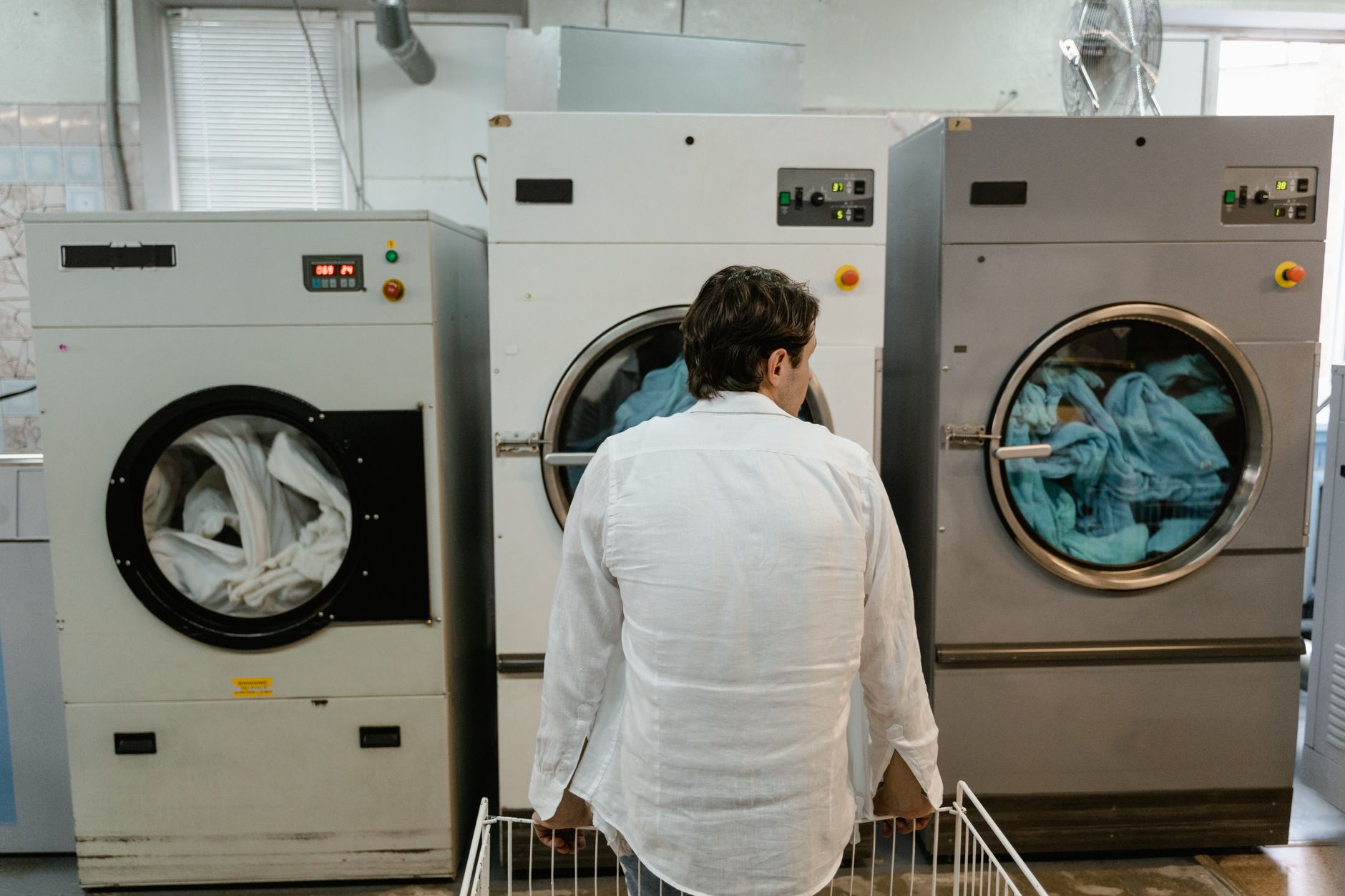
At a commercial laundry, a large share of the shift goes to moving linen. Soiled carts come off the dock, roll to sorting, feed the washers, move on to the dryers and flatwork ironers, reach the folding and finishing tables, and leave again as clean carts for dispatch. Autonomous mobile robots for commercial laundries take over the carts on the repeat legs of that route, so the people on the floor spend their time on sorting, loading, folding and inspection instead of pushing heavy carts from one room to the next.
The main gain is steadiness. A robot runs the same lanes at the same cadence on every shift, it does not wait for a gap in a busy aisle, and it keeps moving through the morning dispatch peak when staff are stretched thinnest. For the person who runs the plant, that means fewer carts parked at the wrong station, less time spent hunting for a cart, and a clearer picture of where linen sits between steps.
The scope is narrower than the headline. Robots in this picture handle transport, not the handwork of sorting, folding or loading washers. Your savings depend on how much of the day your team spends on cart movement, and the sections below show where that time tends to go at this kind of place.
What does moving linen cost a commercial laundry today?
Labor is the largest line on the ledger. According to a laundry automation vendor, labor consumes 35-55% of operating costs in commercial laundry plants, and sorting, finishing and material handling need the most labor hours. That figure is vendor-reported, so check it against your own payroll and cart logs, but it points at the work where transport sits.
Pushing carts is a quiet share of that work. The same vendor says conveyor systems can eliminate up to 5.5 km of daily cart pushing per employee. Treat that as the vendor's own estimate for conveyor installs, not a measure of your floor, but it shows how much walking the job carries when carts are moved by hand across a plant of any size.
Linen also suffers while it waits. A patent filing describes linen degradation from UV light, moisture, temperature, insects and mold during processing. The same filing describes soiled linen placed into carts left at fixed locations, with carts retrieved only when the laundry truck arrives, and calls that process very inefficient and a source of delays for cleaning staff and launderers. Every hour a cart sits at a fixed spot is an hour its contents are not moving toward the next step.

What are the main benefits?

Most operators find the benefits fall into four groups. They usually show up on the floor in roughly this order.
- Fewer hand moves of heavy carts, which means fewer trips per shift for each person on the transport route.
- Steadier timing between stations, so washers, dryers and ironers are fed when they need feeding instead of when someone is free.
- Overnight staging of carts for the morning shift, a practice an operator interview in trade press describes for unfinished linen.
- A record of cart movement from the fleet software, giving dwell times and route counts to compare week to week.
How does the robot work day to day?
Setup starts with a map. The robot is driven or guided through the plant once to learn walls, doors, dock edges and station stops, and the route list is built from the stations you already use. Staff then request a cart move from a tablet or a fixed station, and the robot picks up the cart, travels the lane and parks at the next station for a person to unload.
Between moves the robot charges at a dock in a planned window, usually when the plant is between peaks. Fleet software queues requests, sends a second robot when the first is busy, and flags a blocked cart so a person can clear it. That last part matters on a laundry floor, where hampers, pallets and foot traffic change from hour to hour.
A hospital linen-cart robot vendor describes a similar pattern. According to that vendor, its robots move clean and soiled linen and carts across a hospital day and night, carts can be shared between departments, and the evening run carries linen while the daytime run carries trash. That is a hospital setting, not a plant, but the routing logic carries over. The same vendor says its standard unit handles carts up to 44 inches long and its largest unit up to 56 inches, which is the kind of cart fit you check in the assessment.
Which areas of the plant does the robot work in?
Robots work best where the route repeats and the lane is clear. In a commercial laundry that usually means the links between the areas below, plus the staging spots where carts wait. Each area has its own cart type and its own timing, so the site assessment maps them one by one.
How do robots work alongside your existing staff?
A robot does not replace the crew. It takes the cart legs off a few people so they can run the stations that need judgment. A plant with a robot still needs the same range of skills on the floor, plus a person who can clear a blocked lane and reset a route. The right way to frame it is one or more robots working beside a smaller transport team, never a plant run by machines alone.
The labor pool is large but moves a lot. According to the U.S. Bureau of Labor Statistics, 185,000 laundry and dry-cleaning workers were employed nationally in May 2023. According to O*NET, 204,900 laundry and dry-cleaning employees were counted in 2025, with projected growth of 3 to 4 percent for 2025 to 2035 and 28,200 projected openings.
Turnover is the pressure point. A staffing research source reports annual frontline turnover of 80-120% for commercial linen laundries, citing a 2024 industry association figure that it did not check independently. Treat that as a directional signal. If your plant trains new people every few months, a robot that carries the same route each day gives a new hire one stable lane to learn first.
What drives the savings?
The savings come from hours. Three hour sources matter most: time spent pushing or waiting with carts, time spent waiting for a free cart to reach a station, and time lost when a machine sits idle for lack of feed. Each one can be measured in your plant before any decision, and each one is shown as a range rather than a promise.
Published figures give the scale. According to a laundry automation vendor, automated sorting can cut labor by 70-77%, and an automated towel folder can raise output from 120 pieces per hour manually to 800-1,000 per hour, saving more than 8 labor hours per day per machine. Those are vendor-reported numbers for equipment that is not a robot, and they show the kind of hour change operators tally when work moves off the hands.
A staffing research source also reports labor at 38-50% of revenue for commercial linen laundries. That figure is lower confidence and comes from a secondary source, so use it as a prompt to measure your own labor share, not as a benchmark to hit.
What can the robot not do?
It cannot fold, sort or judge linen. A folding system vendor reports its system runs at about 60% of human throughput and claims 99.4% success in controlled commercial trials. Those are controlled trials and a vendor's own numbers, so the honest read is that folding automation is still earning its place. A trade publication describes a semi-humanoid system completing a commercial laundry shift, including loading, unloading, folding and stacking, but that is an early report and not a plant-wide standard.
It cannot read a stain, a torn sheet or a wrong cart type. It depends on clear lanes, working doors and a floor it can read, so a plant with frequent blocked aisles or uneven floors needs work before deployment. Charging creates downtime, so a route plan with a second unit or a planned pause is part of setup. Exceptions go to people, and that is the right division of work.
There is also a limit on fit. Carts must match the robot's deck and hitch, and a cart that does not fit a lane is a cart that stays put. The assessment checks cart dimensions, door widths and floor transitions before any quote is made.
How do you get started?
Start with a free site assessment. We walk the plant with you, map the transport routes, count cart moves per shift, check doors, floors and cart sizes, and note where staff spend time moving linen by hand. The result is a plan for which robot fits the site and how many lanes it should cover. We are a US commercial robot integrator, so we pick the right robot for the floor rather than fitting your floor to one model.
The robot is leased through financing, and the payment comes in the quote after the assessment. We then deploy and integrate the units with your fleet and station layout, train your staff on requests, exceptions and charging, and service the robots nationwide so faults reach a team that knows your route plan.
Begin with one lane, measure the hours for a few weeks, then add lanes as the numbers support it. That phased start keeps the plant running while the team learns the work.
Frequently asked questions
Want a warehouse robot at your commercial laundry?
Tell us about your site. We will recommend the robot, quote the lease, and keep it serviced.
Sources
- U.S. Bureau of Labor Statistics, laundry and dry-cleaning workers, May 2023
- O*NET OnLine, Laundry and Dry-Cleaning Workers
- Staffing research on laundry and dry-cleaning industry
- Laundry automation vendor blog on labor costs
- USPTO patent filing on linen handling
- Folding system vendor report
- Trade publication on semi-humanoid laundry robot
- Hospital linen-cart robot vendor page