
Key takeaways
- Service bays, drive-in lanes and waiting areas collect oil, grit and debris all day, so floors need passes between appointments.
- A floor cleaning robot runs scheduled passes while technicians stay on the lifts and at the counter.
- The right model is a robot plus a smaller team, with staff owning the route, the spills and the judgment calls.
- Published labor figures come from other settings, so measure your own floor before counting on any number.
- Robots are leased through financing, and the payment comes in a quote after a free site assessment.
Can cleaning robots for auto repair shops keep the floor clean between jobs?
For many shops, the answer is yes. A floor cleaning robot can run scheduled passes through the service bays, the drive-in lane and the customer waiting area between appointments, so the floor is ready when the next car rolls in. For a manager who is already short on hands, that is the core appeal of cleaning robots for auto repair shops: floor care runs on a schedule instead of waiting for someone to find a free gap in the day.
The robot does not replace technicians, service advisors or front desk staff. It takes over the repetitive floor passes that get skipped when bays are full and a customer is waiting, and it leaves your team free to diagnose, repair and talk with customers. A common start is one unit in the busiest bay, run for a few weeks, and then a decision about how far to expand.
We are a commercial robot integrator. We pick the machine that fits your floor, arrange commercial robot leasing through financing, install and integrate it, train your crew and service it nationwide. The first step is a free site assessment, and the lease quote follows from that. Robots are leased through financing, and the payment comes in the quote.
What problem does a busy shop floor create today?
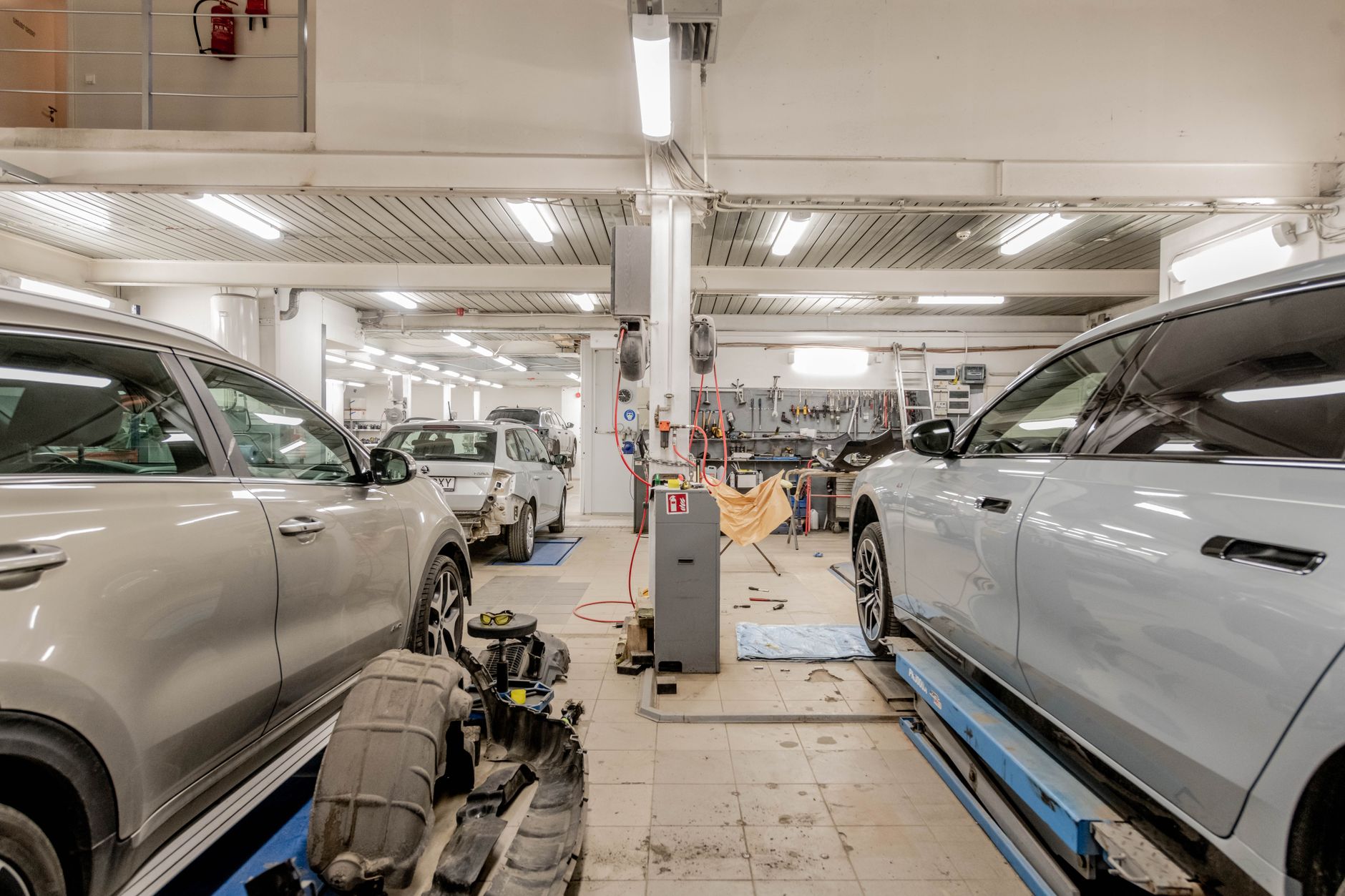
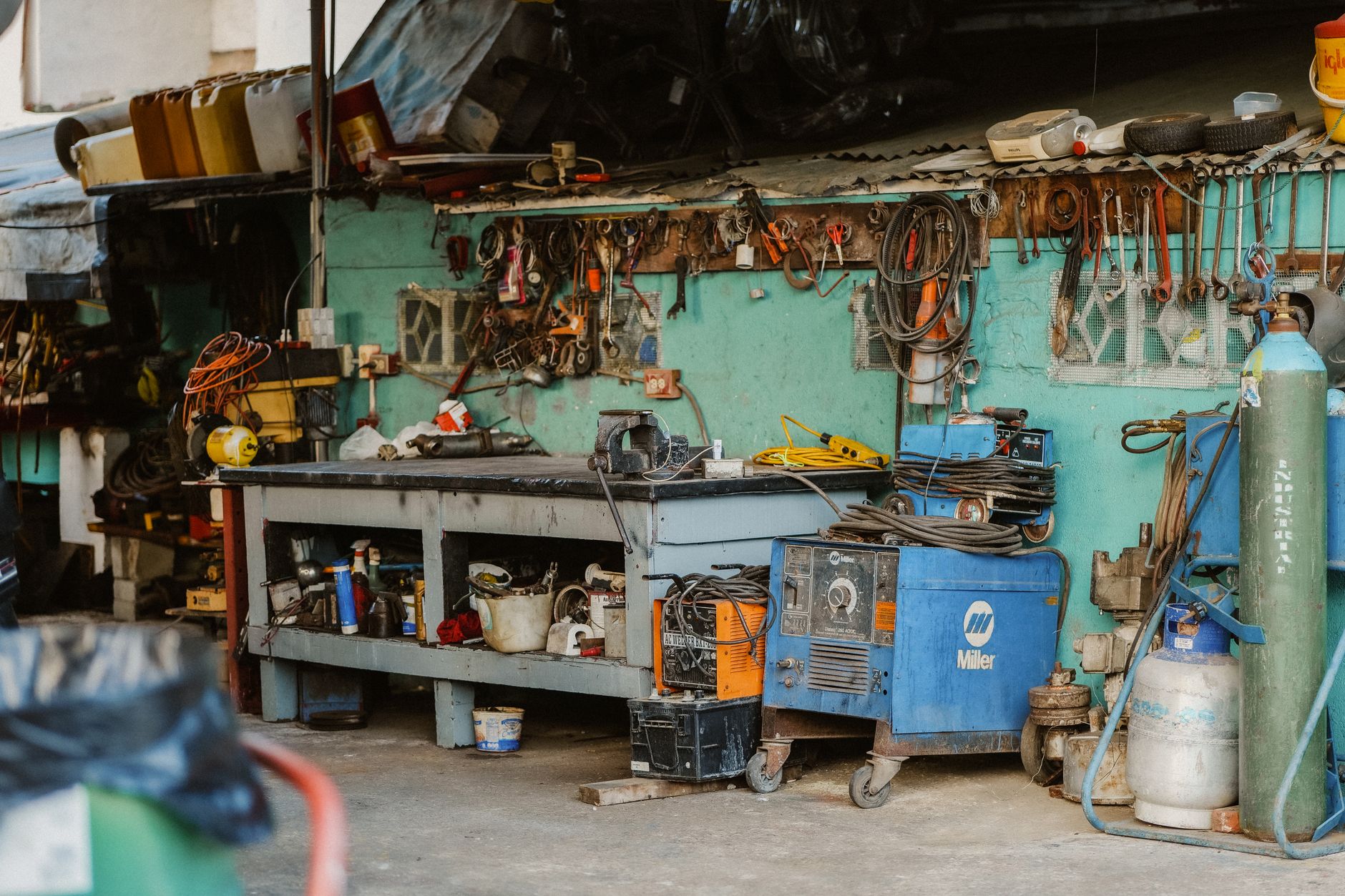
Auto repair floors take a lot of punishment. Oil drips from drain pans and during fluid changes, brake dust settles on the concrete, and gravel and tire debris track in from the lot. Technicians step around the mess through the day, and the waiting area collects dirt from every customer who walks in from outside. By closing time the bays look busy, and the floor looks like it has been busy for longer.
Labor decides who does the cleaning. The U.S. Bureau of Labor Statistics reports that automotive service technicians and mechanics held about 805,600 jobs in 2024, and projects a change of 33,600 jobs over 2024 to 2034. Those are the same people needed on the lifts, so a spare person with time for a broom is rare.
Staffing is tight across the trade. A trade press summary of a 2025 survey of about 700 shops found that nearly six in ten shops reported a high or moderate business impact from the technician shortage. Heavy-duty repair shops describe a similar squeeze: a vendor-reported survey found that 40% of respondents said hiring technicians had become more difficult. These are directional signals, not audits of your floor, but they match what many owners describe.
What are the main benefits for an auto repair shop?

The first benefit is the one customers see. A waiting area with clean tile, a swept entry and no oil tracked in from the bays changes how people judge the shop before they hand over keys. Customers rarely mention floors in a review, but they notice grime near the counter and the restroom door.
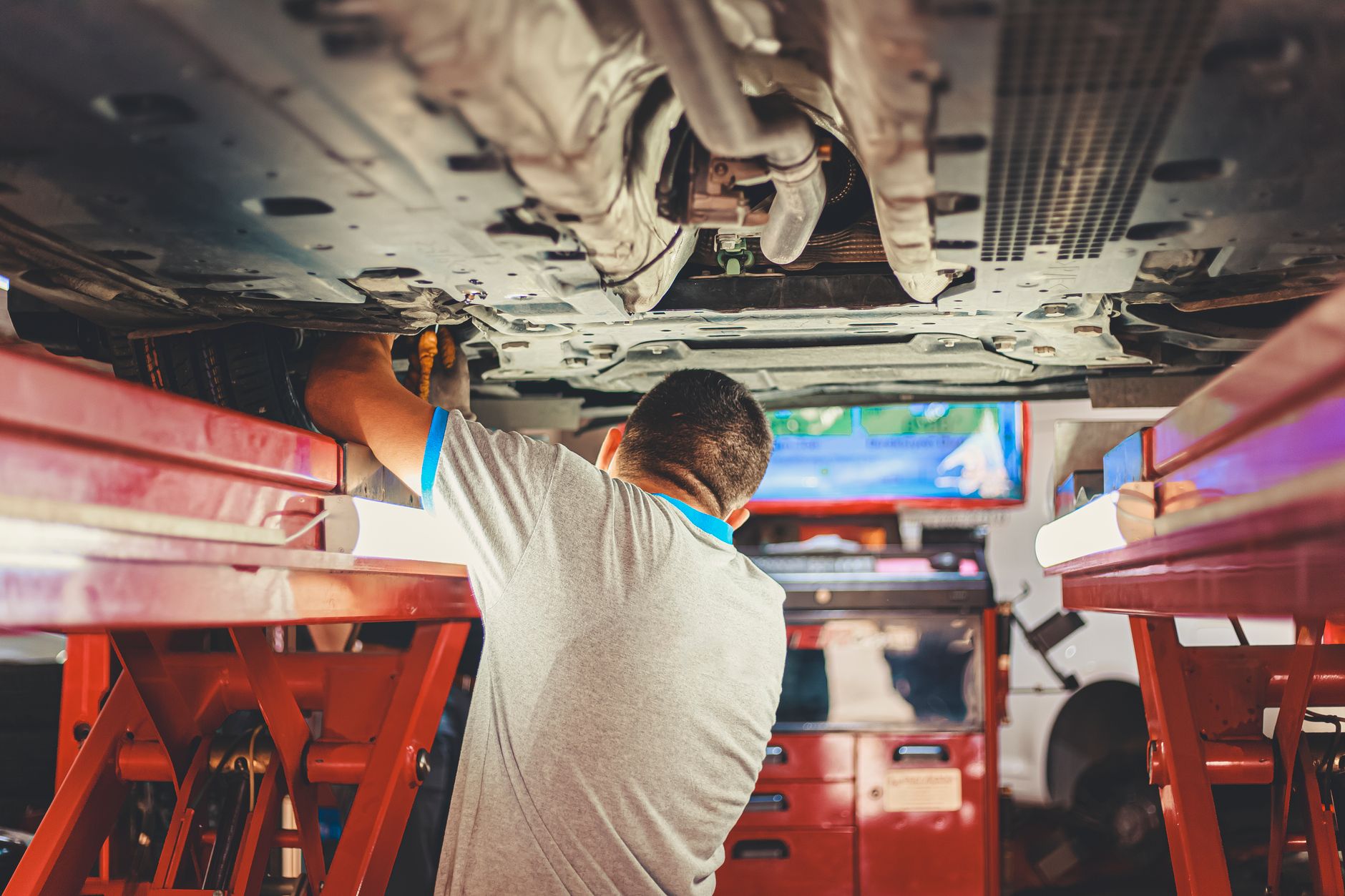
The second is safety. Oil and coolant on concrete are slip hazards, and a shop with people moving around jacks, stands and tool carts has little margin for a fall. A scheduled pass catches a spill that has sat for an hour, not only the one someone happened to notice at closing.
The third is labor. Sweeping and scrubbing pull technicians and service writers away from work that earns the bay its revenue. Moving the repetitive part of floor care to a machine lets your people spend more of the day on diagnosis, repairs and customers, which matters most when the bench is short.
The fourth is consistency. A human crew sweeps when there is time, and on a busy Saturday that can mean not at all. A scheduled robot runs the same route at the same times, so the floor does not slide into the state where it needs a deep clean every week.
How does a floor cleaning robot work day to day?
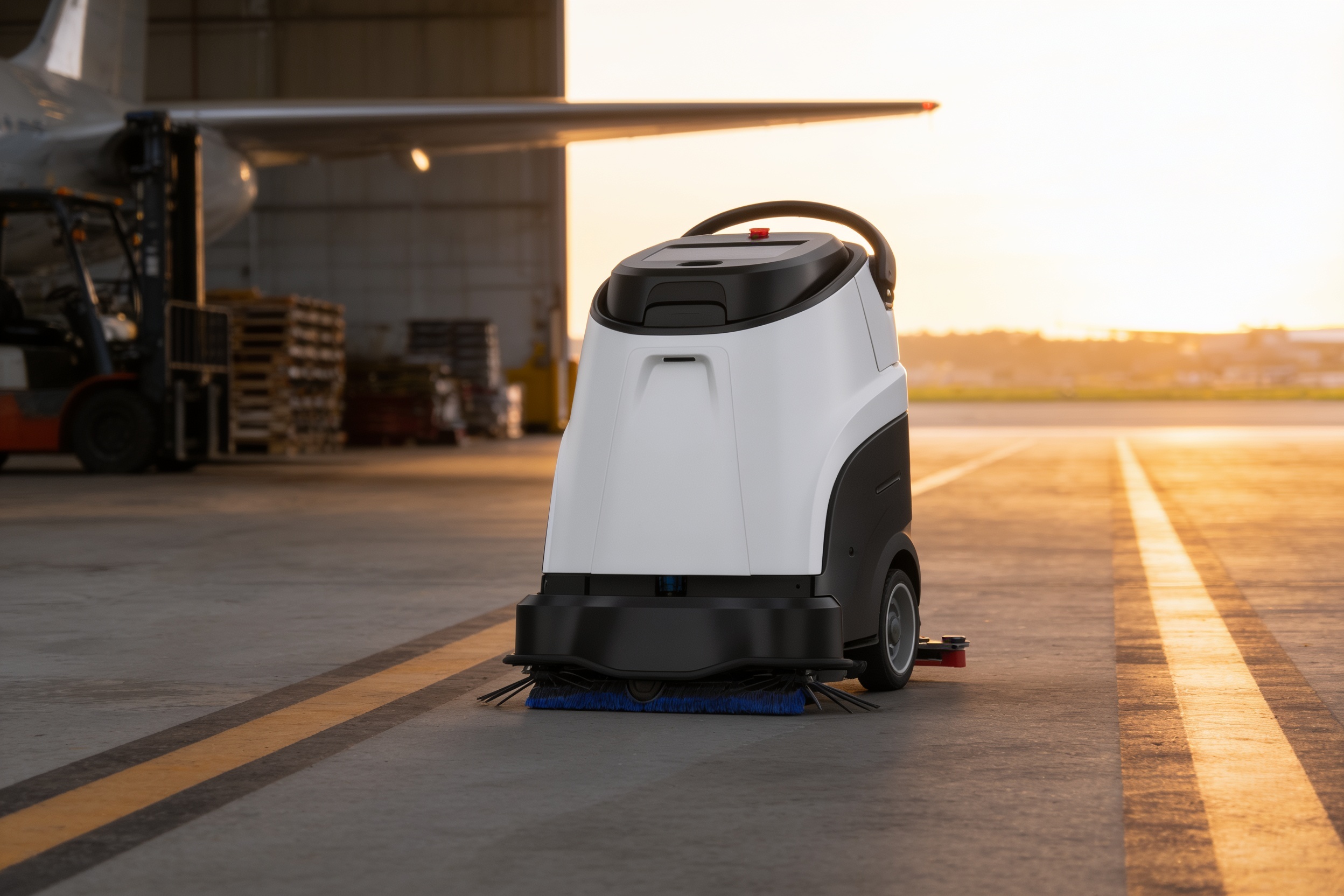
Before anything runs, we map the floor during the site assessment. Mapping captures the bays, the aisles between lifts, the parts room, the waiting area and the spots where tool carts and tire stacks usually sit. The route is set around fixed equipment, and the dock goes where the machine can charge without blocking a bay door or the drive-in lane.
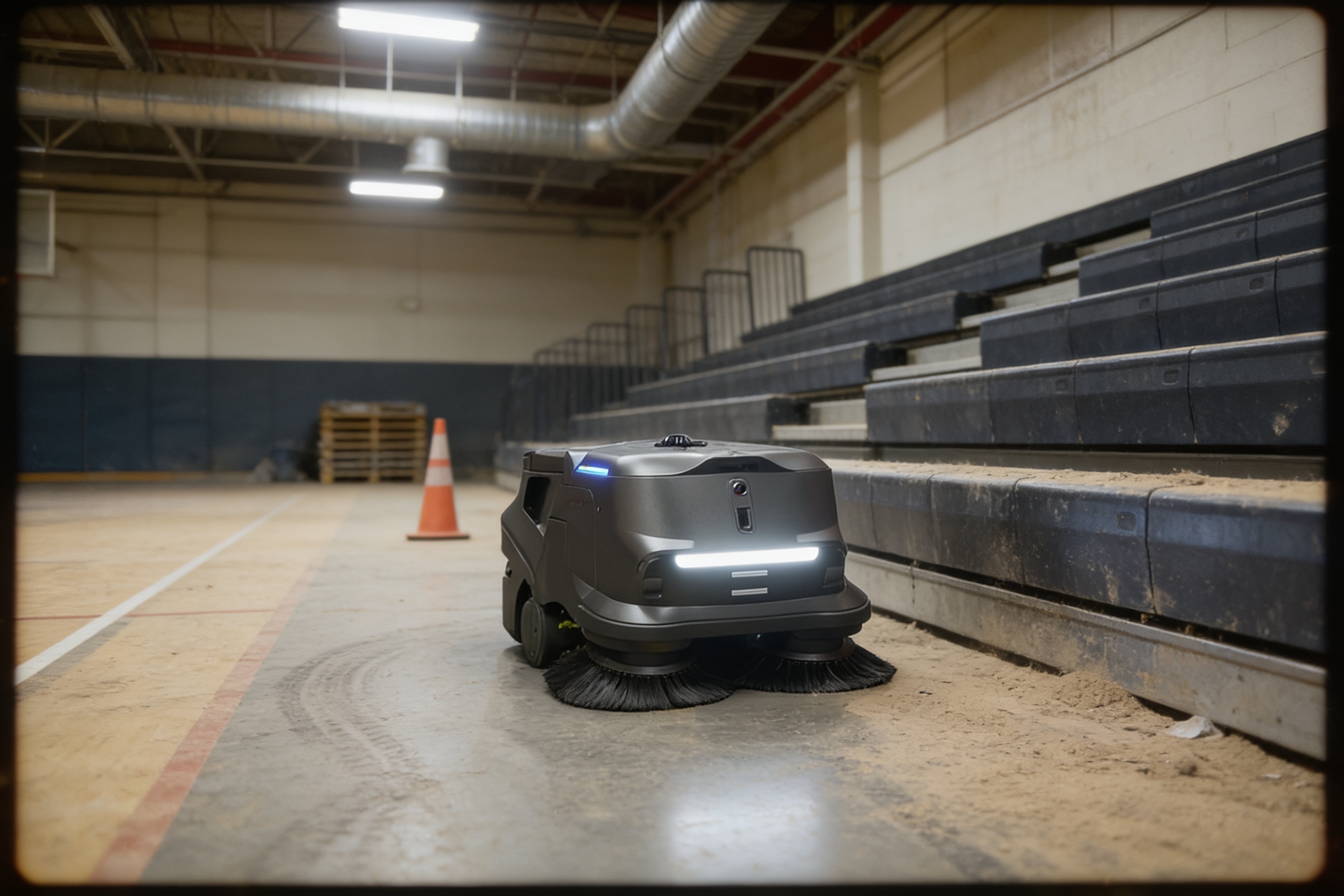
Day to day, passes are scheduled for the gaps between appointments: the lunch lull, the stretch after the last drop-off, and overnight floor care with no operator on the floor. The machine returns to its dock when a pass is done, so it is not parked in the lane between runs.
The crew's job is a few simple habits. Clear the route before a scheduled run, keep creepers and jack stands out of the aisles, and check the dock, tanks and battery at open. If the machine pauses for an obstacle, someone clears it and the pass resumes. Our team covers these routines during go-live support, so the habits form early.
Which areas of the shop does the robot cover?
A floor cleaning robot does its best work on open, hard, reasonably level floors. In an auto repair shop, that means the concrete and sealed surfaces that carry the most traffic and collect the most grime. Coverage usually starts with the areas below, and each one is confirmed during the site assessment.
Shops differ, so the plan differs. A shop with a showroom and a parts counter needs different routes from a small bay and waiting room operation. We do not assume the layout. The assessment decides which areas to include, and a first deployment often starts with one or two of them before the route grows.
How does the robot work alongside existing staff?
A cleaning robot works alongside your team, not in place of it. Technicians still diagnose and repair. Service advisors still greet customers and close the sale. The robot takes the repetitive floor pass, and your people handle what it cannot: absorbing a spill, placing wet floor signs and making judgment calls about what needs attention right now.
Owners already feel the staffing pinch. According to a vendor-reported analysis, 45% of shop owners named the technician shortage as their top concern, yet only 3% listed improving employee turnover and retention among their top three goals for the next 12 months. Protecting technician time is the practical reason to hand the floor pass to a machine.
The routine change is small. One person owns the robot each shift, often a service advisor or lead technician, who checks the dock, clears the route and logs any stop. Our team walks the crew through this during go-live support until it becomes habit.
What drives the savings in hours and labor?
Savings come from hours that were going into floor work, and the best way to see them is to measure your own floor. We did not find a published hours-per-week figure for floor cleaning at auto repair shops, so the figures below come from other settings and should be read as directional.
A 2023 case study from a U.S. hospital network, which is vendor-reported, recorded labor hours falling from 16 hours to 5 total manhours per night, and scrubbing hours falling 50%. A warehouse account, also vendor-reported, put the savings at more than 300 hours of labor versus conventional cleaning over roughly nine months. An auto service business in Romania reported reduced cleaning time, with staff attention shifting to monitoring and occasional supervision.
Read together, the range runs from a 50% drop in scrubbing hours in one setting to more than 300 hours over roughly nine months in another. Your own figure depends on floor area, how often the floor needs passes and how much of the day your crew spends on the floor now. The site assessment gives you a measured estimate for your shop, and we do not promise a number.
Turnover adds hidden hours. According to 2026 reporting on technician workforce data, employers hired 1.18 million technicians in 2025 and lost 1.14 million across all 10 sectors, and collision repair had the highest turnover rate at 60.7%. Every new hire spends time learning the floor routine, so a routine that does not depend on one person's memory protects those hours.
What can a cleaning robot not do?
A floor cleaning robot is not a general helper. It does not diagnose vehicles, move cars or clean surfaces it cannot reach. Its route is set by people, so the crew still decides which corners behind the lifts get extra attention.
It stops for obstacles and needs a clear path. A dropped socket set, an open toolbox or a jack stand in the lane can halt a pass until someone clears it. Stairs, curbs and steep or uneven ramps are not places to send it, and heavy caked grease or loose gravel in the drive-in lane may need a manual pass first.
It will not fix worn floors, cracked concrete or deep staining. Plan for spot cleaning and detail work by hand. Cleaning robots for auto repair shops work best as one part of the routine, not the whole of it, and we would rather say so up front than promise a floor that never needs a broom.
How do you get started with robot lease financing?
Start with your floor, not a machine. We do a free site assessment that maps the bays, waiting room, parts aisles and entry lane, notes obstacles and floor condition, and identifies the right robot for the space. From there we send a lease quote, and the payment comes in that quote.
Robots are leased through financing, so the shop can start without tying up capital in equipment. Lease options can include maintenance included, and where a shop wants more certainty, spare unit coverage and on-site dispatch can be added to the plan. A common start is one leased unit in the busiest bay as a robot pilot program, expanded after the crew has run it for a few weeks.
Once the lease is in place, our team handles deployment and integration, go-live support and crew training. After that, our service team provides remote triage and on-site dispatch nationwide. You will see the plan, the quote and the route before anything is installed.
Frequently asked questions
Want a cleaning robot at your auto repair shop?
Tell us about your site. We will recommend the robot, quote the lease, and keep it serviced.
Sources
- U.S. Bureau of Labor Statistics, Occupational Outlook Handbook
- AAPEX summary of PartsTech and OEC shop survey
- PartsTech analysis of shop owner priorities
- Repairer Driven News, TechForce workforce reporting
- Trucking Info, Fullbay report
- SoftBank Robotics hospital network case study, 2023
- Modern Materials Handling, DSV warehouse floor scrubbing case
- Robot Industries, Michelini auto service success story