
Key takeaways
- Cobots for bicycle manufacturers take repetitive loading and part handling off skilled assemblers.
- Consistent fixture placement lets frames reach the next step without hand adjustment.
- Start with one station, measured on your own floor before any lease quote.
- According to the International Federation of Robotics, cobots were about 11% of 2025 industrial robot installations.
- Robots are leased through financing, with terms set in a quote after a free site assessment.
How can cobots for bicycle manufacturers help a frame line?
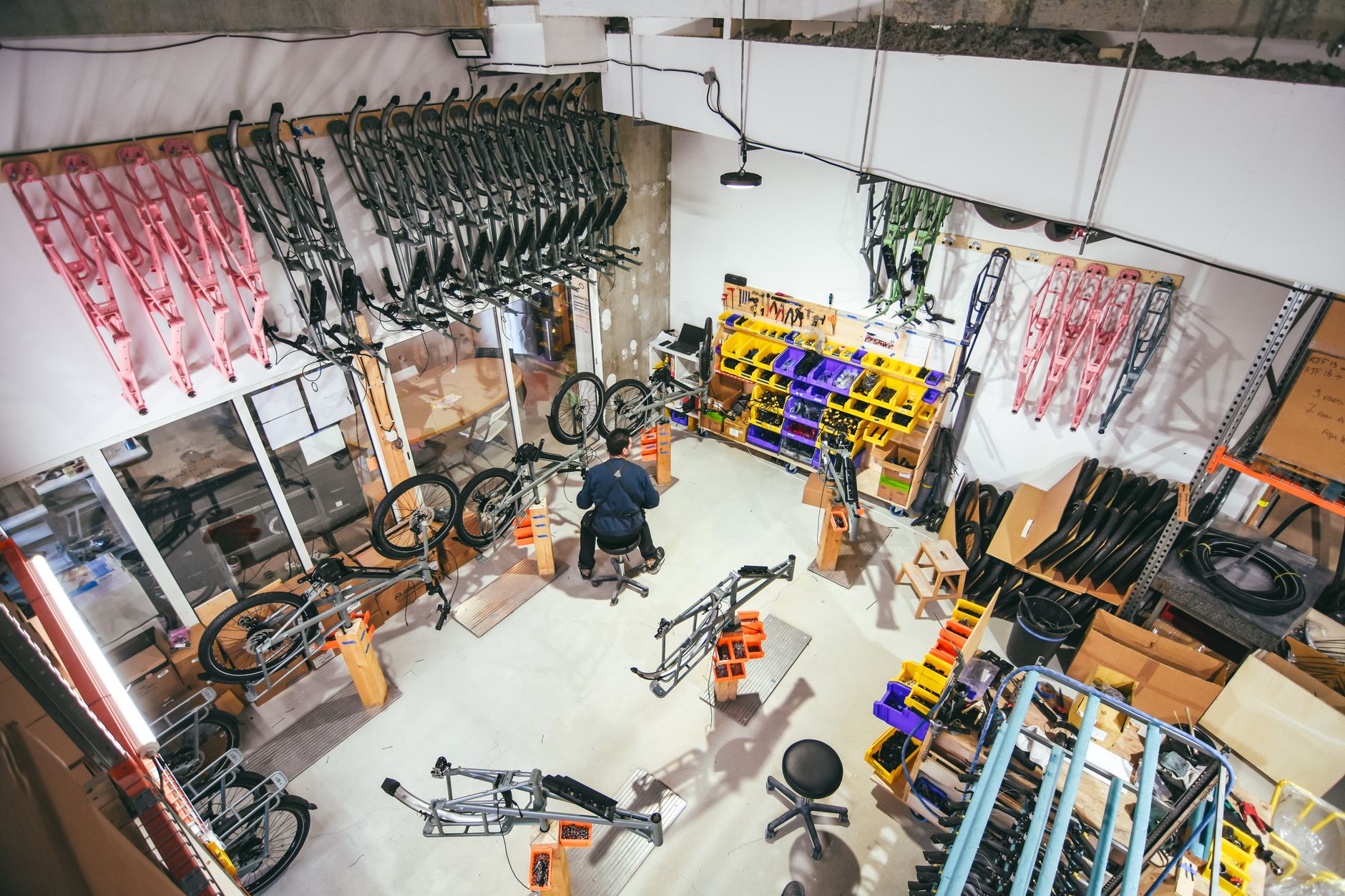
Cobots for bicycle manufacturers take over the repetitive part of frame building: loading tubes, lugs and dropouts into fixtures, moving finished parts to racks, and feeding the same small components to a bench again and again. The skilled assembler keeps the work that needs judgment, including fit checks, alignment, weld and braze decisions, finishing, and inspection.
The gain comes from bounded batch runs. A shop builds a run of one frame size or geometry, then changes over. A collaborative arm can repeat the same loading motion across that batch with consistent placement, and it can be taught a new fixture pattern by hand guiding instead of rebuilding the cell.
We are a US commercial robot integrator. We help a shop choose the right arm for its fixtures and floor, lease it through financing, deploy and integrate it, train the staff who run it, and service it nationwide. Lease terms and payment come in a quote after a free site assessment.
What does a bicycle manufacturing floor look like today?
Most bicycle manufacturers in the US are small and spread out. According to a US market research report on the industry, there were 56 bicycle manufacturing businesses in 2025, up 1.8% from 2024, and no company holds more than 5% market share. A field like that means a shop competes on fit, finish and lead time, not on the volume a large plant can spread across its labor.
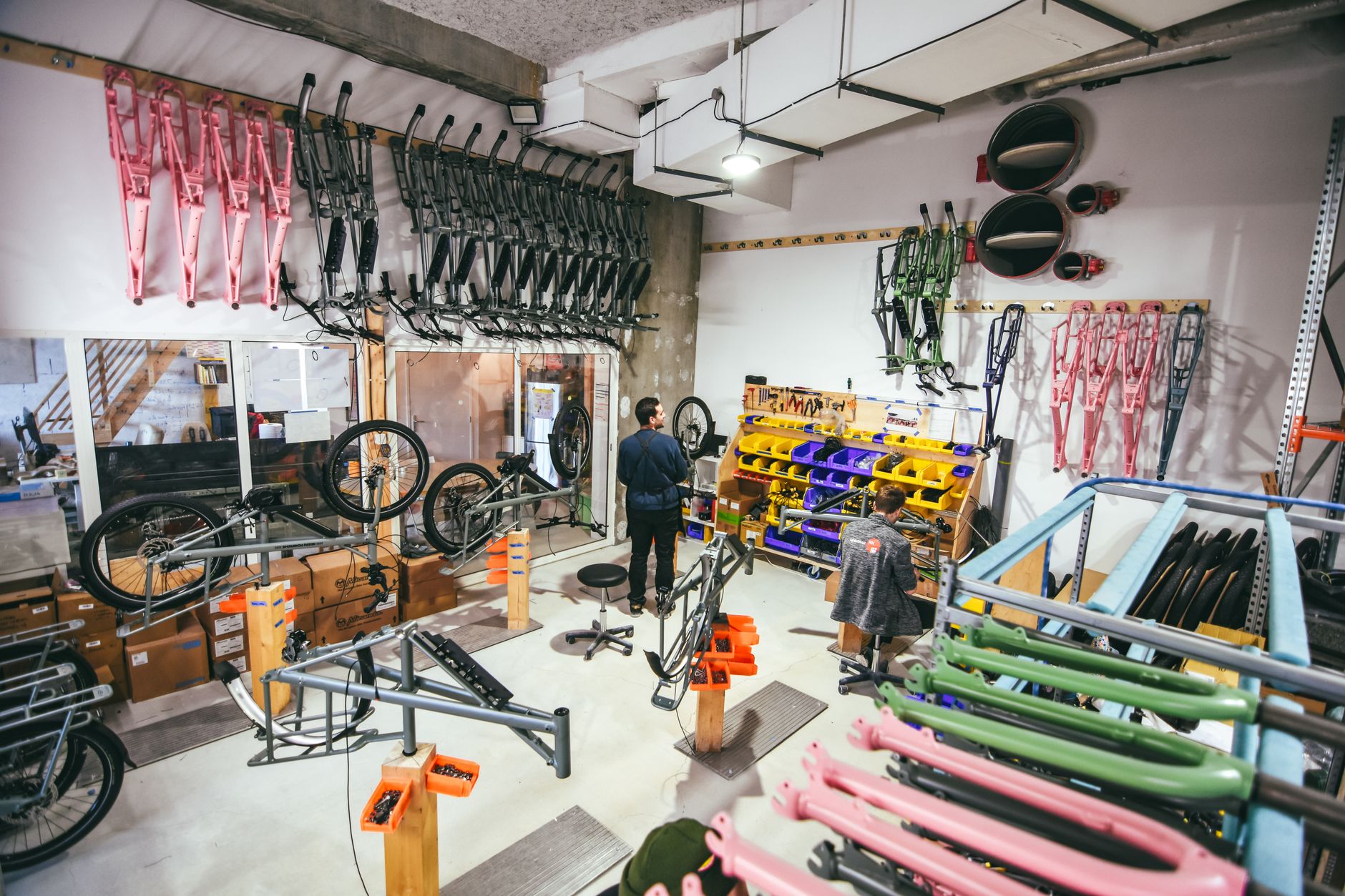
Frame work is hand-intensive. Fixtures are loaded and unloaded many times a shift, parts are staged for tacking and final joining, and small components are counted out to every build. Those motions are steady and repetitive, and they are where placement drifts and fatigue creeps in late in a shift.
Hiring is the harder problem. According to the Bureau of Labor Statistics, the wider assembler and fabricator occupation had about 1,885,400 jobs in 2024, and its employment is projected to fall 1% from 2024 to 2034. Those figures cover all industries, not bicycles alone, but a shop that cannot count on a growing pool of applicants has to make each skilled hire count.
What are the main benefits for bicycle manufacturers?
The first benefit is consistency at the fixture. A cobot places the same part in the same spot on every cycle, so frames reach the next step without hand adjustment. For a shop that holds tight tolerances, repeatable placement often matters more than raw speed.
The second benefit is where skilled people spend their hours. When the arm handles loading and part transfer, assemblers spend more of the shift on finishing, alignment checks and inspection, the work a rider notices. Experienced people stay on the tasks that need them most.
The third is physical. Bending, reaching and lifting small parts for hours wears on the body. Moving that motion to the arm can reduce strain on the people who stay, which matters when a shop is short on experienced hands.
How does a cobot work on a frame line day to day?
A cobot is taught by hand guiding or a simple teach pendant. An operator moves the arm through the motion once, sets the grip and fixture position, and saves the program. A change between frame sizes or jig types means loading a saved program and swapping a gripper or fixture insert, not rebuilding the cell.
Day to day, the arm runs a bounded batch. The assembler stages parts in trays, starts the cycle, and works on finishing or inspection nearby. When the batch ends, the operator checks a sample, logs it, and sets up the next run.
The tasks that suit a cobot best on this kind of line are these.
- Loading tubes or lugs into a tacking jig
- Transferring welded or brazed frames to a cooling rack
- Kitting bearings, headset cups and fasteners for the assembly bench
- Staging parts in front of a gauge or measuring station
Which areas of the line does a cobot work in?
A cobot earns its floor space where a fixed station meets a steady motion. On a frame line that usually means the loading and handoff points around the jigs, the staging of tubes and small parts, and the racks where parts wait for the next step. The arm works inside a defined zone and returns the work to a person at a set handoff.
Shops usually start with one or two of these areas and extend the program in phases. The zones below show where most bicycle shops begin, and the site assessment confirms which one saves the most hours on your floor.
How does a cobot work alongside existing staff?
A cobot does not replace the assembler team. It takes a repetitive motion so the team can focus on finishing and inspection. A shop running one arm still needs people who set up fixtures, check quality, run the finishing bench and clear the small problems, and those people become the core of the cell.
Training matters as much as the hardware. Our team trains the staff who will run the cell, covering teaching and reteaching, gripper changes, safety stops and daily checks. The operator who knows the cell can spot fixture drift before it turns into scrap.
Write the handoffs down. Decide who starts each batch, who checks the first frame, who clears a jam and who calls for service. Clear roles keep the arm useful on a busy day, when everyone wants the operator back on the bench.
What drives the savings on a bicycle frame line?
The savings come from hours, not from a promise. The main drivers are the hours a skilled assembler spends loading and handling parts each shift, the rework that comes from inconsistent placement, and the time the line waits for parts to be staged. Each of those is measured on the floor before any quote is set.
The shop's own records are the best source. Time one shift of loading, handling and staging, count rework traced to fixture placement over a few weeks, and note how often the line waits. Those figures set the hours a cobot can return to the team, and the site assessment works from them.
Savings show up as hours returned to finishing, inspection and build capacity. That is a better use of a skilled team than trying to add shifts in a thin labor market, and the quote should show that trade in plain numbers from your own floor.
What can a cobot not do on a frame line?
A cobot cannot make design or fit decisions. It does not judge if a tube is out of spec, if a joint is sound, or how a frame will ride. Those decisions stay with the assembler and the inspection step, and the arm should be planned around them.
Cobots are also limited by payload, reach and speed. Heavy sub-assemblies, large jigs that need very precise positioning, and high-speed production may call for a different type of machine. A site assessment checks part weight, fixture footprint and cycle time before an arm is recommended.
Welding heat, dust and fixture wear need planning too. The arm works best with a stable fixture, a clean work area and a maintenance plan, and it does not replace any of them.
How do you get started with a cobot in a bicycle shop?
Start with one station. Pick the loading or handoff task that uses the most skilled hours, and ask for a free site assessment. We map the station, check the part and fixture, recommend the right arm for the floor, and then deploy and integrate it with your team.
Robots are only leased, through financing. The lease terms and payment come in a quote after the site assessment, so every term is in writing before you commit. The quote also covers integration, staff training and nationwide service, including on-site dispatch when the cell needs attention.
After go live, add a second station once the first has proven its place on the line. Keep the lease, the saved programs and the team's training in one plan, so the cell grows at the pace your shop can carry.
Frequently asked questions
Want a cobot at your bicycle manufacturer?
Tell us about your site. We will recommend the robot, quote the lease, and keep it serviced.