
Key takeaways
- Scheduled tray runs between decontamination, packing and sterilizers are steady, repeatable work that suits a delivery robot.
- Fewer walking trips let technicians spend more of the shift inspecting, assembling and counting instruments.
- Published programs report clinical staff hours saved, but those figures cover whole hospitals, not sterile processing alone.
- The model is a robot plus a smaller team, never zero staff.
- Start with a free site assessment, then get a lease quote through financing, with a pilot on a few routes as a sensible first step.
See what a delivery robot costsRun the numbers in the ROI calculator
Can delivery robots for sterile processing departments take tray runs off staff?
Yes, for the repetitive part of the job. In a sterile processing department, much of the shift goes to moving instrument trays between decontamination, packing and the sterilizers, and those legs are often walked by the same technicians who should be inspecting and assembling sets. Delivery robots for sterile processing departments take over the scheduled legs, so people stay on the work that needs their hands and judgment.
The fit is strongest where routes are fixed. According to the AHA's 2025 Fast Facts on US Hospitals, based on its 2023 annual survey, the U.S. had 6,093 total hospitals, so the pattern is common well beyond one building. Within each hospital, trays usually move between a small set of rooms on a predictable schedule, along corridors and elevators that change little from shift to shift. That steady work is what a delivery robot handles well.
The benefits are real but bounded. Expect fewer walking trips, less repetitive lifting, a more even flow of trays and some relief for a department that struggles to keep positions filled. Expect also that a robot does not replace the people who inspect, assemble and sterilize. It changes who carries the tray, while accountability for each set stays where it is.
Why does tray transport take so much of a sterile processing shift?
Every tray that leaves decontamination has to reach packing, and every packed tray has to reach a sterilizer. Each leg means a walk, a wait for an elevator and a hand-off, and in many departments the same people do it between tasks. A run that looks small on a schedule adds up to hours of walking across a shift.
Staffing pressure makes it worse. According to a September 2025 industry brief from OR Manager, a report warns that a sterile processing staffing crisis threatens surgical safety. When people are short, tray runs are often the first task to slip, and sets that arrive late hold up the surgical suites.
Turnover compounds the gap. According to a health system task force report, sterile processing turnover fell from 32% to 25% between August 2024 and July 2025 after a task force intervention. Even at the lower rate, a department is continually training new people on the same routes, and each new hire walks the same long loop before they can work the bench.
Speed is not only a transport question. A hospital quality project found that turnaround time depends on several factors, so adding staff alone does not solve it. Keep that in mind before judging any tool by how much walking it removes.
What are the main benefits for the department?
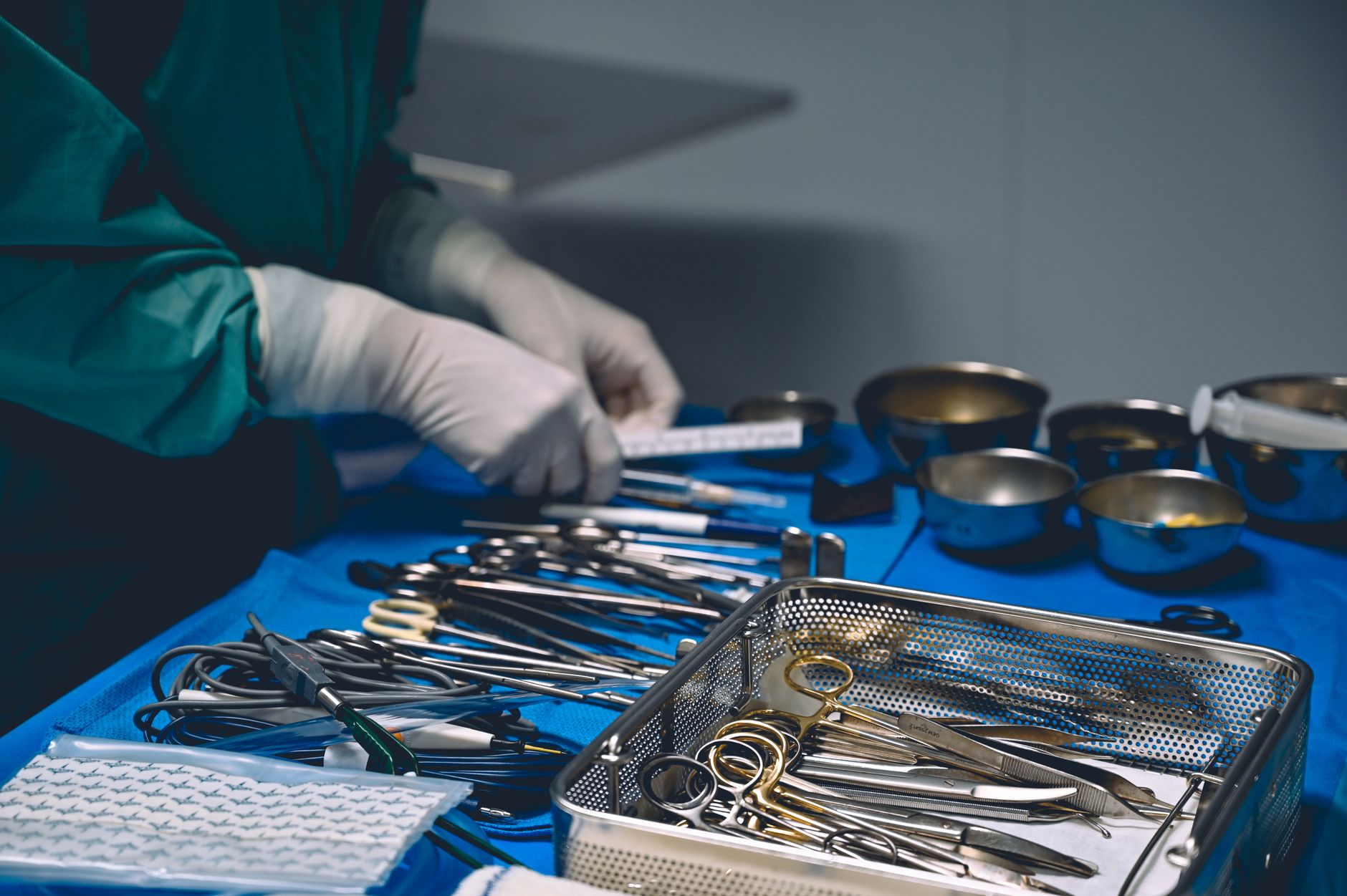
The first benefit is time at the bench. Technicians who are not walking trays can spend that time inspecting instruments, assembling sets and checking counts, which are the steps that set the pace for the rest of the hospital.
The second is steadier flow. A robot on a fixed schedule moves trays at the same interval every shift, so the department stops waiting on one person who is busy elsewhere. Staff can plan around known departure times instead of chasing a tray that is stuck in a corridor.
The third is less repetitive lifting. According to an HFM Magazine article dated June 2020, an Australian hospital began using two robotic automated guided vehicles to carry packed instrument trays to sterilizers, reducing repetitive lifting for staff. The same kind of task, repeated many times a shift, is where the physical gain shows up most clearly.
The fourth is a cleaner handoff record. Fewer people in the chain means fewer trays left unattended in hallways, and a log of when each run left and arrived. Ask your quality team what they already track, so the first baseline matches the measures they use.
How does a delivery robot work in a sterile processing department day to day?
The robot runs fixed routes that are set during the site assessment. Packed or soiled trays are loaded at a staging point, the robot travels the corridor and elevator to the next stop, and staff load and unload at each station. The route follows the path your staff already walk, so the change is in who pushes the cart, not in how the department flows.
It does not decide what goes where. Tray routing, priority for urgent cases and the contents of each set stay with the department's own system and its people. The robot follows the schedule and the map, stops for people and doors, and reports its position so a technician knows where a tray is.
Its work is scheduled, so the day has a rhythm. Early runs bring soiled trays from the surgical suites, midday runs carry packed sets to sterilizer staging, and later runs move supplies back to clean storage. Staff confirm each load and unload with whatever check-in the department already uses.
Which areas of the department does the robot work in?
The robot's work sits in the seams between rooms rather than inside the sterile core. Its routes cover the traffic lanes that connect the department to the rest of the building, and it stops at each station where a person does the handling.
What it may enter is set on purpose. The site assessment defines which doors and thresholds it can pass, and those limits are agreed with infection prevention and facilities before anything moves. Plans usually keep the robot in the corridors and staging points rather than in the sterile zone itself.
How does the robot work alongside existing staff?
The robot replaces the walking, not the team. A sterile processing department still needs technicians to decontaminate, inspect, assemble and sterilize, and it still needs a lead to manage the schedule, handle exceptions and answer for the sets. Plan for a robot plus a smaller team, never a robot with zero staff.
The division of work is simple. Staff stay on the bench and at the sterilizer, and the robot takes the scheduled legs. When a run is urgent or a route is blocked, a person takes it over, and the robot waits or moves on to its next task.
Training is short but needed. Staff learn how to load, unload, clear a stall and read the robot's status, and the lead learns how to change the schedule. Infection control and safety rules still govern every handoff, and the department keeps its own sign-off on every set.
What drives the savings in hours, and what do published numbers show?
Savings come from the walking, waiting and handoffs the robot takes over, multiplied by the number of runs in a shift. The most useful estimate comes from timing one week of current tray runs in your own department, then applying the schedule you plan to automate. Labor is measured in hours here, and hours are what you should track.
Published programs show the scale, though most measure whole hospitals rather than sterile processing alone. According to a vendor case study covering two hospital sites, robots made 7,298 deliveries and saved 4,125.5 clinical staff hours from August 2022 to March 2023 at one site, and 9,813 deliveries and 5,345 hours saved from June 2022 to March 2023 at the other.
Other reports point the same way. A poster on an intensive care program in Taiwan reported that nurses' daily active logistics time fell from 111.34 minutes to 20.43 minutes, a reduction of 81.6% as stated in the poster. Healthcare IT News reports that a medication delivery robot at a Singapore hospital frees almost two hours and four kilometres of walking per nurse per day.
Treat these as directions, not promises. They are vendor-reported or program-reported, and they measure different work. Your own timed baseline is the figure that matters for a staffing plan.
What can a delivery robot not do in this department?
It cannot inspect instruments, assemble sets, run the sterilizer or decide which trays are urgent. Those tasks need trained people, and a robot that moves trays does not change the standards those people must meet.
It cannot fix a slow process on its own. If turnaround is slow because of batching, scheduling or inspection bottlenecks, a robot moves the bottleneck rather than removing it. The same logic that applies to adding staff applies to adding a robot, so look at the whole flow first.
It also depends on the building. Doors, elevators, floor surfaces and wireless coverage shape the routes, and some layouts do not fit. A site assessment decides whether the building works before any lease is signed, and sometimes the right answer is a smaller phased pilot rather than a full set of routes.
How do we get started?
Start with a free site assessment. We map the department, the corridors, elevators and handoff points, then recommend the robot and route plan that fit the floor. The quote follows that assessment, because the route and the handoffs decide what the work actually requires.
Robots are leased through financing, and the payment comes in the quote after the site assessment. We integrate the robot with your schedule, train the staff, provide go live support and service the unit nationwide, with on-site dispatch and remote triage when something needs attention.
Many departments begin with one leased unit on a few routes. Measure the timed baseline against the new schedule, then decide whether to add routes. A pilot keeps the first step small and gives your team real data before any larger commitment.
Frequently asked questions
Upcoming hospitals & healthcare events
- ConferenceNew England College Health Association (NECHA) 2026 Annual MeetingNov 11 to 13, 2026Newport Marriott Hotel & Spa, Newport, RI
- ConferenceHLTH USA 2026Nov 15 to 18, 2026The Venetian Expo, Las Vegas, NV
- ConferenceIndiana Safety and Health Conference & Expo, 2027Feb 8 to 10, 2027Indianapolis, IN
- ConferenceHealthcare Project Delivery Conference 2027Feb 10 to 11, 2027Manchester Grand Hyatt, San Diego, CA
Want a delivery robot at your sterile processing department?
Tell us about your site. We will recommend the robot, quote the lease, and keep it serviced.