
Key takeaways
- Drones can scout blueberry fields for water stress and plant condition before a crew walks the rows.
- Harvest crews are the scarce resource, so the value lies in sending them to the right blocks first.
- Published research supports mapping water stress from drone imagery, but ripeness mapping still needs a pilot.
- A drone works alongside the crew lead and a small staff, and it does not replace the picking crew.
- The drone is leased through financing, and the payment comes in the quote after a free site assessment.
How can drones for blueberry farms help at harvest?
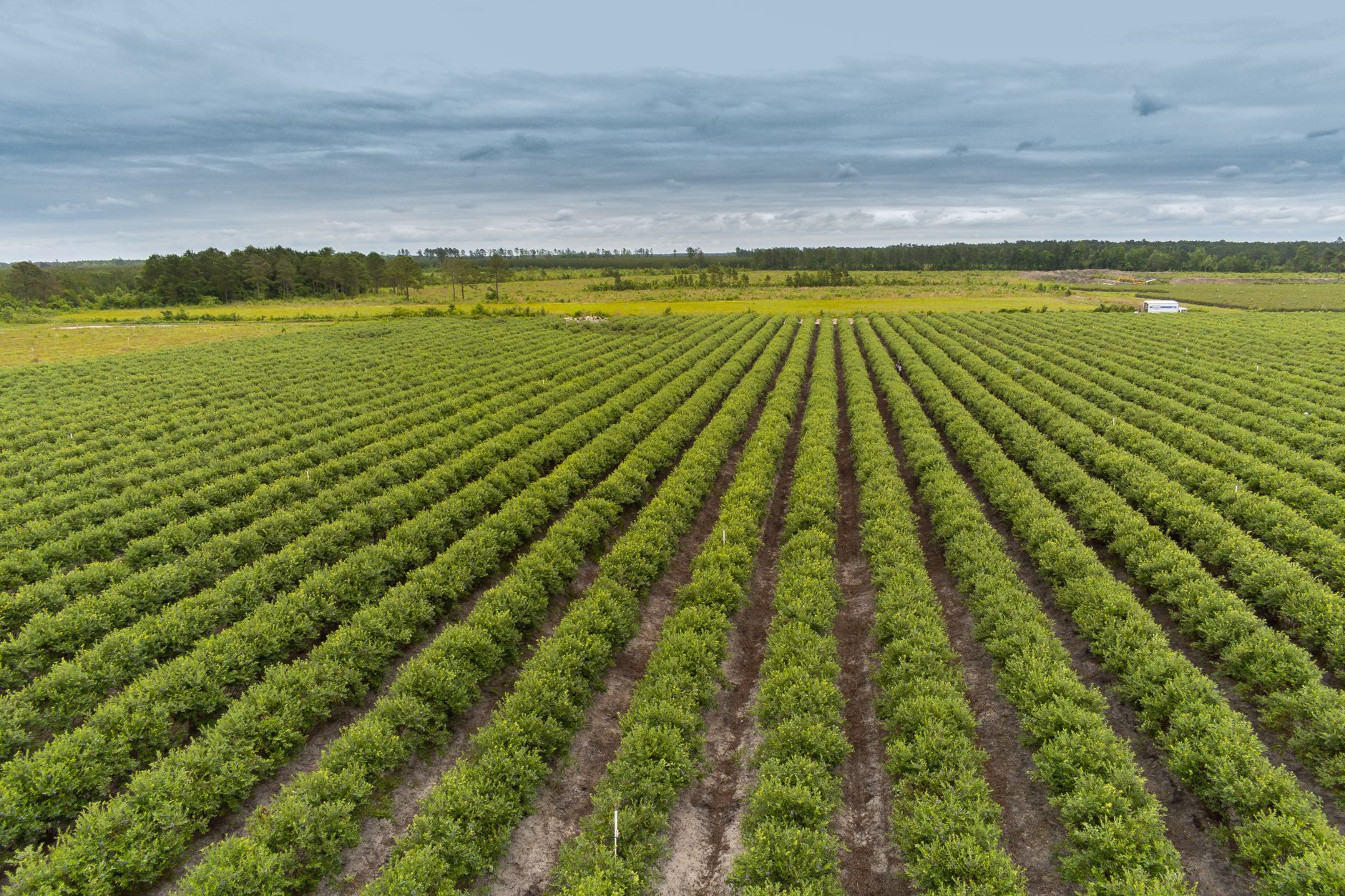
Drones for blueberry farms help most in the days before the picking crew arrives. A drone flies the rows, captures images in visible light and heat, and turns them into a map of plant condition across the field. The crew lead can see which blocks show water stress and which look close to ready, instead of sending people to walk every block to find out.
The benefit is sharpest where labor is short and the picking window is narrow. Published research has used drone imagery to predict water stress in wild blueberry fields. Ripeness is the question growers most want answered, but the published work reviewed for this page has not shown that drone images can map it, so a pilot should test that claim before anyone relies on it.
This page covers the problem at blueberry farms today, what a scouting flight captures, how it fits a normal day with your staff, where it works on the farm, where the savings come from, what it cannot do, and how to get started.
What problem do blueberry farms face at harvest today?
The hardest part of a blueberry harvest is often finding enough people for a short window. A January 2026 farm news report describes a long running farm labor shortage, with farmers saying very few native-born workers apply for physically demanding farm jobs. One southwest Michigan grower moved to the H-2A guest worker program after shortages within existing harvest crews, and Michigan growers say that program has not solved the shortage.
The window is the second squeeze. According to a regional farm news report, wild blueberry harvest in Maine relies on H-2A workers, the work is physically demanding, and it runs about six weeks. Some growers there cite paperwork and visa delays, so the crew is committed before anyone knows exactly which blocks will be ready.
The crop itself is moving too. According to a USDA Economic Research Service outlook, as reported in a trade publication, US blueberry production was about 740.5 million pounds in 2024, with around 721 million pounds forecast for 2025. In Maine, an October 2025 trade report estimated wild blueberries at 45 million pounds for 2025, about half of the 90.8 million pounds produced in 2024. A smaller crop changes which blocks are worth a crew and in what order, and that is the decision scouting informs.
Labor is also a large share of cost. A 2018 survey of 223 blueberry producers, published in HortTechnology, found great concern with labor costs and availability, and openness to mechanization. California's blueberry commission has reported that labor accounts for 52 to 54 percent of blueberry production costs, although that figure comes from an older report, so check it against your own records.
What are the main benefits of scouting with drones?
The main benefit is sequencing. The grower gets a map of where plants are under stress and where the canopy looks uneven, which lets the crew lead send the first pickers to blocks that are ready and keep crews off blocks that are not. Fewer hours on the wrong blocks leaves more hours for fruit that can be picked.
The water stress result is the best supported. Researchers in Maine flew a drone carrying an imaging spectrometer over a commercial wild blueberry field. According to a report on the study, published in the journal Remote Sensing, their models, built from drone images and ground samples, predicted water stress in the barrens at different times of the season.
The fewest wasted hours are the easiest to picture. A crew that walks a block with no ripe fruit or a stressed canopy is paying for ground time that returns nothing, and the map lets the crew lead skip that walk. The same map also shows the grower which blocks need a second look before the next pass.
A typical scouting flight can check the following.
- Water stress, measured with thermal and visible light sensors in irrigated and non-irrigated blocks
- Plant condition, compared across four crop stages
- Ripeness, which is not yet confirmed from drone images and should be tested in a pilot
How does a drone work in a blueberry field day to day?
The day starts with the flight plan. The drone follows a set route over the blocks scheduled for scouting, timed to the crop stage the grower needs to read. A university extension team flew a drone with RGB and thermal sensors alongside ground sensors across four crop stages, and compared NDVI values in irrigated and non-irrigated fields.
Ground sensors matter because the drone image needs a reference. The research paired aerial data with field measurements, so the models were checked against what was actually in the field. Your field crew still walks a sample of flagged blocks to confirm what the camera shows.
By the time the crew arrives, the map is ready. The crew lead reviews flagged blocks in the morning, moves pickers to the blocks that are ready, and holds the rest back for another pass.
Which areas of the farm does the drone cover?
Drones for blueberry farms are most useful when the flight plan follows the way the operation is laid out. Producing blocks come first, since they hold the crop the crew will pick. Irrigated and non-irrigated blocks deserve separate passes, because the research compared them directly.
The same flights can cover the edges of the operation. Field edges, low wet spots and the lanes crews use to move between blocks all affect when and how a block gets picked. Mapping them helps the crew lead plan entry points and routes, not only the picking order.
How do drones work alongside existing staff?
A drone does not replace the picking crew, the crew lead or the field manager. It gives them a sharper map to work from. The picking crew stays on the rows, and the crew lead decides where they go next.
Someone on the farm still plans the flights, reviews the maps and walks flagged blocks. That is usually a small group of existing employees rather than a new department. As the commercial robot integrator on the job, Service Robot Co. trains those staff on flight planning, data review and basic upkeep before the first flight.
Expect the field manager to spend time with the map before the crew arrives, and the crew lead to adjust the labor plan when a block turns out not as expected. A small team that knows the system is what keeps the drone useful through a short harvest window.
Where do the savings come from?
The savings come from crew hours spent in the wrong place. Each hour a crew spends on a block that is not ready, or on a block with a problem nobody knew about, is an hour that could have gone to fruit that is ready to pick. How much that matters depends on how much of your window goes to that kind of walking today.
Labor is a large share of cost, as the California figure shows, so a shift in crew hours is worth measuring. We have not verified an hours saved range for drone scouting on blueberry acreage, so this page will not guess one. A site assessment produces the estimate for your fields, using your block map and your crew records.
Your own records from the last two or three harvests give the baseline. Compare hours spent walking blocks against hours spent picking, and aim the flight plan at the blocks where the gap is largest. That is where a drone earns its place, or shows that it does not.
What can a drone not do?
A drone cannot tell you ripeness from images on its own, at least not on the evidence reviewed for this page. The published work concentrates on water stress, plant condition and bush detection, and no study was found that maps ripeness from drone imagery. Treat ripeness as the question a pilot must answer before you rely on it.
Weather and light shape the results. A flight over wet, windy or dim conditions can produce poorer images, so the schedule needs room for a second pass. A drone also cannot judge fruit quality on the bush, so the picking crew and crew lead keep that job.
A drone narrows where the crew goes, and that is a real benefit. The promise is narrower than a replacement for labor, and it works best when the grower expects exactly that.
How do you get started with drones for blueberry farms?
Start with a free site assessment. We walk the operation, review the block layout, flight space and harvest calendar, and recommend the drone and scouting plan that fits. Service Robot Co. is a US commercial robot integrator: we pick the right unit for the site, lease it through financing, deploy and integrate it, train your staff and service it nationwide.
Robots are only leased, through financing. The payment comes in the quote, which follows the site assessment, and nothing is quoted before we have seen your fields. A pilot on a few blocks through one harvest window is a practical way to test whether the maps match what your crew finds.
Bring last season's crew hours, your block map and a note of where crews lost time. That gives the assessment something concrete to test, and it makes the first pilot easier to judge.
Frequently asked questions
Want a drone at your blueberry farm?
Tell us about your site. We will recommend the robot, quote the lease, and keep it serviced.
Sources
- Farms.com, farm labor report 2026
- RFD-TV, Peach State blueberry growers
- FreshPlaza, US blueberry production 2024
- Freshfruitportal, Maine wild blueberries 2025
- Scholars Junction, 2018 blueberry producer survey
- Blueberries Consulting, California labor costs
- Farms.com, imaging spectroscopy water stress study
- UMaine Extension, drone plant stress poster