
Key takeaways
- Drones can survey roofs, paving and drainage across many tenant buildings in one session.
- A UK drone service provider reports 1 to 2 hours for a typical roof inspection, a vendor-reported figure.
- Each flight leaves dated photos that maintenance can compare from season to season.
- The drone takes over walking and climbing, while the crew still makes the repairs and calls.
- A free site assessment comes before any lease quote, and the payment appears in that quote.
How can drones benefit industrial parks?
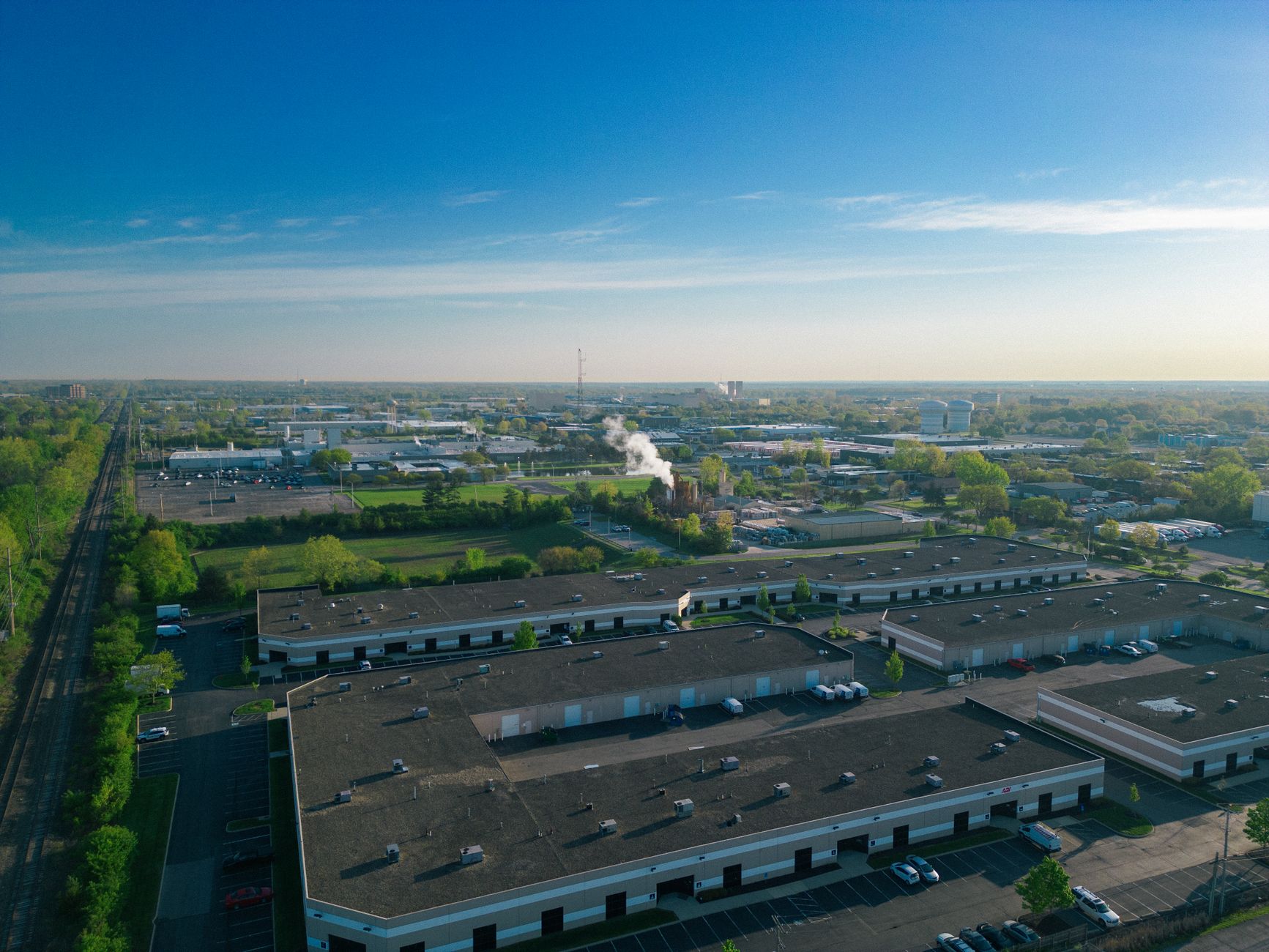
Drones for industrial parks save the most time on surveys that cover many buildings at once. A park with a dozen tenant buildings, the paved truck courts between them and a drainage network that runs under all of it can take days to check on foot, with crews walking the yards and climbing to reach the roof edges. A drone flies the same roofs and yards in a fraction of that time and returns photos tied to each location.
The benefit is more than speed. Each flight leaves a dated photo record that maintenance can compare from one season to the next, so a ponding spot or a cracked slab shows up as a change instead of a memory. According to a UK drone service provider's published figures, a typical roof inspection takes 1 to 2 hours, and a structural or industrial site may need half a day. Those are vendor figures, so test them on your own park before you plan around them.
Service Robot Co. is a US commercial robot integrator. We pick the right robot for the site, lease it through financing, deploy and integrate it, train the staff and service it nationwide. The last section explains how a site review works if you want to see what fits your park.
What does inspection look like at an industrial park today?
Most parks are not one building. They are a collection of tenant buildings with separate roofs, shared yards, loading docks, parking and fence lines, all tied together by a drainage system. Maintenance staff walk the paving, check the drains after rain, and climb or use lifts to see roof edges, penetrations and flashing. On a large park that round can take days, so crews often pick a few buildings each week and push the rest to later. For scale, according to Statista, the U.S. had 7,773 big-box distribution buildings in 2023. That count covers warehouses rather than parks, but it gives a sense of how many large roofs and truck yards exist nationwide.
Consistency is the hard part. Two people walking the same roof may describe it in very unlike terms, and a ground photo rarely shows a seam, a flashing lip or the low spot in a yard. Tenants change, lease boundaries move, and a folder of notes can be hard to match to the right building a year later. Some problems surface only after water has already reached a tenant's space or pooled across a truck court.
Which benefits matter most at a park?
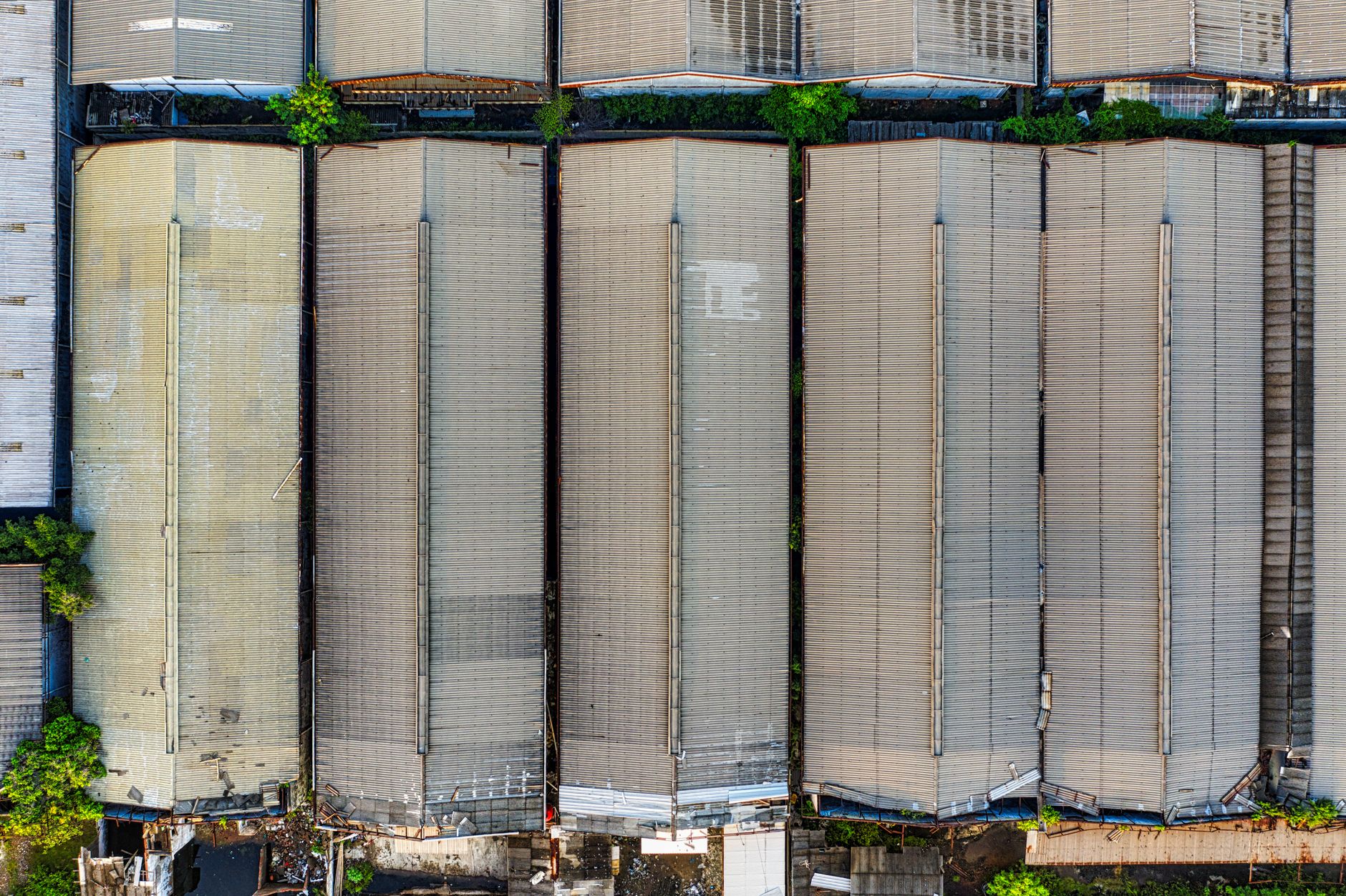
The main benefit is coverage per crew hour. One flight can pass over the roofs of several buildings, the yards between them and a retention area, so the crew spends its hours on findings rather than on access. Overhead photos also reach places that are awkward from the ground, such as the top of a parapet or the low spot in a paved yard that only shows after rain.
The second benefit is safety. A 2018 study by Bown and Miller compared drone and conventional steep-slope roof inspections and concluded that drones can replace manual inspections in most cases and are safer. Fewer people on ladders and roof edges is a practical reason to change the routine, and it matters as much as the time saving.
The third benefit is the record. Each survey produces images tied to the building or yard it covers, so a truck court can be compared against its own history. When a tenant asks about a roof, the answer can come from the photos instead of waiting for the next crew visit.
How does a drone survey work day to day?
A survey day begins with the pilot checking weather, wind and the flight area, then marking which roofs and yards are on the list. The flight plan sequences buildings so the crew can work nearby without crossing the flight path. Flights stop when wind, rain or poor visibility makes the images unreliable, so the plan always includes a second window.
One industrial park operator says on its own service page that its drones fly up to 50 m altitude and that it avoids permitting delays at its own site. The same operator describes its drone service as available at short notice with a lower time commitment. Those operator-published details show how a park can set up the work in-house, though every park's airspace and local rules will need checking.
Which areas of the park does the drone cover?
Coverage follows the park's assets rather than its address list. These areas tend to produce the most maintenance records, and each can be flown on its own schedule within a sequence set by the crew.
Routing matters as much as coverage. Roofs and yards can often be flown in one session, while drainage and retention areas may need a second flight after heavy rain so the photos show water where it actually runs.
How does this work alongside the existing crew?
A drone does not replace the maintenance crew. It takes over the walking and climbing for the survey, and people still make the repair calls, order the work and sign off on it. A park running a drone program still needs at least one trained pilot on site or on call, and a maintenance person who reads the photos and knows the buildings.
The practical trade is a smaller team doing more of the judgment work. Instead of a crew spending most of its shift on access, the same crew spends more time on findings. Some parks give the pilot role to a grounds employee who already knows the site, and others bring in a contracted pilot for survey days. Either way, the record is only as useful as the person who reads it and acts on it.
What drives the savings in time and labor?
Savings come from fewer crew hours on access, less time scheduling around climbing work, and fewer days when a survey is delayed because the crew is busy elsewhere. According to a UK drone service provider, a typical roof inspection takes 1 to 2 hours by drone and a structural or industrial site may need half a day. Those figures are vendor-reported, and a park's result depends on how many buildings it has, how often it flies and how quickly its photos reach the people who act on them.
The hours are easiest to measure on a repeated route. If the same roofs and yards are flown every quarter, the crew can compare hours before and after the change, and the photo archive becomes the evidence. Track the saving in hours on your own timesheets rather than relying on any vendor estimate.
What can a drone not do?
A drone cannot make a repair, see inside a building or replace the judgment of a structural engineer. Photos show the surface of a roof, a paved yard or a basin, and some problems sit under a membrane, behind a fascia or below the waterline. Those still need hands-on checks, and the drone tells the crew where to look.
Weather, wind, low light and airspace rules also limit flying. Plan a backup window every week, set clear rules for who can fly and where, and check local restrictions before the program starts. A survey that could not fly is a delay, not a finding, so the record should say so.
How do we get started?
Start with a free site assessment. We walk the park with the maintenance lead, map the buildings and yards to survey, and identify where the existing routine takes the most time.
After the assessment we recommend the right robot for the site, and the lease is arranged through financing. The payment comes in the quote, along with the lease terms, deployment and integration, staff training and nationwide service. No figure appears on this page, because the right answer depends on the site, the number of units and the work the park needs.
A phased start works well. A park can begin with the roofs of its largest buildings, review the photo records for a season, then extend to yards and drainage. Once the routine is set, the crew keeps the work going, and our staff handle service and repair across the country.
Frequently asked questions
Want a drone at your industrial park?
Tell us about your site. We will recommend the robot, quote the lease, and keep it serviced.