
Key takeaways
- Aerial images can support yard counts and damage checks without staff climbing stacks.
- A warehouse case study reports counts that once took about two months by hand now run year-round.
- Most published figures are vendor-reported, so a pilot in your own yard should come first.
- The drone takes the overhead passes while a small team keeps the ground checks and final calls.
How can drones help a shipping container yard?
Drones for shipping container yards mainly help with two slow, risky jobs: counting what is stored in tall, wide stacks, and spotting damage on boxes and trailers. A drone flies over the rows and captures aerial images, which can be checked against the yard's records. Because the camera works from above, nobody has to climb equipment or walk the tops of stacks to see them.
The main payoff is accuracy and speed. Manual counts across many stack rows take crew hours, and small mistakes in a count add up to misplaced boxes and wrong inventory. Aerial images let you recount the yard on a regular schedule instead of a few rows at a time. Most of the published evidence comes from warehouses rather than large container terminals, so treat the figures on this page as a starting point for a pilot in your own yard.
We are a commercial robot integrator. We help you decide whether a drone fits your yard, lease it through financing, deploy and integrate it into your routine, train your staff, and service it nationwide. The payment comes in the quote after a free site assessment, so the numbers reflect your yard, not a generic example.
Why are container yard counts so hard to get right?
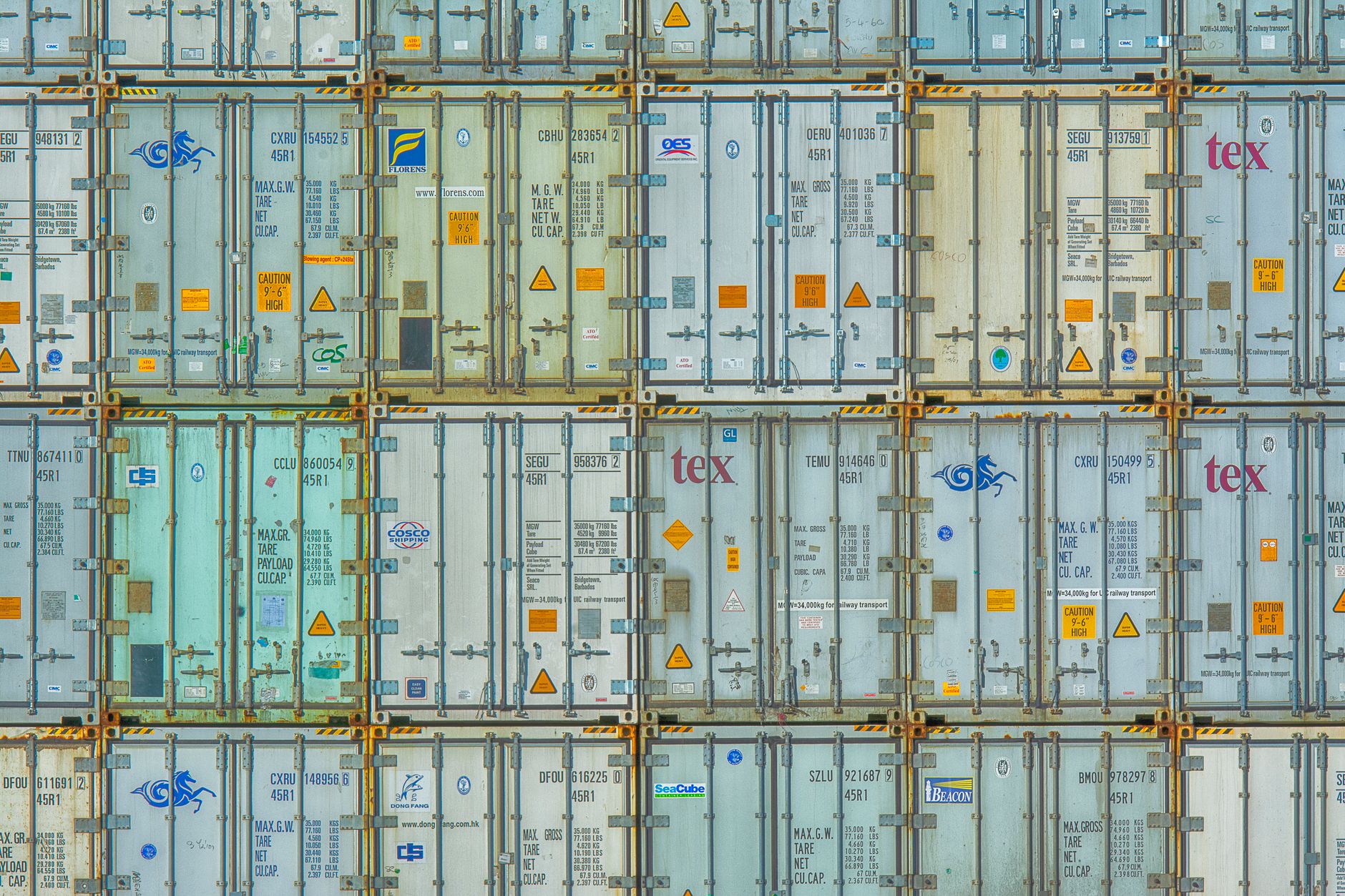
A container yard stores boxes in rows, and those rows are built up in tiers. Equipment sets much of the height. According to an online port economics reference, crane height sets the practical tier count, and the usual maximum is tier 4 or tier 5 for full containers. Stacks that tall are hard to see into from the ground and hard to count without someone standing under a load.
Height brings its own problems. Stacking in tiers saves ground area, but a paper on container cargo handling systems notes that limited yard space pushes stacks higher to gain capacity, and higher stacks mean more container moves. A study of export containers found that the expected number of reshuffles rises sharply with stacking height. Every reshuffle is another chance for a box to end up logged in the wrong place.
Equipment choice matters too. Reachstackers work well at low stack heights, but a terminal industry article points out that their higher operating cost erodes that advantage as stacks grow. A yard running tall stacks pays for them in moves, and in the records that have to follow those moves.
What are the main benefits for a yard?
The clearest benefit is inventory accuracy. In a warehouse case study published in a logistics trade magazine, inventory counts that once took about two months by hand now run year-round. According to that case study, the site now images the warehouse 52 times per year, a 600% increase over its previous manual process. In a yard, frequent passes mean drift gets caught in days rather than at the next full count.
The second benefit is a faster full count. A supply chain trade article reports that a drone inventory vendor's customer cut full inventory collection from 90 days to 2.5 days. Those are vendor-reported results, not independent tests, so ask any vendor how it measured them. A separate supply chain case study reports that a warehouse error rate fell from 11% (89% inventory accuracy) to 3% (97% inventory accuracy) in 3 months.
The third benefit is safety and access. Staff do not have to climb equipment or stand under loads to check the tops of stacks. Damage checks can start from the air, so a person only goes to the spots the images flag.
How does a drone work in the yard day to day?

Most of the work is planning and timing. The flight path follows the stack rows, the drone captures images along a set route, and the imagery is processed into counts and damage notes. In the warehouse case study, flights ran at night, between 5 p.m. and 5 a.m., outside active picking hours. A container yard has its own busy periods, usually tied to vessel and rail schedules, so flights are set for quieter windows.
Some systems go further than images. A trade article describes drones carrying GPS, RFID, OCR and barcode readers to locate tagged containers and trailers in a yard or port. The same article notes that the vendor's own traction has been indoors, in warehouses, so yard use has a shorter track record.
Every flight produces a record that is compared with the yard system. Discrepancies go to a person who confirms the stack on the ground. The drone narrows down where people need to look, and the crew makes the final call.
Which areas of the yard does a drone cover?
A drone earns its time where people are slowest to count or inspect. Stack blocks are the main area, but a yard has several distinct zones, each with its own checks. The zones below show where aerial passes usually help most. Coverage depends on the layout, stack heights and local airspace rules, which we map during the site assessment.
Trailer lanes and empty container rows change quickly, so frequent passes keep their records up to date. Refrigerated rows and rail loading tracks need a mix of aerial and ground checks, since power connections and track-side work still need a person on site.
Does a drone replace yard staff?
No. A drone takes over the overhead passes that are slow and awkward for people, but a yard still needs a smaller team on the ground. Staff handle lashing, seal checks, gate work and anything the images flag for a closer look. The drone changes what the crew spends its hours on rather than removing the crew.
The working setup is a drone plus a small team with defined roles. One person owns the flight schedule and the image review, while others confirm discrepancies and make corrections. We train your staff on the routine, the flight rules and the review steps before the first live flight, so the yard is never without people who know the system.
Where do the savings come from?
Savings come mainly from labor hours. In the warehouse case study, the site freed roughly 120 labor hours each month for other work once drone imagery took over the manual counting. The number for your yard depends on how often you count, how many stack rows you cover, and how much of the crew's week goes to recounting.
Measure your own baseline before you decide. Track the hours your crew spends on counts and damage checks in a typical week, and how often counts disagree with the yard system. That gives you a range you can defend, rather than a headline figure from another site. Vendor figures are a starting point for that conversation, not a promise.
The payment comes in the quote after a free site assessment. We compare your baseline hours with the flight plan for your yard, then give you a lease quote through our financing programs. The quote reflects your yard and your baseline, not the results at another site.
What can a drone not do in a container yard?
A drone sees what is above and beside a stack, not what is inside a sealed box or behind a lower tier. It cannot open a container, verify a seal, or read a box that is shaded, dirty or stacked out of view. Those checks still need a person with the right access.
Weather and wind limit flights, and yard rules and airspace limits set where and when a drone can fly. Dense stacks and poor light can make images harder to read, so the process still depends on a reviewer who checks flagged results.
The evidence is also thin. We have not found independent results from large container terminals. Most published figures come from vendors or small studies, and some of those studies were too small to show how a busy terminal would perform. Run a pilot in your own yard before you scale, and set the success measures before the first flight.
How do you get started with a drone program?
Start with a free site assessment. We walk the yard with you, review stack heights, layout and traffic patterns, and the airspace and safety rules that apply. From that visit we recommend whether a drone fits your yard, what the flight plan should look like, and how the work splits between the drone and your team.
Next is the lease. Drones are leased through financing, and the payment comes in the quote after the assessment, so you see the numbers for your yard before you commit. We deploy and integrate the drone with your yard records, train your staff, and provide go live support.
Many yards begin with one unit on one part of the yard, such as the main stack blocks, and expand once counts match the yard system. We service units nationwide, so you have one partner and one number to call. A pilot is the best way to measure your own labor hours and error rate.
Frequently asked questions
Want a drone at your shipping container yard?
Tell us about your site. We will recommend the robot, quote the lease, and keep it serviced.
Sources
- Logistics trade magazine case study on warehouse inventory drones
- Supply chain trade article on drones in the supply chain
- Supply chain trade case study on warehouse error rates
- Online port economics reference on container yard configuration
- Academic paper on container cargo handling systems
- Study of export container reshuffles
- Terminal industry article on intelligent stacking
- Trade article on drones in the supply chain