

The question, in the buyer's words
I run a bicycle wheel shop where builders hand-lace every wheel, and rush builds are getting turned away because lacing takes the most hand time; could a cobot do the lacing while builders true and check each wheel?
Key takeaways
- A cobot can repeat the spoke pass, but not truing or tension judgment.
- Forum and magazine accounts put a full wheel at about 20 to 40 minutes, with lacing only part of that.
- Dedicated lacing machines are the benchmark to price against before any cobot pilot.
- Two weeks of step timing on your own bench will answer the question better than any published figure.
- Cobots need a validated safety review and an insurer check before any guarding changes.
Can a bicycle wheel lacing cobot handle rush builds?
A bicycle wheel lacing cobot would take over the spoke pass on rush builds, the step where each spoke is fed through a hub hole and crossed to a rim hole in a set pattern. It would not take over truing, judging tension by feel, or stress relief, and those are the steps where many experienced builders spend much of their hand time.
Lacing has a reputation as the slow step, and the accounts I found support that only in part. According to a shop mechanic quoted in a bicycle magazine feature, lacing alone used to take about 10 minutes, while builders on a rider forum put a full wheel near 20 to 40 minutes. The lacing speed figures I found come from dedicated lacing machines built for the job, and none of the figures I could verify were measured on a cobot.
So the honest read is this. A cobot is a reasonable pilot candidate for the spoke pass on standard rims and spoke counts, and a poor fit for the truing bench. If your rush orders are mostly stiff, unusual or very thin rims, the time saving will be smaller than any headline speed suggests.
How much bench time does lacing take compared with truing?
Accounts disagree on how long lacing takes, which is a good reason to time your own shop. The mechanic's figure of about 10 minutes covers lacing only, with most of the rest of the work going to truing, tensioning and stress relief. Forum builders put the whole wheel at roughly 20 to 40 minutes, with one saying about 40 minutes and another about 30 minutes including spoke prep.
Those forum and magazine figures are anecdotes, not measured studies, and they mix build types. A standard wheel and a hard to lace rim do not take the same time, so your own records will beat any published number. The useful question is what share of the wheel's hands on time sits in the spoke pass.
If lacing is about 10 minutes of a wheel that takes 40, a perfect lacing robot still leaves most of the wheel's time with the builder. In that case the rush queue may be forming at the truing stand, not the lacing bench. Time each step before you assume the lacer is the bottleneck.
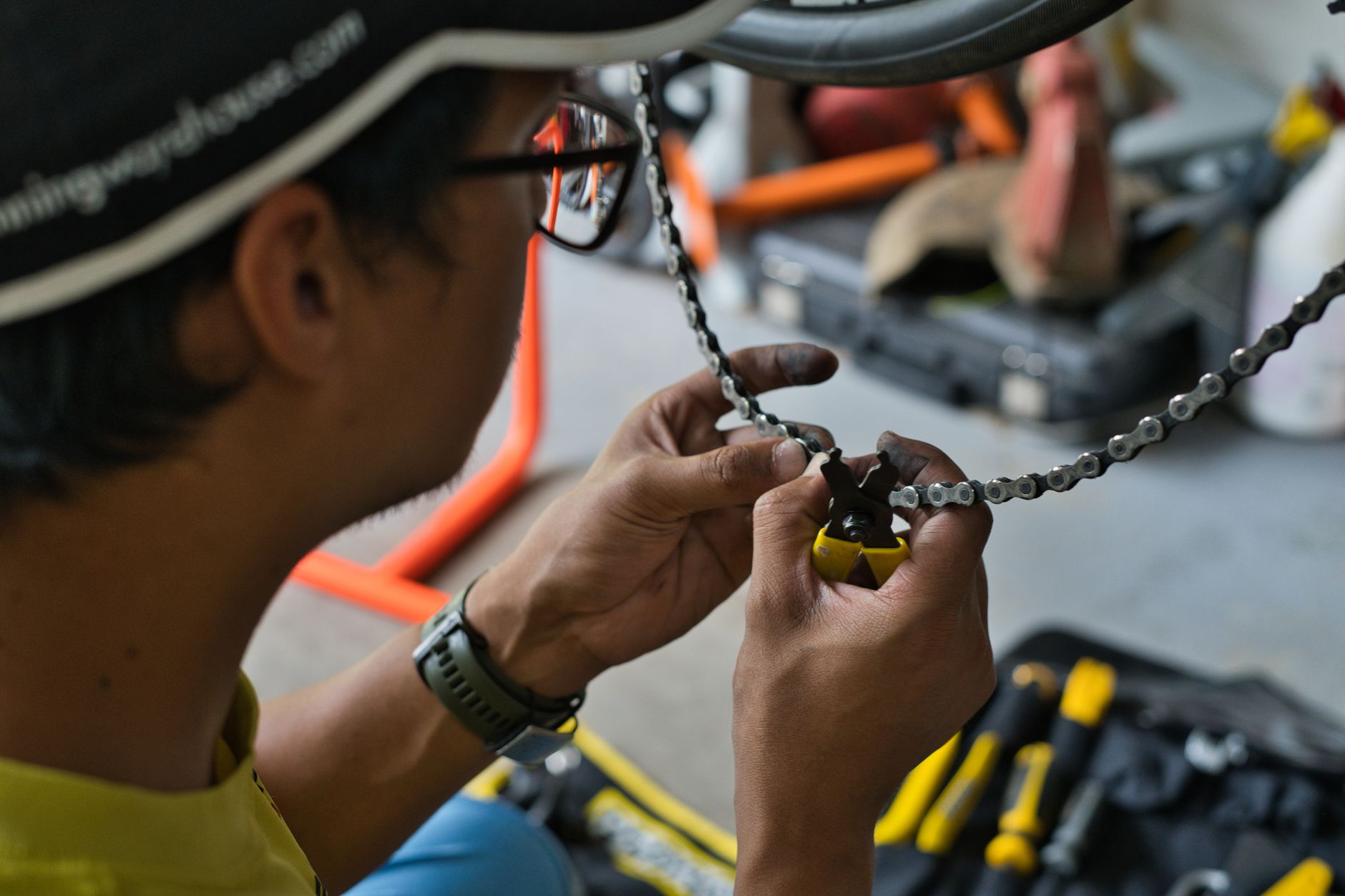
Where would a lacing cobot sit on the wheel bench?

A cobot would stand at the lacing station with spokes staged in a tray sorted by length, and a fixture holding the hub and rim in position. The robot picks each spoke, threads it through the hub and rim holes in the pattern the builder sets, and returns the partly laced wheel for the builder to check. The builder keeps the truing stand, the tension gauge and the final inspection.
Setup is where most of the work sits. Each rim profile, hub flange and spoke count needs a fixture or program, and a shop that builds one or two wheel types can reach a steady routine. A shop with many types will spend more time on changeovers, so count your distinct rim and hub combinations over the last three months before you talk to anyone.
The cell needs a clear zone around the station. Spoke ends are sharp, the fixture has to hold the rim under lacing load, and the builder must reach the tray without crossing the cobot's path. Plan the layout on paper first, so the robot does not end up where the truing stand should be.
Cobot or dedicated lacing machine: which fits a rush shop?
A dedicated lacing machine is the benchmark to price against, because it is built for one job. A cobot is general purpose, so it can also load trays, stage spokes or move to packing when lacing is slow. That flexibility has a cost in setup and in lacing time that has not been measured.
Machine lacing speeds are published by the machine makers and were not independently tested in the research I could review, so treat them as claims to test on your own rims. Volume decides the choice. A shop that laces many wheels of one type each day may favor the dedicated machine, while a shop with mixed rims, a small crew and a need for flexible work may favor a cobot pilot, provided the trial shows the spoke pass is fast enough.
We are OEM-neutral, so we compare both options against your bench before recommending either one.
- Repeating the spoke pattern
Cobot
Runs the same sequence once the fixture and program are set
Staff
Varies slightly, but adjusts when a hole or spoke is off
- Feel for tension
Cobot
Can follow a set tension target but does not feel the spoke ring
Staff
Judges tone and tension by ear and feel
- Odd or stiff rims
Cobot
Needs a new fixture or program for each rim profile
Staff
Adapts on the bench without setup
- Changeover between wheel types
Cobot
Program and tooling change, time set by the cell
Staff
Usually quick at the bench
- Truing and stress relief
Cobot
Not part of the cobot task
Staff
Stays with the builder
- Hours in a shift
Cobot
Runs as long as it is loaded and supervised
Staff
Needs breaks and tires over repeated motions
How many wheel shops and cobots are there in the US?
The trade is small and spread out. An industry research database counts 10,004 US businesses in bicycle dealership and repair for 2026, but that is a broad category that includes many shops that do not hand-build wheels. According to the Bureau of Labor Statistics occupational employment estimate for May 2023, 13,980 bicycle repairers were employed in the US.
According to a trade association's 2025 channel study, the survey drew on more than 200 anonymized US specialty bicycle retailers, so it is a sample rather than a total count. Coverage of that study names financial performance and margin sustainability as the main channel pressures, which means a labor saving has to pay back on rush orders, not only on speed.
Cobots are established in general industry. According to the International Federation of Robotics, cobot installations reached 66,000 units in 2025, which is 11% of all industrial robot installations, and total industrial robot installations reached 603,000 units. The same report says cobot growth of 7% in 2025 was below the overall market, the first time that has happened since tracking began, so cobots are mainstream but not growing fastest.
What safety rules apply to a cobot at a wheel bench?
Cobots are built to work near people, but the rules still apply. ISO/TS 15066 describes power and force limiting, which keeps robot to person contact below biomechanical limits. According to a peer reviewed article on that specification, it lists limits for 29 body locations, and many are described as preliminary, so ask how a specific cell was validated against them.
Tooling and spoke ends need attention. ISO/TS 15066 states that sharp contact shapes are not allowed on the cobot surface, which matters if the gripper or fixture has edges near a builder's hands. Check that the end effector and fixture have been reviewed for this as part of the layout.
US shops should confirm the standards chain before relying on any one document. A 2025 guide says ISO/TS 15066 content is now in ISO 10218-2:2025 and names ANSI/RIA R15.06 as the main US standard, which I have not checked against the official texts. Power and force limiting also does not mean guards can come off. A 2019 slide deck attributes to an OSHA compliance officer the caution that such cobots do not mean fences can be removed without further review, a secondhand account, so confirm with your insurer and a qualified integrator.
How do hand and wrist injuries affect lacing builders?
Lacing is repetitive hand work, and that is the strongest case for automating the spoke pass. According to a CDC-hosted document, repetitive motion illnesses numbered 253,200 in 1998, and BLS data showed about a 24% downward trend since 1994 as reported in that document. The same CDC material notes that BLS data understate tendinitis, epicondylitis, carpal tunnel and hand-arm vibration cases.
Those figures are old, and I did not confirm 2024 BLS hand or wrist case counts. Check the latest BLS injury and illness release and its case characteristic tables before quoting numbers to your team.
For your shop, the useful question is which motion repeats most across a build day. If builders report strain on the spoke pass, a cobot may take a repeated motion off the bench. If the strain comes from truing and tensioning, a robot may move the problem nowhere, so ask the builders before you assume.
How does getting a lacing cobot work with us?
We start with a free site assessment at your bench. We map your spoke counts, rim types, hub flanges and the path from staging to truing, then pick the robot for your floor across manufacturers, since we are OEM-neutral. The lease payment comes in a quote after that assessment, and the robot is leased through financing.
We deploy and integrate the cell, train builders on setup, changeover and fault recovery, and service the unit under our service plan through regional service engineers in the states we cover. For a rush shop, a one unit pilot is the practical start, because it lets you measure hours per wheel before deciding on more equipment. We also set out what happens if the unit is down during a rush week, before you sign.
Should a rush shop pilot a cobot or fix the bench first?
If the spoke pass is a large share of your hands on time and your wheel types are few, pilot one cell with clear measures: wheels per day through lacing, rejects, builder hours and strain reports. If lacing is a small share or your rims vary widely, fix the truing queue first. Options include a second truing stand, batching rush builds by wheel type, or scheduling truing separately from lacing.
Whatever you choose, measure a baseline for two weeks before any decision. Time each step for each wheel type, count the rush orders you turn away and the reason, and log strain complaints. Those records decide the question better than a speed claim or a forum anecdote, and they make the lease conversation far more specific.
Frequently asked questions
Want a cobot at your bicycle wheel build benches?
Tell us about your site. We will recommend the robot, quote the lease, and keep it serviced.
Sources
- International Federation of Robotics president's report, 2026
- US Bureau of Labor Statistics occupational employment estimate, bicycle repairers, May 2023
- Industry research count of US bicycle dealership and repair businesses, 2026
- National Bicycle Dealers Association 2025 specialty bicycle retail channel study
- CDC-hosted document on repetitive motion illnesses
- Rider forum discussion on how long it takes to build a wheel
- Bicycle magazine feature on how handbuilt wheels are made
- Peer reviewed article on ISO/TS 15066 power and force limiting