
The question, in the buyer's words
Our 25-person CNC machine shop has machinists who have never worked beside a robot, and our owner wants them trained before the first cobot arrives; what does crew training look like?
Key takeaways
- Train the machinists who will run the cell, not a separate robotics group.
- Start from a risk assessment, then match the training to the operating mode each task uses.
- The verified figures describe the national trend, not how many training hours your shop will need.
- Keep a dated shop training record from the first day of supervised runs.
- The lease quote follows a free site assessment, so the training scope and the lease scope are set together.
What does a CNC machinist cobot training plan need to cover?
A CNC machinist cobot training plan starts from a gap in experience rather than a gap in skill. Your machinists already know the machine tool, the part and the tolerance, but they have not yet learned how a cobot moves, stops and hands work across. According to the Bureau of Labor Statistics, about 299,500 machinists held jobs in 2024, and the agency projects employment of machinists and tool and die makers combined to decline 2 percent from 2024 to 2034. That is a national trend rather than a forecast for your shop, but owners often use it to justify cross training so each experienced machinist can run more than one cell.
The wider labor picture points the same way. According to The Manufacturing Institute, US manufacturing could need as many as 3.8 million new employees from 2024 to 2033, and as many as 1.9 million of those jobs could go unfilled without changes. The 1.9 million is a conditional scenario, not a count of open jobs, and an earlier 2021 study by the same groups projected 2.1 million unfilled jobs by 2030.
For a training plan, that means teaching the people already on the floor. Hiring a robotics specialist is one route, but machinists already know what a good part looks like, what a bad setup sounds like and when a probe reading is wrong. Those judgments are the hardest part to teach a new hire, so the plan should keep them at the center and teach the cobot around them.
Plan the training as a shop project, not a robot project. The owner, the lead machinist and the quality person each have a stake in the first month, and naming them early avoids a plan with no one responsible for the floor.
How common are cobots in machine shops and manufacturing?
According to the International Federation of Robotics, about 66,000 cobot installations happened worldwide in 2025, roughly 11 percent of industrial robot installations. Cobot growth was 7 percent, below the overall industrial robot market, where total installations reached about 603,000 in 2025, up 11 percent.
Machine shop counts are harder to pin down. According to a NAICS reference site, a 1997 Economic Census counted 23,619 establishments under NAICS 332710 for machine shops, which is the last count we could verify. For a current number, check the Census Bureau's County Business Patterns tables before you compare your shop with peers.
The practical reading is that cobots are common enough that integrators, safety trainers and standards bodies have established material you can use, even if your machinists are the first in your building. Adoption figures track installations, not shop floors, so they do not tell you how long other crews took to get comfortable.
A cobot in a machine shop is usually chosen for its reach and its ability to share space, not for speed. Machinists should expect the cycle to be set by the machine, and that changes how they judge a pause that looks unexpected.
What should machinists learn before the cobot arrives?
Start with the cell, not the robot. Machinists need to know what the cobot can reach, which gripper and fixture it uses, where a workpiece sits at handoff and what happens when a part is not seated. Those are questions they already ask about a vise and a touch probe, so the vocabulary carries over.
Next comes the teaching interface and how a program is loaded, paused, resumed and reset. Most shops choose one or two people to edit programs, while the rest learn to start the cycle, clear faults and recognize normal motion. That split sets how deep each person goes, so decide it before you schedule anyone.
Then cover the handoff with the machine tool: how the cobot signals the controller, how door and spindle interlocks are handled, and how the cycle changes when a cobot loads the part instead of a person. We could not find a verified figure for how many hours this takes, so the schedule should come from the site assessment and from the lead machinist who will run the cell.
Also teach what not to do. Do not reach into a moving cell, do not override a fault without checking the part, and do not edit a program during a run. Write those three rules where operators will see them at the cell.
- Cell layout and reach envelope
- Gripper and fixture changes
- Start, stop, pause and fault recovery
- Who may edit programs and when
- First article check after any stop

What safety rules shape cobot training for machinists?
ISO/TS 15066 describes four collaborative operating modes: safety-rated monitored stop, hand guiding, speed and separation monitoring, and power and force limiting. Each mode asks people to behave differently near the arm, so training has to name which mode each task uses and why. A machinist who learns only that the arm is safe will test that claim with a hand sooner or later.
The Association for Advancing Automation publishes a collaborative robot safety training syllabus that covers risk assessment, including power and force limiting applications. A risk assessment done before installation tells you which mode applies to each task, and the training should follow that assessment rather than a generic course.
We did not find an OSHA rule that sets specific operator training hours for cobots. The OSHA General Duty Clause still applies, requiring an employer to keep the workplace free of recognized hazards, and a dated training record is the simplest proof that the shop acted on that duty.
How do injury rates set a baseline for the shop?
According to the Bureau of Labor Statistics, the private industry total recordable case rate was 2.3 per 100 full-time workers in 2024, down from 2.4 in 2023. That is an average across all industries, not a machine shop figure, so treat it as a trend line rather than a benchmark for your floor. We did not verify a machine shop specific rate.
Build the baseline from your own log. Count recordable injuries, near misses and any stop and check events for several months before the cobot arrives, then track the same measures once it runs. A shop with no record cannot tell whether the training worked.
Expect the first months to show more stops and questions than usual, since new operators often pause a cell when they are unsure. That is a training signal, not a failure. Use the same cause categories each time, such as operator error, fixture problem, part variation, program fault and sensor fault, so the lead machinist can see the pattern after a month instead of treating every stop as a one-off.
How should the training schedule be phased?
A phased plan runs in order: classroom orientation on the risk assessment and cell layout, a walkthrough of the physical cell with power off, supervised runs with a lead machinist present, and then independent operation with a documented sign off. Each phase should end with a check that the person can show the skill. We do not give hour counts here because the cell, the programs and the staffing set them.
Pick the lead machinists before installation, not after. They should join the site assessment and the risk discussion, because they will answer questions on the floor for weeks. The rest of the crew benefits from watching a lead run several cycles before taking a turn.
Schedule classroom work in slower periods, and run the first supervised cycles on a part the shop already knows well. That way the only new variable is the cobot. A shop that trains on a familiar job learns the cell without also learning a new part, which makes problems easier to trace.
Hold a short review after the first two weeks of supervised runs. Ask the crew which steps confused them, which stops they could not explain and which steps they now do without thinking. Use that list to revise the classroom material before the next group starts.
Where does a cobot fit on a machine shop floor?
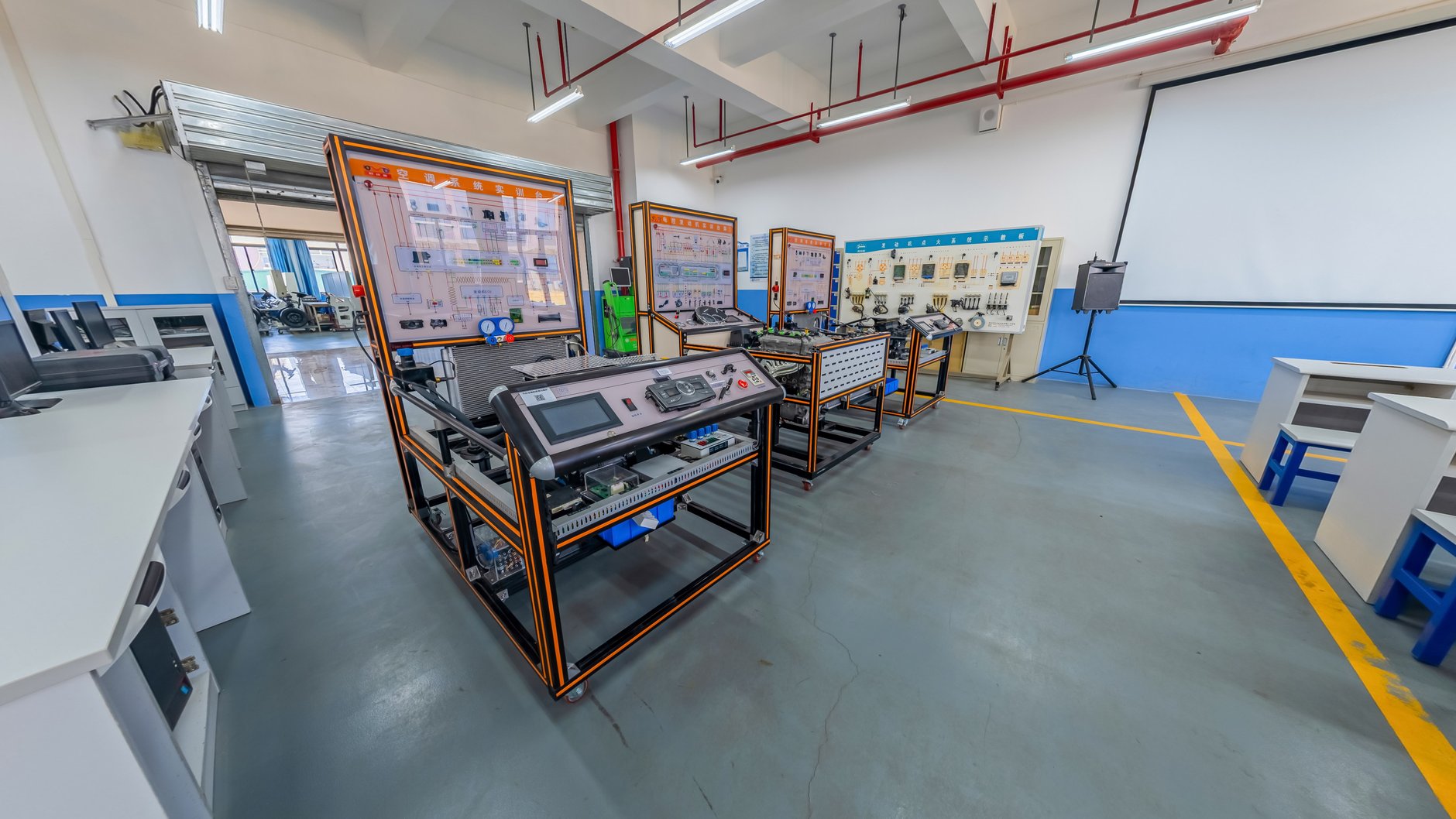
Most machine shop cobot work clusters around tending a machine, moving parts between stock, inspection and finished storage. The six zones below are where a training plan should focus, because operators will spend most of their time near them.
Mark the working boundary on the floor and in the training materials at the same time. A cobot does not need the whole shop, and training goes better when everyone who crosses the boundary knows the rules. Keep the zone layout fixed during the first months so the crew learns one layout before anything moves.
Zone boundaries also set the handoff points, and handoffs are where most training attention belongs. Each handoff should have a visual cue and a clear owner, so the crew knows who clears a jam and who confirms the part before the cycle continues.
How do the lease, training and service fit together?
We begin with a free site assessment, where we map the cell, the machine interfaces and the staffing, then help build the risk assessment that feeds the training plan. The lease quote follows that assessment, because the scope of the cell sets the scope of the lease. Robots are leased through financing, and the payment is stated in the quote.
Deployment and integration come next, then staff training on the cell and go live support during the first production runs. Our service plan covers the unit after go live, with regional service engineers in every state we service. We will not promise a specific training duration before we have seen your cell.
Training does not end at go live. Expect the lead machinist to own the cell day to day, and keep the shop's own training record, since that record is what a safety review or an insurer will ask for first.
Frequently asked questions
Upcoming manufacturing events
- Trade showBrats & RobotsNov 10, 2026Alliant Energy Center Exhibition Hall, Madison, WI
- Trade showMATE Farm & Ranch ShowFeb 11 to 13, 2027MetraPark, Billings, MT
- ExpoPFMA Expo 2027Feb 17 to 18, 2027Washington County Fair Park, West Bend, WI
- ExpoLouisville Facilities Maintenance ExpoApr 15, 2027Mellwood Art Center, Louisville, KY
Want a cobot at your machine shops?
Tell us about your site. We will recommend the robot, quote the lease, and keep it serviced.
Sources
- U.S. Bureau of Labor Statistics, Occupational Outlook Handbook: Machinists and Tool and Die Makers
- The Manufacturing Institute, Manufacturers need as many as 3.8 million new employees by 2033
- International Federation of Robotics, President's report
- U.S. Bureau of Labor Statistics, Occupational Safety and Health news release
- Association for Advancing Automation, Collaborative robot safety training syllabus
- ISO, News on ISO/TS 15066
- NAICS reference, NAICS 332710 description