
The question, in the buyer's words
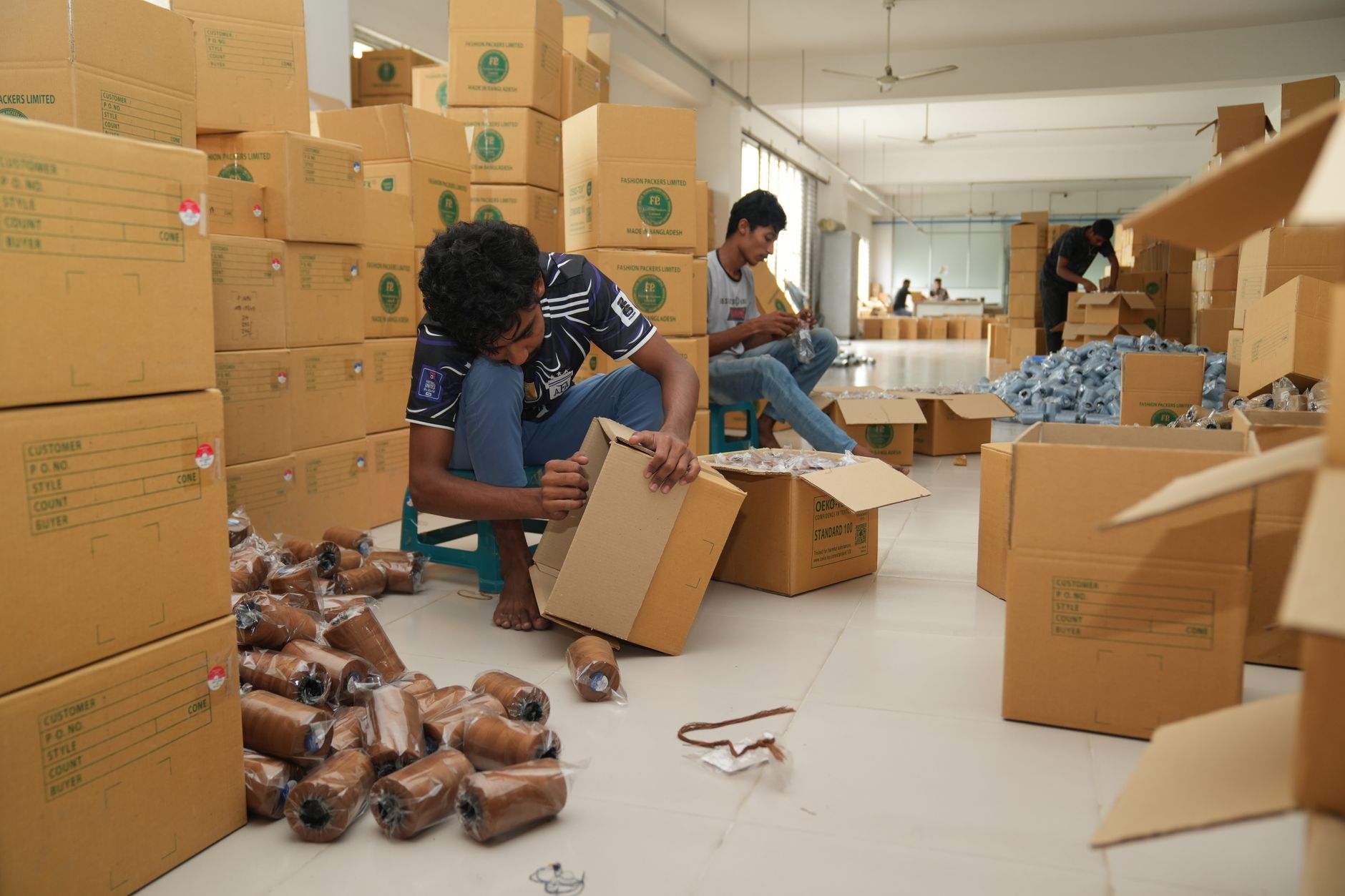
Our 200-person corrugated box plant hand-feeds blanks into the die-cutter on night shift, and feeders are getting cut hands while the press stops for jams; could a cobot feed blanks and clear jams without stopping the press?
Key takeaways
- A cobot can take the hand feeding motion away from the die cutter infeed during normal running.
- Clearing a jam with the press running is not a task to give a robot or a person.
- Plan for fewer misfeeds and faster restarts, not zero press stops.
- No published cobot on a die cutter case study with output or injury results was found.
- Press guarding and feed opening design decide the answer more than the robot does.
Can a cobot feed blanks into a corrugated die cutter on night shift?
A cobot can take over the hand feeding job at a corrugated die cutter, and that is the part worth automating first. In many plants an operator lifts blanks from a skid or stack and places them onto the feed table or into the infeed, repeating that motion all night. A collaborative arm with a suitable gripper can pick from a stack, present each blank square to the feed, and keep the operator's hands out of the feed opening.
Feeding is the easier half of the job. Blanks vary in size, warp and moisture, so the cell needs a stack presentation that holds its pick point, and a feed registration the press can trust. A 2023 trade article on automatic feeding says automatic prefeeders and robotic loaders now take full stacks and feed flexo folder-gluer and rotary die-cutter lines without manual lifting. That article names no installation or cobot, and this review covered only its title and summary, so treat it as direction rather than proof.
Night shift is where the case is strongest. A feed cell does not tire, does not need a meal break, and keeps its registration when the crew changes over. It also means nobody is standing at the infeed to watch for a misfeed, so plan for a supervisor or a remote alarm path, and do not run the cell unattended until the causes of its stops are understood.
Why are feeders getting cut hands at the die cutter?
Hand injuries at a feed point come from a few repeated exposures: hands near the infeed while the press is running, hands reaching in to straighten a misfed blank, and hands sliding a board under a closing die. According to the Michigan State University Occupational Medicine program's 2024 fact sheet, 92.0 percent of work-related amputations in Michigan in 2024 involved fingers, and 41 percent occurred in manufacturing. Those are Michigan figures covering amputations, not every cut, but they show where the damage concentrates.
National rate data for this sector is thinner than a plant manager would like. Workplace Safety North reports a 2025 total injury rate of 2.10 per 100 workers for Ontario's corrugated and solid fibre box sector. That is a Canadian figure, so use it as a rough comparison only. The US rate for this industry should be checked directly against the federal injury survey before it is quoted internally.
Undercounting is a known problem. An earlier Michigan State University annual report found that Michigan surveillance identified 767 work-related amputations, against 300 in the federal survey data for the same period. Your own first aid log and near miss reports will likely tell you more about feed point hand injuries than any published rate.
What do OSHA guarding rules say about hand feeding a press?
The starting point is 29 CFR 1910.212(a)(3), which requires the point of operation to be guarded wherever it exposes an employee to injury. The rule lists guillotine cutters among the machine types that usually need point of operation guarding. This review did not find a listing that names die cutters directly, so the question for your plant is whether the die cutter's point of operation exposes a feeder. In a hand fed cell it almost always does. The version reviewed was the 2012 edition of the Code of Federal Regulations, so confirm the latest text on osha.gov.
OSHA's directive on mechanical power presses is more specific about hand feeding. It states that hand feeding tools, regardless of length or size, do not replace guards or devices, and it warns that a closing die can strike the operator or pull a hand into the machine when a tool is caught. A feeding tool therefore does not count as a guard, and a cell that depends on a tool to keep hands clear is not a guarded cell.
OSHA's interpretation on automatically fed presses adds one useful point. The feeding equipment may act as a barrier to the point of operation. A prefeeder that truly closes off the infeed can count toward guarding, but the interpretation requires analysis of whether more guarding is still needed. The feed design has to be evaluated, not assumed, so bring your safety engineer or a qualified outside reviewer into the design early.
Can a cobot clear jams while the press keeps running?
No, and this is the part of the request that does not fit. A jam at a die cutter puts hands and tools inside the point of operation, which is the zone the guarding rules exist to keep people out of. A cobot does not remove that exposure. An arm can be fast and sensitive, but a press that closes on a gripper or a person's hand still produces a pinch. Jam clearing should happen with the press stopped, the energy isolated and locked out, and the cell cleared by trained people.
What a cobot can do is reduce how often jams happen and how long they take to recover from. Stable stack presentation and consistent blank placement catch many misfeeds before they become jams. When a jam does occur, a clear fault indication and a defined stop position let the restart go faster, while people stay outside the press until the lockout is complete. That is a reduction in stop time, not an end to stops.
Set this expectation with the crew early. The feed cell cuts the number of hands at risk, but it does not remove the need for a person to recover a jam. Training should cover the stop, the lockout, the clear and the restart, the same way it does today, and the cell should be validated on your line before anyone relies on it.
- Hand exposure at the infeed
Cobot
The arm handles blanks, so no hands enter the feed opening during normal feeding.
Staff
Hands are at the infeed each cycle, which is the exposure this project is meant to reduce.
- Jam recovery
Cobot
Can detect a misfeed and hold a defined stop position, but cannot judge a torn or curled blank.
Staff
Reads the board and the die, decides whether a blank is safe to pull, and handles unusual jams.
- Board quality problems
Cobot
Repeats the same pick, so wet or warped stock can cause repeated faults.
Staff
Spots warped or wet stock early and sets it aside.
- Night coverage
Cobot
Works without a meal break and holds registration at three in the morning.
Staff
Needs breaks, handoffs and staffing, and can lose focus late in a shift.
- Changeover and new board sizes
Cobot
Needs reprogramming, new grippers or new stack fixtures, often with an integrator's help.
Staff
Adapts with a short briefing and hand adjustments on the feed table.
How many hours does hand feeding and jam recovery take per shift?

The research for this page did not verify hour figures for hand feeding or jam recovery at a die cutter, and this page will not invent them. The numbers that matter are in your own records: press run hours, stop logs with cause codes, feeder headcount per shift, and the time from each stop to restart. Split those stops into misfeeds, board problems and blank jams, since each one points to a different fix.
The table below lists the tasks a feed cell would change, described without hour figures. Fill in the hours from your logs before comparing options, and keep the cause split with them so the case rests on your own data.
What cobot safety standards apply to a feed cell?
A cobot arm is designed for work near people. The standards for that are ISO 10218-2 for industrial robot safety and ANSI/RIA R15.06, the US adoption of the same content. Sources disagree on how the technical specification ISO/TS 15066 now fits in. Some say ISO 10218-2:2025 absorbed its content, while another says the specification will later become its own standard. The publication timing of the US adoption is also unconfirmed, falling in 2025 or 2026. Ask the integrator which edition the cell is validated against.
Power and force limiting is the cobot approach that keeps contact forces and pressures below body region limits. That helps when the arm contacts a person. It does not make the die cutter safe. The press is a separate machine with its own point of operation, and its guarding has to be assessed on its own. The feed cell and the press need one combined risk assessment, not two separate ones. The vendor guide reviewed on cobot safety is unverified, so confirm the standard with your safety engineer.
Is the box industry moving toward robots, and is labor tight?
Industrial robot use is growing worldwide. The International Federation of Robotics reports a record operational stock of 5 million industrial robots in 2025, up 9 percent, and China deployed 354,000 units that year. Those are global and China figures. They show that the technology is widely deployed in factories, but they do not show how many box plants run feeding cells.
The corrugated sector itself is changing slowly. According to a historical count reported by AICC Now, 937 of 1,576 box plants were sheet plants in 1987, the peak year for sheet plants. Corrugated manufacturers increased employment by 4.7 percent from Q1 2020 to Q1 2024, according to BLS data as reported by AICC Now. Sector employment growth does not mean your night shift is staffed, so check your own vacancies and turnover, which vary by plant.
How does leasing and deploying a feed cell work with us?
We are an OEM neutral integrator for US businesses. For a feed cell like this, we choose the arm, gripper and feed fixture for your die cutter, lease the equipment through financing so the cost is spread over the lease term, deploy and integrate it with the press, train your staff and service the unit. The lease payment is quoted after a free site assessment, so no price appears on this page.
The site assessment is where the answer gets settled. We look at the feed opening, the guarding, the press model and the stop history, and we test whether the feed cell can meet the guarding rules described above. If the press cannot be guarded for a cobot cell, we will say so and recommend against it. A pilot on one press is a reasonable start, with stop counts measured over several weeks before any decision on other presses.
Service is part of the lease. Our service plan covers the arm and its controls, with regional service engineers in each state we service and remote triage before anyone is dispatched. If one press cannot afford a long outage on night shift, ask about spare unit coverage before you sign.
Frequently asked questions
Upcoming manufacturing events
- Trade showBrats & RobotsNov 10, 2026Alliant Energy Center Exhibition Hall, Madison, WI
- Trade showMATE Farm & Ranch ShowFeb 11 to 13, 2027MetraPark, Billings, MT
- ExpoPFMA Expo 2027Feb 17 to 18, 2027Washington County Fair Park, West Bend, WI
- ExpoLouisville Facilities Maintenance ExpoApr 15, 2027Mellwood Art Center, Louisville, KY
Want a cobot at your corrugated box manufacturing lines?
Tell us about your site. We will recommend the robot, quote the lease, and keep it serviced.
Sources
- Workplace Safety North, 2025 corrugated and solid fibre box safety infographic
- Michigan State University Occupational Medicine, 2024 amputation fact sheet
- Michigan State University Occupational Medicine, 2021-2022 amputation annual report
- 29 CFR 1910.212 machine guarding (2012 CFR edition)
- OSHA directive on mechanical power presses (North Carolina Department of Labor copy)
- International Federation of Robotics, five million robots now operate in factories globally
- AICC Now, a look at the evolution of box plants
- Sweets Processing, 2023 article on manual work and cobot product feeding