Key takeaways
- Empty corporate campuses present unique security challenges like theft, vandalism, and trespassing after business hours.
- Autonomous security robots patrol large areas tirelessly, using advanced sensors to detect threats human eyes might miss.
- Thermal imaging allows robots to detect human heat signatures in complete darkness, fog, or through foliage.
- AI-powered person detection differentiates between human threats and false alarms like wildlife, ensuring a targeted response.
- A Robot-as-a-Service model makes this advanced security accessible with no large upfront capital, bundling hardware, maintenance, and support.
The Challenge: A Silent Campus Is a Vulnerable Campus
When the last employee drives away, a corporate campus transforms. Buzzing centers of productivity become sprawling, empty spaces, creating a distinct set of security challenges that differ greatly from the 9-to-5 routine. The primary daytime goal of managing employee and visitor access gives way to a nighttime imperative: protecting vast, deserted areas from unauthorized entry, vandalism, and theft.
This after-hours emptiness is a significant liability. Multi-building layouts, extensive parking structures, and landscaped perimeters offer countless points of entry and concealment for intruders. Traditional security measures, often stretched thin across large properties, can leave significant gaps in coverage. This is the specific problem that modern autonomous security robots are built to address, providing a persistent presence that never tires.
What Makes After-Hours Campus Security So Difficult?
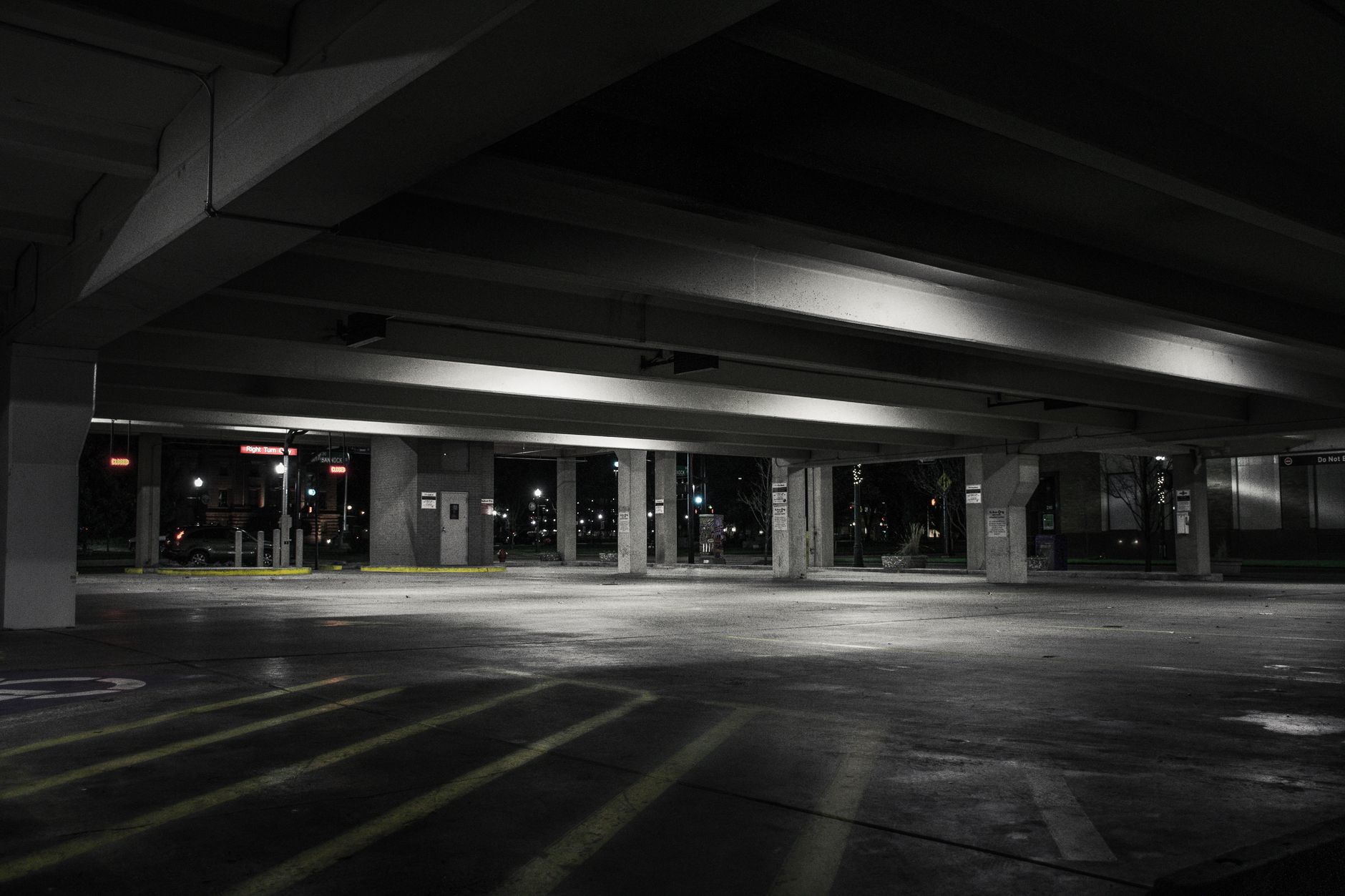
Protecting a corporate campus overnight is not simply about locking the doors. The scale and nature of the environment create specific vulnerabilities. Large perimeters are difficult to monitor completely, and parking structures with their multiple levels and poor sightlines are notoriously hard to secure.
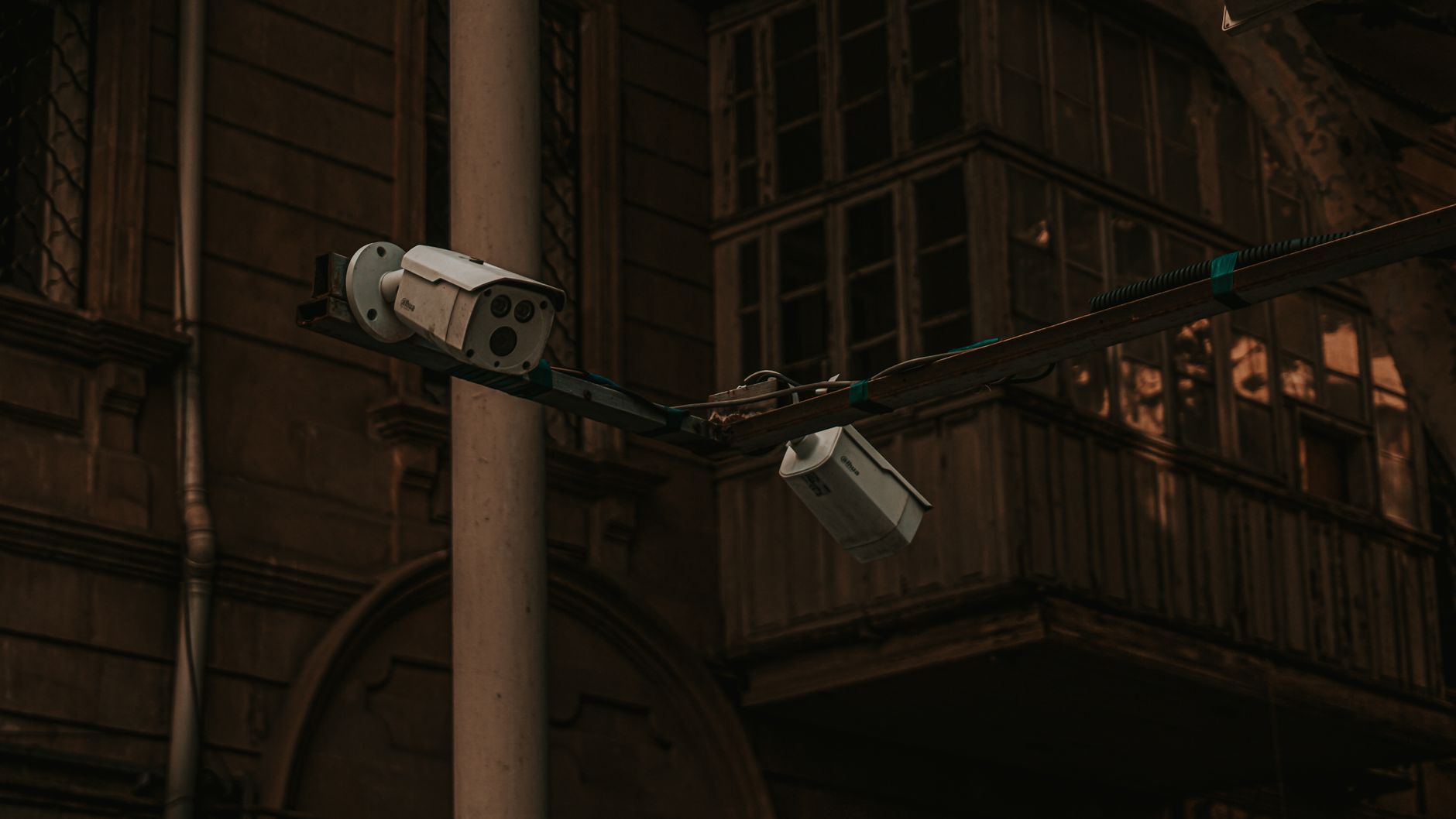
Human patrols, while essential, face limitations of fatigue and the sheer amount of ground to cover. It is impossible for a person to be everywhere at once. Static camera systems can be compromised by blind spots, insufficient lighting, or adverse weather conditions, leaving valuable assets and sensitive information at risk.
How Do Autonomous Security Robots Work?
Autonomous security robots are mobile surveillance platforms that navigate and patrol designated areas without direct human intervention. They follow pre-programmed routes, ensuring consistent and complete coverage of a campus, including office parks and parking lots. These machines are designed for continuous operation, autonomously managing their power levels and returning to a charging station before resuming their patrol.
Their real power comes from the advanced sensor payloads they carry. Unlike a fixed camera, a security patrol robot brings the sensors to the potential issue. Equipped with high-definition cameras, two-way communication, and, most critically for overnight work, thermal imaging and AI-driven analytics, they provide a much deeper layer of situational awareness. The global security robot market is expanding rapidly, projected to reach $44.3 billion by 2030, a clear indicator of their growing adoption in corporate settings.
Seeing in the Dark: The Power of Thermal Imaging
One of the greatest advantages of a robotic patrol is its ability to see what human guards and standard cameras cannot, especially in total darkness. This is accomplished with thermal imaging. A thermal camera detects infrared radiation, which is the heat energy naturally emitted by all objects. It then converts this data into a visible image, or thermogram, where different temperatures appear as different colors.
This technology is a game-changer for after-hours security. A person hiding in shadows, concealed by fog, or obscured by landscaping will be instantly visible to a thermal camera due to their body heat. Because it detects emitted heat rather than reflected light, its performance is unaffected by darkness or poor weather, providing reliable detection around the clock.
Intelligent Detection: Separating People from Passing Animals
Detecting a heat signature is only the first step. Early motion-based security systems were often plagued by false alarms triggered by animals, shifting shadows, or weather. Modern security robots overcome this with artificial intelligence and machine learning. This is the crucial technology of person detection.
AI-powered analytics process the sensor data in real-time to differentiate between the heat signature and movement pattern of a human versus other objects. This capability dramatically reduces false alarms and allows human security personnel to focus only on credible threats. When the robot identifies a person in an unauthorized area after hours, it can be programmed to trigger alarms, broadcast audible warnings, and immediately stream live video to a security operations center for human verification and response.
A Force Multiplier for Your Human Security Team
Autonomous patrol robots are not designed to replace human guards, but rather to act as a force multiplier that enhances their effectiveness. Robots can handle the monotonous, repetitive, and often sprawling patrol routes with perfect consistency. This frees up human officers to perform higher-value tasks, manage command centers, and respond to verified incidents.
This collaborative model improves safety for everyone. By sending a robot to investigate a potential disturbance first, a security team can assess the situation remotely without putting a human guard in potential danger. The robot becomes the team's eyes and ears on the ground, providing critical intelligence from a safe distance.
Making Advanced Security Accessible
Implementing a fleet of autonomous robots might sound like a major capital expense, but the industry has moved toward a more accessible model. At Service Robot Co., we provide this technology through a Robot-as-a-Service, or RaaS, subscription. This approach eliminates the large upfront purchase price, instead bundling the hardware, software, maintenance, and support into a predictable monthly payment.
As a vendor-neutral integrator, we focus on matching your campus's specific needs with the right technology from across the robotics landscape. Our role is to be your single point of contact for the entire lifecycle. We handle the initial site assessment, deployment, integration with your existing systems, and provide nationwide service through our network of engineers. This is how we provide a turnkey robot deployment, giving you one partner and one number to call for everything.