Key takeaways
- AMRs fit best after intake, once a return has been identified, tagged, and routed to the right disposition lane.
- Bulky-item reverse logistics is harder than outbound fulfillment because cartons are damaged, dimensions drift, and quarantine and rework loops never fully stop.
- The strongest AMR use cases are repetitive cart, pallet, and cage moves between receiving, inspection, test, refurb, parts harvest, and outbound staging.
- Good reverse-logistics automation depends more on process discipline, slotting, and exception rules than on headline robot specs.
- A vendor-neutral integrator matters when you need financing, integration, training, service coverage, and a mixed-fleet plan under one contract.
Where do AMRs actually help in appliance returns?
AMRs help most in the middle of the reverse-logistics flow, not at the front door. In bulky appliance returns, people still need to identify the unit, inspect packaging damage, verify serial numbers, and decide whether the item should be quarantined, tested, refurbished, harvested for parts, liquidated, or scrapped. Once that decision exists, an autonomous mobile robot can take over the repetitive transport that burns labor and clogs aisles.
That matters because reverse logistics is no niche side process anymore. The National Retail Federation said total retail returns were projected to reach $890 billion in 2024, equal to 16.9% of annual retail sales. For large consumer goods, each return is slower, heavier, and riskier than a standard parcel return, so the warehouse penalty is disproportionate.
In practice, AMRs earn their place by moving bulky returns between receiving, damage inspection, electrical test benches, cosmetic repair, repack, secondary storage, and outbound docks. They do not remove the need for judgment. They remove the non-value-added walking, towing, and queue-jumping that make reverse operations feel permanently underwater.
Why is reverse logistics harder than greenfield fulfillment?
A forward-pick warehouse lives on predictability. A reverse-logistics building does not. The box is often the wrong box. The dimensions in the system are often stale. The unit may be missing a shelf, a cord, a manual, or the original foam. And a dented washing machine can require a completely different path from an unopened microwave that simply came back after a delivery refusal.
Industry guidance from OSHA underscores the physical strain here. In warehousing, the agency flags overexertion in lifting and lowering, pushing and pulling heavy loads, awkward postures, and repetitive handling as core musculoskeletal risk factors. Those risks intensify when teams are repeatedly repositioning large consumer goods that were never repacked to original condition.
Reverse operations also carry more state changes than outbound. A unit can enter as sellable, move to quarantine after inspection, shift to test pending, go to refurb staging, and then be downgraded again after a parts shortage or cosmetic failure. That constant rework is exactly why simple conveyor logic often struggles here and why mobile transport, with software rules around destinations and priorities, can fit the mess better.
What does the warehouse workflow look like for a returned appliance?
A workable reverse flow usually starts with triage at receiving. The team captures the return authorization, serial number, photos of visible damage, and current dimensions if packaging has changed. That step sounds administrative, but it is operationally decisive because the rest of the building will route labor and floor space based on that first disposition call.
From there, most facilities break bulky returns into lanes. One lane handles unopened or lightly disturbed units with a chance of quick restock. Another handles damaged-carton units that need full inspection and probable repack. Another is a true exception lane for contamination, safety concerns, leakage, electrical faults, or products tied to a recall or vendor hold.
A fourth lane is usually where AMRs begin to matter. Once the product is tagged to a lane, a pallet transport robot or tug-style AMR can move it to the correct zone without waiting for a lift driver to become available. That is especially useful when the same unit may touch three to six stations before a final disposition is set.
The most automation-friendly facilities make these handoffs explicit. Human workers do the judgment-heavy tasks. Robots do the repeated transport between fixed points. That division keeps the project grounded in actual warehouse friction instead of trying to automate the ambiguous parts first.
- Receiving and ID capture
- Condition and packaging assessment
- Safety or recall quarantine if needed
- Functional test or cosmetic inspection
- Refurbishment, repack, or parts harvest
- Final disposition to restock, secondary sale, return-to-vendor, or scrap
Which AMR moves make sense, and which ones do not?
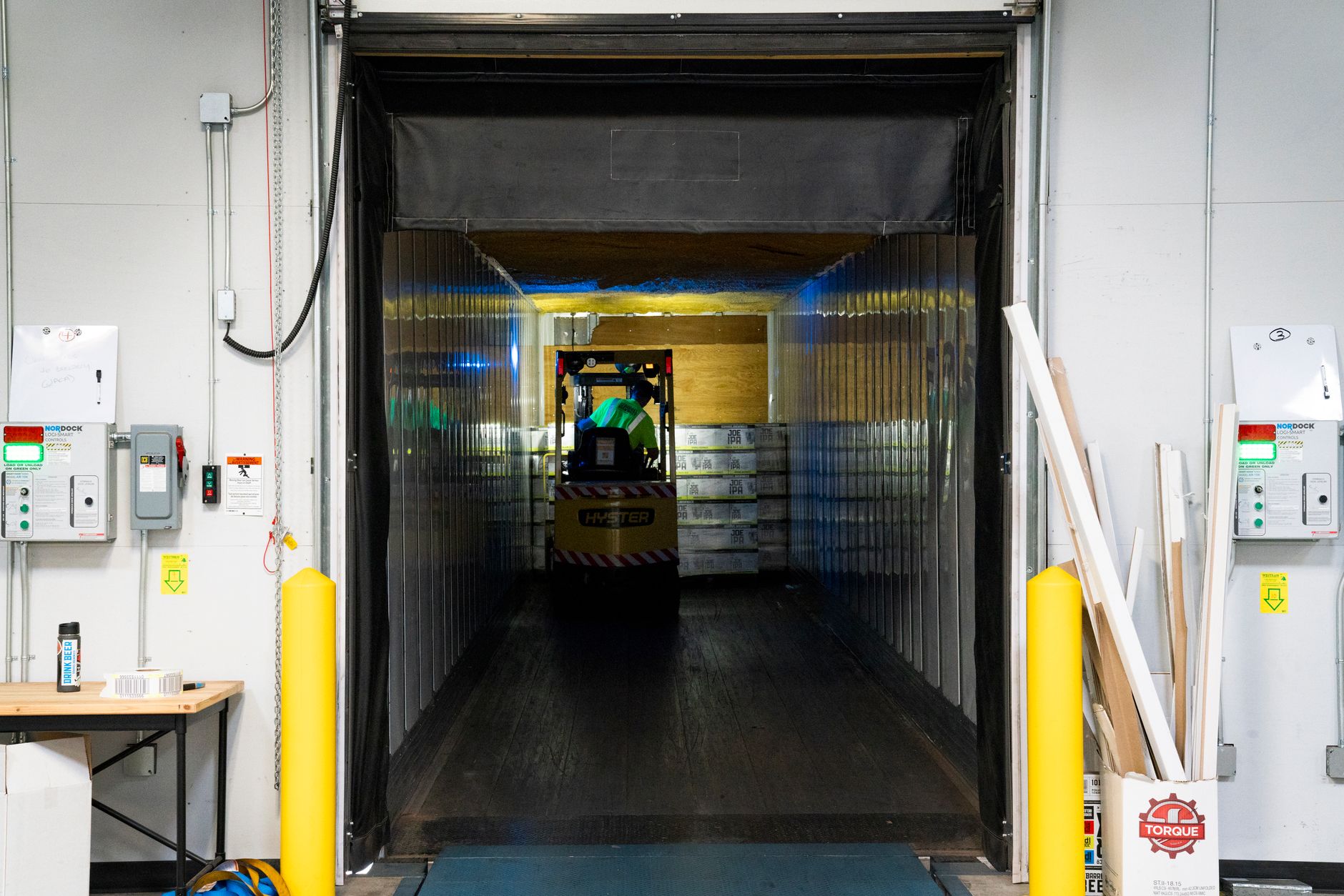
The best reverse-logistics AMR jobs are predictable in origin and destination even if the items themselves are messy. Moving a caged dryer from inspection to test. Taking a pallet of open-box refrigerators from repack to overflow staging. Pulling a batch of failed units from diagnostics to parts harvest. Those are repetitive transport loops, and they are exactly where labor gets consumed by travel instead of value recovery.
What usually does not fit is the first-touch maneuvering around badly presented freight. A robot should not be your answer to a half-collapsed carton sitting crooked on an inbound pallet, or to a random unit dropped in an aisle by a carrier. Reverse logistics has too many ugly arrivals. Human intervention is still the safer first move there.
There is also a payload and presentation issue. The more consistent the unit load, cart interface, and handoff zone, the better the AMR program performs. Facilities that standardize return carts, refurb pallets, and quarantine cages generally get better robot utilization than sites that let every department improvise its own container style.
How do quarantine areas and exception lanes change the automation plan?
This is where many warehouse teams under-scope the job. Reverse logistics is full of products that cannot just re-enter the normal flow. Appliances may arrive with water residue, refrigerant concerns, broken glass, cut cords, infestation risk, or recall flags. Some need isolation for safety. Others need evidence preservation for claims, chargebacks, or warranty disputes.
That means the AMR map cannot be designed like a clean outbound facility. The robot fleet needs controlled access rules for quarantine boundaries, no-go zones around technician benches, and clear digital states that prevent a unit from being sent back into general inventory staging too early. The automation layer must respect the warehouse's compliance logic.
A useful design principle is simple. Keep quarantine moves few, explicit, and auditable. Use AMRs to bring a tagged unit into the holding zone or out of it after release, but do not let ad hoc dispatching blur the chain of custody. In exception-heavy operations, traceability is just as important as travel reduction.
What numbers make the case for automation here?
The first number is return volume. According to the National Retail Federation, retailers expected nearly 17% of annual sales to come back in 2024. Even if a bulky-goods operator sits below that blended retail average, reverse flow is now large enough to justify dedicated process engineering instead of treating it as warehouse overflow.
The second number is labor pressure. The 2025 MHI Annual Industry Report said 83% of manufacturing and supply chain professionals saw workforce and talent shortages as an operational challenge, and 55% planned to invest more in supply chain innovation than in the previous year. Reverse logistics is one of the hardest places to staff because the work is physical, variable, and hard to pace fairly.
The third number is risk. OSHA's updated National Emphasis Program for Warehousing and Distribution Center Operations began inspections on July 31, 2026. That does not mean every appliance returns site needs robots to satisfy regulators. It does mean reducing nonessential heavy transport, aisle congestion, and improvised material handling has become easier to defend in front of both safety leadership and finance.
The right business case is usually not labor savings alone. It is labor redeployment, fewer forklift touches, shorter queue times between workstations, and better control of high-friction lanes that otherwise keep inventory sitting in limbo.
How should a warehouse pilot this without disrupting live returns?
Start with one closed loop, not a building-wide promise. Good pilots usually target a single repetitive path such as receiving to inspection, inspection to test, or refurb to repack staging. If the route is short, visible, and high-frequency, supervisors can judge quickly whether the robot is actually removing travel and congestion instead of adding ceremony.
Measure waiting time between stations, touches per unit, and exception rate before launch. Then measure them again after go-live. Reverse-logistics teams often discover that the biggest gain is not raw speed. It is that work stops getting stranded because a technician no longer has to leave a bench to chase a pallet jack or wait for a driver.
This is also where commercial terms matter. Many operators prefer autonomous mobile robot rental, AMR rental, or warehouse robot rental structures before they commit to a larger fleet. Monthly payment programs, robot leasing for business, or a robot as a service model can be sensible when reverse volume swings seasonally and the process still needs tuning.
Why does the integrator matter more than the robot brand?
In reverse logistics, brand-first buying is usually backwards. The harder problem is fitting robot behavior to your workflow, WMS events, safety rules, charging layout, technician zones, and service expectations. That is why an OEM-neutral, vendor neutral robot integrator can be more useful than a single-brand pitch, especially when the site may need different transport methods for pallets, carts, and cages.
Service Robot Co. is built around that reality. For U.S. operators, the company acts as one partner and one number across robot selection, financing, deployment, integration, training, and service. That is a practical advantage in reverse operations, where downtime at one handoff point can ripple across receiving, refurb, and outbound staging in the same shift.
It also changes how companies buy. Some sites want lease rental or sale options. Others want no upfront capital, a lease purchase program, or maintenance included under a long-run service plan. When the operational question is still being answered, flexibility on commercial structure can matter as much as the hardware itself.
What separates a useful AMR deployment from an expensive detour?
Three things. First, the site has to define standard load presentations. Second, the disposition logic has to be clear enough that a robot knows where a unit is supposed to go next. Third, the facility needs ownership from operations, maintenance, safety, and IT at the same time. Reverse logistics breaks projects that live in only one department.
The temptation is to chase the most dramatic use case. Resist that. Appliance returns are won by making dull, repeated moves boringly reliable. If the AMR fleet keeps units flowing from triage to test to refurb without adding confusion, it is doing the real job.
That is the practical fit. AMRs are not the star of bulky-item reverse logistics. They are the connective tissue that keeps value-recovery work moving in a warehouse full of damaged cartons, uncertain dimensions, quarantine rules, and constant rework.
Frequently asked questions
Sources
- National Retail Federation 2024 Consumer Returns in the Retail Industry
- NRF on reverse logistics and 2024 return rates
- OSHA warehousing overview
- OSHA warehousing hazards and solutions
- MHI 2025 talent gap summary
- CBRE holiday returns and reverse logistics note
- NAIOP report on reverse logistics facility design