Key takeaways
- AMRs pay off first on repeat campus runs between fixed pickup and drop points, not on every parcel move.
- Door, elevator, badge, and package-tracking integrations matter more than top robot speed.
- A good pilot starts with one route family, one shift window, and clear handoffs for mailroom staff.
- Campus mail teams still own exceptions, chain of custody, and customer service. The robot handles the long walks.
- A vendor neutral robot integrator can phase in the right fleet, training, service, and financing under one contract.
Where do AMRs actually help a campus mailroom?
Yes. AMRs make sense for campus mailrooms and package rooms when the pain is repetitive transport between buildings, not front-counter pickup. On universities, corporate campuses, and medical campuses, the best first use is the same route run over and over: parcels from a central package room to residence halls, interoffice mail between admin buildings, specimen-adjacent paperwork between clinics, or supply totes from a receiving dock to satellite offices.
The reason is simple. A mail delivery robot is best at the dull miles that steal staff time and create late-afternoon pileups. It is less useful at judgment-heavy work like resolving bad addresses, checking IDs, repacking damaged cartons, or handling signature exceptions. Put the robot on the cart run. Keep people on exceptions and service.
The timing is also favorable. According to Pitney Bowes, U.S. parcel volume reached 22.4 billion shipments in 2024, up 3.4 percent from 2023. More parcels in the wider market keep showing up at campus package rooms, and those extra touches land on the same mailroom teams that already cover interoffice mail, receiving, and internal deliveries.
Which campus workflows are the strongest first targets?
Start with routes that have four traits: fixed origins, fixed destinations, predictable windows, and lightweight decision-making. That usually means central mailroom to building mail stop, package room to parcel locker bank, receiving dock to departmental drop point, or print shop to office cluster.
Universities offer a clear example. UCSB says its mail service prepares and processes an average of 162,000 parcels and packages of university mail per month. The University of Michigan says campus mail serves more than 200 buildings and moves more than 10,000 pieces of campus mail each day. Those are not exotic robotics cases. They are transport loops.
Medical campuses and corporate campuses have the same pattern, just with tighter service windows and more controlled access. Internal mail, forms, light supplies, boxed IT equipment, and pharmacy-adjacent paperwork often move on recurring schedules. When those moves happen across long corridors, between towers, or over weather-exposed walkways, an autonomous mobile robot rental or pilot program has real operational logic.
- Central package room to residence hall locker banks
- Mail center to departmental mail stops in office and admin buildings
- Receiving dock to satellite clinics, labs, and office suites
- Print room to high-volume departments with fixed daily runs
- Evening sweep of outbound interoffice mail from remote buildings back to the hub
Where do manual cart runs still beat a robot?
Not every route should be automated. Manual carts still win when stops change by the hour, freight is oversized, doors are inconsistent, or the route depends on local workarounds that only a veteran runner knows. A robot struggles if every trip includes a propped-open fire door one day and a locked vestibule the next.
Campus mail also has plenty of exception-heavy work that stays human. Think misaddressed parcels, perishable items, damaged cartons, special handling, signature requirements, and departments that want the mail left in three different sublocations depending on who is in. Those are service tasks, not repetitive transport automation.
The practical rule is this. If you would write the route on a whiteboard and expect it to stay mostly unchanged for 30 days, AMRs are worth a look. If the route changes every morning meeting, keep it on a cart for now.
What building integrations matter most?
The hard part is usually not navigation. It is building access. A multi floor delivery robot lives or dies on doors, elevators, badge rules, and where a handoff can legally happen. If those pieces are weak, the pilot turns into a parade of escorts and workarounds.
Door geometry matters first. The ADA standards require a minimum 32 inch clear opening at doorways on accessible routes. Elevator behavior matters too. The Access Board guidance says passenger elevator doors must remain fully open for at least 3 seconds in response to a call, and the reopening device must stay effective for at least 20 seconds. Those numbers shape whether a robot can enter cleanly, wait safely, and recover from foot traffic.
Modern building APIs help, but only when the site team plans around them. Major elevator OEMs now publish robot-oriented interfaces for calling cars and reading door and car status. That is valuable for a delivery robot for elevators, but the field reality still depends on access control permissions, Wi-Fi coverage in elevator lobbies, and a fallback plan when a car goes out of service.
- Automatic door actuation or approved push-plate workflow at every controlled threshold on the route
- Elevator integration that can request rides, confirm car arrival, and report door state
- Badge and access-control rules for after-hours routes and public-to-back-of-house transitions
- Reliable wireless coverage in lobbies, loading areas, and corridor dead zones
- Clearly marked handoff points so the robot never blocks egress or reception traffic
How should package tracking and inventory tie in?
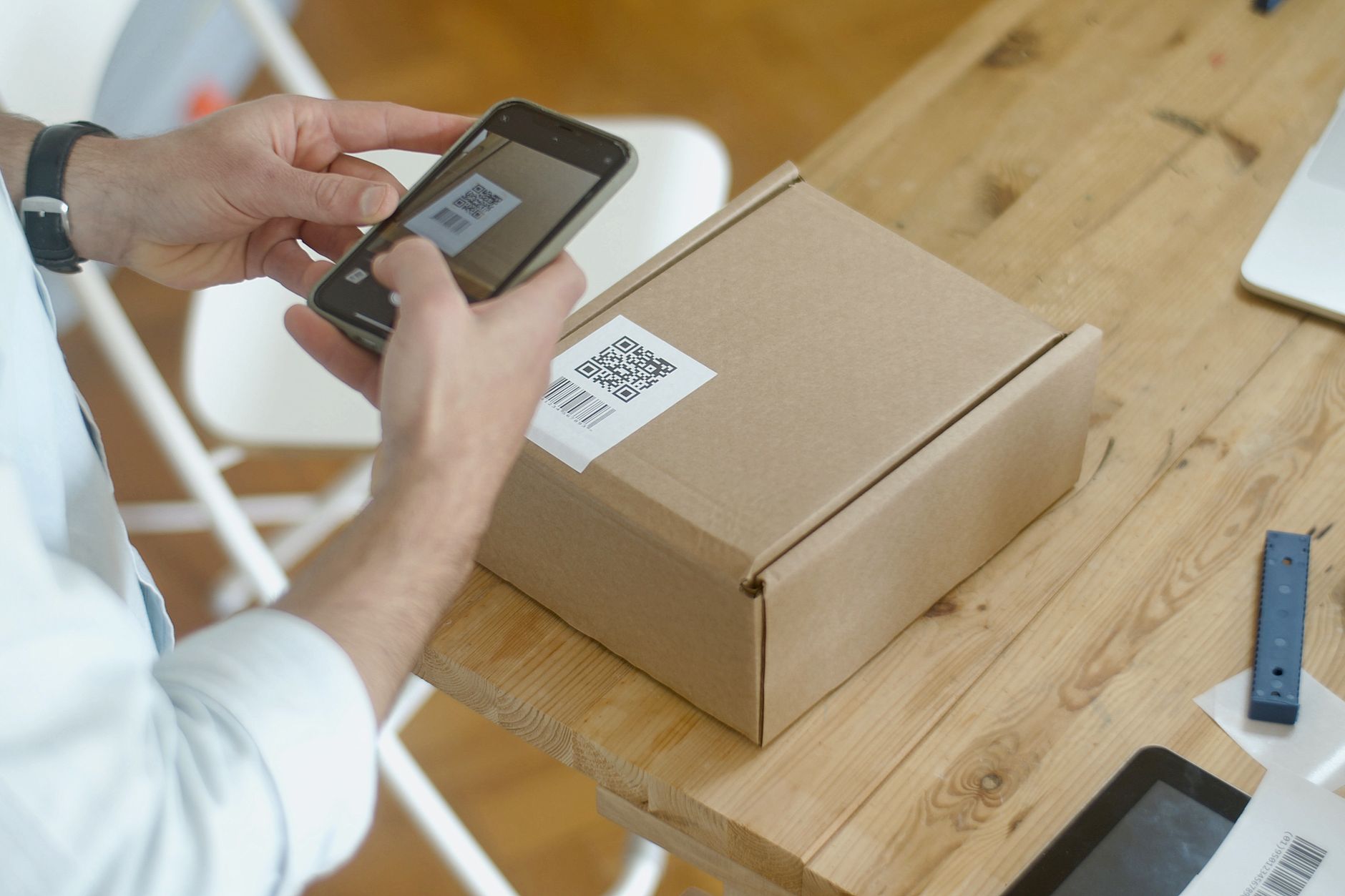
A campus robot should never be an orphaned moving box. It needs to sit inside the same chain of custody your mailroom already trusts. That usually means barcode scans at pickup and drop-off, route status inside the package-tracking system, and exception codes that staff can resolve without chasing the robot around the map.
Universities already run this way. UT Austin describes a Campus Tracking System that provides chain-of-custody information for barcoded packages and campus deliveries. UConn describes a workflow where tracking numbers are scanned, packages are relabeled to the right destination, and a final scan at the mailroom or locker triggers recipient notification. Penn says all mail and packages are tracked in a database and that 90 percent of packages are scanned the day they arrive.
That is the right model for AMRs as well. The robot should receive jobs from the inventory or tracking layer, confirm possession, confirm drop, and hand any exception back to staff with enough detail to act. If your software cannot answer who had the parcel, where it paused, and whether it reached the mail stop, do not add robots yet.
How do you pilot without upsetting the mailroom team?
Treat the pilot as labor relief, not staff replacement theater. The cleanest message to mailroom staff is that the robot is taking the least pleasant transport loop first: the long weather walk, the cross-campus backhaul, the repeated elevator run, the late-day sweep when counters are still busy. Staff still own intake, triage, customer questions, and exception handling.
Scope matters. Pick one route family, one shift window, and one operating rulebook. A good robot pilot program for a campus mailroom usually starts with one hub, two to five destinations, and a narrow payload class such as parcels under a set size or sealed internal mail totes. Keep the service window predictable so staff can learn handoffs without reorganizing the whole day.
Training should focus on a few real moments: how to load and dispatch, how to recover from a blocked path, what to do when the elevator is unavailable, how to escalate damaged freight, and when to revert to a manual cart. This is where Service Robot Co. fits well. As a vendor neutral robot integrator, we can map the site, pick the right robots across manufacturers, connect doors and elevators, train the mailroom crew, and support robot deployment and integration with one partner and one number.

What does a sensible campus pilot look like?
Begin with a baseline. Count daily runs, walking minutes, late deliveries, exception rate, and how often staff abandon the route because the counter gets slammed. If you skip this step, the pilot becomes opinion against opinion.
Then choose a route with enough volume to matter and few enough variables to survive week one. Stanford offers a useful signal on package pressure. Its sustainability team says approximately 420,000 packages were delivered to students on campus in 2023, rising to around 450,000 in 2024, with more than 200 delivery trucks reaching campus each week. That is exactly the kind of environment where centralization and repetitive internal transport start to matter.
For most campuses, success comes from a phased deployment with no shutdown. Keep the legacy cart route intact during the first weeks. Let the robot handle a subset of trips while staff shadow, correct addresses, and tune loading procedures. Once trip completion, handoff timing, and exception recovery are steady, add buildings or extend hours.
- Weeks 1 and 2: map route, validate doors and elevators, confirm network coverage
- Weeks 3 and 4: run staffed shadow trips during off-peak hours
- Weeks 5 and 6: move live parcels or internal mail on one route family
- Weeks 7 and 8: expand destinations only after trip success and handoff timing are stable
What metrics prove the AMR is earning its keep?
Use operations metrics, not showroom metrics. The important question is not peak speed. It is whether the robot removed enough repetitive walking to free staff for receiving, sorting, and customer-facing work.
Track trip completion rate, average handoff time, late deliveries by route, elevator-related delays, exception rate, and labor minutes returned to the mailroom. On campuses with locker delivery, also track time from inbound scan to locker-ready status. On interoffice routes, track same-day completion and how often pickups miss the cut-off.
Service Robot Co. usually advises buyers to compare the robot against the existing cart loop, not against a fantasy state where every delivery is perfectly organized. If the AMR removes the long walk, keeps chain of custody intact, and fits the site’s real access rules, that is a meaningful operational gain. If it still needs a human escort for every second door, it is not ready for scale.
Why a full-service integrator matters on campus routes
Campus environments punish partial ownership. One party handles the robot, another owns the elevator tie-in, a third controls access badges, and the mailroom is left refereeing outages. That structure breaks down fast when a package room is busy and a building manager changed a door schedule at 6 a.m.
A full-service commercial robot integrator reduces that friction. Service Robot Co. stays OEM-neutral, then finances, deploys, integrates, trains, and services every unit through a nationwide U.S. engineer network. For a university, corporate campus, or medical campus, that means one vendor for the whole lifecycle: site assessment mapping, pilot design, building integration, go live support, and ongoing service. It is the practical way to run an office delivery robot rental, an AMR rental, or a broader mail delivery robot fleet without turning the mailroom into its own engineering department.