Key takeaways
- AMRs fit best in the short repeatable moves between unload, sort, buffer, and outbound staging, not in every dock task.
- Cross-dock fleets need traffic rules built for bursts, lane conflicts, and minute-level priorities, not storage-oriented warehouse logic.
- Buffer design matters as much as the robot itself. Small dynamic buffers beat long static queues in same-day freight.
- The labor case is real: transportation and warehousing recorded 335,000 job openings in May 2026, according to the U.S. Bureau of Labor Statistics.
- A full-service integrator matters because cross-docks need robot selection, software handoffs, training, financing, and field service to work as one operating system.
Where do AMRs actually fit in a same-day cross-dock?
They fit in the middle of the flow. In a cross-dock terminal built around same-day freight, AMRs are strongest after the trailer is opened and before the outbound trailer is sealed. They are not a replacement for every forklift move, every dock worker, or every trailer maneuver. They are a way to absorb the repetitive horizontal transport that burns minutes and attention all shift long.
That usually means four jobs: moving freight from inbound unload points to sort positions, pulling sorted freight to short-term buffers, feeding outbound staging lanes in sequence, and returning empty carts, cages, or pallets to where the next trailer wave will hit. In a fast cross-dock, those short moves happen hundreds of times a shift. That is exactly where autonomy earns its keep.
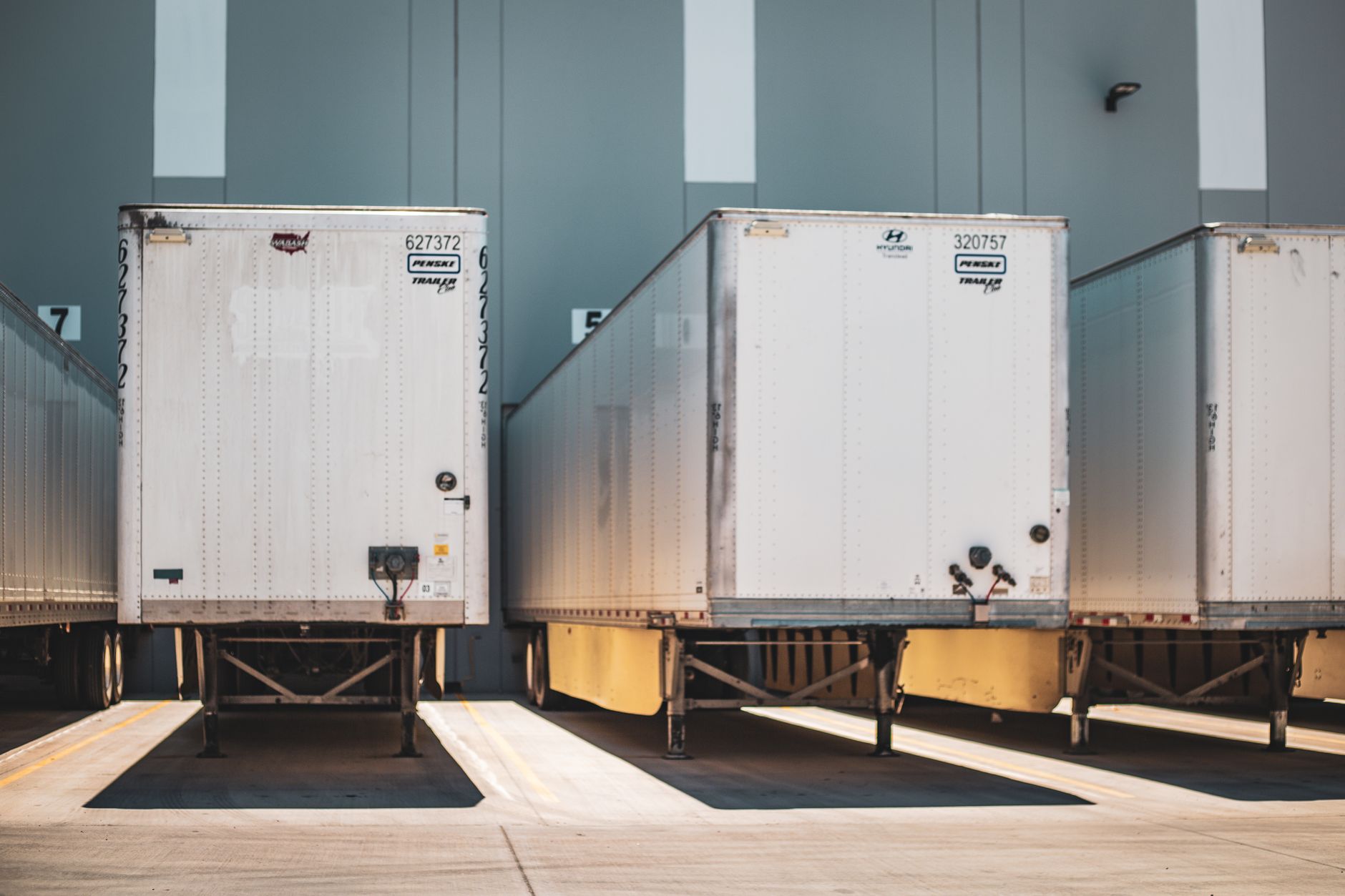
The case is stronger because the freight system itself is still truck-heavy and time-sensitive. According to the American Trucking Associations, trucks moved 11.27 billion tons of freight in 2024 and carried 72.7 percent of domestic freight tonnage by weight. When your terminal lives on same-day turns, shaving friction out of those truck-connected handoffs matters more than automating a distant reserve aisle that does not exist.
- Best AMR fit: repetitive point-to-point movement inside the terminal
- Weak AMR fit: deep trailer loading judgment, damaged freight triage, oddball exceptions, and any move that changes by the second without a control rule
- Real objective: faster dock-to-sort and sort-to-stage cycles with fewer empty travel legs
Why is a cross-dock different from a traditional DC?
A storage-oriented distribution center can hide mistakes in inventory locations, reserve slots, and longer dwell windows. A cross-dock cannot. Freight lands, gets identified, gets split, and has to be pointed toward its next truck almost immediately. Space is not inventory space. It is timing space.
That changes the traffic logic for automation. In a traditional DC, an AMR can optimize for steady travel and long repeated routes. In a cross-dock, the robot has to survive burstiness. Three inbound trailers may hit one side of the building inside twenty minutes, then outbound priorities flip because a route cut-off moved up. The robot fleet has to behave more like a dispatcher inside the building than a warehouse taxi service.
The same-day pressure is not theoretical. The U.S. Census Bureau reported on May 18, 2026 that first-quarter 2026 retail e-commerce sales reached 326.7 billion dollars, up 9.8 percent from the first quarter of 2025, and equal to 16.9 percent of total retail sales. More e-commerce volume does not automatically mean every terminal should automate, but it does mean more networks are living with compressed order-to-delivery windows and less tolerance for dock congestion.
- Cross-dock constraint: dwell time
- DC constraint: storage efficiency
- Cross-dock optimization target: flow continuity and departure integrity
- DC optimization target: inventory density and pick productivity
Which moves should stay manual, and which should go autonomous?
Keep the work manual when it demands judgment at the trailer face. Mixed floor-loaded unloads, crushed packaging, unstable pallet bases, and shipment exceptions still favor human operators or conventional equipment under direct control. The first touch inside the trailer is often too variable for a standardized AMR lane to handle cleanly.
Push the work to AMRs once the freight has been made legible. That means the item, pallet, cage, or cart has an assigned destination, a release condition, and a physically predictable way to be moved. The robot does not need to decide what the freight is. It needs to execute the next move faster and more consistently than a person walking it across the building.
In practice, the handoff point is the design decision that separates good automation from expensive frustration. If your team standardizes freight onto compatible carts, pallets, or transfer fixtures near the dock, AMRs become useful. If every load remains irregular all the way through staging, the fleet will spend its life waiting on people to improvise around exceptions.
- Manual zone: trailer interior and exception handling
- Hybrid zone: unload nose, scan, label confirmation, and freight standardization
- Autonomous zone: dock-to-sort, sort-to-buffer, buffer-to-stage, and empty asset returns
What traffic logic works when dock volume arrives in waves?
Cross-dock AMR traffic should be scheduled around waves, not around simple shortest-path math. The right fleet behavior is usually priority-based. Freight tied to the next route cut-off should outrank a lower-priority replenishment move. Empty return trips should backfill deadhead time. Robots should also be released in batches that match labor and dock-door availability so they do not stack themselves into congestion.
This is where many teams copy the wrong playbook from storage warehouses. A cross-dock needs protected merge points, explicit pedestrian crossings, no-parking zones at trailer mouths, and route throttles that prevent ten robots from arriving at one sort lane just because the software found the same shortest path. Fast buildings fail at intersections first.
Safety data reinforces that point. The U.S. Bureau of Labor Statistics reported that transportation and warehousing had a 4.4 total recordable injury and illness rate per 100 full-time workers in 2024, versus 2.3 for private industry overall. The same BLS tables show warehousing and storage at 4.8. That is not an argument to automate recklessly. It is an argument to design robot traffic so it removes chaotic crossing movements instead of adding new ones.
- Use one-way travel loops where possible
- Protect inbound and outbound mouths as controlled zones
- Hold robots upstream instead of letting them queue inside active work cells
- Prioritize dispatch by departure cut-off, service level, and congestion state
How should buffers and staging lanes be designed?
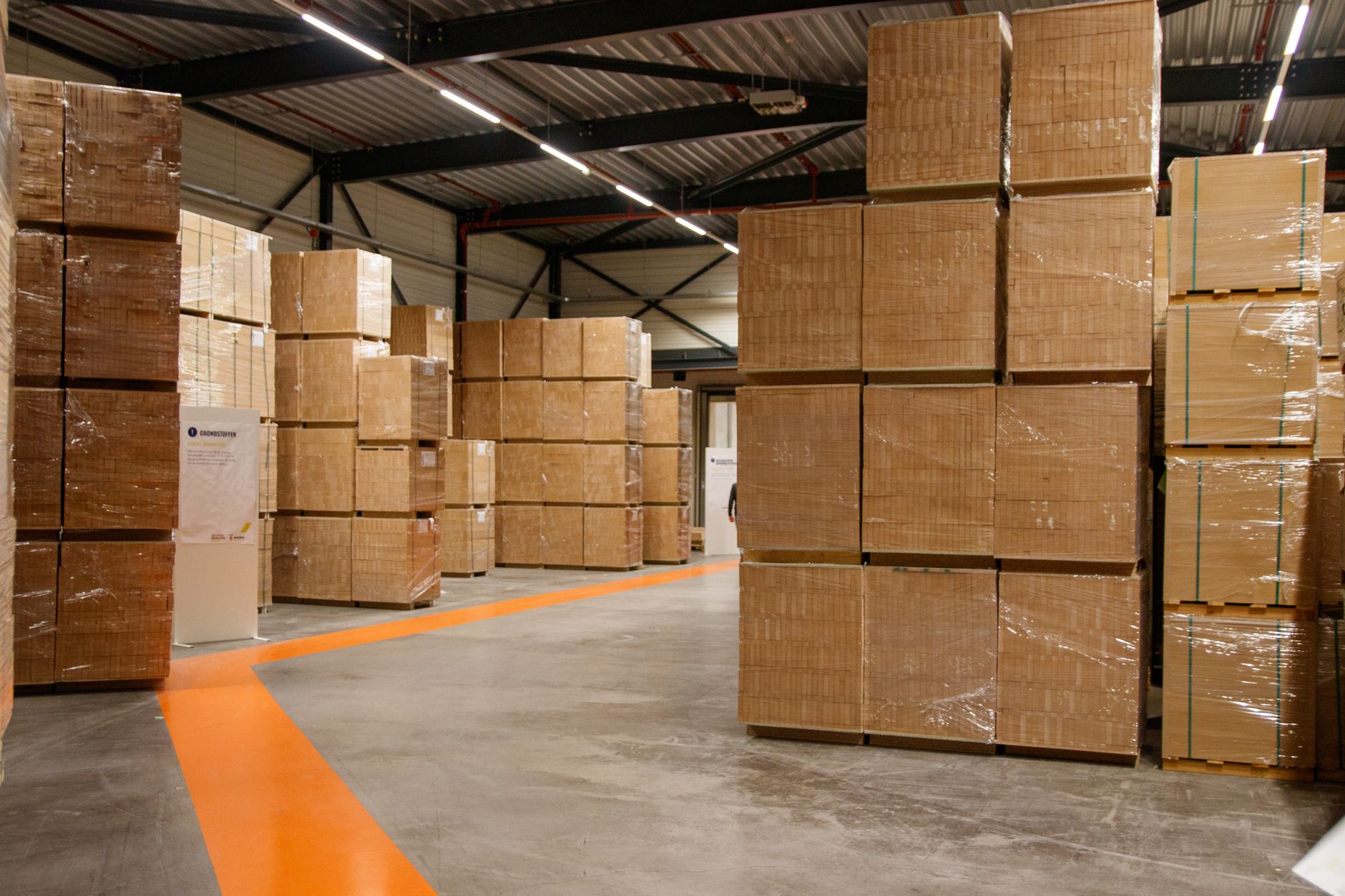
In a same-day terminal, the buffer is not a warehouse. It is a pressure regulator. AMRs work best when buffers are short, visible, and rule-driven. Think compact accumulation zones tied to outbound route families or departure windows, not long anonymous rows that quietly become storage.
A useful pattern is the two-step buffer. First, robots feed a near-sort accumulation zone where freight can be consolidated by route or stop sequence. Second, a release rule pushes those units to outbound staging only when the trailer, door, and labor are ready. That keeps staging lanes from clogging too early and prevents outbound doors from becoming de facto storage.
Small buffers also improve fleet behavior. The robot gets a clear mission with a clear completion state. It is not told to deliver to a lane that may or may not have space. Instead, the software checks capacity, reserves a slot, and then dispatches. That sounds minor. Operationally, it is the difference between flow and standstill.
- Design buffers by departure wave, not by static SKU logic
- Reserve slots digitally before dispatching a robot
- Limit lane depth so old freight cannot disappear behind new freight
- Separate robot drop zones from human build zones when staging complexity is high
What software handoffs matter most?
The robot does not need every enterprise integration on day one. It does need clean handoffs on identity, destination, priority, and completion. If the terminal cannot reliably tell the fleet what unit just got scanned, where it should go next, and when that move is confirmed done, the rest is decoration.
For cross-docks, the key events are usually arrival at inbound door, unload complete for a unit, sort assignment, buffer release, stage release, and load complete. Those events can come from a warehouse management system, a transportation management system, a dock scheduling tool, or a local orchestration layer. The important point is ownership. One system must be authoritative for each event.
Service Robot Co. fits here because many operators do not need a robot vendor. They need one party that can choose the right platform, connect it to the site’s real workflow, train the floor team, and keep it running after go-live. For U.S. operators trying to automate without building an in-house robotics department, that full-lifecycle model is usually more practical than stitching together procurement, software, financing, and field service from separate firms.
- Required data: unit ID, destination, priority, handling class, and completion status
- Required control rules: slot reservation, exception escalation, and congestion throttling
- Required floor behavior: clear visual cues so workers know where a robot may enter, stop, or wait
What is the labor and safety argument for this use case?
The labor case in cross-docks is less about replacing a whole headcount line and more about protecting the shift from repetitive transport work that drags down unload and load crews. According to the U.S. Bureau of Labor Statistics JOLTS release for May 2026, transportation, warehousing, and utilities still had 335,000 job openings and 188,000 quits. Cross-docks feel that churn as missed starts, overtime, and experienced workers pulled off value-added tasks to do yet another internal move.
The safety case is equally concrete. OSHA’s loading-dock guidance warns that docks are dangerous places for forklifts, and its trucking guidance notes that many fatalities occur when a worker is crushed by a forklift that overturns or falls from a loading dock. AMRs do not erase dock risk, but they can reduce some of the non-value-added crossings and empty travel that keep people and vehicles weaving through the hottest parts of the terminal.
That only works if the automation boundary is honest. If robots are sent right into unstable trailer conditions, you shift risk instead of reducing it. If they are used to pull standardized freight away from the dock face and feed controlled lanes downstream, you can lower the volume of hurried internal traffic in the zones where mistakes compound fastest.
- Best labor effect: keep skilled dock labor at the touchpoints only people should handle
- Best safety effect: reduce crossing traffic and repetitive internal vehicle trips
- Bad deployment pattern: sending autonomy into exception-heavy dock-edge chaos
How should a cross-dock start without slowing itself down?
Start with one flow family, not the whole building. A good first lane is repeatable, time-sensitive, and physically disciplined. That might be a recurring outbound route family, a parcel induction feed, or pallet moves between a known bank of inbound doors and a known outbound zone. The point is to prove dispatch rules and handoffs before the fleet touches every exception in the terminal.
Measure only the numbers that match the use case. In a cross-dock, that usually means unload-to-sort time, sort-to-stage time, door dwell, missed departure risk, empty travel percentage, and how often a worker had to intervene. Traditional warehouse metrics like storage density or long-path utilization will tell you very little here.
Service Robot Co. is built for that phased approach. Because the company is OEM-neutral and supports financing, deployment, integration, training, and service through a nationwide U.S. engineer network, it can structure a pilot around the freight pattern that matters first, then expand only after the terminal has real operating evidence. That is the right posture for cross-docks. They do not need a science project. They need faster turns that survive a Tuesday rush.
- Pilot one repeatable lane family first
- Standardize handoff fixtures before expanding scope
- Prove departure performance before chasing maximum robot count
- Build service coverage into the plan from the start because same-day networks do not tolerate long downtime
Frequently asked questions
Sources
- U.S. Census Bureau Quarterly Retail E-Commerce Sales
- American Trucking Associations Economics and Industry Data
- American Trucking Associations Trucking Trends 2025
- U.S. Bureau of Labor Statistics Injury Rates by Industry 2024
- U.S. Bureau of Labor Statistics JOLTS May 2026
- U.S. Bureau of Labor Statistics JOLTS Quits Table May 2026
- OSHA Loading Docks Guidance
- OSHA Trucking Industry Loading and Unloading