Key takeaways
- AMRs make the most sense on repetitive back-of-house banquet loops with stable routes, not on chaotic live event floors.
- The labor case is about faster resets, fewer long walks, and less cart pushing during tight turn windows, not replacing banquet captains.
- Good candidates are linens, wrapped glassware racks, smallwares, signage, and restock tubs that move in repeated batches between the same points.
- Door clearance, elevator behavior, staging discipline, and dispatch rules matter more than robot top speed.
- A vendor neutral robot integrator is valuable here because banquet traffic, elevators, and mixed flooring usually need site-specific deployment and service planning.
Do AMRs make sense for banquet supply runs between events?
Yes, sometimes. AMRs can make real sense for hotel banquet operations when the job is repetitive, indoor, and painfully walk-heavy: clean linen from staging to ballroom, glassware from storage to prefunction, small banquet supplies to service pantries, then empty tubs or unused stock back again after breakdown.
The fit gets stronger when reset windows are short and the route repeats all day. According to the U.S. Travel Association, meetings and business events generated $126 billion in spending in 2024 and recovered to 82 percent of 2019 levels. That matters because more group and meeting activity means more room flips, more banquet turns, and more back-of-house hauling in the same labor market.
The catch is just as important. AMRs are not a cure for every banquet headache. They are best used to remove the dead travel inside a reset, not to handle final tabletop placement, last-minute room changes, fragile hand-finishing, or the improvisation that good banquet teams do instinctively.
Why is this such a stubborn labor loop in hotels?
Banquet resets are full of tiny delays that add up. A runner leaves the ballroom for linen, waits on a service elevator, pushes a heavy cart through a cross-corridor, unloads half the load because the staging corner is crowded, then goes back for glassware because the first trip could not carry both. None of that is glamorous work, but the event starts late if it falls behind.
Hotels are still operating with staffing pressure. AHLA reported on February 20, 2025 that 65 percent of surveyed hotels said they had staffing shortages, 71 percent had open roles they could not fill despite active recruiting, and properties were trying to fill an average of six to seven positions. The same report said hotel employment remained nearly 10 percent below pre-pandemic staffing levels.
The physical strain is not trivial either. The Bureau of Labor Statistics reported an accommodation and food services injury and illness rate of 2.6 cases per 100 full-time workers in 2024, above the 2.3 private-industry average. OSHA also calls out heavy cart pushing, pulling, awkward reaches, and mixed-floor rolling resistance as ergonomic hazards. Banquet supply runs hit all of those pressure points at once.
What work is actually a good AMR candidate?
The sweet spot is repetitive transport automation inside a known envelope. You want tasks with repeatable pickup points, reasonably consistent payloads, and a clear handoff at each end. That is why an autonomous mobile robot rental or material handling robot rental can be more practical here than a general hotel delivery robot rental built around guest-facing runs.
Banquet teams should think in loops, not in gadgets. If the same loads move from the same back-of-house staging room to the same ballroom cluster five, ten, or twenty times during a turnover window, that is where an AMR begins to earn its keep.
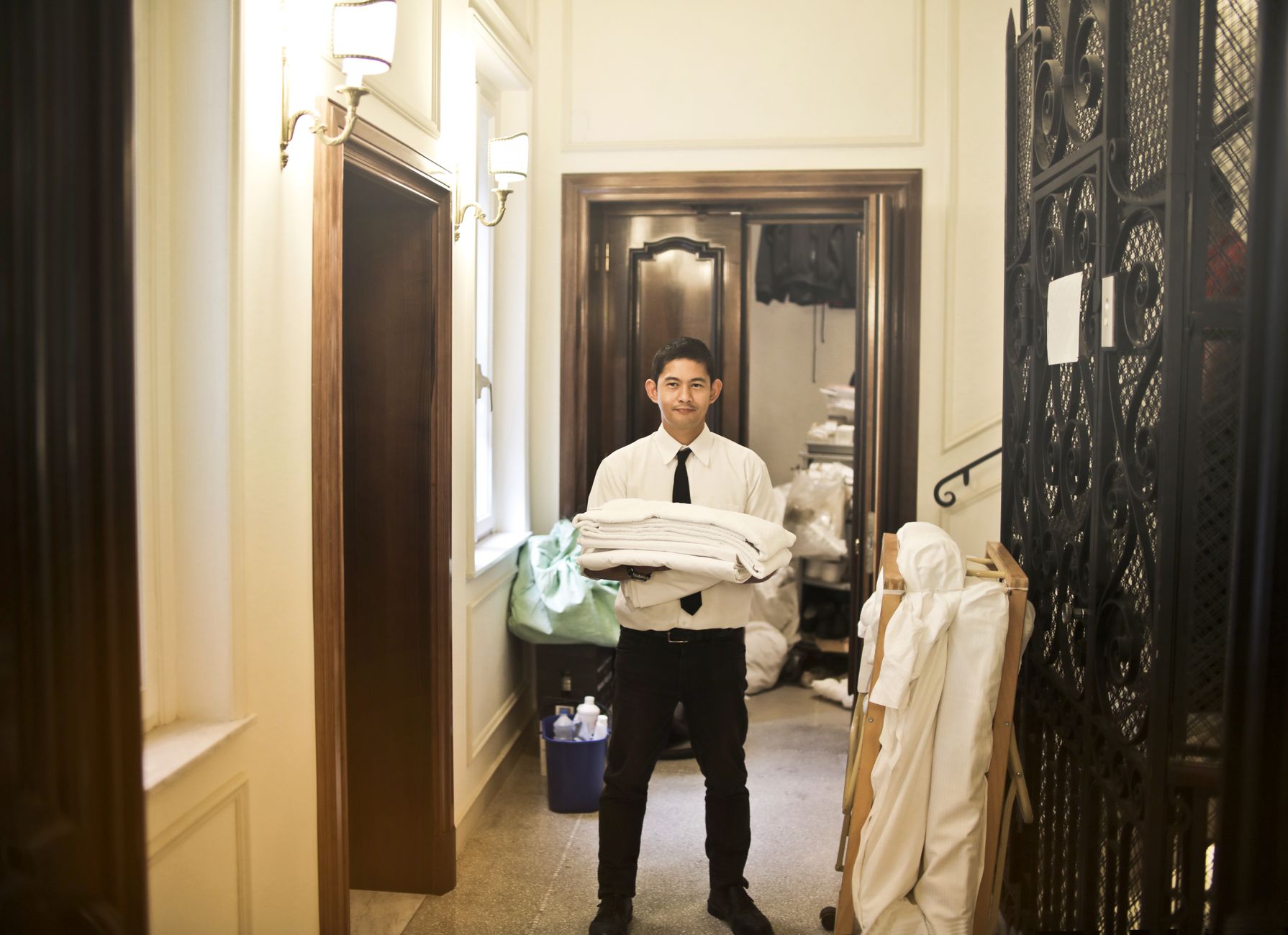
- Clean linen bundles between laundry staging, ballroom service corridor, and setup zone
- Racks or tubs of wrapped glassware moving from storage to prefunction or bar setup
- Folded napkins, table numbers, votives, menu stands, and other small banquet supplies
- Backhaul of empty totes, soiled ancillary items, and unused setup stock after the room flip
- Recurring elevator-to-ballroom loops in multi-floor meeting hotels where staff lose time to long corridors
Where do AMRs usually fail in banquet operations?
They struggle when the route is unstable or the environment is too social. A ballroom foyer packed with guests, photographers, live registration desks, and pop-up decor crews is a poor place to rely on autonomous motion. The robot may still move safely, but safe motion in that setting is often slow motion, and slow motion can ruin the whole point.
They also fail when the payload discipline is loose. If every cart is stacked differently, if glassware is exposed and top-heavy, or if staff keep loading one-off items that snag on door frames, the transport loop turns into a rescue loop. AMRs need predictable packaging and staging habits.
Another common miss is trying to automate the wrong segment. The last 30 feet inside the ballroom is often the messiest part of the job. Human staff still win there. The better design is usually robot to service corridor, then human handoff for final placement.
- Live guest traffic in the route during peak event arrival or exit
- Freight or service elevators that cannot be called or dispatched reliably
- Loads with poor center of gravity, exposed stems, or inconsistent container sizes
- Back corridors that become temporary storage during every reset
- Operations that change ballroom assignments constantly with no stable dispatch rules
How should a hotel design the workflow instead of just buying a robot?
Start with one loop and one service standard. For example: linen carts from basement staging to Level 3 ballroom service vestibule, every eight minutes, during a two-hour reset block. That is concrete. It gives the operation a dispatch point, a handoff zone, a success metric, and a way to tell quickly if the robot is helping or just circulating.
The strongest pilots define human work around the robot. One runner loads and clears the origin. One banquet lead receives the load at the destination. The robot does not wander looking for people. It runs a scheduled or triggered route, hands off in a marked zone, and returns or takes a backhaul assignment.
OSHA's ergonomics guidance is useful here. The agency recommends reducing push-pull strain, keeping carts easy to move, and using carts rather than carrying loads by hand. AMRs fit that logic best when the hotel standardizes bins, keeps staging areas uncluttered, and removes awkward manual hauling instead of adding a robot on top of a broken cart process.
- Pick one ballroom cluster and one load type first
- Use standardized tubs, linen carts, or glass racks with stable loading rules
- Create marked robot handoff spots outside the most congested setup footprint
- Run the pilot during real event turnover windows, not on an empty demo day
- Track trip count, minutes saved per reset, elevator wait time, and manual touches removed
What building constraints decide the fit fast?
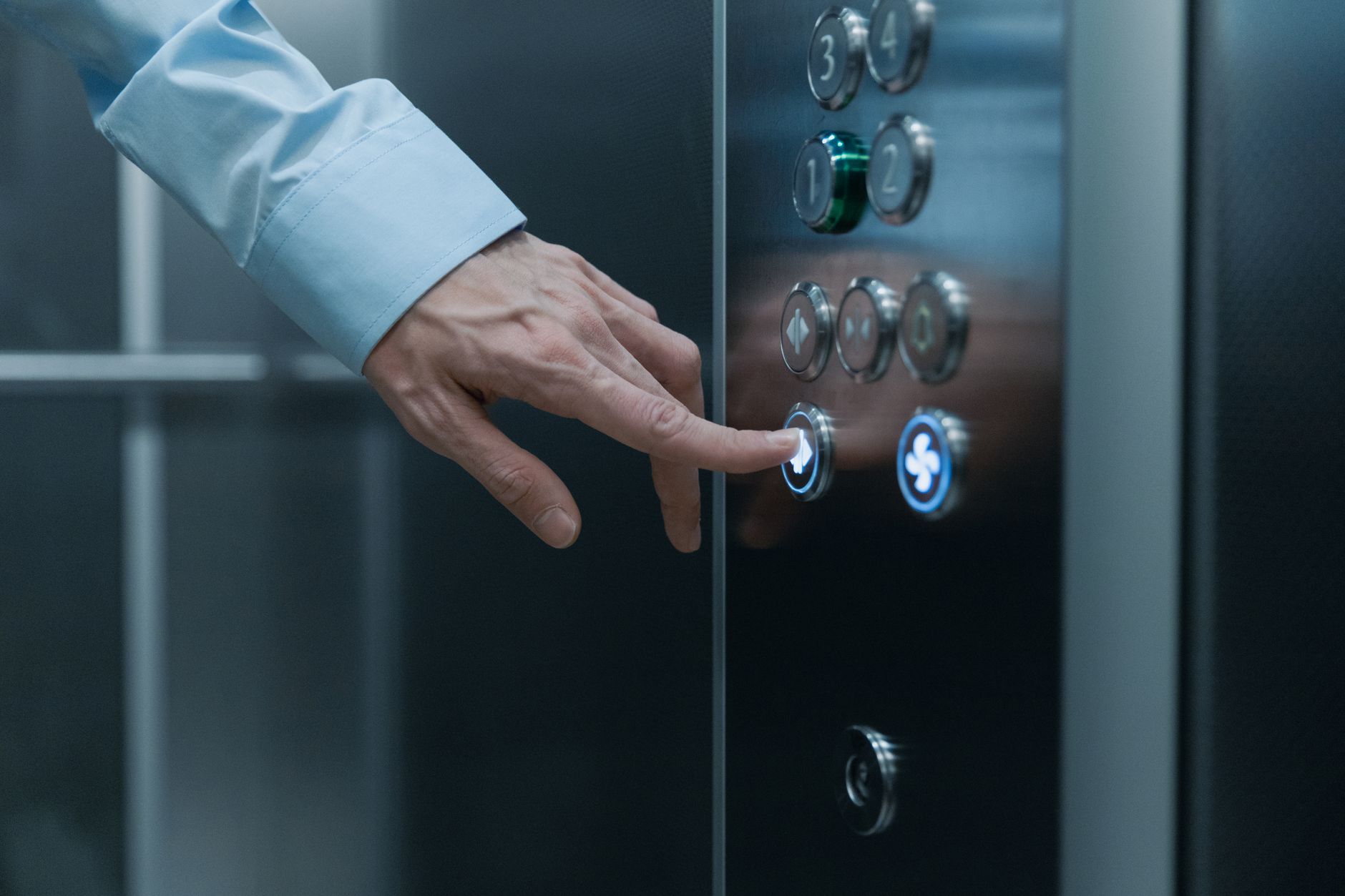
Clearance and elevator behavior decide more than marketing claims do. Under ADA standards from the U.S. Access Board, accessible door openings must provide at least 32 inches of clear width, and openings deeper than 24 inches need 36 inches. The same guidance requires elevator doors to open to at least 36 inches clear in common accessible configurations. Those are not banquet design targets, but they are useful lower-bound checks for route planning.
In practice, hotels should care about the real usable envelope, not the drawing set. Door swings, kick plates, temporary decor, housekeeping carts, and table stacks eat clearance. Service corridors that look generous at 10 a.m. can narrow dramatically during a reset. An AMR that technically fits but frequently pauses for obstruction recovery will frustrate the team.
Multi-floor runs raise the bar again. A delivery robot for elevators is only worth deploying if elevator calling, door timing, and dwell time are dependable. If the service elevator is routinely monopolized by banquet furniture, stewarding, and housekeeping at the same hour, the robot will inherit the same bottleneck humans already have.
What does a good business case look like here?
The honest case is operational, not theatrical. You are not buying a machine to replace banquet artistry. You are buying back minutes inside the reset, reducing long pushes with loaded carts, and making staffing gaps hurt less on heavy meeting days.
According to the U.S. Travel Association's 2026 forecast, business travel reached $317 billion in 2025 and is forecast to grow to $319 billion in 2026. Group demand is not disappearing, and the State of Group Travel Report says RFP volume recovered to 109 percent of 2019 levels. For hotels with active meeting floors, that means the reset loop remains a recurring labor drain worth measuring carefully.
A sensible pilot asks four plain questions. Did resets finish earlier. Did supervisors pull fewer skilled staff into hauling work. Did elevator trips get more organized. Did the robot keep running through the real mess of event operations. If the answer is yes on those fronts, the case is usually stronger than a vague headcount argument.
Why deployment details matter more than the robot brochure
This is exactly where a full-service integrator earns its place. Banquet routes cut across flooring transitions, service corridors, elevator controls, union work rules in some properties, and a daily operating rhythm that changes by hour. A robot that looks fine in a warehouse-style demo can stumble in a hotel if nobody has mapped the handoffs and service expectations with care.
Service Robot Co. approaches this as a commercial robot deployment and integration job, not a box drop. The practical work is choosing the robot that fits the route, deciding if robot leasing for business or another finance structure suits the property, mapping the site, training the banquet and engineering teams, and backing the unit with ongoing service. That matters more in hospitality than many buyers expect because the floor is never truly static.
The OEM-neutral piece matters too. A vendor neutral robot integrator can compare different form factors for payload, turning behavior, elevator compatibility, and fleet controls without forcing the hotel into a single brand shape that does not fit its banquet operation.
The practical verdict for banquet teams
AMRs fit hotel banquet supply runs when the work is repetitive, hidden from guest traffic, and disciplined enough to run in loops. They are especially compelling for linens, smallwares, wrapped glassware, and backhaul between staging, service elevators, and ballroom service corridors. They are far less compelling for live ballroom floor work or anything that depends on constant improvisation.
If a property wants to test the idea, the right first move is narrow. Pick one loop, one payload family, one event floor, and one turnover window. Measure reset time, touches, and staff travel. Banquet operations live and die on reset speed. That is exactly why this unglamorous transport loop is one of the sharper places to test an AMR.
Frequently asked questions
Sources
- U.S. Travel Association, Business and Group Travel
- U.S. Travel Association, Travel Forecasts
- U.S. Travel Association, State of Group Travel Report
- AHLA, 65% of surveyed hotels report staffing shortages
- AHLA, Staffing growth and hotel success in 2025
- BLS, Employer-Reported Workplace Injuries and Illnesses 2024
- OSHA, Housekeeping and work-related musculoskeletal disorders
- U.S. Access Board, ADA Chapter 4 Elevators and Doors