Key takeaways
- Waste cart AMRs need sealed top modules, odor control, and routes that never share elevators with clean meal delivery.
- EPA data shows hotels generate about 1.2 million tons of wasted food annually, so cart volume is real even when kitchens run tight.
- Leakage and liner discipline matter more than speed; slow, enclosed moves beat fast open carts through guest corridors.
- BLS counts nearly 398,000 housekeeping jobs in traveler accommodation, the labor layer waste runs should not pull off guest floors.
- A vendor-neutral integrator ties elevator rules, cleaning cycles, and nationwide service into one hotel rollout.
Should hotels automate kitchen waste cart moves?
Yes, when the pain is repeated cart pushes through back-of-house corridors, not the decision of what goes in the bin. Banquet breakdowns, production prep, and late-room-service pickup all generate wheeled waste carts that must reach a dock, compactor, or staged holding area on a clock.
Enclosed autonomous mobile robots fit those fixed legs if the payload stays sealed and the route never crosses clean linen or meal delivery paths. They do not replace stewarding judgment on segregation or allergen rules. They remove the third and fourth manual trip the same shift already asked a porter to make.
Properties with multiple kitchens and a shared loading bank gain the most when every cart type uses the same docking profile and the same elevator permission window.
What makes waste different from other AMR loads?
Food waste carries odor, leakage, and cross-contamination risk that a box of towels does not. Top modules need rigid sides, drip trays, and liners changed on a written interval. Software should flag a cart that missed its wash cycle before the next pickup.
According to EPA 2019 estimates, hotels generated about 1.2 million tons of wasted food in the food service sector profile, roughly 1.8% of wasted food across retail, food service, and residential combined. That volume sits behind the cart wheels your staff already push after every banquet.
Guests notice smell before they notice automation. Route design should favor freight elevators, service corridors, and timed runs after peak dining, not shortcuts past active lobbies.
How do you keep waste robots away from clean delivery?
Treat waste AMRs as a red-zone fleet. Separate charging docks, separate elevator credentials, and separate mission types in the fleet manager so a dispatcher cannot accidentally assign a clean tray run to a waste-configured unit.
Physical barriers beat policy alone. One-way doors, floor tape, and geofences around banquet holding kitchens reduce the chance a waste cart enters a clean staging area during turnover.
Audit the handoff at the compactor or dock. The robot should stop at a defined swap point where stewards verify weight and liner integrity before the load enters the hotel waste vendor stream.
- Dedicated waste AMR fleet color and dock signage.
- No shared top modules between waste and clean carts.
- Elevator schedules that block guest-car calls during waste moves.
What about elevators and loading banks?

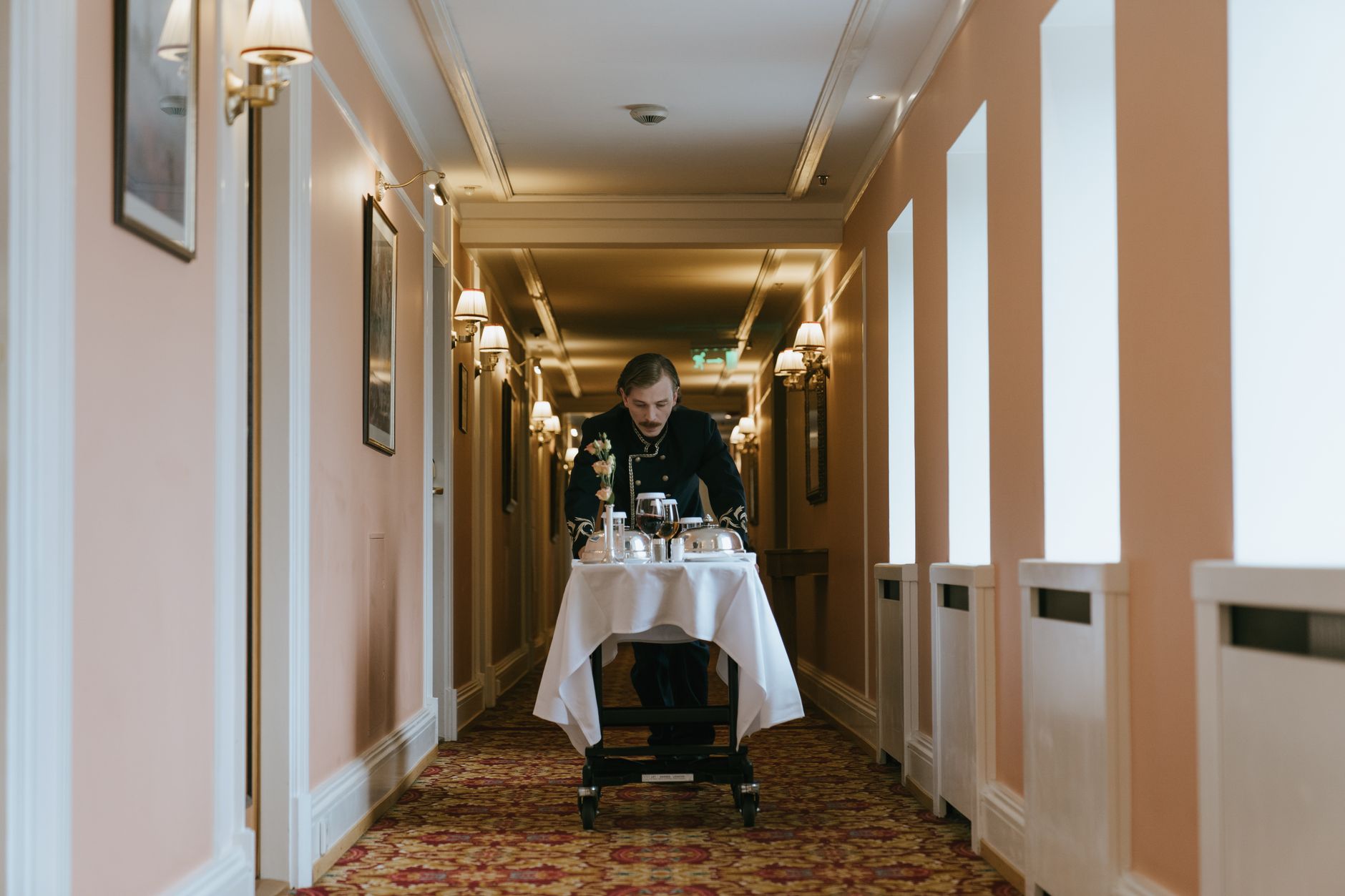
Freight elevators are the default for waste cart AMRs. Passenger elevators need a property-specific risk review and usually stay off limits unless hours and enclosures meet engineering sign-off.
Loading banks get congested before checkout and after banquets. Schedule waste missions in the gaps your telemetry already shows, not against the same window room trays use.
When an elevator goes out of service, waste carts stack fast. Build a floor-level holding map so AMRs have a legal staging bay instead of blocking a fire lane.
How often must waste carts and robots be cleaned?
Match the robot contact surfaces to your stewarding SOP for waste carts today. If carts are washed nightly, robot forks and skirts need the same cadence or faster when leakage events occur.
ATP or visual inspection checkpoints at the dock catch drift before guest areas see it. Log each cleaning against the unit serial so audit questions have a timestamp.
Chemical compatibility matters on enclosed plastic and rubber seals. Qualify cleaners the same way you qualify floor scrubber pads in guest corridors.
Where does banquet peak stress the fleet?
A single ballroom exit can release a dozen carts in twenty minutes. Size concurrent missions for that burst, not for average hourly volume. One robot per active kitchen exit is a planning start until stopwatch data says otherwise.
Overflow holding near the kitchen keeps stewards sorting while robots loop to the dock. Without that buffer, humans override the system and push carts manually anyway.
Late finishes after weddings and conferences are the hidden peak. Program one extra mission slot after midnight when your POS and event logs show consistent overruns.
What labor context supports the case?
May 2023 BLS data show about 836,000 maids and housekeeping cleaners nationally, including roughly 397,600 in traveler accommodation at a mean near $16.28 per hour. Waste cart runs should not pull those roles off guest floors during checkout rush.
Stewarding and kitchen teams still own segregation and safety. AMRs absorb the long corridor legs so those teams stay at the source where contamination is controlled.
Training should emphasize exception handling when a bag splits. The robot holds position and calls a human rather than dragging a trail through a service hall.
Where does Service Robot Co. fit?
Hotel waste automation fails when the tug vendor, elevator consultant, and finance desk run on different timelines. Service Robot Co. compares enclosed AMR options, structures monthly programs when FF&E budgets are committed elsewhere, and maps routes with stewarding and engineering together.
Site assessment covers freight elevator permissions, odor paths, and cleaning SOP alignment. Nationwide field service keeps a failed unit from becoming stacked carts outside a banquet kitchen on Saturday night.
Pilot one kitchen to one dock loop, measure minutes and odor complaints, then expand only with data from that property layout.