Key takeaways
- Yes, AMRs can fit tool-crib work in high-mix plants when the moves are small, frequent, and repetitive.
- The best early missions are inserts, gauges, fixtures, fasteners, and replenishment bins with clear pickup and drop rules.
- The win usually comes from removing walking, waiting, and interruption, not from replacing a dramatic bottleneck.
- A pilot should start with one crib, one aisle family, and one or two container standards before expanding plant-wide.
- Safety, dispatch logic, and change management matter as much as the robot itself in a live fabrication environment.
Can AMRs really help a tool crib in a high-mix plant?
Yes, often more than managers expect. In a high-mix fabrication plant, the daily drag is rarely one spectacular stoppage. It is the steady accumulation of small losses: an operator walking for inserts, a lead waiting on a gauge, a setup tech hunting a fixture, a replenishment bin arriving ten minutes late. Those losses do not always show up cleanly on an OEE dashboard, but they bleed time out of every shift.
That is exactly the terrain where autonomous mobile robots can earn their keep. If the plant has frequent, low-payload, repeatable moves between a tool crib and production cells, an AMR can handle a meaningful share of that internal traffic. The job is not glamorous. It is fetch, carry, return, and replenish. In high-mix work, that plain logistics layer matters.
Older industrial research still frames the opportunity well. A study on tool and gauge crib dispatching found that travel and counter waiting consumed enough time to justify delivery-to-workstation methods, with modeled annual labor savings of about 320,600 dollars and another 242,100 dollars from lower tool and gauge inventory. The hardware has changed since 2003. The waste pattern has not.
- Best fit: many short trips, modest payloads, and repeatable destinations
- Weak fit: one-off engineering errands, oversized fixtures, and chaotic ad hoc requests
- Primary value: less walking, less waiting, and fewer interruptions to setup and spindle time
What moves are the best candidates?
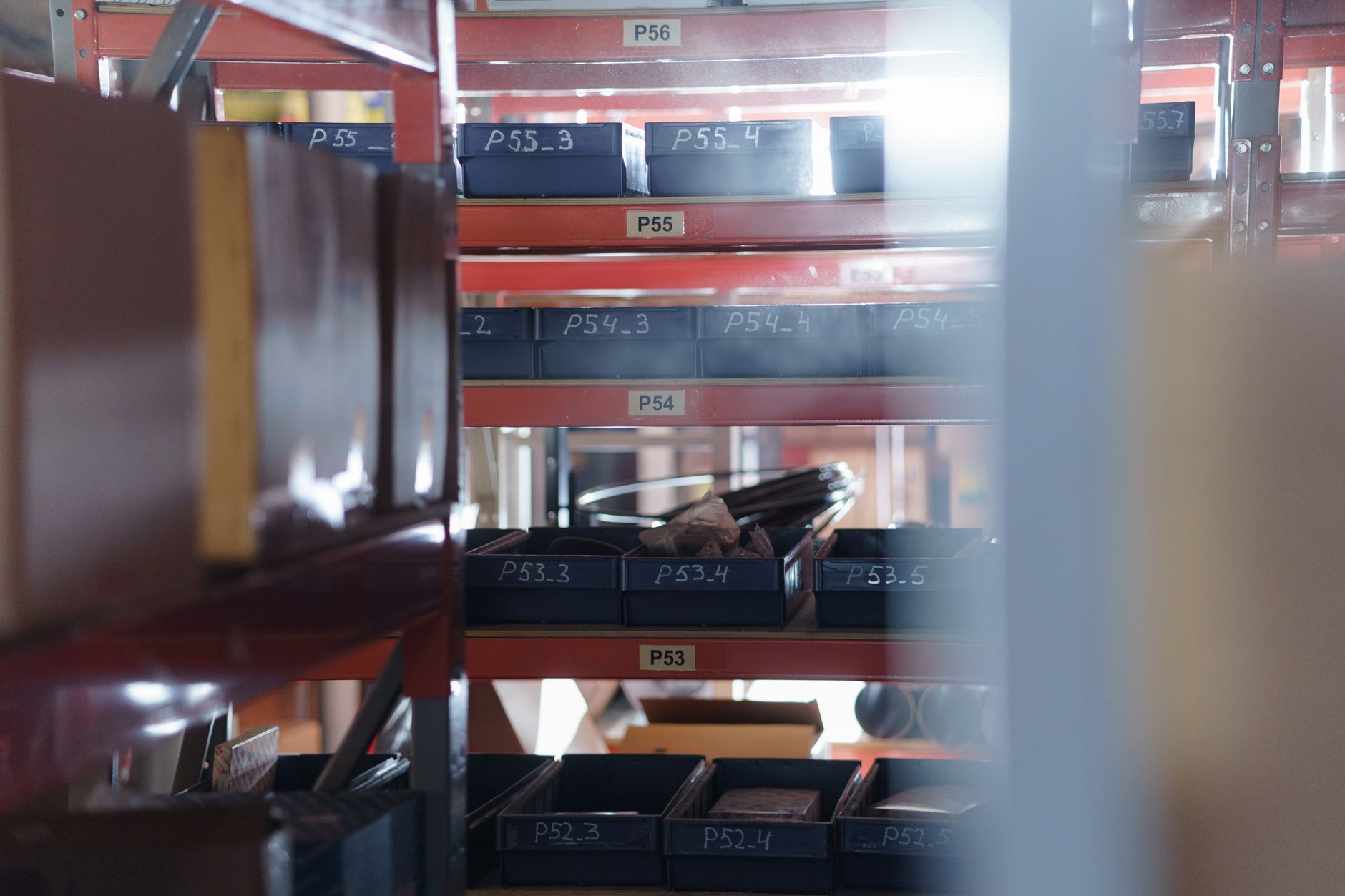
The strongest early candidates are the items that move constantly but do not justify tying up skilled people. Think inserts in labeled totes, preset tools in protected carriers, gauges in dedicated foam trays, fastener kits, backup consumables, and two-bin replenishment containers. These are routine runs with a known source, a known destination, and a known handoff.
Fixtures can fit too, but only if the packaging discipline is tight. A plate fixture in a custom cart with a stable center of gravity is one thing. A collection of odd clamps, loose pins, and oily components is another. The question is not just payload. It is repeatability.
A 2011 simulation paper on machining-line tool delivery described a crib process where CNC demand signaled the need for replacement tools, effectively a kanban trigger. That matters because AMRs work best when dispatch comes from a clean signal. When the request is machine-driven, preset by setup schedule, or tied to min-max replenishment, the robot has something dependable to execute.
- Good first missions: insert replenishment, gauge delivery, setup kits, fastener kits, empty-full bin exchange
- Usually second-wave missions: heavier fixtures, specialty tooling, return-to-crib of used items needing inspection
- Poor early missions: fragile one-off items, unlabeled loose parts, and anything requiring expert judgment mid-route
Why do high-mix shops get more value from this than they first assume?
High-mix plants live inside constant schedule churn. One cell is changing over. Another is waiting on inspection. A third is burning through inserts faster than expected because material came in harder this week. That volatility makes managers skeptical about automation, and sometimes for good reason. But it also increases the value of dependable internal milk runs.
The hidden cost is cognitive fragmentation. Every time a machinist, setup technician, or supervisor leaves the cell to chase a missing item, the plant loses more than footsteps. It loses attention, sequencing, and the rhythm of setup. In small-batch work, that rhythm is precious.
Recent research on high-mix, low-volume production reinforces the point. A 2024 paper in Scientific Reports found that a cellular method cut work-in-process cost by about 84 percent versus the baseline configuration. AMRs are not the same as cellular redesign, but they serve the same operational aim: shorten wait states and keep work moving close to the point of use rather than marooned in queues and side trips.
- High mix magnifies the cost of interruption because changeovers are frequent
- Small delays repeat across dozens of jobs, so the aggregate loss is larger than it looks
- Internal logistics discipline supports better setup performance, not just better transport
What has to be true on the floor before an AMR will work?
The plant does not need to be pristine, but it does need rules. Pickup locations have to be fixed. Drop zones have to be visible and protected from drift. Containers need standard footprints and labels. A robot can navigate around people and carts. It cannot succeed in a process that changes its handoff logic every day.
Safety is also a real design constraint, not a paperwork tail. In the United States, A3 lists the current ANSI/A3 R15.08 series for industrial mobile robots, including Part 3 published in 2026 for the day-to-day use of IMR applications. That matters in fabrication plants where AMRs cross aisles shared with forklifts, carts, pallets, and pedestrians. The route, speed, right-of-way rules, and operator training all need deliberate design.
The business case is partly labor, but it is also risk control. According to the Bureau of Labor Statistics, private industry logged 946,290 DART cases over 2023 and 2024 from overexertion, repetitive motion, and bodily conditions, and the median days away from work for DAFW cases was 8. Tool-crib logistics is not the whole injury picture, but reducing needless carrying, pushing, and rushing is still worthwhile.
- Standard containers and repeatable handoffs
- Clear route hierarchy between forklifts, pedestrians, and AMRs
- Crib and cell staff trained on dispatch, exception handling, and blocked-path recovery
- A narrow first scope before any fleet expansion
Where do AMR tool-crib pilots usually fail?
They fail when leadership automates disorder instead of a bounded loop. If every urgent request can bypass the queue, if crib staff still field phone calls and hallway favors, and if no one agrees on what qualifies as a robot mission, the pilot becomes theater. The robot moves. The process does not improve.
Another common failure is trying to make the AMR do the last ten percent of nuance. For example, the robot can bring a fixture cart to the cell. It should not be expected to decide which shim pack belongs with a revised traveler, or to interpret a setup note that lives only in a veteran employee’s head. Separate transport from judgment.
A third failure is ignoring congestion. High-mix plants often have route pinch points near saws, deburr, inspection, and shared staging racks. If the path is always blocked by WIP carts, the answer is not better robot software alone. It is route redesign, timed dispatch windows, and stricter floor discipline.
- No mission taxonomy
- Too many exceptions treated as normal work
- Bad container design
- Blocked aisles and drifting staging zones
- No owner for dispatch rules and queue performance
What does a sensible first deployment look like?
Start with one crib and one family of production cells. Pick a route where request frequency is high, payloads are light to moderate, and item formats are easy to standardize. Then define two or three missions only: for example insert replenishment, gauge delivery, and empty-full bin exchange. If the team cannot run those cleanly, it is too early to automate fixtures and special tooling.
Use dispatch rules that match the plant’s actual signals. Some missions should be scheduled by setup plan. Others should trigger from min-max inventory, a scan event, or a request station at the cell. The point is to reduce hallway traffic and verbal chasing, not merely to add another moving object to the aisle.
For many shops, this is also where an autonomous mobile robot rental or amr rental model makes sense. A short pilot lets the plant validate route density, operator acceptance, and handoff discipline before it commits to a larger manufacturing plant robot rental or purchase program. The right goal for phase one is proof of process, not bragging rights.
- Scope one loop, not the whole plant
- Standardize containers before routes
- Measure request-to-delivery time, touches per move, and interrupted operator minutes
- Expand only after exception rates fall and queue logic stabilizes
How should a plant measure success?
Do not grade the program on robot miles traveled. Grade it on operational friction removed. The best metrics are request-to-delivery time, percentage of on-time deliveries to cells, interrupted labor minutes avoided, crib counter traffic reduced, and setup jobs started with complete kits. Those numbers tell you if the plant is actually getting calmer.
You should also watch the second-order effects. Are machinists staying at the machine longer. Are crib attendants spending less time as runners and more time on tool condition, presetting, and inventory control. Are stockouts dropping because replenishment got more disciplined. Those are better indicators than raw utilization alone.
Broader automation demand suggests plants are willing to invest when the use case is concrete. According to A3, North American companies ordered 36,766 robots worth 2.25 billion dollars in 2025, up 6.6 percent in units from 2024. The point for a fabrication plant is not trend chasing. It is that automation capital is still moving toward practical, problem-specific applications.
- Request-to-delivery time
- On-time delivery rate to cells
- Interrupted operator minutes avoided
- Crib window transactions reduced
- Setup completeness at first touch
Where Service Robot Co. fits
A tool-crib AMR project is rarely just a robot purchase. It touches route design, traffic rules, pickup hardware, software triggers, training, and service response. That is why many manufacturers prefer a vendor neutral robot integrator instead of trying to piece together hardware, finance, deployment, and support from separate parties.
Service Robot Co. works as a full-service commercial robot integrator for U.S. businesses. For a project like this, that means helping the plant choose the right platform across manufacturers, then handling robot deployment and integration service, training, and long-term support through a nationwide engineer network. If a shop wants a phased deployment with no shutdown, or wants to test a material handling robot rental before scaling, that lifecycle model matters.
In practical terms, one partner and one number is useful when the project graduates from a single crib loop to a mixed internal-logistics program with additional AMRs, carts, software hooks, and service expectations. Plants do not need more vendor choreography in the middle of a changeover-heavy environment.
- OEM-neutral selection
- Financing and monthly program options when they fit the rollout
- Deployment, integration, training, and service under one operating model
- Nationwide U.S. support for ongoing fleet uptime
The real answer for fabrication plants
AMRs belong in tool-crib logistics when the plant suffers from many small transport delays, not just occasional dramatic stoppages. They are especially effective when inserts, gauges, fixtures, fasteners, and replenishment bins already move in repeatable loops and the floor can support disciplined handoffs.
They are not a cure for messy inventory, vague dispatching, or unmanaged aisle congestion. But in a high-mix fabrication plant that is serious about container standards, request logic, and route ownership, an AMR can quietly remove hundreds of low-value trips every week. That is the kind of gain operators feel before the spreadsheet catches up.
If your plant keeps losing minutes to walking, waiting, and interrupted setups, start there. The first robot should go after the longest recurring walk, not the flashiest use case.