
Key takeaways
- A standard office Wi-Fi network is rarely sufficient for a commercial robot fleet, which needs consistent coverage and low latency.
- Smooth roaming between access points, enabled by 802.11r/k/v protocols, is critical to prevent robots from stopping mid-task.
- Latency for autonomous mobile robots (AMRs) should ideally be under 50 milliseconds to ensure safe and efficient operation in dynamic environments.
- Wi-Fi 6 offers significant advantages in device density and efficiency, while private 5G provides superior coverage for large or outdoor areas.
- A professional radio frequency (RF) site survey is the essential first step to identify coverage gaps, interference sources, and hardware needs.
Why Your Existing Wi-Fi Might Not Support a Robot Fleet
Deploying a fleet of autonomous mobile robots (AMRs) requires more than just clear floor space. The invisible infrastructure of your wireless network is the true foundation of a successful automation project. A network designed for laptops and phones often fails to meet the specific demands of machines that move, sense, and act in real time.
The core challenges are threefold: intermittent signal loss in large facilities, dropped connections as robots move between coverage zones, and delays (latency) between the robot and the control system. Any one of these issues can cause a robot to stop, disrupting workflows and negating the ROI of your investment.
This is not a theoretical problem. A dropped connection forces a robot to halt and attempt to reconnect, a process that can take over a minute. Across a fleet, these small stops accumulate into significant operational delays and costly downtime. According to research from Aberdeen Group, unplanned downtime can cost a company as much as $260,000 per hour.
How Much Data Does a Robot Fleet Generate?
The bandwidth required by a robot fleet depends heavily on the robots' functions. An autonomous floor scrubber might only send small packets of telemetry data, such as location and battery status. A sophisticated warehouse AMR, by contrast, is a mobile data collection platform.
These advanced robots often use a suite of sensors to navigate, including LiDAR, 3D cameras, and ultrasonic sensors. LiDAR systems, which create detailed environmental maps by measuring light pulses, can generate a significant amount of data. High-definition video streams for remote operation or AI-based object recognition add even more load.
While a single robot's needs might be modest, the aggregate demand of a dozen or more AMRs operating simultaneously can strain a network not built for machine-to-machine communication. The key is to plan for peak usage, not just average traffic.
Why Is Low Latency a Critical Safety Factor?

Latency is the time it takes for a data packet to travel from a source to its destination. For a robot, high latency means a delay between seeing an obstacle and reacting to it. In a dynamic warehouse or a busy hospital hallway, this delay can be the difference between a near-miss and a collision.
Most experts agree that for safe operation of AMRs in environments with people or other vehicles, network latency should be under 100 milliseconds, with a target of 20 to 50 milliseconds for optimal performance. Above this threshold, a robot's movements can become jerky and its response to unexpected events is dangerously slow.
Achieving this requires a network optimized from the access point to the back-end controller. It is not just about signal strength; it is about the entire data pathway being designed for rapid, predictable communication.
What Guarantees a Robot Never Drops its Connection?
As a robot travels through a facility, it must hand off its connection from one wireless access point (AP) to the next. This process, called roaming, must be fast and reliable. A standard Wi-Fi network might cause a device to 'stick' to a distant AP with a weak signal before finally switching, causing a momentary connection loss.
To prevent this, enterprise-grade networks use a set of protocols known as IEEE 802.11k, 802.11v, and 802.11r. In simple terms, these standards help the robot and the network work together to anticipate and execute a smooth handoff. 802.11r, also known as Fast Basic Service Set (BSS) Transition, is particularly important as it pre-authenticates the robot with the next AP, reducing handoff time to under 150 milliseconds.
Without these fast roaming capabilities enabled and properly configured on both the network and the robot, every transition between APs becomes a potential point of failure where the robot stops, waiting for a new connection.
Should You Consider Wi-Fi 6 or a Private 5G Network?
The latest wireless standards offer distinct advantages for robotics. Wi-Fi 6 (802.11ax) was designed specifically for high-density environments with many connected devices. Its use of OFDMA technology allows an access point to communicate with multiple devices simultaneously, increasing efficiency and reducing latency, which is ideal for a fleet of AMRs.
For very large facilities, outdoor operations like parking garage patrols, or areas with significant radio frequency interference, a private 5G network is a powerful alternative. 5G offers ultra-low latency, sometimes as low as 1 millisecond under ideal conditions, and requires far fewer access points than Wi-Fi to cover the same area. This technology creates a dedicated, high-performance network solely for your operational technology, completely separate from general IT traffic.
The choice is not always one or the other. Some deployments might use Wi-Fi 6 within buildings and a 5G network to connect robots that travel between them, ensuring uninterrupted coverage across a whole campus.
How Do You Mitigate the Security Risks of a Connected Fleet?
Each robot on your network is an endpoint that must be secured. A compromised robot could be used to gain access to your wider corporate network or could be disabled remotely, halting operations. Security must be a primary consideration from day one.
A foundational practice is network segmentation. Robot traffic should be isolated on its own Virtual LAN (VLAN), separate from guest networks and sensitive corporate data. This containment strategy limits the potential damage if a single robot were to be compromised.
Using the latest security protocols is also essential. WPA3 offers significant security enhancements over the older WPA2 standard. Access to the robot fleet management system should be tightly controlled with multi-factor authentication, and all communications between the robots and the server should be encrypted.
What Does a Professional Network Assessment Involve?
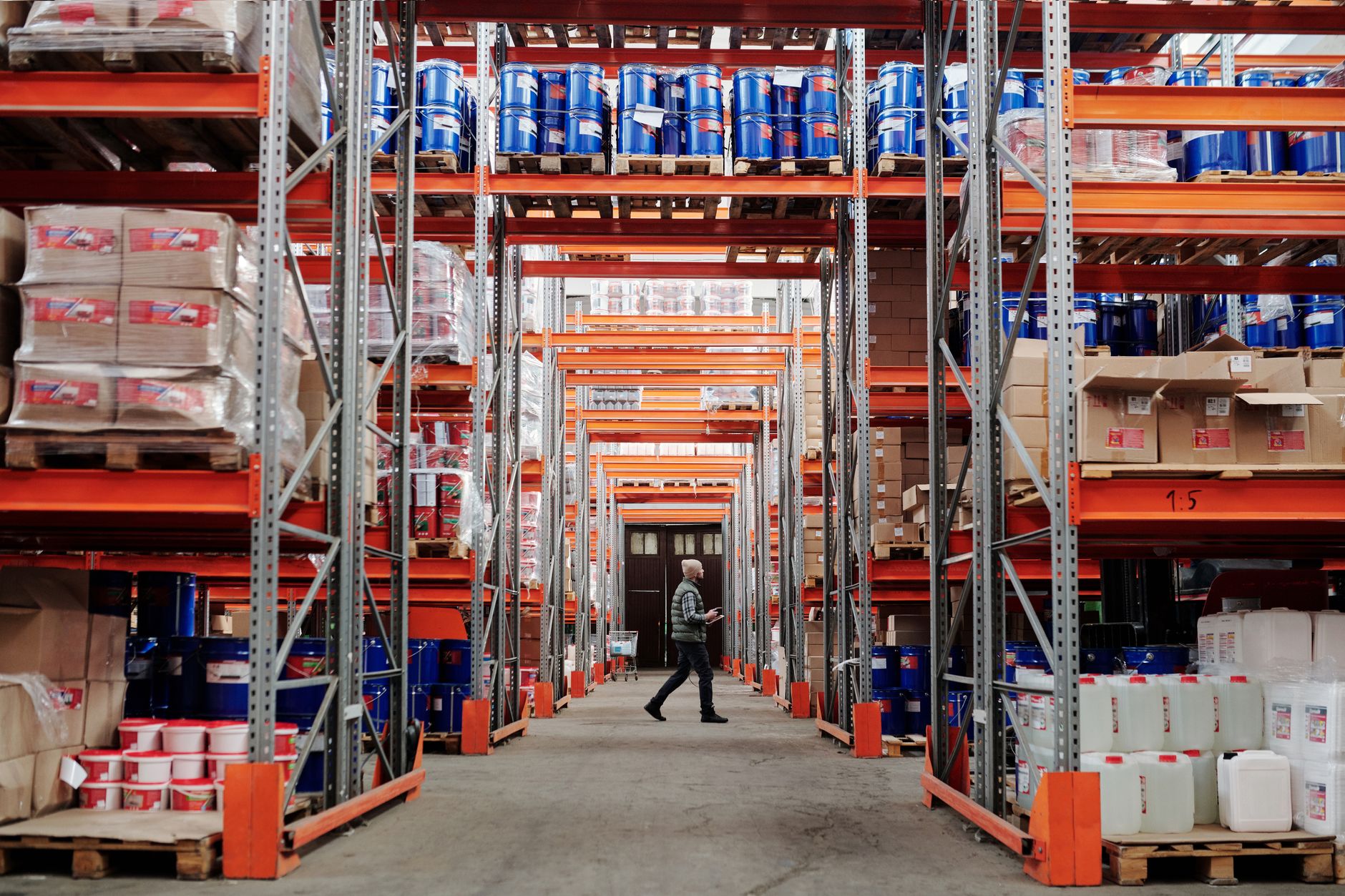
You cannot design a reliable wireless network from a blueprint alone. Every facility has unique challenges, from metal racking and concrete walls that block signals to industrial machinery that creates radio frequency interference. The only way to build a network that will support a robot fleet is to start with a professional site assessment.
This process involves a technician using specialized equipment to perform a radio frequency (RF) survey. They walk the entire operational area, mapping signal strength, identifying coverage gaps, and detecting sources of interference. This data is used to create a 'heat map' showing where access points must be placed for complete, overlapping coverage.
As a vendor neutral robot integrator, Service Robot Co. makes this site assessment a core part of our process. Our nationwide network of engineers doesn't just deliver a robot; they ensure the environment is ready for it. We perform site assessment mapping and provide go-live support to confirm your network is prepared for the specific robots that fit your needs, providing a truly turnkey robot deployment.