Key takeaways
- Car dealership showrooms require constant floor maintenance due to high-gloss surfaces, heavy foot traffic, and rubber tire marks.
- Autonomous floor scrubbers operate overnight without supervision, using advanced sensors to safely navigate around expensive vehicle displays.
- Automating floor care frees human staff for higher-value tasks, reduces labor costs, and ensures a consistently positive first impression for customers.
- A vendor-neutral integrator is key to selecting the right robot for a dealership's specific floor type, layout, and operational needs.
- Flexible acquisition models like robot-as-a-service (RaaS) make advanced automation accessible without large upfront capital investment.
How Can a Showroom Floor Stay Perfect Around the Clock?
A car dealership's showroom floor is its most critical marketing asset. The mirror-like shine reflecting the vehicles is the first thing a customer sees, setting the tone for their entire experience. Maintaining that pristine surface, however, is a relentless operational challenge, especially in a facility that is nearly always active.
The answer lies in targeted automation. Autonomous floor scrubbers can execute a perfect cleaning routine overnight, without any staff present. These machines are designed to navigate complex, real-world environments, scrubbing away the day's grime, scuffs, and tire marks to reset the floor to a flawless finish before the first salesperson arrives.
This approach directly addresses the core problem of dealership floor care: the conflict between cleaning schedules and business hours. By delegating the heavy, repetitive work of floor scrubbing to a reliable robotic workforce, dealerships ensure peak presentation quality at all times, freeing human teams for detailed work that requires their direct attention.
What Makes a Car Showroom Floor So Demanding?
Unlike a standard office or retail space, a car dealership showroom presents a unique combination of floor care difficulties. The surfaces are often high-gloss tile or polished concrete, materials chosen specifically to reflect inventory and create a premium atmosphere. These floors are unforgiving, showing every footprint, smudge, and streak.
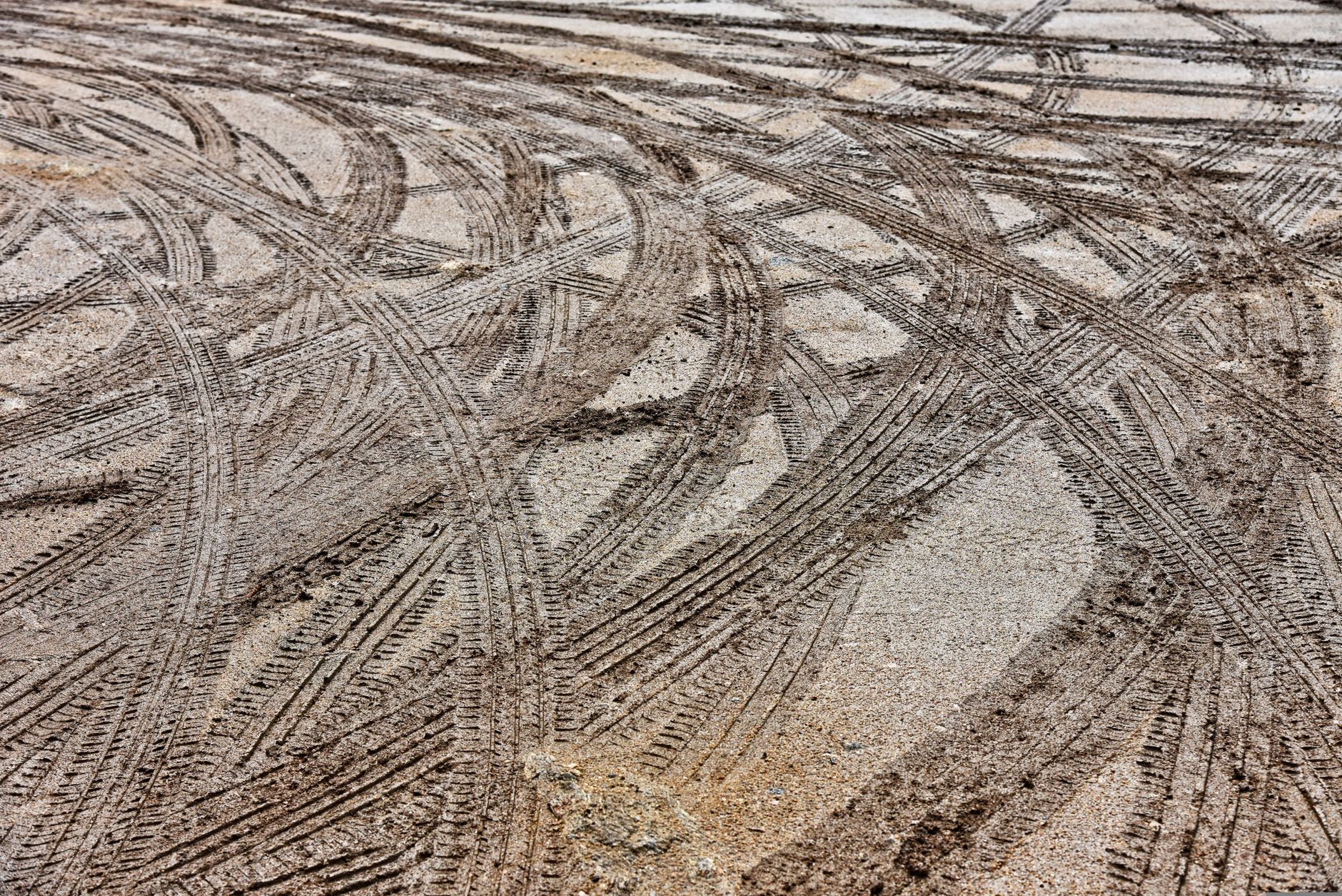
Foot traffic is constant, bringing in dirt, moisture, and in winter months, corrosive salt and sand. More uniquely, the inventory itself is a source of grime. Rubber tire marks and residue from vehicle detailing compounds are persistent issues that manual cleaning struggles to keep up with.
The static, high-value obstacles-the cars themselves-add another layer of complexity. Cleaning must happen around these expensive assets without any risk of contact. This environment demands a cleaning protocol that is not just effective, but also precise and supremely safe.
How Does an Autonomous Scrubber Work at Night?
An industrial floor scrubbing robot operates on a simple principle: map the space once, then clean it on a schedule indefinitely. During initial setup, the machine is guided through the showroom to create a detailed digital map of the entire floor plan, including permanent obstacles like columns and display platforms.
Once the map is stored, a cleaning schedule is programmed. The autonomous scrubber can be set to activate late at night, long after the last employee has gone home. It leaves its charging dock on schedule, navigates to the designated starting point, and begins its route.
The robot systematically covers the entire floor, dispensing cleaning solution, scrubbing the surface with brushes or pads, and vacuuming the dirty water up with a rear squeegee. This single-pass operation leaves the floor dry and streak-free. After completing its route, the machine automatically returns to its dock to recharge and await the next shift.
Can a Robot Safely Navigate Around Priceless Vehicles?
This is the most critical question for any dealership manager, and the technology provides a reassuring answer. Commercial cleaning robots use a sophisticated array of sensors to perceive their surroundings in real time. This sensor fusion allows them to navigate with extreme precision and safety.
The primary navigation tool is often LiDAR, which uses lasers to create a 360-degree map of the environment. This is supplemented by 3D cameras that provide depth perception, and a final layer of ultrasonic and infrared sensors to detect unexpected or low-profile objects. Physical bumper sensors act as a final failsafe, stopping the machine immediately upon contact.
This multi-layered system means an autonomous scrubber can dynamically adjust its path around temporary obstacles, like a newly positioned vehicle or a promotional display, that were not on the original map. It maintains a safe buffer zone, ensuring it cleans effectively without ever touching the dealership's valuable inventory.
What is the Business Impact Beyond a Clean Floor?
Automating floor care produces benefits that extend far beyond aesthetics. The first and most obvious is the optimization of labor. By using a night shift autonomous scrubber, janitorial staff are freed from pushing a mop or operating a walk-behind scrubber for hours. Their time can be reallocated to higher-value tasks like detailing, sanitizing high-touch surfaces, and servicing restrooms.
Consistency is another major advantage. An automated system performs the job the exact same way every time, eliminating the variability of manual work. This leads to a reliably high standard of cleanliness that customers notice. A study by M/A/R/C Research found that 14% of customers will stop visiting a store entirely if it is not clean. A clean environment builds trust and reinforces a premium brand image.
Furthermore, a consistently dry and clean floor reduces the risk of slip-and-fall incidents, a significant liability concern in any public space. The return on investment is measured not just in labor hours saved, but also in enhanced customer perception, brand reputation, and operational safety.
Why Is a Vendor-Neutral Integrator the Right Partner?
The commercial robotics market is growing rapidly, with a projected compound annual growth rate of 12.6% for cleaning robots, according to Intel Market Research. With so many manufacturers, choosing the right machine for a specific environment is a complex decision. A car showroom with polished porcelain tile has different needs than a service bay with epoxy-coated concrete.
This is where a vendor-neutral robot integrator like Service Robot Co. provides critical value. Instead of being tied to a single brand, we select the best-fit robot from across the industry, focusing entirely on the dealership's unique requirements. We analyze your floor types, layout complexity, and traffic patterns to recommend the machine that will deliver the best performance and reliability for your specific space.
This OEM-neutral approach ensures the technology serves the business goal, not the other way around. The objective is to find the perfect car dealership cleaning robot for the job, and that requires access to the entire market of possibilities.
What Does a Full-Lifecycle Partnership Include?
Acquiring a robot is only the first step. For automation to succeed, it must be supported throughout its operational life. Service Robot Co. provides a single point of contact for the entire journey through flexible programs like our robot rental monthly plans and other robot as a service (RaaS) models.
This partnership begins with financing and deployment, where we handle the initial site assessment, mapping, and staff training to ensure a smooth start. It continues with our nationwide network of US engineers providing on-site service and maintenance, managed through one phone number. We understand that uptime is critical.
Our comprehensive support includes everything from remote triage to emergency on-site dispatch. This one-vendor, one-number approach removes the burden of managing technology and allows dealership managers to focus on what they do best: selling cars. It turns a capital expenditure into a predictable operating expense that includes all maintenance and support.