Key takeaways
- Robots in assisted living are evolving from simple delivery tasks to providing meaningful social and emotional interaction.
- Automating repetitive jobs like food running frees up staff to spend more quality time interacting with residents.
- Socially assistive robots can help reduce senior loneliness, which is linked to serious health risks like cognitive decline and heart disease.
- Successful robot deployment requires a holistic approach, including site assessment, staff training, and ongoing support from a dedicated partner.
- The goal of this technology is not to replace human caregivers but to augment their capabilities and enhance the quality of resident care.
What is the Real Role of Robots in Senior Care?
When you picture a robot in an assisted living community, you probably imagine a machine dutifully carrying a tray of food or a bundle of linens down a hallway. While that picture is accurate, it is incomplete. The most significant impact of robotics in senior care is not what the robot delivers, but the human connection it enables.
A growing number of senior living communities are using autonomous mobile robots for routine delivery tasks. This shift is not just about efficiency. By automating repetitive transport, these communities are freeing their staff to do what they do best: provide compassionate, high-touch care to residents.
This is a fundamental change in the application of technology in eldercare. It moves the focus from simple task automation to enriching the daily lives of seniors. Robots handle the fetching, so caregivers can focus on the friendships.
The Challenge of Loneliness in Senior Communities
Social isolation is a critical health issue for older adults. According to the National Institute on Aging, loneliness is linked to higher risks for high blood pressure, heart disease, a weakened immune system, anxiety, depression, and cognitive decline. One study cited by AARP found that the health risks of prolonged isolation are equivalent to smoking 15 cigarettes a day.
Even within a bustling community setting, residents can experience feelings of isolation. Staff members are often stretched thin with clinical and operational duties, leaving less time than they would like for meaningful conversation and engagement. This is where automation creates an opportunity not just for efficiency, but for enhanced well-being.

A Real-World Example: More Time for Residents
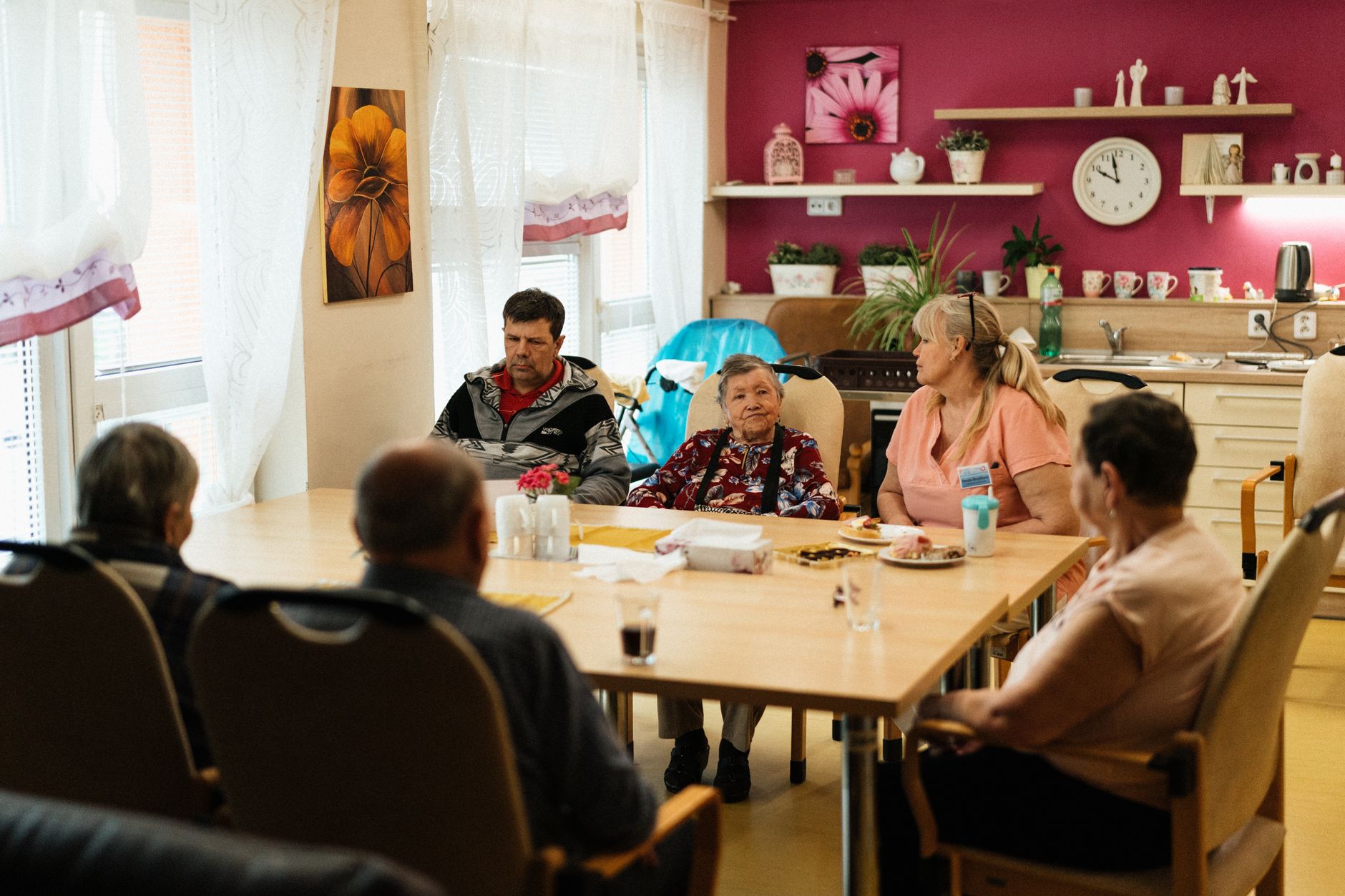
Consider the case of American Senior Communities, which has deployed food service robots in its dining rooms. A representative for the company stated their goal was to allow dining staff to spend more time with residents, ensuring their needs are met.
The robots handle the predictable work of running food from the kitchen to the tables. This allows servers to remain in the dining room, available for conversation, attending to special requests, and building relationships. Residents have reportedly enjoyed the change, understanding that the robots are not replacing their favorite servers but are instead helping them be more present.
How Can a Robot Provide Companionship?
Beyond freeing up human staff, some robots are designed specifically for social interaction. These 'companion' or 'socially assistive' robots engage residents directly to mitigate loneliness and provide cognitive stimulation.
Their capabilities can include:
These functions provide a source of engagement and connection, especially for residents who may be less mobile or have fewer visitors. The technology serves as a bridge, not a replacement, for human interaction, helping to keep seniors connected to their families, caregivers, and hobbies.
- Initiating simple, AI-powered conversations.
- Leading residents through memory games and cognitive exercises.
- Playing personalized music playlists or reading audiobooks.
- Facilitating video calls with family and friends.
- Leading gentle, seated exercise routines.
From Dining Halls to Daily Life: Integrating Automation
Implementing robotics in a senior living environment requires more than just unboxing a machine. Success depends on a thoughtful integration strategy. This is where a full-service commercial robot integrator becomes a vital partner for assisted living operators.
At Service Robot Co., we recognize that every community is unique. As a vendor-neutral integrator, we start by selecting the right robot from across manufacturers to fit a facility's specific needs, whether it's a food runner robot for the dining room or a hospital delivery robot for transporting supplies.
Our process covers the entire lifecycle. We manage the financing through programs like robot rental or leasing, which eliminates large upfront capital costs. Our nationwide network of engineers handles deployment, site mapping, and staff training to ensure a smooth go-live. This one-partner approach means the community has a single point of contact for service, maintenance, and support, ensuring the technology reliably serves its ultimate purpose: improving the lives of residents.
Are Robots a Welcome Addition for Residents?
A common question is how seniors react to autonomous technology. While some may be hesitant at first, many communities report a positive reception. In one pilot study at two Front Porch communities, 65.4% of residents believed the robots improved their overall dining experience. Over half felt the robots allowed staff to spend more quality time with them.
The key is in the framing and implementation. When residents understand that the robots are tools to help the human staff, not replace them, they often embrace the change. Many communities even give their robots names, turning them into beloved members of the extended family.
What Does the Future Hold for Eldercare Robots?
The technology is advancing rapidly. The global smart home elder care market was valued at $14.8 billion in 2025 and is projected to reach $42.6 billion by 2034, according to one market analysis. This growth is fueling development in AI, sensory technology, and mobility.
Future robots will likely feature more sophisticated conversational AI, allowing for more natural and engaging interactions. Enhanced sensors may help monitor for changes in a resident's condition, while advancements in mobility could provide physical support for standing or walking. The goal remains consistent: to support independence, enhance safety, and foster connection for aging adults.