Key takeaways
- Service robots are now used for more than just delivering food to tables.
- Automating the busing process frees up staff to focus on guest-facing tasks.
- Robots can create a continuous loop, carrying dirty dishes back and clean supplies forward.
- Using robots for these repetitive transport tasks reduces physical strain on employees.
- A Robot as a Service (RaaS) model makes this technology accessible without large upfront capital.
More Than Just a Food Runner
When you picture a robot in a restaurant, you probably imagine it carrying trays of food from the kitchen to a table. While food running is a common application, it only scratches the surface of how autonomous mobile robots are transforming restaurant operations. A more creative, and arguably more impactful, use is emerging: automating the entire disposables lifecycle.
This means using the same robots to bus dirty dishes, glassware, and cutlery from tables back to the dish pit. Once there, they can be reloaded with clean napkins, condiments, and polished silverware for the journey back to front-of-house server stations. This creates a closed loop of activity that handles some of the most time-consuming and physically demanding work in a restaurant, freeing human staff to focus entirely on the guest experience.
What is the Real Work of a Busser?
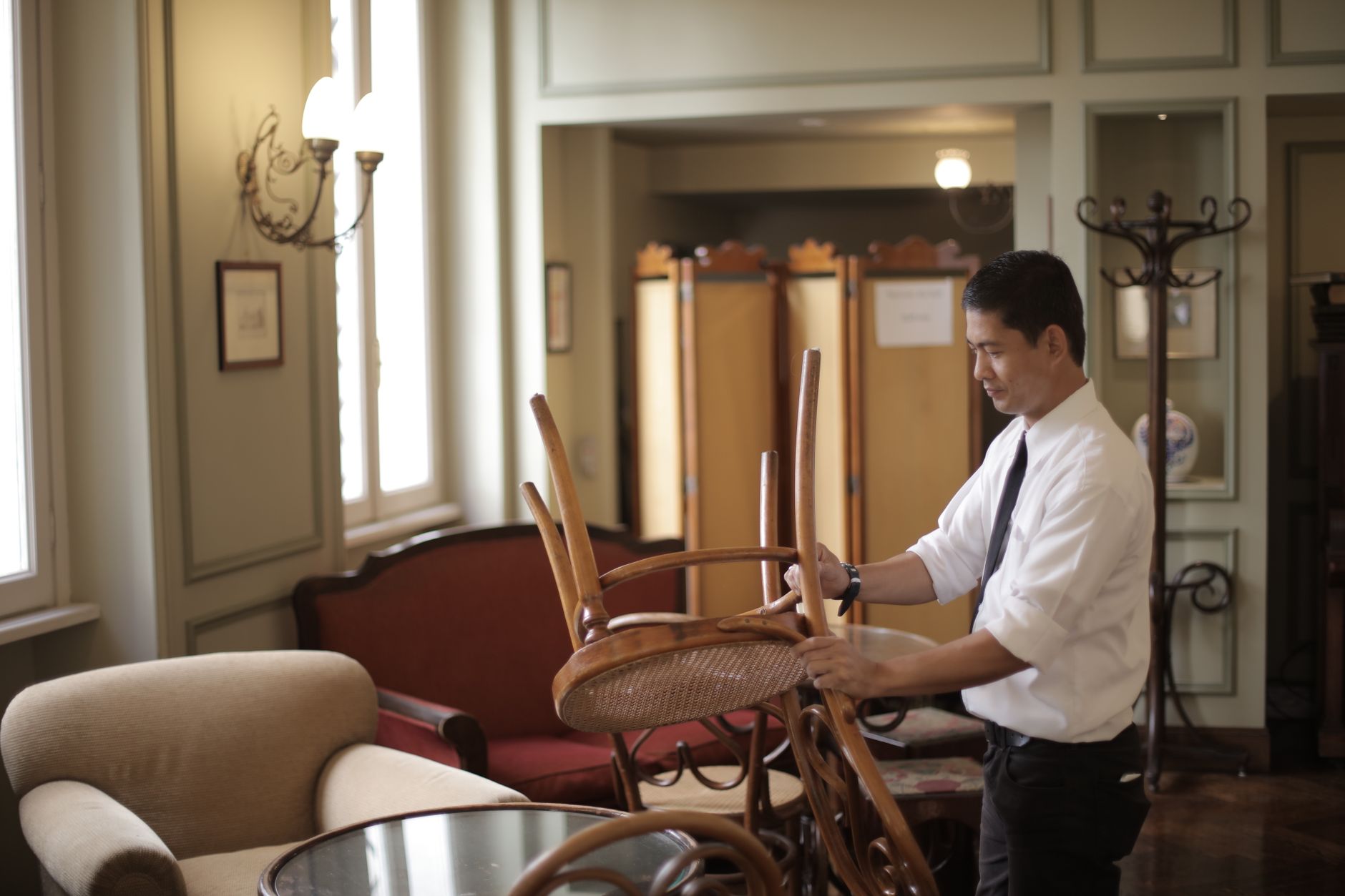
The role of a server assistant or busser is often underestimated. It is not just about clearing plates. It is a physically demanding job that involves constant motion, carrying heavy tubs of dishes, and keeping service stations perpetually stocked.
These repetitive transport tasks are critical for smooth operations but add little direct value to the customer's dining experience. Every minute a team member spends hauling a 40-pound bus tub is a minute they are not available to greet guests, refill drinks, or support servers during a rush. According to one report, full-service restaurants are often operating with nearly three fewer front-of-house employees than before the pandemic, making every staff minute more valuable than ever.
This constant, physically taxing movement also leads to employee fatigue and potential injuries, contributing to the high turnover rates that plague the industry.
How Does a Robot Automate the Busing Workflow?
The process is straightforward but powerful. A server assistant clears a table and loads the dirty dishes into a tub placed on one of the robot's shelves. With a simple tap on a screen, the assistant dispatches the robot to a pre-mapped location, typically the dishwashing station in the back-of-house.
Using a combination of sensors and intelligent navigation, the robot autonomously travels through the bustling dining room, safely avoiding staff and guests. Upon arrival, kitchen staff unload the dirty dishes and can immediately send the robot back empty or, even better, reload it for a restocking run.
For restaurants with multiple floors or event spaces, a delivery robot for elevators can be programmed to manage travel between levels, ensuring the automation loop continues uninterrupted across the entire venue.
Closing the Loop: Restocking Runs from Back-of-House

The true operational advantage appears when busing is paired with restocking. An empty trip from the dish pit back to the dining room is a missed opportunity. Instead of returning empty, the robot is loaded with freshly cleaned and polished cutlery, stacks of folded napkins, or refilled bottles of condiments.
It is then dispatched to specific server stations that are running low. This automated flow of goods keeps the front-line staff stocked with everything they need to turn tables quickly. It prevents the all-too-common scenario where a server has to abandon their section to search for more forks or napkins during a busy dinner service.
By automating this continuous loop, the robot becomes a true utility player, tackling two of the most persistent logistical challenges in restaurant service without needing a break.
What are the Tangible Benefits for a Restaurant?
Automating busing and restocking delivers concrete, measurable results. One case study showed that integrating service robots led to a 40% decrease in service times and an increase in average table turnover from 1.8 to 2.5 customers per evening. Faster turns translate directly to more customers served and higher revenue.
Staff also see immediate benefits. With robots handling the heavy lifting and miles of walking each shift, physical strain is significantly reduced. This allows server assistants to stay in their sections, supporting servers, engaging with guests, and improving the overall quality of service. This shift from manual labor to guest-centric service can also improve job satisfaction and help with employee retention in an industry still grappling with staff shortages.
Finding the Right Automation Partner is Key
Implementing robotics successfully is about more than just buying a machine; it's about integrating a new system into your unique operational workflow. Restaurants have tight spaces, unpredictable crowds, and specific needs. This is why working with a vendor-neutral robot integrator is so important.
At Service Robot Co., we don't start with a specific brand. We start with your floor plan and your challenges. As a full-service integrator, our process includes a free site assessment to identify the right robot for your environment from across multiple manufacturers. We are your one partner for the entire lifecycle.
Our nationwide network of US engineers handles everything from financing and deployment to integration with your existing systems. We provide the go-live support and on-site training to ensure your staff is confident and your operations are enhanced from day one. When you need help, you have one number to call for everything.
Is a Robot Rental Model a Good Fit for Your Business?
The idea of investing in automation can seem daunting, especially when considering the high upfront capital costs. However, modern financing models make this technology accessible to businesses of all sizes, including small independent restaurants.
Service Robot Co. specializes in Robot as a Service (RaaS) and other robot leasing for business programs. A RaaS monthly subscription avoids the large initial expense, converting it into a predictable operating cost. This model often includes a comprehensive robot maintenance service plan, on-site dispatch for repairs, and even backup units to ensure zero downtime.
With affordable service robot leasing, you can realize the benefits of automation, like lower labor costs and increased efficiency, without the financial burden of ownership. Our monthly payment programs are designed to provide a rapid return on investment, making it a financially sound decision for any restaurant looking to solve persistent labor challenges.