Key takeaways
- Gate turnaround is a complex, time-sensitive process critical to on-time performance.
- A single minute of ground delay can cost over $100, creating a strong financial case for automation.
- Autonomous baggage tugs and cargo movers are reducing manual labor and improving safety on the tarmac.
- FOD detection drones can inspect a runway area in minutes, a task that takes human crews up to 30 minutes.
- A vendor-neutral integrator is key to deploying a multi-faceted robot fleet without operational silos.
The Race Against the Clock at the Gate
When passengers think of airport robots, they often picture autonomous floor scrubbers gliding through a quiet terminal late at night. While that application delivers real value, the next frontier of airport automation is happening outside on the tarmac, where every second counts.
The aircraft gate turnaround is one of the most time-sensitive processes in the entire travel industry. This carefully choreographed sequence of events, from the moment an aircraft is chocked to the moment it's pushed back for departure, directly determines on-time performance. A narrowbody aircraft turnaround can have a window as tight as 25 minutes to complete dozens of tasks.
Automating these gate operations is no longer a distant concept. Airports and their ground handling partners are actively deploying specialized robots to perform critical jobs faster, safer, and more reliably than ever before. This moves automation beyond common airport cleaning robot rental to the heart of operational profitability.
What Really Happens During a Turnaround?
The gate turnaround is a flurry of parallel and sequential activities. Multiple teams and vehicles converge on a single aircraft in a confined space, creating a complex operational challenge.
The process includes a long list of essential tasks:
Each step is a potential point of delay. A late catering truck or a slow baggage unloading process can have a ripple effect, causing the entire schedule to slip. Historically, managing this has relied on radio calls and manual checklists, methods prone to error and miscommunication in a high-pressure environment.
- Parking and securing the aircraft with chocks.
- Connecting to ground power and air conditioning units.
- Positioning the passenger jet bridge.
- Unloading inbound baggage and cargo.
- Refueling the aircraft.
- Servicing the potable water supply and lavatories.
- Loading outbound meals and cabin supplies.
- Performing required safety inspections.
- Loading outbound baggage and cargo.
- Finalizing paperwork, retracting the jet bridge, and pushback.
Why is Every Minute So Expensive?
For an airline, an aircraft only generates revenue when it is in the air. Every moment it spends idle at the gate is a direct cost. According to Airlines for America, the average cost of an aircraft's block time in the U.S. was over $98 per minute in 2025. A separate 2024 analysis puts the figure even higher, at $100.76 per minute, breaking it down into labor, fuel, maintenance, and overhead.
A single 30-minute delay on one aircraft can cost an airline thousands of dollars. But the financial damage doesn't stop there. A ground delay during a morning peak can multiply across the network as the day progresses. These knock-on effects lead to crew scheduling conflicts, passenger re-bookings, and even compensation payouts, turning a small delay into a significant financial liability.
How Do Robots Handle Baggage and Cargo?
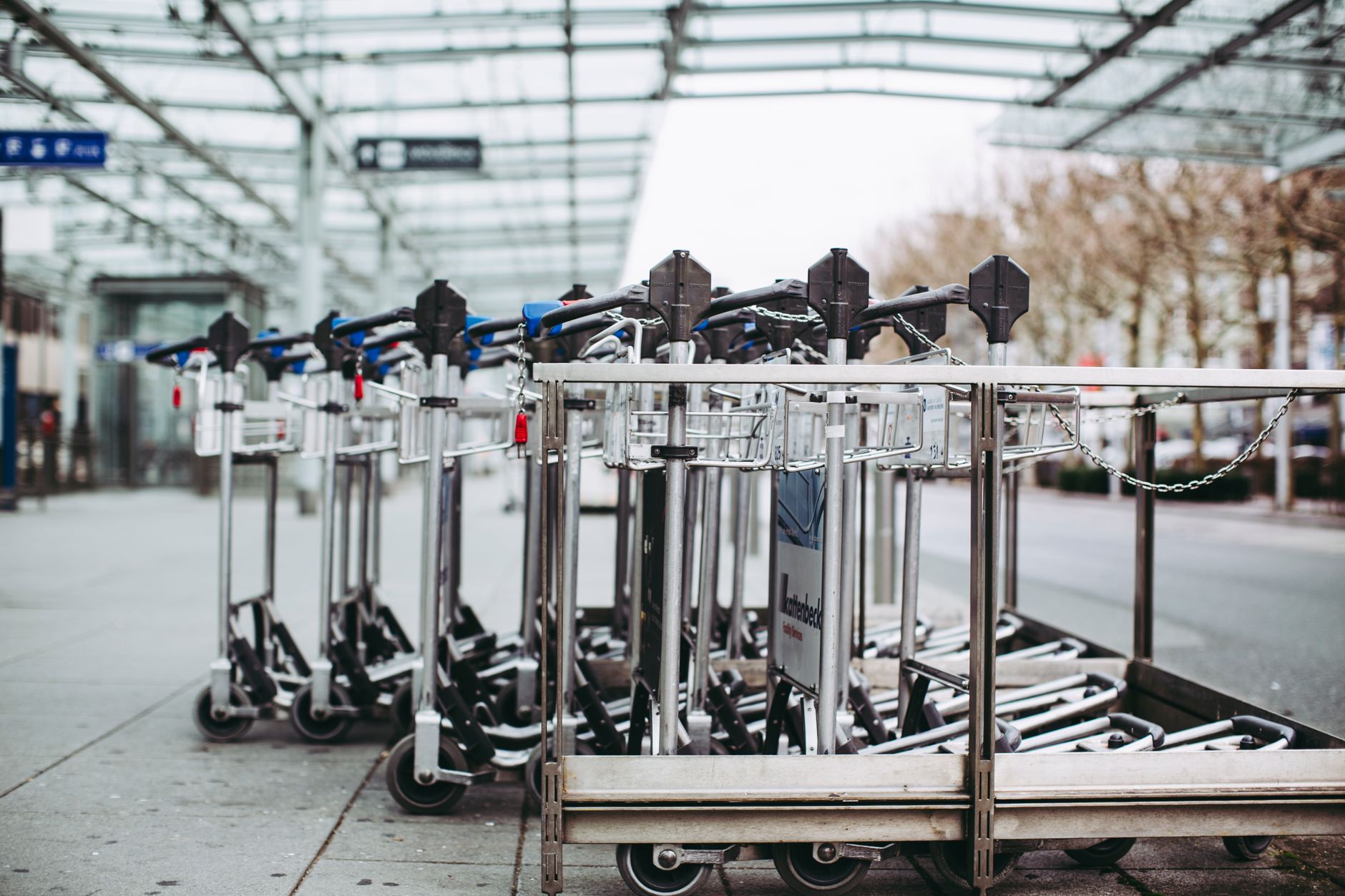
One of the most physically demanding and error-prone parts of the turnaround is baggage and cargo handling. This area is seeing some of the most mature applications of robotic technology. Autonomous mobile robots (AMRs) are being deployed to streamline this workflow.
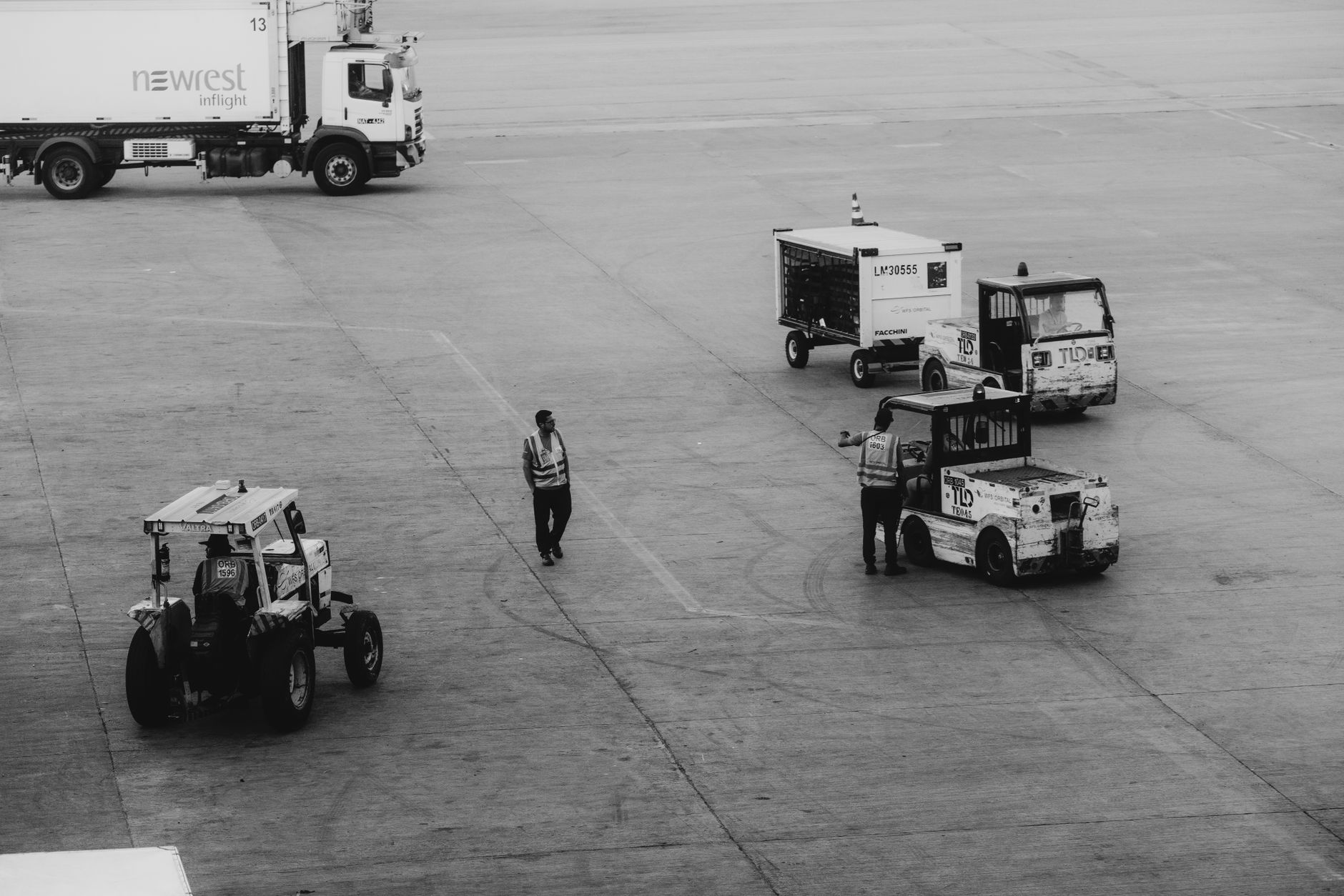
Electric, autonomous tugs can now transport baggage carts and Unit Load Devices (ULDs) between the terminal and the aircraft without a human driver. These robotic vehicles follow pre-mapped, optimal routes, reducing transit times and the risk of collisions on the busy apron. They operate with precision, enhancing safety in areas where people and equipment work in close proximity.
By automating these repetitive transport tasks, ground crews can be reassigned to more complex work, such as the final loading and organization within the aircraft's hold. This reduces the physical strain and injury rates associated with manually moving thousands of bags per shift.
Can Drones Make the Tarmac Safer?
Foreign Object Debris (FOD) is a constant and serious threat in aviation. A single loose bolt, piece of pavement, or scrap of metal on the tarmac can be ingested by a jet engine, causing catastrophic failure. Traditionally, FOD detection involves crew members walking the runway and gate areas, a time-consuming and imperfect process.
Today, inspection drones are transforming this critical safety check. An unmanned aerial vehicle (UAV) equipped with high-resolution cameras and AI-powered image recognition can scan a runway in as little as three to eight minutes. A manual inspection of the same area can take up to 30 minutes.
The AI algorithms are trained to identify potential FOD with a high degree of accuracy, flagging even small items a human inspector might miss, especially during overnight operations. This allows for faster, more frequent, and more reliable inspections, significantly improving safety without extending turnaround times.
Putting It All Together: The Integrator's Role
Deploying an autonomous baggage tug is one thing. Integrating it with FOD drones, automated fueling systems, and the airport's central flight information system is another challenge entirely. These different technologies, often from various manufacturers, must work in harmony to deliver real efficiency gains. This is where a vendor-neutral robot integrator becomes essential.
At Service Robot Co., we specialize in creating a single, cohesive ecosystem from disparate robotic components. We are OEM-neutral, meaning we select the right machine for the job, regardless of brand. Our role is to ensure that a baggage AMR, a catering delivery robot, and an inspection drone can all operate from a unified fleet management platform.
This one-partner approach prevents the creation of information silos. Instead of juggling multiple vendors, service contracts, and software dashboards, airport operators get a turnkey robot deployment. We handle everything from the initial site assessment and mapping to the final go-live support and ongoing maintenance through our nationwide network of engineers.
How Can Airports Afford This Technology?
The high initial cost of purchasing a fleet of specialized robots can be a significant barrier to adoption. To address this, the industry is increasingly moving toward flexible acquisition models like Robotics-as-a-Service (RaaS).
RaaS turns a large upfront capital expenditure into a predictable monthly operating expense. This subscription-based model often includes maintenance, software updates, and support, eliminating the risk and complexity of ownership. Airports or ground handling companies pay for the service, such as 'kilograms of baggage moved', not the machine itself.
Service Robot Co. offers multiple pathways to automation, from RaaS monthly subscription plans to robot leasing for business. These programs, including our lease-purchase program and other robot financing for small business options, make advanced technology accessible without requiring a massive capital investment. This allows operators to pilot new solutions, scale fleets as needed, and benefit from automation immediately.