Key takeaways
- Yes. Robots can keep a food hall restroom closer to audit-ready by automating patrols, documenting conditions, and flagging service needs fast.
- They work best on repeatable work: scheduled checks, floor condition monitoring, consumable visibility, and rapid spill escalation.
- They do not replace attendants for stall detail, restocking, fixture wipe-downs, or biohazard cleanup after vomiting or diarrhea incidents.
- In mixed-tenant venues, the value is consistency. One operating rhythm across the whole restroom beats ad hoc checks during peak rushes.
- A vendor neutral robot integrator matters because food halls need deployment, mapping, training, service, and uptime support, not just a machine.
What is the short answer for food hall operators?
Yes, but only in a supporting role. A robot can help keep a food hall restroom audit-ready by handling the dull, repeatable part of the job: frequent patrols, floor-condition checks, timestamped proof of rounds, and early warnings when paper, soap, or trash conditions are drifting out of spec. That matters in a venue where the restroom serves many tenants, traffic spikes hit all at once, and no single operator fully owns the guest complaint.
What a robot cannot do is the last three feet of restroom sanitation. It cannot replace an attendant for stall detail, mirror wipe-downs, fixture cleaning, refill work, or a bodily-fluid incident that needs the right chemistry and dwell time. In practice, the strongest program uses robots to find problems sooner and to keep a service loop moving, then uses people for the hands-on work that still decides inspection outcomes.
That distinction is the whole answer. If your goal is fewer missed checks, faster spill response, and cleaner audit trails, inspection and cleaning robots can help. If your goal is zero labor in the restroom, they will disappoint you.
Why do food hall restrooms become a sanitation problem so quickly?
Food halls compress a lot of demand into a small footprint. Lunch rush, evening drinks, family traffic, delivery drivers, and event spillover all hit the same shared restroom. Unlike a single-tenant restaurant, the accountability line is fuzzy. The restroom is everyone’s problem, which often means it becomes nobody’s priority until a guest complains.
That is a real business issue, not cosmetic fussiness. According to Bradley Corporation’s 2025 Healthy Handwashing Survey, 84 percent of Americans say an unclean or poorly stocked restroom damages a business’s image, 75 percent say they are likely to think twice before returning after a bad restroom experience, and 71 percent say they are more likely to return and spend more at businesses with clean, well-maintained restrooms.
The compliance side is just as unforgiving. The FDA says the 2022 Food Code is the national model used by regulators covering more than one million restaurants, retail food stores, vending operations, and food service sites. In a food hall, restroom sloppiness may sit outside the stall in the guest’s mind, but it still colors how clean the entire venue feels.
What does audit-ready actually mean in a shared restroom?
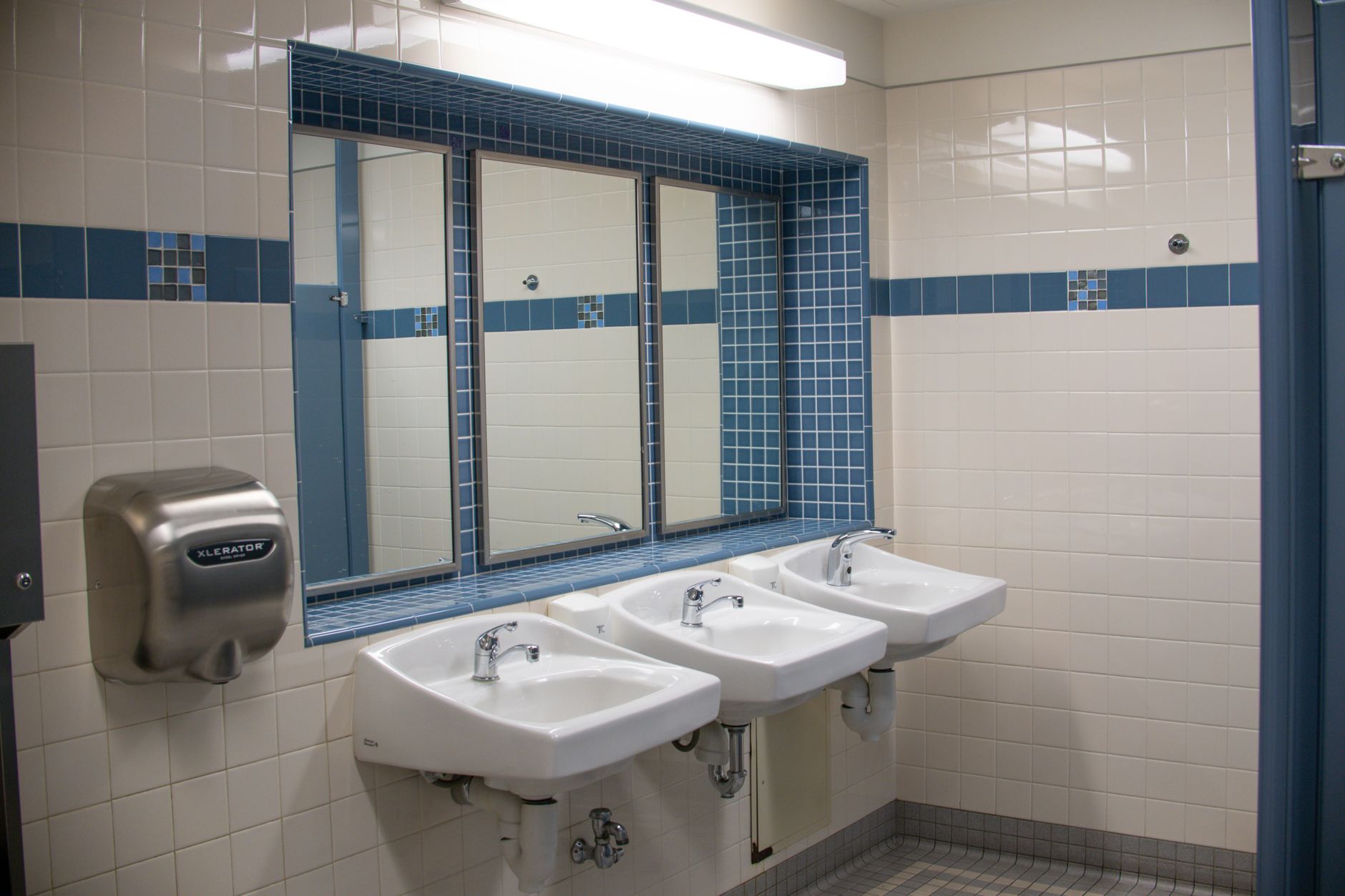
Audit-ready does not mean showroom perfect all day. It means the room can take an inspection, a manager walk, or a guest complaint at any time without exposing obvious misses. Floors are dry enough to be safe. Trash has not overflowed. Soap and towel dispensers are working. Odor is controlled. There is evidence that checks happened when they were supposed to happen.
The public-health basics are mundane and strict. CDC guidance still centers handwashing on soap, running water, and at least 20 seconds of scrubbing. That means a restroom program is not only about visible cleanliness. It is also about keeping the handwashing station usable every hour of the day. A restroom with empty soap or paper does not just look neglected. It breaks a basic hygiene control in the middle of a food venue.
For operators, audit-ready is therefore a rhythm problem. The question is not can your team deep-clean the room overnight. The question is can the venue detect drift during service and recover before the room crosses the line from busy to unsanitary.
Where can robots genuinely help during the day?
This is where the case becomes practical. A mobile inspection or cleaning robot is useful when the task repeats often, follows a route, and benefits from objective records. Shared restrooms in food halls fit that pattern better than many operators assume. The route is known. The traffic spikes are predictable. The failure modes are repetitive: wet floors, paper on the ground, trash buildup, depleted consumables, and long gaps between checks.
A robot can run scheduled rounds before the lunch peak, through the mid-afternoon lull, and again before dinner. It can document that the route happened at 11:05, 2:40, and 5:15 instead of relying on a clipboard that gets filled out after the fact. It can also watch for the same signs every pass without getting pulled into another task.
The highest-value support cases usually look like this:
- Patrol checks that create timestamped proof of rounds and reduce missed inspections during rush periods.
- Floor monitoring that spots standing water, fresh debris, or slip-prone areas before a complaint escalates.
- Consumable visibility tied to refill tasks, so attendants are dispatched when soap, tissue, or towels are trending low instead of after they are empty.
- Spill escalation that sends a person to the exact restroom zone instead of forcing a supervisor to go hunting for the problem.
- After-hours floor scrubbing in the common restroom approach area or shared corridor, where a commercial cleaning robot rental or robot as a service model can cover routine floor care with maintenance included.
What still needs a person, every single time?
The hard boundary is bodily-fluid cleanup and detail sanitation inside the room. CDC says norovirus is the leading cause of vomiting and diarrhea and foodborne illness in the United States. After someone vomits or has diarrhea, CDC calls for immediate cleanup and disinfection, with either a chlorine bleach concentration of 1,000 to 5,000 ppm or an EPA-registered disinfectant effective against norovirus. EPA’s current List G also makes clear that disinfectant contact times vary by product, from as little as 30 seconds to as long as 10 minutes. That is procedural work. It needs trained people, correct chemicals, PPE, disposal steps, and judgment.
The same is true for refill work and fixture detail. Someone still has to replace tissue, load paper, refill soap, wipe partitions, clean touch points, and verify that the room actually feels acceptable. A camera, sensor, or route log does not replace the tactile part of the job.
So the operating model should be blunt. Let the robot find drift, carry the routine, and shorten the time to intervention. Let the staff do the sanitation work that still requires hands, training, and accountability.
How do robots change spill response and safety?
They compress the lag between incident and action. In many food halls, the dangerous period is not the spill itself. It is the fifteen-minute stretch where nobody is sure the spill happened, whose zone it is, or whether someone already handled it. A patrol robot narrows that blind spot by turning a vague complaint into a specific service event.
That matters because wet restroom floors are not just ugly. OSHA’s walking-working surfaces rule requires floors to be kept clean and dry so far as feasible. Bureau of Labor Statistics data show 479,480 cases involving falls, slips, and trips that led to days away from work in 2024 across private industry. Not every one of those came from restrooms, of course, but the lesson is plain: floor conditions are a real operational risk, not a minor housekeeping detail.
A robot does not eliminate that risk. What it can do is catch the puddle, paper buildup, or recurring wet zone earlier, create a record that the alert was seen, and push the job to a person faster. In a busy food hall, that speed is often the difference between routine service and a liability event.

What does a workable deployment look like in a mixed-tenant venue?
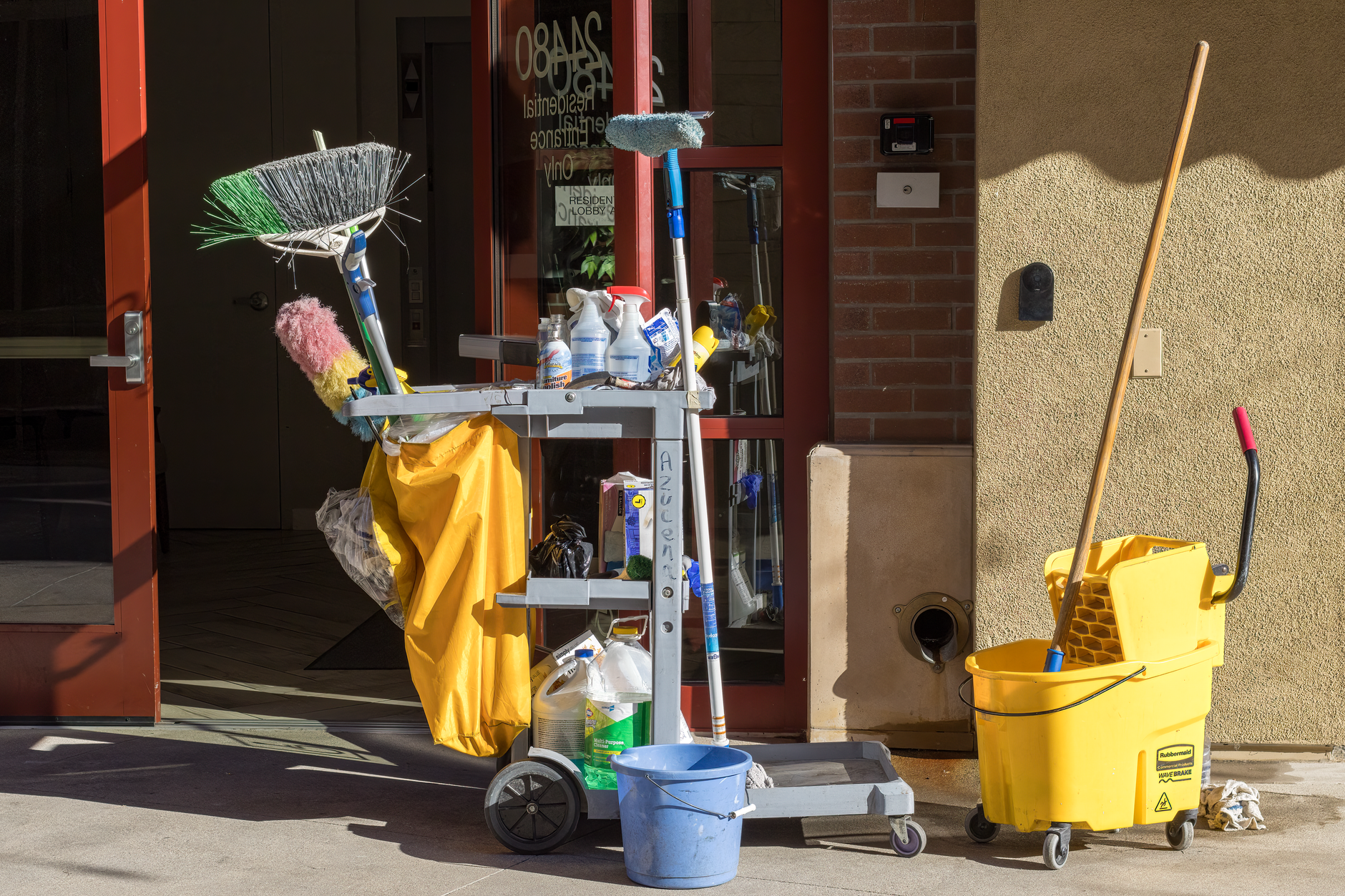
The good version is boring in the best way. The venue defines routes, check intervals, alert thresholds, refill triggers, and who owns the dispatch. One restroom may need rounds every 20 to 30 minutes during peak windows. Another may only need hourly coverage. The point is to set a service cadence that matches traffic, not a generic building standard.
Mixed-tenant halls also need clear lines between common-area responsibility and tenant responsibility. If the restroom is controlled by the venue, the venue should own the robot program end to end. If janitorial work is outsourced, the service partner needs access to the alert flow and the proof-of-service data. The robot should feed one operating playbook, not create a second one.
This is where Service Robot Co. fits naturally. Food halls usually do not need a random unit dropped at the site. They need robot deployment and integration, site assessment mapping, go-live support, staff training, and a robot maintenance service plan backed by a US service engineer network. As an OEM-neutral, full-service integrator, Service Robot Co. can match the robot to the restroom workflow, then finance, deploy, integrate, and service it through one partner and one number.
Should operators rent, lease, or buy for this use case?
For many food halls, the practical entry point is not an outright purchase. A service robot rental, robot leasing for business, or robot as a service plan lets the operator test route quality, tenant acceptance, alert volume, and staffing impact before locking in a permanent standard. That matters because restroom operations are all edge cases. Door swings, narrow vestibules, peak congestion, and elevator dependence can make a promising pilot fail if the site was not mapped correctly.
A commercial robot rental or robot rental monthly program also fits the way venue operators budget shared services. The conversation becomes operating performance, not just equipment ownership. If the program includes maintenance, remote triage, and emergency response nationwide, the operator has a cleaner path to uptime than a do-it-yourself buy.
The smartest buyers still demand proof. They should ask for a commercial robot demo, a clear pilot scope, the service path when the unit goes down, and the handoff rules between robot alerts and human response. Restroom automation works when the machine fits the process. It fails when the process is left vague.
How do you know the site is ready?
A food hall restroom is a strong robot candidate when four things are true. First, traffic is heavy enough that manual checks are routinely missed. Second, the route from dock, storage, or charging area to restroom is consistent. Third, the venue already has attendants or janitorial staff who can receive and close service alerts. Fourth, management cares about proof, not anecdotes.
It is a weak candidate when the room is too small for useful movement, the ownership line is politically messy, or nobody is prepared to act on alerts. Robots are force multipliers. They are bad at rescuing broken management discipline.
The strategic view is simple. In a high-volume urban food hall, restroom quality is one of the most visible signals of operational competence. Robots can help keep that signal clean, especially for patrols, consumable tracking, and spill response. They just need to be deployed as part of a real sanitation system, not as a substitute for one.