Key takeaways
- Cobots fit best at repetitive secondary packaging tasks where cartons, pouches, cups, or trays must be picked, oriented, and loaded into cases with steady precision.
- Pet food plants are a strong fit because SKU variation, labor churn, and repetitive lifting often collide at the end of the line.
- The real gating items are sanitation design, dust management, changeover discipline, and upstream package consistency, not hype about the robot itself.
- A cobot cell usually beats another manual packing station when staffing is unstable, patterns change often, and the line is losing output to fatigue, rework, or missed breaks.
- An OEM-neutral integrator matters because the win is not just the arm. It is the gripper, guarding, controls, financing, training, and service response behind it.
Where do cobots actually fit on a pet food packing line?
Cobots fit in secondary packaging when the line has a repetitive hand-pack step that is too variable for a rigid hard-automation machine and too punishing to staff consistently by hand. In pet food plants, that usually means picking finished units off an infeed, building the required pack pattern, and loading cases or trays at the end of the line.
That is the short answer. If your team is fighting frequent pack-count changes, unfilled end-of-line jobs, or a case-packing station that slows down late in the shift, a cobot cell is often the practical middle ground. It gives you repeatable motion and stable throughput without forcing a full rebuild of the packaging line.
The market context is not trivial. According to the American Pet Products Association, U.S. pet food and treats spending reached 68.3 billion dollars in 2024, with 69.7 billion projected for 2026, while its 2025 survey data says 95 million U.S. households own a pet. That combination keeps pressure on output, SKU breadth, and labor planning in pet food manufacturing.
- Primary tasks: singulated pick, multi-pick grouping, case loading, tray loading, partitioned pack loading, simple inspection-linked reject handling
- Best product formats: stand-up pouches, flow-wrapped treats, cups, tubs, cartons, sleeves, and small bags with repeatable presentation
- Best line conditions: moderate speeds, frequent changeovers, consistent package presentation, and limited floor space for adding another staffed station
Why pet food plants are a distinct use case
Pet food is not generic packaging. Dry kibble creates fines and dust. Treat lines may run sticky or oily packs. Wet formats bring washdown expectations and condensation. Plants also tend to carry wide SKU families, retailer-specific counts, club packs, mixed formats, and short promotional runs that keep case packing from settling into a single stable pattern for long.
That matters because cobots earn their keep in exactly this kind of operational middle ground. They are not the answer to every high-speed line, but they are well suited to lines that need more flexibility than dedicated machinery and more consistency than a rotating manual crew can deliver.
FDA oversight shapes the operating envelope too. FDA says animal food facilities subject to the Preventive Controls for Animal Food rule must follow current good manufacturing practice requirements and maintain a food safety plan. In practice, that means the case-packing cell has to be selected and installed with sanitation, cleanability, access, and contamination control in mind from day one.
What jobs should stay manual, and which ones should move first?
The first jobs to move are the ones operators can do, but hate doing for eight or ten hours. Repetitive picks from a conveyor to a case, constant torso twist to reach dunnage or cartons, and repetitive low-value loading work are prime candidates. OSHA continues to identify force, repetition, and awkward posture as core ergonomic risk factors, and its ergonomics guidance points directly to engineering controls and material-handling redesign as the preferred fix.
The jobs to leave manual, at least initially, are the ones dominated by exceptions. If every tenth package arrives skewed, leaking, underweight, or difficult to grip, the cell will spend its life in recovery mode unless upstream packaging discipline improves first. Cobots reward orderly chaos. They do not reward total chaos.
A useful screen is simple. If the operator is making the same safe, low-judgment motion hundreds of times per hour, automation is probably worth evaluating. If the operator is mostly troubleshooting, sorting oddballs, and compensating for bad upstream behavior, fix the line first and automate second.
- Move first: repetitive pick-and-place into RSC cases, tray loading, alternating left-right pack patterns, simple orientation tasks, and stations that always need a second person at peak volume
- Hold for later: unstable packs, frequent jams upstream, inconsistent case erecting, heavy mixed-SKU judgment work, and lines with chronic sanitation redesign still unresolved
When does a cobot cell beat adding another manual packing station?
It wins when the labor problem is structural rather than temporary. The U.S. Bureau of Labor Statistics counted 379,060 packaging and filling machine operators and tenders in May 2025, with a mean annual wage of 44,590 dollars. That is the baseline labor market you are competing in before overtime, turnover, training loss, and absentee coverage even enter the picture.
Packaging employers are feeling that pressure broadly. PMMI reported in December 2025 that 95 percent of surveyed consumer packaged goods companies were struggling to hire skilled operators and technicians, and nearly 60 percent expected hiring difficulties to become more demanding. End-of-line jobs in pet food plants sit squarely inside that reality.
A second manual station still makes sense for short seasonal spikes or unstable demand. A cobot cell pulls ahead when the station is routinely hard to staff, requires cross-shift coverage, or degrades line performance because people slow down as fatigue accumulates. It also pulls ahead when the station changes pack patterns often enough that dedicated case-packing machinery feels too rigid and another human station feels like paying forever for avoidable repetition.
How much SKU variation can a cobot absorb?

Usually more than plant teams expect, but only if the variation is engineered properly. The arm itself is rarely the limiting factor. The real constraints are end-of-arm tooling, product presentation, quick recipe management, and how cleanly the infeed transitions from one size or count to the next.
In pet food, variation shows up in pouch height, bag stiffness, gusset behavior, artwork orientation, count-per-case, corrugate dimensions, and customer-specific pack patterns. A well-designed cell handles that with stored recipes, guided changeover steps, and tooling that tolerates some dimensional drift without bruising or dropping packs.
The discipline point is important. A cobot cell should reduce changeover pain, not just relocate it from the operator to maintenance. If pattern changes take longer at the HMI than they used to take at the hand-pack table, the cell was designed badly.
- Good variation for cobots: count changes, case-size changes, simple orientation changes, retailer pack patterns, and moderate product-size families
- Poor variation for cobots: wildly unstable bags, frequent film defects, major weight swings, and packs that require human feel to judge acceptability
Dust, sanitation, and food-safety reality on the floor
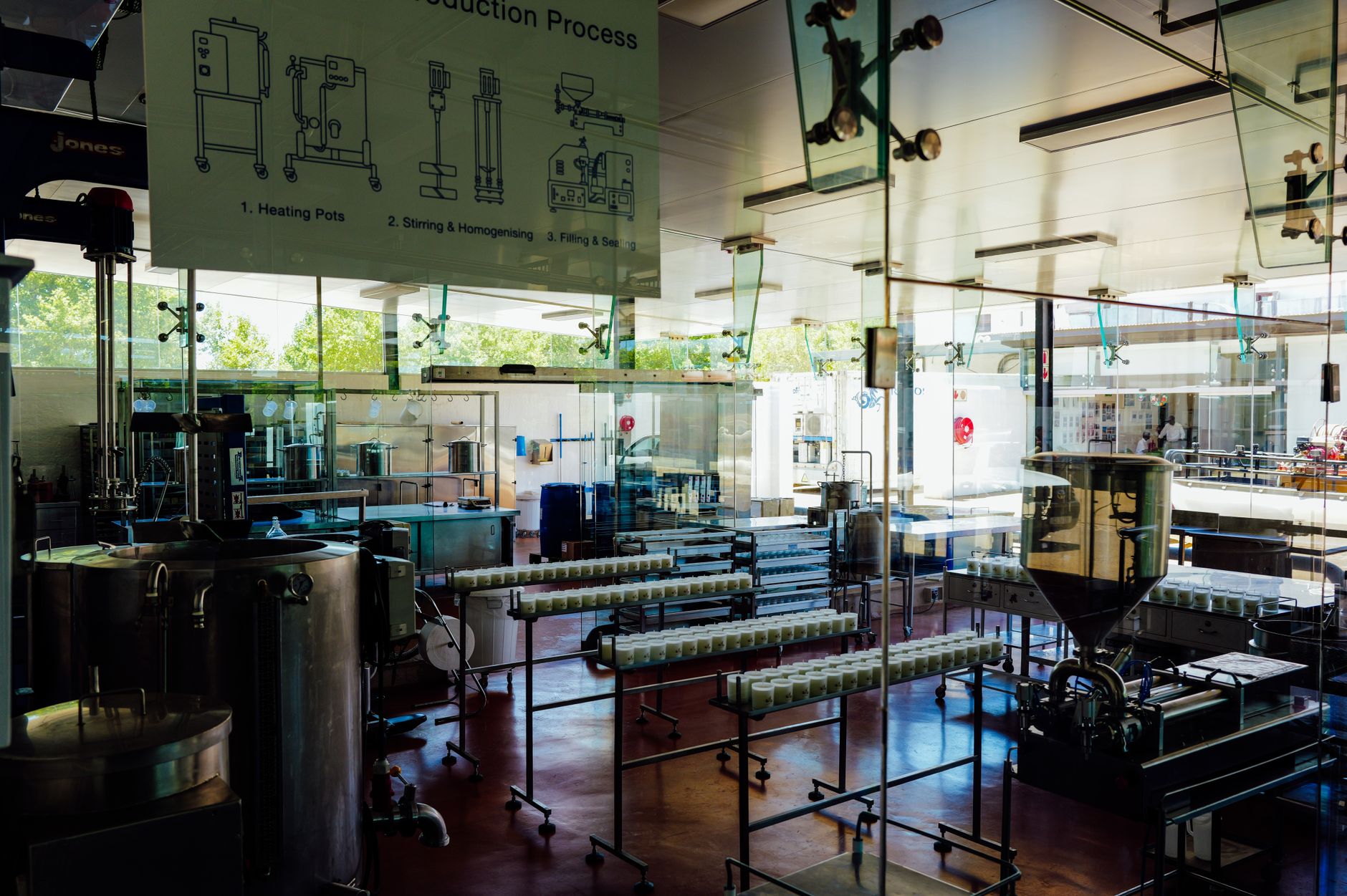
This is where many buyer conversations finally become serious. A pet food case-packing cell cannot be judged only on cycle time. It has to live inside the plant's hygiene rules, dry-clean or wet-clean routines, allergen controls, and maintenance practices without turning into a contamination trap.
FDA's animal food guidance is explicit that manufacturers, processors, packers, and holders need baseline sanitation and preventive controls. FDA also notes that animal food can be exposed to biological, chemical, and physical contaminants during manufacturing, and it lists physical contaminants and filth as real hazards that must be controlled. That pushes the design toward cleanable surfaces, sensible cable routing, protected sensors, easy inspection access, and a gripper strategy that does not shed or harbor debris.
Dust deserves its own line item. In dry applications, airborne fines can coat sensors, reduce vision reliability, and turn small mechanical shortcuts into frequent stoppages. Plants that succeed here specify the whole cell for the real room, not the spotless room in the concept drawing.
Throughput is only half the ROI story
The obvious return comes from labor substitution and steadier output, but pet food plants usually see the decision more clearly when they include the hidden costs of manual case packing. Those costs show up as overtime, late-shift slowdowns, training churn, minor product damage, inconsistent pack presentation, and supervisors getting pulled from other work to cover a packing hole.
Ergonomics is part of that math. OSHA's ergonomics materials tie repetitive lifting, twisting, bending, and forceful manual handling to musculoskeletal risk, and its guidance emphasizes engineering controls such as repositioning work, reducing reach, and using mechanical handling methods. A cobot cell does not erase ergonomics risk everywhere, but it can remove one of the most repetitive exposures on the line.
The ROI window is strongest when the cell protects output as much as it replaces touches. If the line can finally run to the pace upstream equipment already supports, the gain is bigger than a simple headcount comparison suggests.
What should buyers ask before approving a project?
Start with the line, not the robot. Confirm actual package rates by SKU, pack-pattern count, allowable drop and squeeze limits, sanitation method, floor space, case supply method, and how often upstream package quality drifts. Those facts decide feasibility faster than a glossy demo ever will.
Then ask how the project will be supported after go-live. In this category, the arm is only one piece. Grippers wear. Vision needs tuning. Operators need recipe discipline. Maintenance needs spares and fault recovery training. If the plant runs multiple brands or multiple sites, support coverage matters as much as cycle time on day one.
That is where Service Robot Co. fits naturally. For manufacturers that want cobot rental, robot leasing for business, lease rental or sale, or monthly payment programs instead of a single capital event, Service Robot Co. acts as a vendor neutral robot integrator. The company selects the right system across manufacturers, then handles robot deployment and integration, training, financing, and field service through a nationwide U.S. engineer network.
Why an OEM-neutral integrator changes the buying math
Pet food plants rarely need a generic robot quote. They need an end of line automation package that matches their products, sanitation regime, uptime expectation, and staffing model. An OEM-neutral integrator can build around the actual use case instead of forcing the plant into one manufacturer's narrow comfort zone.
That matters even more when the commercial structure is flexible. Some plants want cobot rental for manufacturing during a launch window. Others need a collaborative robot arm rental or robot financing for small business because cash timing matters more than ownership. Others want a permanent cell but one partner and one number for integration, training, parts, and service. The right answer changes by plant, but the lifecycle burden should not land on the customer to coordinate across five vendors.
For Service Robot Co., that is the core proposition. One vendor for the whole lifecycle: assessment, engineering, deployment, training, service, and support. In a plant environment where downtime can erase the value of a good spec in a single shift, that operating model is not cosmetic. It is risk control.
The practical bottom line
Cobots make sense in pet food case packing when the work is repetitive, the SKU mix changes often, and the plant keeps paying a penalty for staffing the end of the line manually. They are especially useful where the line needs flexibility but not the cost and rigidity of a large dedicated case packer.
They do not win by magic. They win when upstream packaging is reasonably stable, sanitation and dust are engineered into the cell, and the project is treated as a line-design decision instead of a gadget purchase. Plants that approach it that way usually see the value quickly. Plants that buy on demo speed alone usually end up automating the wrong pain point.
If the question is not Can a cobot pack pet food cases at all, but Where does it fit best, the answer is clear: repetitive secondary packaging with frequent changeovers, hard-to-staff end-of-line positions, and enough operational discipline to let flexible automation do its job.