Key takeaways
- Automated nozzle reaming often finishes in five to six seconds during cycle downtime versus more than five minutes for manual cleaning.
- Spatter in the nozzle risks lost shielding gas coverage and porosity, so repeatable cleaning beats occasional wipe-downs.
- Heat and welding fumes mean the cobot path, guarding, and ventilation must be designed together, not bolted on later.
- Maintenance ownership should split between production schedules and a service partner who stocks tips, nozzles, and reamer blades.
- A cobot rental pilot lets you prove cycle impact on manual and semi-automatic stations before you standardize across cells.
When does a cobot belong on torch maintenance?
A cobot earns its place when nozzle cleaning, anti-spatter application, and front-end consumable checks happen on a schedule instead of when an operator notices arc wander. Fabricating and Metalworking notes that a nozzle reamer can complete a cleaning cycle in about five to six seconds during process downtime, while manual cleaning can take more than five minutes once you stop production and enter the cell. That gap matters on lines that index fixtures every minute or two.
Collaborative arms fit manual weld stations and hybrid cells where a full robotic welder is not justified. The cobot presents a cleaning tool, anti-spatter applicator, or inspection probe to the torch while the station is idle. You keep human welders on the arc and let the arm handle repetitive front-end care that gets skipped on busy shifts.
The case is strongest where spatter bridges contact tips and nozzles often enough to cause porosity or gas coverage loss. Reamers were built for robotic MIG guns, but the same discipline applies when a cobot services torches on manual benches or automated cells with predictable idle windows.
What fails first on a dirty nozzle?
Spatter packs into the nozzle bore and around the contact tip. Gas coverage shrinks, the arc becomes unstable, and rework climbs before anyone swaps consumables. Industry maintenance articles tie clogged nozzles directly to porosity risk and shortened tip life because the arc starts hunting for a path.
Anti-spatter spray or dip helps, yet uneven application still leaves hot spots that attract spatter. A cobot can repeat the same stroke length and dwell time every cycle, which beats a hurried wipe when the takt clock is loud.
Consumable checks belong in the same visit. A quick visual or gauged standoff check catches a worn tip before it destroys a nozzle or leaves undercut on the seam. Logging each check by station ID builds a trail maintenance can use instead of guessing which torch caused last night’s defects.
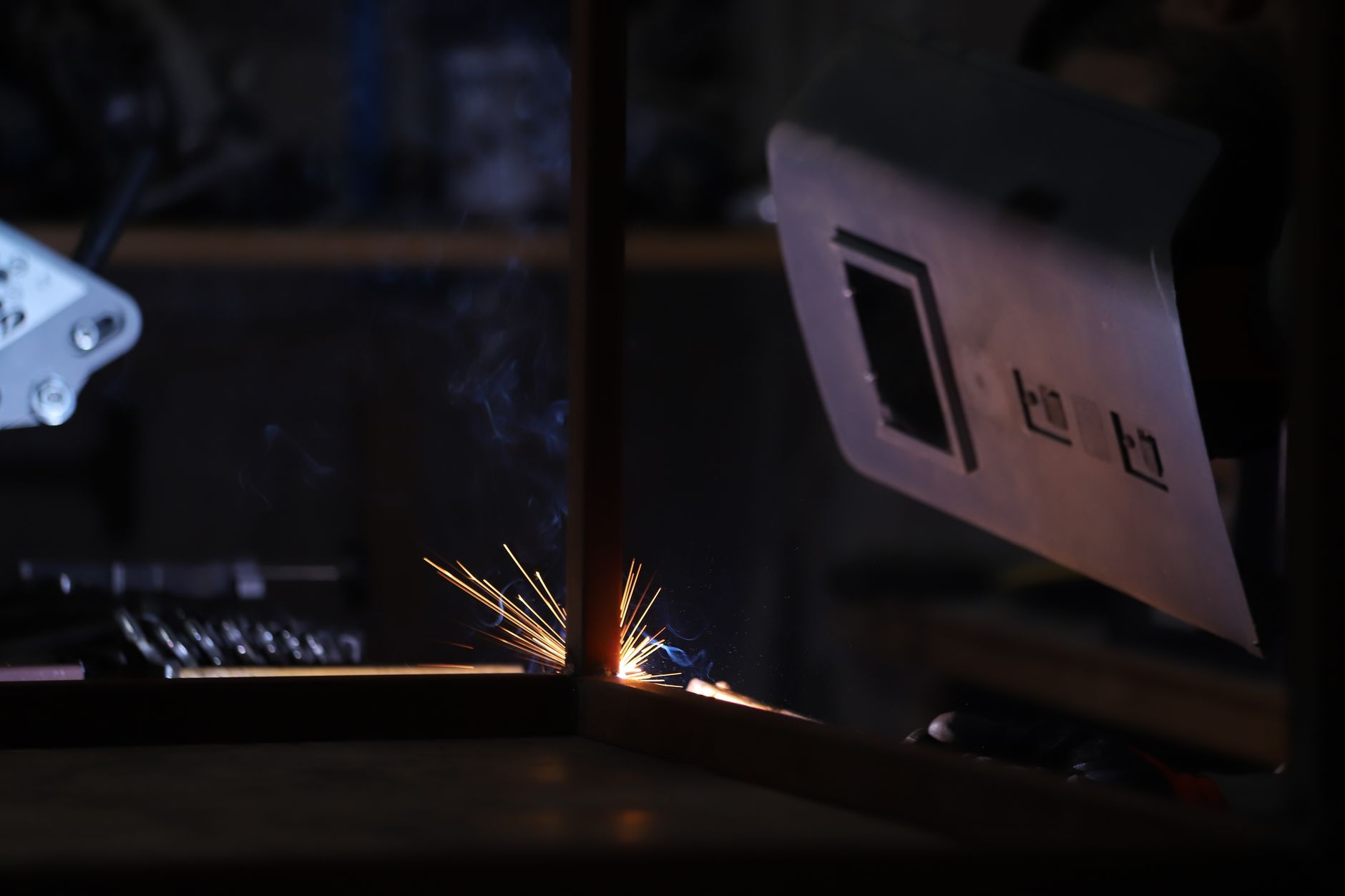
How do heat and fumes change the cell layout?
Welding smoke carries metal fume and gases OSHA discusses in its welding fact sheet, including chromium compounds that can include hexavalent chromium in some processes. OSHA lists a permissible exposure limit for Cr(VI) of 5 micrograms per cubic meter as an eight-hour time-weighted average. Local exhaust and keeping the plume away from the breathing zone still matter when a cobot works near an active arc.
Heat radiating from the torch and fixture limits where the arm can sit and which materials you use on end effectors. Schedule cleaning when the torch is parked and cooled enough for polymer seals on reamer heads. If cleaning must happen closer to production, use shields and keep cables out of the spark zone.
Fume extraction should stay close to the weld during production, then shift or supplement during maintenance moves if the cobot stirs settled dust. Treat ventilation as part of the integration scope, not an afterthought once the arm is mounted.
How should tools and torches be presented?
Repeatability starts with a fixed torch park position and a known approach angle. Manual stations need a rest bracket that locates the neck the same way every time. Automated cells should park the robot gun in a taught cradle before the cobot begins.
Present anti-spatter fluid from a controlled reservoir with level monitoring. Drip trays and splash guards keep floors from turning slick. Reamer blades and wire brushes need quick change so maintenance can swap wear items without re-teaching the whole path.
If multiple torch styles share one cobot, use keyed fixtures or RFID recipes so the arm loads the right tool profile per station. Mixing profiles without verification is how a long nozzle gets over-reamed while a short neck barely gets touched.
Where does cleaning fit in the production cycle?
The best window is existing idle time: fixture index, part load, or conveyor gap. Five to six seconds fits inside many of those beats when the path is optimized. If your index is shorter, run cleaning every N cycles based on spatter rate rather than every single index.
Manual stations may prefer cleaning at break times or lot changes when the torch is guaranteed cool. Trying to force a six second routine into a continuous manual line without idle time only creates interference with the welder.
Track weld defect rate and tip consumption before and after scheduling. If porosity drops and tip changes slow down, keep the cadence. If not, adjust anti-spatter or fix gas leaks before blaming the arm path.
Who owns maintenance and consumables?
Production owns the schedule and the andon when cleaning fails. Maintenance owns blade life, fluid filters, and calibration of the park fixture. Splitting ownership clearly prevents the cobot from sitting idle because no one ordered tips.
Keep a small stock of nozzles, contact tips, and reamer inserts at the cell. A cobot that cleans well but waits on parts still loses the downtime battle manual cleaning already lost.
Service Robot Co. can bundle cobot rental for manufacturing with integration, train-the-trainer sessions, and nationwide service so a single partner handles finance, deployment, and emergency response. That model helps when you pilot on one manual line before rolling the same recipe to automated cells.
What should a pilot prove before you scale?
Baseline manual cleaning time, tip and nozzle spend, and porosity or rework tickets for two weeks. Then run the cobot schedule for equal wall clock time on the same SKUs.
Measure whether total station downtime drops once cleaning rides inside existing indexes. Compare tip life and gas usage if you log them today. A free site assessment and mapped path review catch fixture clashes before they become production folklore.
If the pilot wins, document recipes per torch type and train off-shift leads to restart the cell after a consumable change. Cobot cells fail quietly when only one engineer knows the teach pendant password.
How does this differ from a fixed reamer station?
Dedicated reamers excel on robotic MIG guns with a fixed park. Cobots add flexibility when several manual torches or mixed brands share one maintenance lane. You trade some raw speed for reach and recipe changes.
Some plants run both: a hard-mounted reamer on high-volume robotic lines and a cobot tending manual stations or repair cells. Choose based on torch count and how often the torch geometry changes.
End of line automation gets the headlines, but front-end torch care is often the cheap lever on weld quality. Cleaning ownership belongs in the same conversation as wire feed and gas billing.