Key takeaways
- Cobots fit best on stable molding jobs with moderate cycle pressure, repeatable part presentation, and light secondary work near the press.
- They are not the default choice for every press. Very hot parts, ultra-fast cycles, complex EOAT, and tight guarding constraints can still favor more traditional automation.
- Safety drives the project. OSHA guidance for molding machines and robot cells makes guarding, interlocks, risk assessment, and maintenance procedures non-negotiable.
- Mid-sized molders usually get the best result from a phased cell: takeout first, then trim handoff, then inspection or pack-out once the first step is stable.
- An OEM-neutral integrator matters when you want one partner to size the robot, build the cell, train operators, finance the project, and support uptime after launch.
When does a cobot make sense at an injection molding press?
A cobot makes sense for injection molding part takeout when the job is repetitive, the part can be presented consistently, and the value sits in labor relief and repeatability rather than raw speed alone. For many mid-sized molders, that means part removal, placing parts into a trim fixture, handing off to a simple inspection step, or loading a tote or conveyor without building a large dedicated cell around the press.
The case gets stronger when staffing is thin on second and third shift, scrap rises when operators rush the takeout, or hot-part handling is fatiguing people. According to the U.S. Bureau of Labor Statistics, plastics and rubber products manufacturing employed 687,100 people in June 2026, and the same BLS industry profile shows 77,480 molding, coremaking, and casting machine setters, operators, and tenders employed in the sector in 2025. That is a large installed labor base for a task family that is repetitive by nature.
A cobot does not replace every style of press automation. If your mold opens fast, the cooling window is tight, or the part and end-of-arm tooling demand aggressive acceleration and reach, a traditional non-collaborative robot cell may still be the better technical choice. The right question is not, Can a cobot do takeout. It is, Does this specific press need flexibility and easier deployment more than it needs the highest possible motion performance.
- Best-fit use cases: part takeout, trim-fixture loading, gate or sprue handoff, simple vision-present inspection, light assembly, and orderly pack-out
- Weak-fit use cases: very short cycles, heavy parts, high-temperature part handling without a safe cooling or transfer method, and jobs that need hard guarding around large high-speed motion
- Strong business trigger: chronic operator gaps on nights or weekends, especially when manual takeout creates inconsistent downstream flow
Why are more molders revisiting this now?
The labor picture is one reason. The BLS Job Openings and Labor Turnover Survey reported 481,000 manufacturing job openings in June 2026. That does not map one-to-one to molding cells, but it does describe the hiring climate molders live in. When a press sits waiting for an operator to pull parts, separate runners, or stage a trimming step, the true loss is not just labor. It is unstable output.
Automation adoption also keeps moving upward in the United States. The International Federation of Robotics reported in June 2026 that U.S. industrial robot installations reached 38,000 units in 2025, up 11 percent year over year, and that U.S. robot density in manufacturing stood at 307 robots per 10,000 employees. That does not mean every molder should automate every press. It does mean flexible automation is now a normal operating decision, not an edge case.
There is also evidence that smaller manufacturers can get measurable returns from cobots when the application is chosen carefully. In a 2025 NIST MEP success story, Poly-Tech Plastic Molding reported $196,450 in cost savings after adding a cobot and workforce training. In a separate 2026 NIST MEP plastics case, automation projects that included a cobot and more injection molding overhead robots were linked to $180,000 in cost savings. Those are not universal outcomes, but they are real ones, and they came from manufacturers that look a lot more like regional molders than giant greenfield plants do.
What jobs near the press actually fit a cobot well?
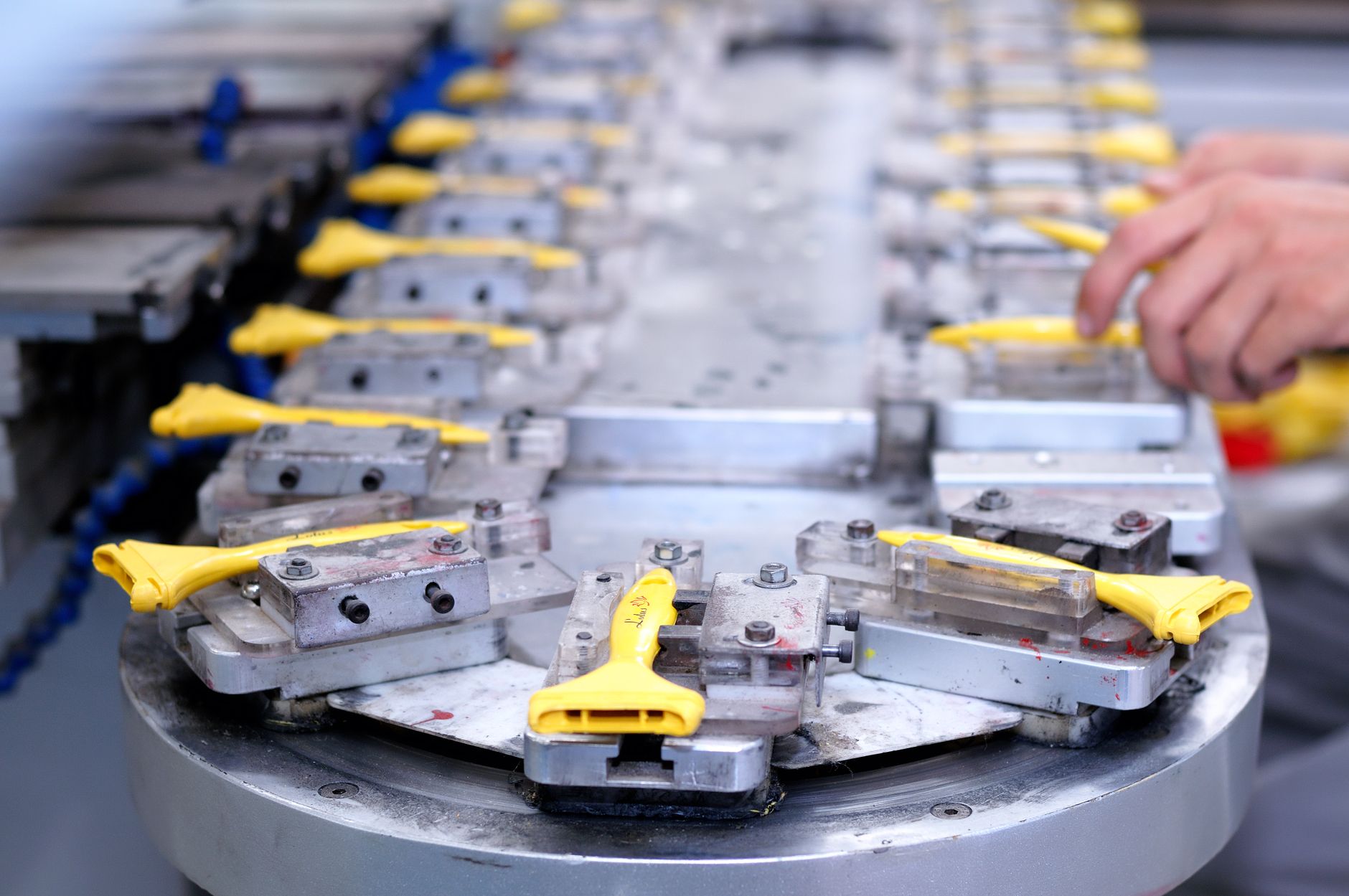
The cleanest fit is simple part takeout with orderly placement. If the mold opens, the part is accessible in a repeatable orientation, and the robot can place it into a fixed downstream position, a cobot can remove operator variability from the first few feet after ejection. That matters because many molding quality problems are born in those first few feet. Dropped parts, scuffed cosmetic surfaces, inconsistent cooling time before trimming, and mixed good-and-bad bins all start there.
The next strong fit is trim handoff. Many molders do not need the robot to perform the whole trimming process at first. They need it to present the part to a fixture, a cutter, or an operator in the same orientation every cycle. That simple handoff often does more for consistency than jumping straight to a fully automatic secondary station.
Then come light secondary operations. These include basic vision checks for presence or gross defects, simple insert placement, label or mark presentation, or loading parts into a dunnage pattern that prevents damage. Once the cobot already owns the takeout motion, adding one more small step can be easier than staffing a separate touch point.
- Good technical signs: repeatable part geometry, modest payload, stable mold opening position, clear press-side access, and enough cycle slack to avoid racing the machine
- Good operational signs: frequent operator rotation, repetitive-motion complaints, cosmetic handling damage, and downstream work that benefits from fixed orientation
- Best rollout order: automate takeout first, then add trim handoff, then add a simple secondary step only after the base cycle is stable
Where does a cobot stop making sense?
Some jobs want speed and stiffness more than flexibility. If the press cycle is so tight that every fraction of a second matters, the plant may be better served by a more conventional automation cell built for higher dynamic performance. The same is true when the part is heavy, the sprue is awkward, or the end-of-arm tool has to manage complicated vacuum, grip, and compliance logic at speed.
Heat and hazard exposure can also push the project out of cobot territory, or at least out of true collaborative operation. OSHA’s molding-machine eTool notes that a robot can be attached to or placed adjacent to an injection molding machine for repetitive or hazardous tasks, but it also states that the robot must be guarded to prevent workers from entering or reaching into its space during operation. That is the key reality many buyers miss. A cobot at a molding press is often still part of a guarded robot cell.
The last weak-fit pattern is high-mix work with unstable fixturing discipline. Cobots are flexible, but they are not magic. If parts arrive with inconsistent ejection, fixtures drift, EOAT changes are improvised, and press-side housekeeping is loose, the project turns into a process-control problem before it becomes a robot problem.
What does a safe molding takeout cell require?
Start with risk assessment, not with the arm. OSHA’s robotics overview says robots are generally used for unsafe, hazardous, highly repetitive, and unpleasant tasks, and it warns that many robot accidents happen during non-routine conditions such as programming, maintenance, setup, testing, or adjustment. That matters at molding presses because the dangerous moment is often not automatic production. It is restart, troubleshooting, or a half-cleared jam.
OSHA’s technical manual on robot systems draws a sharp line between collaborative intent and safe implementation. It says collaborative robot applications operate in shared safeguarded spaces and asks whether human presence is truly integral to the task. For many takeout cells, the honest answer is no during automatic operation. That means the smartest design is often a compact guarded cell with interlocks, clear access logic, and reduced-speed manual modes for setup and recovery.
The current U.S. consensus safety standard was updated in 2025 through ANSI and A3, again emphasizing risk assessment at the robot, application, and cell level. In practice, that means the press, the robot, the EOAT, the trim fixture, the discharge path, and human recovery motions all have to be treated as one system. The best cells also document entry procedures, lockout and tagout, safe restart, and who is allowed to teach or edit the sequence.
- Design around the full cell, not just the arm
- Guard the press opening and discharge path so workers cannot reach into hazard zones during motion
- Use reduced-speed manual modes and clear recovery procedures for setup, jams, and maintenance
- Train operators, setters, and maintenance separately because their exposure is different
How do you judge the ROI without fooling yourself?
Good ROI math on a takeout cell starts with three hard numbers: labor hours actually exposed to the task, scrap or cosmetic loss tied to manual handling, and the cost of press interruptions when the operator is pulled away. Too many projects focus only on the fully burdened wage of one operator. A molding press creates value only when the whole cycle stays predictable, so your calculation should include uptime and quality stability, not just direct labor substitution.
Injury exposure belongs in the discussion too. The BLS reported a 2024 total recordable injury and illness rate of 2.8 cases per 100 full-time workers for plastics product manufacturing, with 1.8 cases involving days away, restriction, or transfer. A cobot project does not erase that risk by itself, but reducing repetitive hot-part handling and awkward reach at the press can improve the ergonomics of the task mix around the cell.
Payback is usually strongest on presses that run long enough to avoid constant re-teaching, but not so specialized that they justify a large custom automation build. That middle ground is where a cobot often shines. It lets a molder standardize one painful step first, prove the gain, and then replicate the pattern across similar presses instead of betting the whole plant on one giant automation leap.
Why integration discipline matters more than the robot brand
This is the part many molders underestimate. The success or failure of a takeout cell usually comes down to cell design, EOAT, guarding, interfaces to the press, operator training, and post-launch support. The arm matters, but it is not the whole job. If the integrator cannot connect the molding process, the trim process, the safety logic, and the maintenance reality, the project becomes expensive troubleshooting.
Service Robot Co. fits this kind of work well because the company operates as an OEM-neutral robot integrator for U.S. businesses. For a molder, that means one partner can evaluate the press-side task, choose the right robot class for the cell, handle robot deployment and integration, train the people who will run it, and keep service attached to the project after go-live. That is especially useful when the right answer might be a collaborative robot on one press and a more traditional guarded cell on another.
It also helps when the commercial structure has to match plant reality. Some manufacturers want lease rental or sale options, robot leasing for business, monthly payment programs, or a pilot before a larger rollout. Others care most about commercial robot repair service, remote triage, on-site dispatch, and a nationwide support path. For a mid-sized molder, having one partner and one number for the whole lifecycle is often more important than squeezing the quote on the arm itself.
What is the right first step for a mid-sized molder?
Pick one press with boring repetition and persistent labor pain. Not the hardest part in the plant, and not the trophy application. Choose a stable tool, a repeat job, and a downstream handoff that can be simplified. The point of the first cell is to establish mechanical reliability, safe recovery, operator confidence, and a clean handoff between molding and the next step.
Document the manual cycle before you automate it. Measure how often the operator leaves the press, where parts get damaged, how often the trim fixture jams, and how long restart takes after a small interruption. Those facts will tell you whether the cobot should only remove parts, or also present them to trimming, inspection, or packing.
Then build for replication. A good first project leaves behind more than one working cell. It leaves fixture standards, EOAT conventions, operator training materials, spare-parts logic, and a service plan. That is how a plant turns one successful machine tending robot project into a repeatable program instead of a one-off science experiment.
Frequently asked questions
Sources
- OSHA Injection Molding Machine Safety Tour
- OSHA Robotics Overview
- OSHA Technical Manual on Robot Safety
- BLS Plastics and Rubber Products Manufacturing Profile
- BLS JOLTS June 2026 Release
- IFR U.S. Robot Industry Returns to Double Digit Growth
- NIST Best Practices for Cobot Integration
- NIST MEP Plastics Automation Success Story