Key takeaways
- Cobots fit best in repetitive branch tasks such as kit presentation, scan confirmation, and completed-order handoff, not in every pick.
- Electrical supply distribution is a big, branch-heavy market. The latest Census profile lists 13,379 employer establishments in NAICS 423610, and the 2022 Economic Census reported 13,019 establishments and $219.4 billion in revenue.
- Labor is too valuable to waste on avoidable walking and re-handling. BLS reports a 2025 median wage of $42,590 for wholesale hand material movers, and wholesale customer service representatives had a $22.85 median hourly wage in May 2024.
- The smartest first deployment is a narrow pilot around repeat kits and will-call staging, then expansion once error rates, touches, and counter response actually improve.
Can a cobot really help an electrical supply branch?
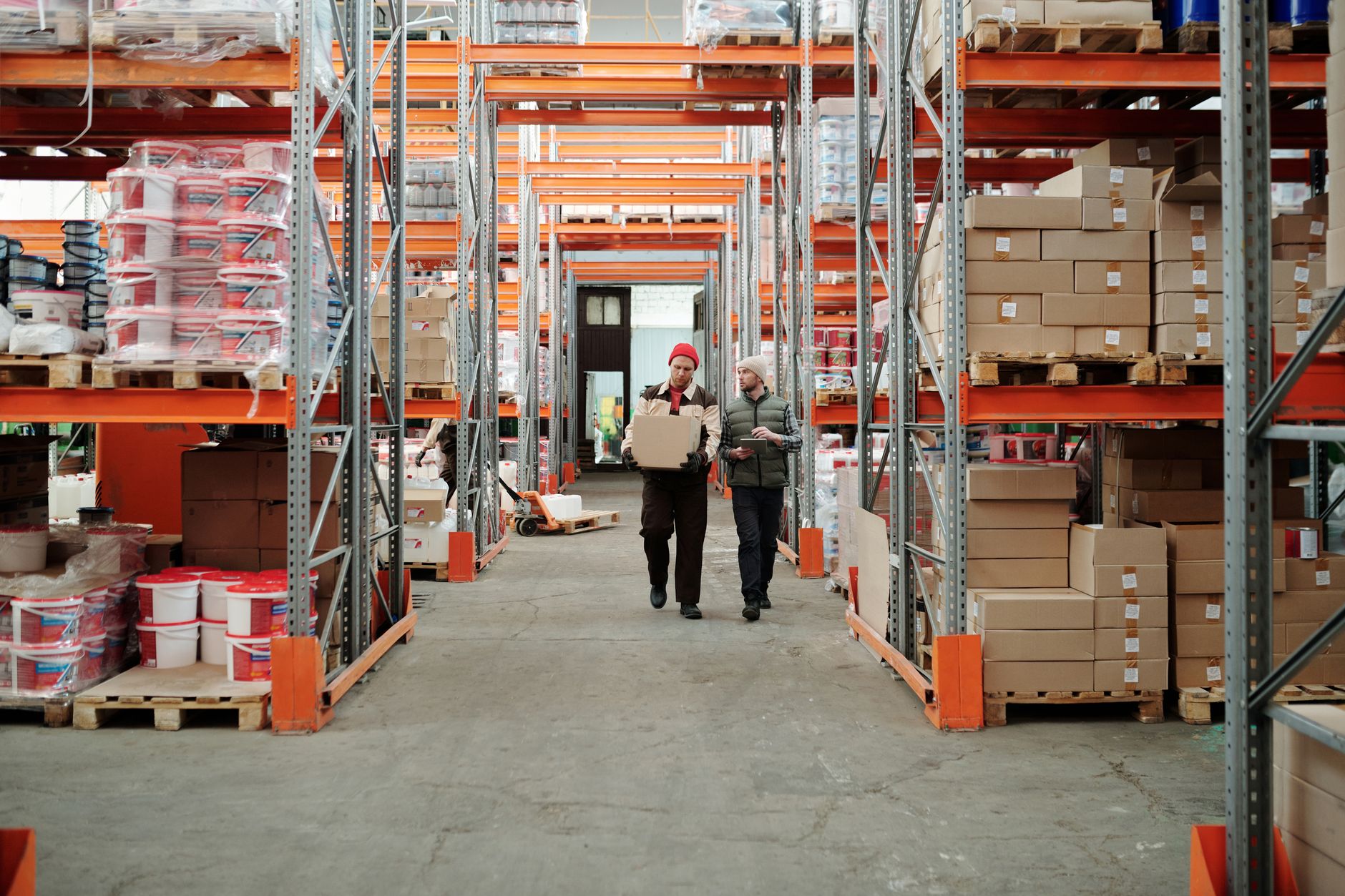
Yes, but only in a specific lane of the operation. In an electrical supply branch, a cobot is most useful when the branch builds the same contractor kits again and again, stages will-call orders under time pressure, and keeps pulling experienced counter or inside staff off customer work to handle repetitive warehouse touches.
That means a cobot should support the branch warehouse, not try to replace it. The sweet spot is repetitive presentation and confirmation: bringing bins or totes into an ergonomic pick zone, holding cartons in a fixed position, triggering barcode or vision checks, and placing completed kits into a ready lane for will-call pickup. If the branch expects one cobot to solve every mixed-SKU problem, it will be disappointed.
The market context is large enough to matter. The U.S. Census Bureau profile for NAICS 423610 lists 13,379 employer establishments in this industry, and the 2022 Economic Census reported 13,019 establishments and $219.4 billion in revenue. That is a lot of small and midsize branch footprints where a full automated warehouse would be excessive, but repetitive branch kitting still deserves structure.
Why do contractor kits and will-call orders create such stubborn friction?
Because branch work compresses sales, service, and fulfillment into the same few hours. A morning counter rush is not just a picking problem. It is a context-switching problem. One moment staff are answering a pricing question, the next they are hunting conduit fittings, verifying labels, and rebuilding a contractor kit that should have been staged correctly the night before.
Electrical supply branches also live with mixed SKU behavior. Some items are dense and tiny. Others are bulky, awkward, or packaged in a way that invites re-handling. A branch may carry thousands of SKUs, but only a subset accounts for the repetitive kit patterns that create daily labor drag. That is why the right automation target is not the entire inventory profile. It is the repeatable slice of it.
Labor cost sharpens the point. According to the U.S. Bureau of Labor Statistics, wholesale trade employed 397,800 hand material movers in 2025, with a median annual wage of $42,590. BLS also says customer service representatives in wholesale trade had a median hourly wage of $22.85 in May 2024. When counter-facing people keep leaving the desk to patch avoidable fulfillment noise, the branch is burning skilled labor in the wrong place.
Where does a cobot earn its keep first?

The first good use case is repeat kitting, especially where the branch builds standard job packs for common contractor needs. Think lighting retrofit kits, device-and-cover assortments, breaker-and-accessory bundles, or maintenance replenishment packs for recurring accounts. The cobot does not need to identify every oddball part. It needs to handle the stable motions around the pack build.
The second use case is will-call order assembly. Many branches lose time after the order is already picked because staff still need to consolidate, verify, label, and park the order in a clean pickup lane. A cobot can hold cartons for loading, present totes in sequence, and create a fixed scan point before the order moves to the shelf or cart. That matters because the hidden delay is often not the pick itself. It is the last three touches before the customer arrives.
The third use case is parts presentation at the bench or packing table. OSHA notes that musculoskeletal disorder risk rises with lifting, reaching, pushing, pulling, awkward postures, and repetitive work. A cobot that keeps high-frequency bins in the right working window can cut reach distance and twisting even when its cycle time is modest.
According to the International Federation of Robotics, cobots accounted for 10.5 percent of industrial robot installations worldwide in 2023. IFR also notes that cobots are especially attractive where production needs change and batch sizes are smaller. That description fits many branch-warehouse workflows better than the grand promises often attached to full warehouse automation.
- Best first tasks: tote presentation, carton holding, barcode confirmation, completed-kit placement, fixed-position dunnage loading
- Weak first tasks: random deep-bin picking, oversized reels, unstable packaging, undocumented substitutions, and any process that still depends on tribal knowledge
What should stay manual in a branch environment?
Exception handling should stay with people. If a kit changes because a contractor swapped a spec at 7:10 a.m., or a branch has to decide between substitute inventory options, that is not the moment to force the decision through a rigid automated flow. Human judgment belongs at the point where account context, margin, and job urgency collide.
The same is true for highly variable picks. Bulky conduit bodies, irregular cartons, damaged packaging, and items that arrive from receiving in inconsistent orientations usually belong outside the first cobot cell. A branch earns better results by automating the predictable perimeter around those items than by trying to teach one cell to cope with every physical oddity in the building.
Counter relationships also stay human. A cobot can reduce the number of times a counter rep walks away from the customer. It should not become the center of the service model. The operational goal is simpler: let skilled staff sell, advise, and resolve problems while repetitive handling happens with more consistency behind them.
How should a branch decide if the workflow is ready?
Start with order history, not a demo. Pull 60 to 90 days of repeat kits, frequent will-call packages, and lines per order for the branch. Then isolate the families where the physical sequence stays mostly the same even when quantities vary a bit. Those are the candidates that deserve a collaborative robot arm rental, a cobot rental pilot, or a small fixed cell discussion.
Then audit the touch pattern. Count how many times a finished kit or will-call order is handled after the first complete pick. In many branches the answer is more than anyone expects: picked into a tote, moved to a bench, verified, relabeled, shifted to a shelf, then rechecked at pickup. A cobot does not have to make the pick faster to create value. It can simply delete two or three unnecessary touches.
Look at labor rhythm as well. BLS says average weekly hours for wholesale trade were 39.4 in July 2026. That alone does not prove labor strain, but it is a reminder that branch teams are already carrying near full schedules. If your operation still relies on pulling inside staff into repeated warehouse cleanup every busy morning, the branch is a candidate for selective automation.
Finally, check process discipline. If item master data is sloppy, packaging is chaotic, or the branch has no reliable place to stage completed orders, fix that before buying hardware. A cobot is good at repeating a method. It is useless at inventing one.
- Measure repeat kits per week by family, not just total order count
- Track touches per completed will-call order from first pick to pickup shelf
- Measure counter interruptions caused by warehouse retrieval or restaging
- Flag SKUs with stable packaging and stable presentation first
- Separate exception orders from true repeat work before you size a pilot
What numbers matter more than raw cycle time?
In a branch setting, the right scorecard is usually operational, not theatrical. Start with kit accuracy, touches per order, and minutes from order release to will-call ready. Add counter interruption count during peak windows. If those four numbers move in the right direction, the branch is getting practical value even if the robot never looks especially fast.
Safety belongs on the same board. BLS reports 126.8 thousand nonfatal injury and illness cases in wholesale trade in 2024, with an incidence rate of 2.2 per 100 full-time workers. Within merchant wholesalers of household appliances and electrical and electronic goods, the 2024 total recordable case rate was 1.2. Those figures are not an argument for automating everything. They are a reminder that repetitive material handling is not free just because it is familiar.
OSHA's warehousing guidance highlights item picking, lifting, lowering, pushing, pulling, awkward posture, and repetitive motion as real musculoskeletal risk factors. That is why a branch should evaluate cobots partly as an ergonomics tool. Less twisting at the bench and less repetitive re-handling are worth real money even before the branch reaches a headline throughput gain.
Another useful metric is pickup readiness during rush windows. If completed will-call orders are staged cleanly before the counter line forms, the branch wins twice: faster handoff for the contractor, and fewer service staff dragged into the back to rescue avoidable chaos.
Why financing and integration matter more here than in a giant DC
Electrical supply branches usually do not need a grand automation program. They need a narrow, dependable cell that fits a small footprint, uses no upfront capital if needed, and can sit beside live operations without forcing a shutdown. That is why robot leasing for business, monthly payment programs, and a lease rental or sale structure matter so much in this use case.
This is also where Service Robot Co. fits naturally. The company works as a vendor neutral robot integrator for U.S. businesses, which matters in branch environments because the right answer is driven by workflow, not brand loyalty. A branch may need a simple kitting cell, barcode integration, guarding decisions, operator training, and robot deployment and integration support more than it needs a flashy hardware pitch.
Service Robot Co. can finance, deploy, integrate, train, and service the system through a nationwide U.S. engineer network. For branches that want a cobot rental, a robot pilot program, or a turnkey robot deployment with one partner and one number, that full-lifecycle model removes a lot of coordination drag.
What does a sensible rollout look like?
Phase one should be narrow enough to survive real branch traffic. Pick one branch, one repeat kit family cluster, one packing bench, and one will-call staging lane. Run the pilot through live morning demand, not just quiet afternoon tests. The point is to learn where cartons pile up, where labels fail, and where staff naturally bypass the cell.
Phase two should add the second use case only after the first one is boring. Boring is good. It means operators know how to reset the cell, supervisors trust the output, and the branch can absorb small exceptions without calling an engineer every hour. That is the threshold where expansion makes sense.
A mature rollout may eventually tie together repeat kitting, will-call verification, and downstream cart or shelf presentation. Even then, the branch should resist the urge to automate every SKU class. Mixed-SKU electrical distribution is won by picking the repeatable work carefully, then holding that process to a higher standard every day.
If the branch wants to try before it buys, this is exactly the kind of environment where a staged pilot and commercial robot demo make sense. The economics improve when the branch proves fewer touches, cleaner pickup lanes, and less counter disruption before expanding the program.
The practical case in one sentence
A cobot belongs in an electrical supply branch when the branch has repeat contractor kits, recurring will-call patterns, and too many skilled people spending busy hours on preventable handling work. It does not belong where the process is still improvised every morning.
That distinction is the whole buying case. In a small, mixed-SKU branch warehouse, the point is not to mimic a giant automated distribution center. The point is to protect service levels during rush periods, make repetitive handling safer and more consistent, and do it without the capital burden of full warehouse automation.
If that is the target, cobots can be a very sensible first step.
Frequently asked questions
Sources
- U.S. Census Bureau NAICS 423610 Profile
- U.S. Census Bureau 2022 Economic Census 423610
- BLS Wholesale Trade Industry at a Glance
- BLS Customer Service Representatives Outlook
- BLS 2024 Injury Rates by Industry
- BLS Nonfatal Work Injuries Chart
- OSHA Warehousing Hazards and Solutions
- International Federation of Robotics on Cobots