Key takeaways
- Embroidery cobots pay when hoop size and fabric family repeat across a multi-head bank.
- Thread changes and operator trims still interrupt unattended runs more than the load motion.
- Vision and barcode on the hoop beat guessing SKU from fabric color alone.
- Fixturing must respect cap frames, flat goods, and jacket backs as separate programs.
- Measure loaded cycles per hour after rethread events, not on a clean demo day.
When do cobots beat manual loading on embroidery heads?
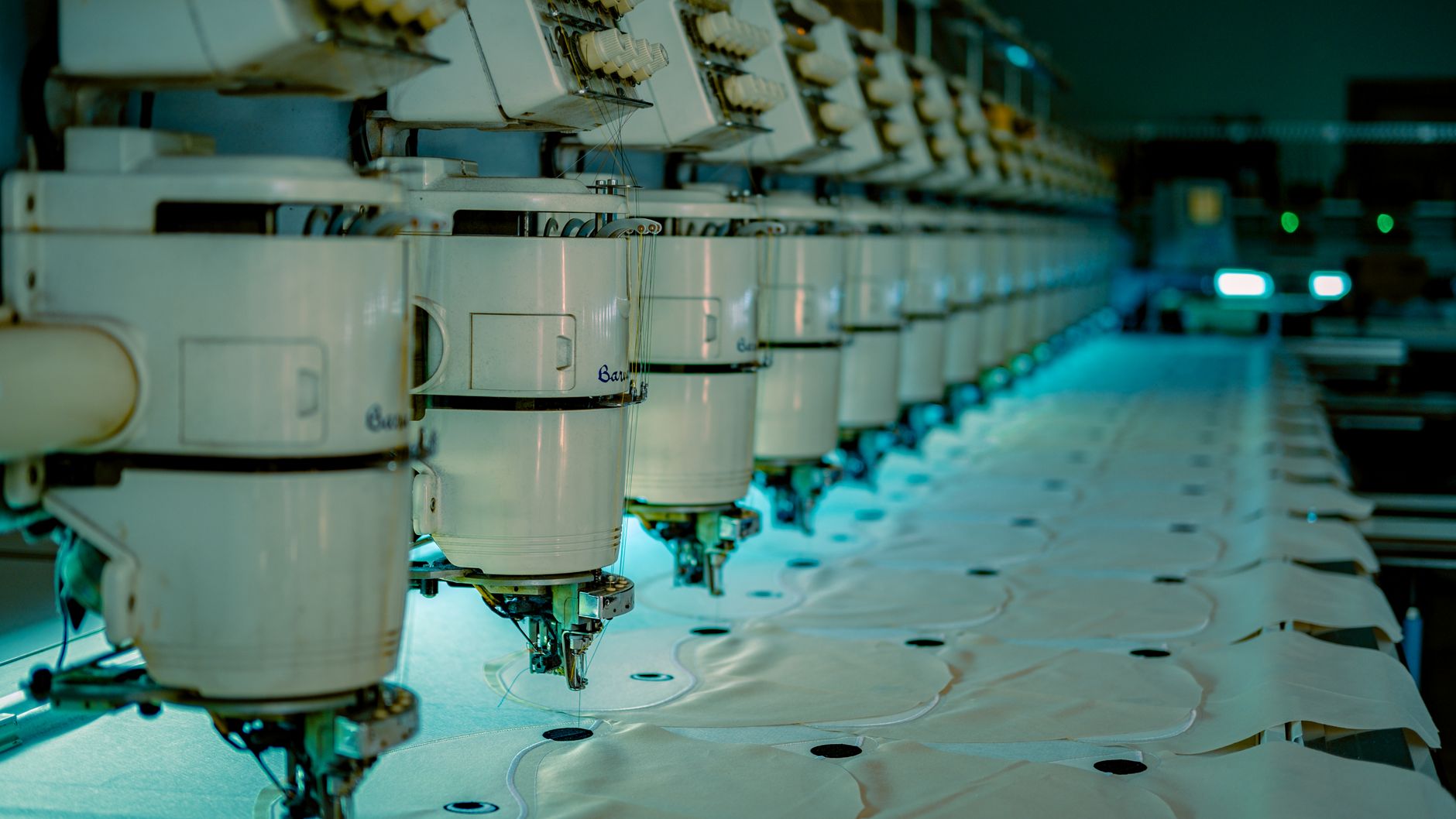
Contract embroidery shops live on repeat hooping: same cap front, same left-chest polo, same jacket back across twelve or twenty heads. Operators walk the same two steps hundreds of times per shift while machines wait.
A collaborative arm can pick a hooped blank from a nest, present it to the clamp, and retrieve finished pieces when the design family, hoop size, and fabric weight stay in a bounded set. The cell fails fast when every job is a one-off sample with new backing and new tension.
According to the Association for Advancing Automation, North American companies ordered 8,940 robots in the second quarter of 2026, with non-automotive customers taking 56 percent of units. Apparel decoration sits in that broader consumer and textile demand even when embroidery is only one station.
The business question is whether idle head time during load and unload caps output more than digitizing or machine capital. If operators queue at two multi-head banks every cycle, one cobot lane on the highest-volume hoop size is the right place to model first.
What makes hooped goods harder than flat machine tending?
Hoops add diameter, backing stiffness, and snag risk. Caps need aligned bills. Jackets need clearance for thick seams. A gripper that works on flat polos can distort knits if vacuum cups sit on ribbed panels.
Fabric variability is real even within one customer: garment dye lots change thickness, backing sheets age, and stabilizer type shifts between orders. The robot path stays stable only when the shop standardizes hoop prep upstream.
Thread-change interruptions dominate calendar time. Needle breaks, color stops, and trim cycles pause the head while the arm might already be idle. Throughput math must include those stops, not assume continuous rotation.
How should hoop identification and programs stay aligned?
Barcode labels on hoops or job travelers beat inferring SKU from thread color in the bobbin. Load the wrong hoop on head four and you scrap twelve pieces before anyone notices.
Tie each robot program to a verified hoop ID and design file revision. When the shop renames a design, update the cell map the same day.
Keep a physical mismatch bin at the cell edge for hoops that fail vision or weight checks before clamping.
- Scan hoop ID before the arm moves from the nest.
- Block clamp close if backing overhang exceeds tolerance.
- Log head number and hoop ID together in the job record.
What fixturing belongs at the load station?

Nest hooped goods by outer diameter, not by customer name. Three nests for cap, flat, and wide hoop families cover most contract work without a custom fixture per logo.
Use compliant fingers or shaped nests so bill caps do not spring out on the turn. Rigid pinch on brim plastic creates rejects.
Leave manual access for first-piece sew-out without dismantling the cell. Embroidery always needs a human sign-off when thread or backing changes.
How do thread-change and trim cycles affect ROI?
Multi-head machines stop individually for color changes. A cobot that loads in thirty seconds still waits while the operator rethreads head nine.
Model ROI on loaded cycles per hour across a full production day, including lunch and last-minute rush POs. Demo throughput on one design color misleads.
Some shops assign the cobot to load only while operators handle thread work on adjacent banks. That hybrid often ships before full unattended load is realistic.
What labor context sits behind the conversation?
U.S. Bureau of Labor Statistics 2024 data show apparel manufacturing at 2.4 total recordable cases per 100 full-time workers, with 1.5 cases involving days away, restriction, or transfer. Manufacturing overall recorded 2.7 total recordable cases per 100 workers in the same table.
Repetitive hooping and lift-and-clamp motion add strain even when headline injury rates look moderate. Cobots remove steady transfer motion on the modal hoop, not the need for an operator on thread and quality.
When experienced hoopers are pulled to rush jobs instead of loading, automating the highest-volume frame size often stabilizes head uptime before it removes a headcount.
How do you pilot without risking a customer PO?
Pick one hoop size and one garment family that run daily, such as standard cap fronts for a recurring corporate account. Measure head idle seconds during load and unload for a week.
Include Monday backlog and Friday short-ship pressure, not only midweek balance.
Track mis-hoop scrap and rework separately from robot cycle time before you expand to jacket backs or wide frames.
Where does a full-service integrator fit the first embroidery cell?
Embroidery load sits between digitizing rules, hoop prep habits, and machine brand quirks your ERP never sees. Service Robot Co. works as a vendor neutral commercial robot integrator for U.S. apparel decoration shops. We match arms, vision, and nests to your hoop library, then finance, deploy, train, and service through a nationwide engineer network.
Collaborative robot arm rental with maintenance included can carry one load lane through a seasonal promo surge on operating budget before you commit capital to every head bank. One partner number covers program libraries, interlocks, and the monthly service plan after go live.