
Key takeaways
- Cobots fit best where a small shop has short, repetitive load and unload cycles, not where every part is a one-off.
- U.S. cabinet and countertop manufacturing still spans 6,055 employer establishments, so this is a broad small-factory market, not a fringe case.
- The labor case is real: BLS shows about 21,400 woodworker openings per year, while repetitive tending work is hard to staff and harder to keep consistent.
- The safety case matters too, because wood product manufacturing logged a 4.2 total recordable case rate in 2024, and repetitive lifting plus machine exposure remain stubborn risks.
- A good rollout starts with one cell, one part family, and one measurable bottleneck, then expands only after uptime and labor savings are proven.
Do cobots really belong in a small cabinet shop?
Yes, in the right spots. A small cabinet or millwork shop usually does not need a fully automated line. It needs consistency at the edges of a process: loading blanks into a CNC, unloading finished panels, transferring parts between a router and a cart, or feeding the same part orientation into a secondary operation for hours at a time.
That is exactly where cobots earn their keep. According to the U.S. Census Bureau, the United States had 6,055 employer establishments in wood kitchen cabinet and countertop manufacturing in 2023. This is a large base of mostly modest-sized operations, not a handful of giant plants. The practical question is not whether a shop looks like an auto factory. It is whether a repetitive task keeps stealing a skilled person from higher-value work.
The labor backdrop supports that view. The Bureau of Labor Statistics says woodworkers held about 214,600 jobs in 2024, with roughly 21,400 openings projected each year on average over the next decade. In a cabinet shop, those openings rarely show up as abstract labor-market data. They show up as uneven second-shift staffing, setup people getting pulled into tending, and good operators spending half the day on simple infeed and outfeed work.
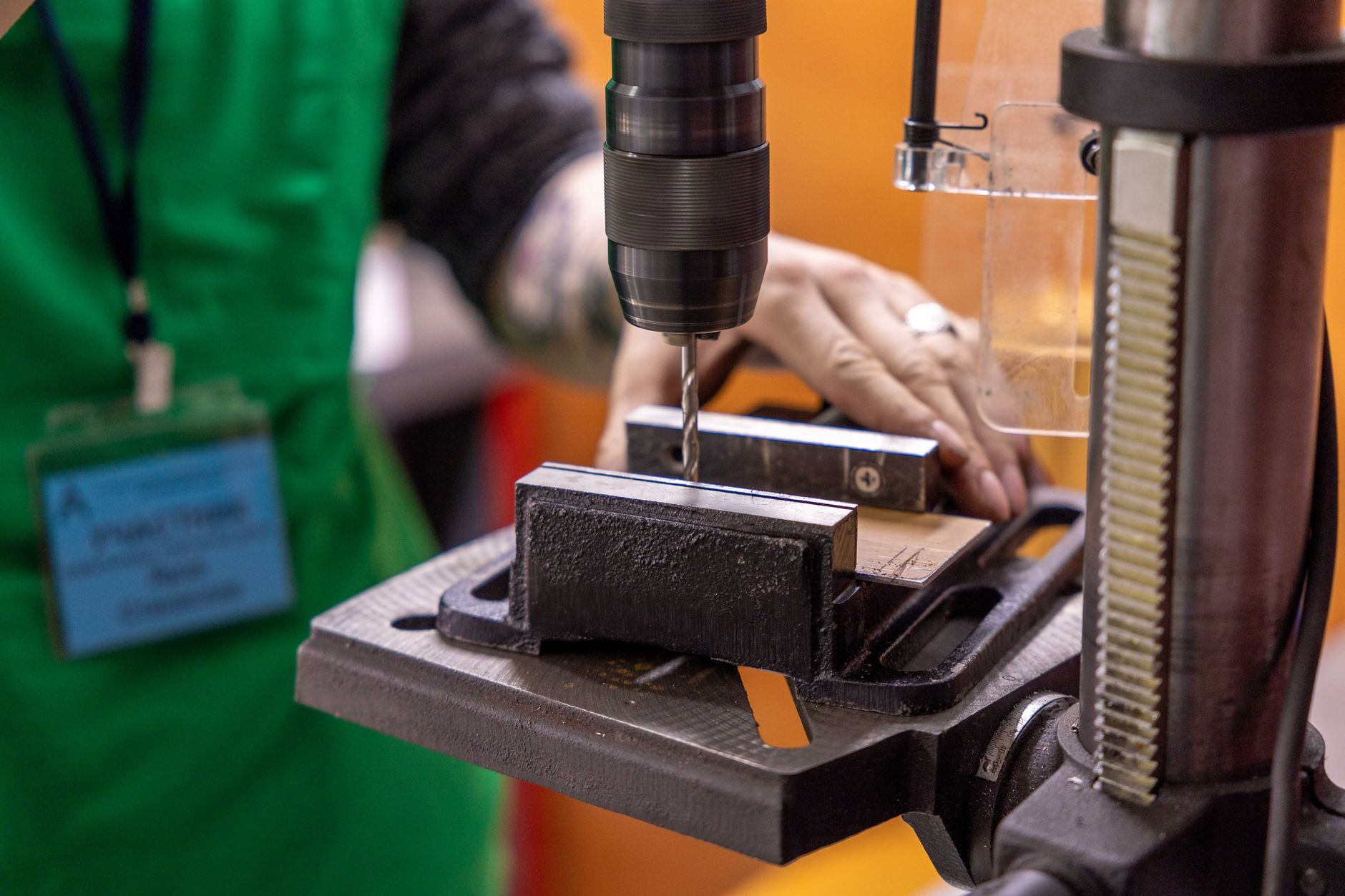
- Best-fit tasks: repetitive CNC loading and unloading, panel handoff, cart-to-machine presentation, simple drill or boring-cell tending, and sanding-adjacent part transfer
- Poor-fit tasks: highly variable custom assemblies, unstable parts, finish-room work with heavy overspray exposure, and jobs that change faster than the cell can be justified
Which cabinet-shop jobs are most realistic first targets?
The strongest first targets share four traits. They repeat often, use predictable part geometry, sit near an existing bottleneck, and do not require continuous human judgment. A machine tending robot in a small shop does not need to replace a master craftsperson. It needs to take the sameness out of the day.
CNC routers are the obvious place to start. If the shop runs nested panels, door components, drawer parts, or repeat cabinet sides in batches, a cobot can present blanks, clear cut parts, and keep cycle-to-cycle timing tight. Even when part mix is broad, many shops still have recurring families of components that justify a simple pattern-based tending cell.
Sanding is trickier, but sanding-adjacent handling is often viable. Instead of asking a cobot to perform the sanding itself in a dusty, variable process, some shops use automation to stage panels into and out of a sanding lane, stack parts by recipe, or transfer workpieces so the operator stays focused on finish quality rather than lifting and shuffling.
- Router and CNC machining centers
- Boring and doweling stations with repeat geometry
- Simple edge-process handoff where orientation is fixed
- Pre-sanding and post-sanding part staging
- Cart loading, stack building, and repeat pallet presentation

Why does machine tending matter so much in wood products?
Because the work looks simple until you price the interruption. Every time a skilled operator stops to fetch blanks, square a stack, clear a finished part, or babysit a load cycle, the shop loses machine utilization and skilled attention at the same time. In a short-run environment, that double loss is usually more expensive than managers expect.
There is also a safety and fatigue angle. BLS reports a 2024 total recordable injury and illness rate of 4.2 cases per 100 full-time workers in wood product manufacturing, and custom architectural woodwork and millwork manufacturing posted a 2.9 rate. OSHA also notes that woodworking equipment commonly exposes workers to laceration, amputation, severed fingers, blindness, wood dust, and chemical hazards. A cobot will not erase those risks by itself, but it can reduce how often hands and shoulders repeat the same risky motions around active equipment.
OSHA's ergonomics guidance is relevant here too. The agency points directly to repetitive motion, forceful exertion, awkward posture, pushing, pulling, and extended reaching as musculoskeletal risk factors. A cabinet shop that uses cobots well is not chasing novelty. It is applying an engineering control to the dullest, most fatiguing slices of production.
What makes a cabinet-shop cell a good technical fit?
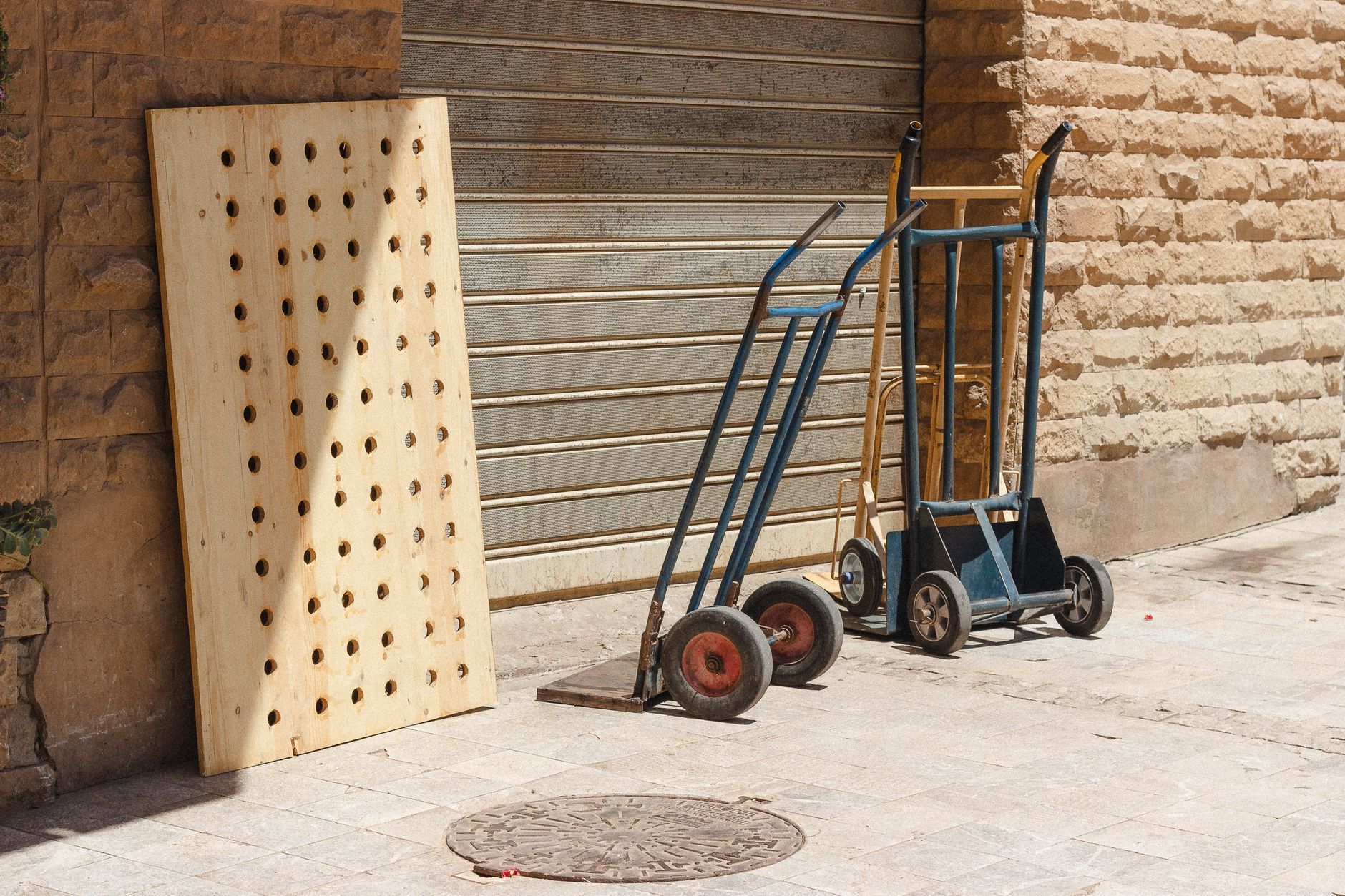
The answer is not payload alone. A good cobot cell starts with part behavior. Panels or components need reliable pickup points, stable orientation, and a clear handoff to the machine or fixture. Vacuum grippers often suit flat wood parts, but porosity, dust, laminate surface, cutouts, and stack variation all need to be tested in the real shop.
Cycle time matters just as much. If a CNC process runs long enough for safe load and unload motion, the cobot has room to work. If the cycle is extremely short and parts are awkward, the cell may need buffering, dual staging, or it may simply not be the right first project. Small shops get in trouble when they buy for headline payload and ignore part presentation, changeover, and recovery after a bad pick.
Dust and housekeeping matter more in millwork than many first-time buyers expect. OSHA's woodworking guidance stresses housekeeping, guarding, and keeping hands clear of the point of operation. In practice, that means a good cell design isolates the robot from the dirtiest exposure, manages scrap and vacuum lines, and preserves safe access for blade changes, maintenance, and lockout procedures.
How much variation can a cobot handle in a short-run shop?
More than many owners assume, but less than marketing copy implies. A cobot can tolerate a healthy amount of product variation if the variation is structured. Think families of cabinet sides, shelves, rails, toe-kick parts, or repeated drawer components that differ in dimensions but still arrive in known orientations with known pickup logic.
It struggles when variation becomes chaos. If every job has a new fixture, random stack quality, changing material behavior, and no repeatable presentation, automation spend shifts from tending to constant exception handling. That is why the best cabinet-shop projects start with one narrow band of work, then widen only after the team understands what the cell actually sees on second shift, on Friday afternoon, and after a rushed setup.
The goal is not to automate every custom job. It is to carve out the repetitive core that exists inside a high-mix business. Most small shops have more of that core than they think.
What does payback usually depend on in a small wood shop?
Payback usually comes from three places: better spindle uptime, steadier labor coverage, and less wasted skilled attention. In a cabinet shop, the hidden win is often not raw headcount reduction. It is that one experienced operator can oversee more value-added work because the repetitive loading and unloading now happen on time every cycle.
Labor consistency is a larger issue than straight labor scarcity. BLS says becoming proficient as a woodworker typically takes several months to more than a year of on-the-job training, and the work increasingly relies on computer-controlled machinery. When a shop uses a trained CNC person for repetitive part shuffling, it is spending a hard-won skill on the lowest-value part of the cell.
This is also where cobot rental, robot leasing for business, and monthly payment programs can make sense for smaller manufacturers. If the application is clear but the owner wants proof before a full buy, a collaborative robot arm rental or try-before-you-buy pilot can reduce the decision risk. The wrong way to justify automation is broad optimism. The right way is measuring one machine, one shift pattern, one part family, and one before-and-after utilization story.
How should a small shop roll out its first cobot cell?
Start with the cell that already hurts. Not the flashiest machine. The one that repeatedly goes underutilized because load and unload work keeps pulling people away. Define success in plain operating terms: more machine uptime, fewer interruptions, less overtime pressure, and safer handling around the process.
Then keep the first deployment narrow. One CNC. One material family. One gripper concept. One staffing pattern. Build in easy manual fallback, simple operator recovery steps, and realistic training for setup changes. If the cell only works when the best engineer is present, it is not ready for a cabinet shop floor.
Service Robot Co. fits this stage well because we act as a vendor neutral robot integrator for U.S. businesses, not a single-brand reseller. For a cabinet or millwork shop, that matters. The right machine tending robot depends on payload, reach, dust tolerance, guarding approach, gripper behavior, finance structure, and local service reality. We handle robot deployment and integration, training, service, and financing through one lifecycle partner, with a nationwide engineer network behind the install.
What should owners ask before they move ahead?
Ask operational questions first. Which exact part family repeats enough to matter? How many touches per shift are pure handling? What happens when the stack is misaligned? How does the machine recover after a bad pick? What guarding and lockout changes are required? If those questions do not have crisp answers, the project is still too fuzzy.
Ask service questions next. Small shops do not have spare automation staff sitting around. They need clear support terms, remote triage, on-site service, operator training, and a realistic plan for consumables and gripper maintenance. A cobot cell that runs beautifully at acceptance but stalls after minor production drift is not a success.
Finally, ask whether financing structure matches the business. Some shops prefer purchase. Others want cobot rental for manufacturing, a pilot, or monthly payment programs that avoid a large lump-sum commitment. Service Robot Co. can structure those paths, including a free site assessment, so the shop can test the fit without pretending every application deserves the same commercial model.
Frequently asked questions
Sources
- BLS Occupational Outlook Handbook: Woodworkers
- U.S. Census Bureau Profile: Wood Kitchen Cabinet and Countertop Manufacturing
- BLS Industry at a Glance: Wood Product Manufacturing
- BLS Table 1: Industry Injury and Illness Rates, 2024
- OSHA Woodworking Hazards and Solutions
- OSHA Ergonomics Overview
- OSHA Woodworking eTool: Point of Operation Hazards
- A3: Robot Orders Increase in Q2 as Automation Demand Broadens Across Industries