Key takeaways
- Custom blind packing is a high-mix end-of-line job where every order changes length, wrap style, and carton size.
- Cobots earn hours on repeat measure, label, and insert steps when fixtures flex without a full reprogram every SKU.
- Long slats need horizontal support and gentle acceleration so slats do not whip or scuff inside the wrap station.
- Order verification belongs in the robot sequence so the wrong width never reaches a carrier label.
- A vendor neutral integrator can pilot one packing lane before you scale cobot rental across a second shift.
Where do cobots actually help on a custom blind packing line?
Made-to-order window blinds and shades leave the cut and assembly area as long, awkward units that still need measuring, wrapping, labeling, and cartonizing before they ship. Labor clusters at those final stations because every order changes length, hardware bundle, and ship-to label. When that mix repeats all day, the packing table sets the real lead time, not the cutting machine.
Collaborative robot arms fit when you can bound the variation with flexible fixtures rather than a new hard tool for every fabric. The arm can hold a slat bundle horizontal while a person or fixed station applies wrap, or it can pick precut cartons, verify length against the work order, and place inserts before the box closes. The win is repeat motion with consistent force, not removing every human touch.
Cobots are a weak default when every blind is a one-off prototype or when cartons arrive crushed from the supplier. They shine when your ERP already sends width, drop, and room name to the lane and when you can standardize corner protectors and tube lengths across most SKUs.
Why is product variation harder here than on a single-SKU line?
A six foot cellular shade and a nine foot roller blind share a process name but not the same center of gravity. Headrails, cords, and valance clips add snag points during wrap. Carton depth that fits a two inch slat stack may crush a layered fabric roll if someone grabs the wrong template under pressure.
Manual packing also invites order swaps when two similar widths queue on the same bench. According to the U.S. Bureau of Labor Statistics, manufacturing reported 355,800 total recordable injury and illness cases in 2023, with 224,400 cases involving days away, restriction, or transfer. Packing and material handling sit in that risk bucket even when the injury is not tied to one machine.
Robot packing works when you document allowed length bands, maximum bundle weight, and which accessories ride inside the carton versus on the exterior tag. Teach points on pristine samples fail once real slats arrive with bow or end-cap gaps. Validation needs production scrap, not demo pieces from marketing.

How should you handle awkward lengths without damaging slats?
Long blinds behave like fragile beams. Support them at two points minimum, keep acceleration low on horizontal moves, and avoid pinch points where a gripper jaw could mark a finished face. Vacuum cups can work on flat slats; soft jaw fingers often suit fabric stacks better if you tune opening stroke for valance thickness.
Horizontal carriages or passive nests let the robot slide a bundle into a shrink tunnel or sleeve instead of lifting eight feet in the air. That layout also keeps the arm reachable for operators who still adjust cord ties or insert desiccant packs.
Damage prevention is mostly fixturing and sequence, not brute force. A rejected pick path beats running a scratched unit to the loading dock because the scanner already printed a label.
What belongs in order verification before the carton closes?
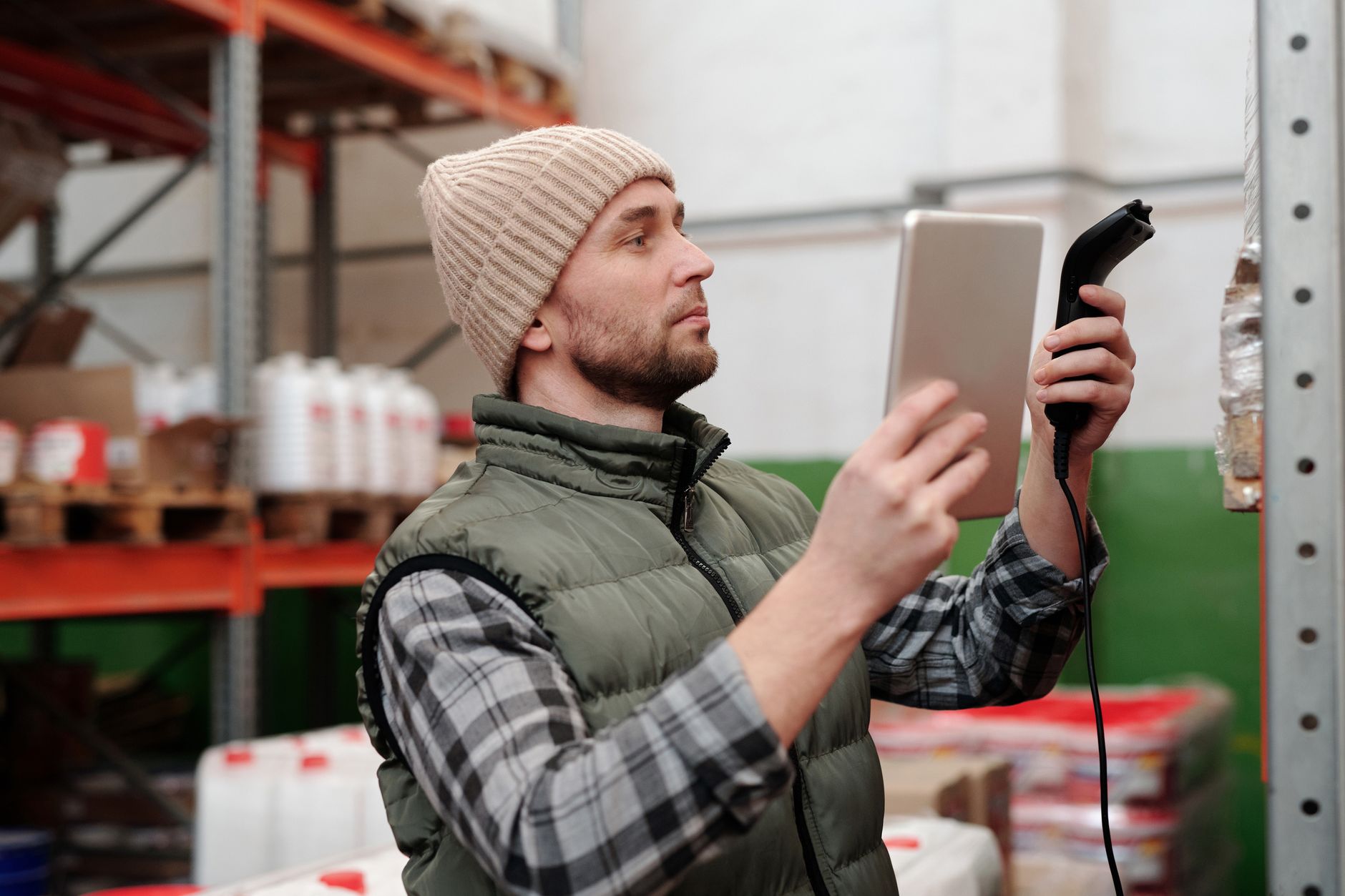
Verification starts with length and width against the digital work order, not with the label printer. Barcode scans of the work ticket, vision checks on printed room tags, or a simple mechanical gauge for drop length can stop a mismatch before foam inserts go in.
Hardware kits deserve their own check when brackets ship in a separate bag inside the same carton. A missing clip discovered at install is expensive; catching it at pack is cheap if the sequence forces a scan of each sub-kit.
Tie verification data to a hold state on the conveyor so a failed check never receives a ship label. Operators should have a clear rework path that does not block the robot teach zone during peak hours.
- Match slat count or headrail serial to the ERP line item before wrap.
- Print shipping labels only after dimensional checks pass.
- Photo or scan valance color swatches on high-end lines if returns are costly.
How do measuring, wrapping, and labeling split between robot and person?
Measuring can be a fixed sensor pair with the robot presenting the bundle, which keeps hands away from pinch rollers. Wrapping often stays hybrid: the arm positions the blind while a person pulls film or inserts a corrugated sleeve because film tension is still hard to automate on tiny runs.
Label application is a strong robot task when peel-and-present guns mount on the wrist and labels always land on the same carton face. Mixed carton sizes need a quick tool change or adjustable applicator height, not a new program for every dealer logo.
End of line automation should follow the longest repeating motion. If labeling and scanning take forty seconds but carton fold takes ten, automate the forty second block first.
When does flexible fixturing beat a dedicated hard automation line?
Hard automation pays on one blind family shipped in millions of units. Custom shops live in the long tail: many widths, many fabrics, short runs for dealers and home centers. Adjustable nests, sliding length stops, and parametric programs let one cobot cell cover dozens of SKUs without a week of retooling.
Digital work orders should drive parameters such as nest length, grip force, and label template ID. Operators override exceptions at a keypad instead of editing robot code at lunch.
Cobot rental for manufacturing with integration support lets you prove that parameter model on one lane before capital spreads to a second pack table.
How does outside integration shorten a blind packing pilot?
Service Robot Co. acts as a full service commercial robot integrator for U.S. plants and fulfillment shops. We are OEM neutral, so the arm, applicator, and vision kit match your lane rather than a catalog photo.
We finance, deploy, integrate, train, and service through a nationwide engineer network. A first site visit maps length ranges, carton sources, and ERP fields. A pilot on one packing bench proves damage rates and verification logic before you add a night shift cell.
Robot leasing for business with monthly payment programs can keep the pilot on operating budget while you measure mispack reductions and throughput on real dealer orders.