Key takeaways
- Cobot-assisted stapling targets the arm-heavy staple cycle, not every soft-goods skill on the line.
- NIOSH upholstery studies cite pinch forces near 20 to 50 newtons and about 40 fabric pulls per minute before automation.
- Part presentation, fabric tension, and staple-gun integration decide whether a cell is safe and repeatable.
- Guarded collaborative cells can cut awkward reach while humans own inspection and SKU changeovers.
- Vendor-neutral integrators help match cobot rental or lease programs to real frame mix and service coverage.
Can a cobot really help with upholstery stapling?
Yes, but only when you scope the job honestly. Upholstery stapling on sofa and chair frames is a burst of forceful, repetitive motion: reach, align, fire, verify, shift the frame, repeat. A collaborative robot arm can hold a pneumatic or electric staple gun on a fixed path while a trained upholsterer manages fabric tension, corner folds, and the judgment calls that separate a clean edge from a wrinkle.
What cobots do not do is replace the whole upholstery craft. Padding placement, pattern matching, and hand finishing on curved rails still belong to people. The win is ergonomic fastening automation on the high-volume staple runs along straight rails and deck edges where motion is predictable and quality rules are clear.
What makes stapling such an ergonomic problem on the line?
NIOSH-funded research on furniture upholstery described workers pulling fabric with repetitive pinch grips while staple guns fire, often at piece-rate speed. That work documented pinch forces in the range of 20 to 50 newtons and repetition near 40 pulls per minute on some tasks, with sustained awkward wrist and shoulder postures while the fabric stays tight until the staple seats.
OSHA's ergonomics guidance for musculoskeletal disorder prevention lists the same pattern: high force, repetition, and postures held while tools run. In cabinet and frame plants, NIOSH health hazard evaluations have also flagged pneumatic stapling when workers reach above shoulder height to flip or hold assemblies. Stapling looks simple, but the injury story is cumulative.
Where should humans stay in the loop?
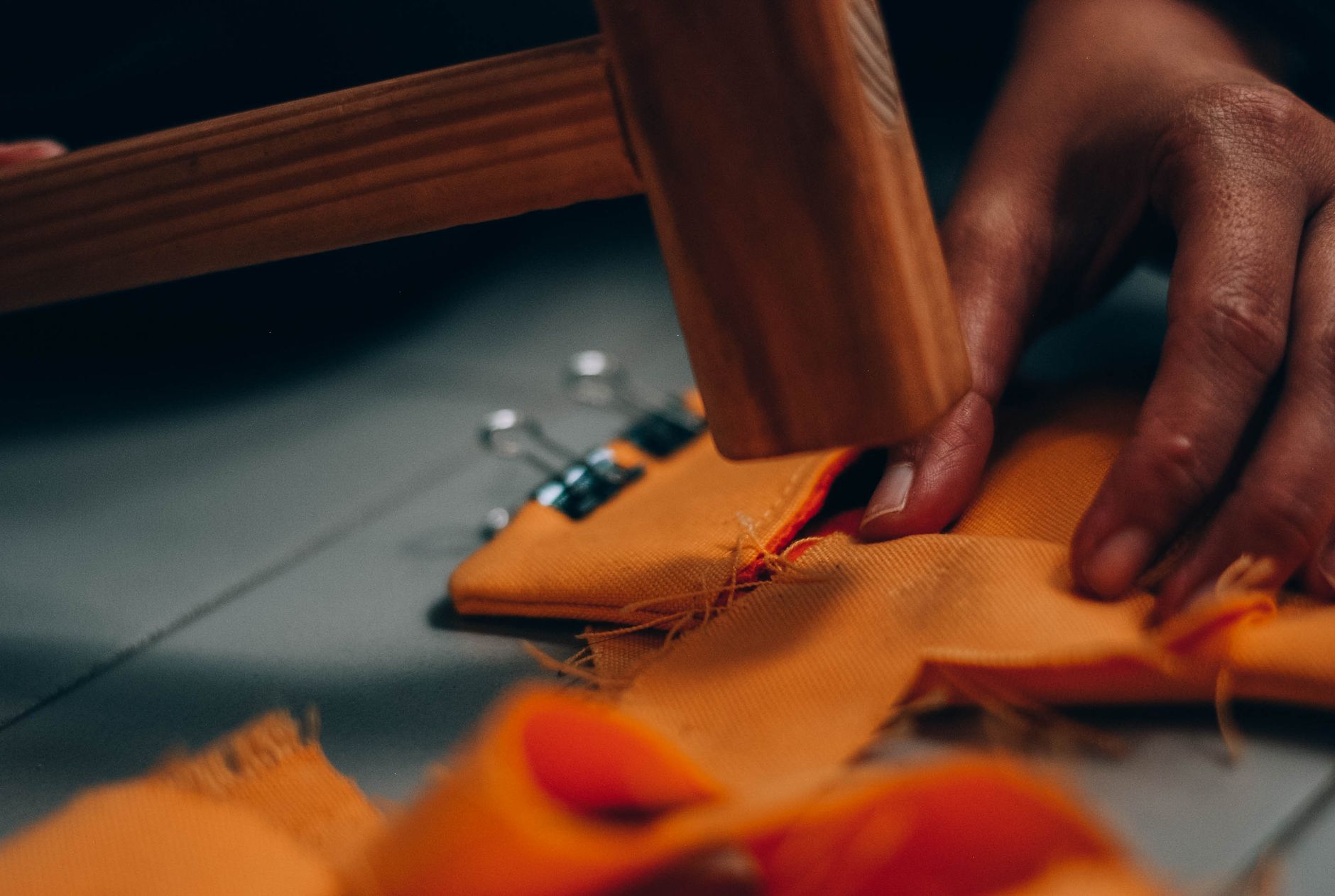
Keep people on fabric tension and visual quality. The robot should not guess how much pull a vinyl, leather, or heavy weave needs. An upholsterer sets tension with hands or a mechanical clamp, signals the robot to run a defined staple sequence, then inspects crown height, staple seating, and tear-out before the frame moves on.
Humans also own changeovers. Frame widths, rail angles, and staple spacing change by SKU. A good cell stores those recipes digitally but still expects a lead to confirm the first article after each change. That division of labor is what makes cobot rental or monthly lease pilots workable: you automate the motion that hurts, not the craft that sells.
How do you present parts so the gun path stays repeatable?
Presentation beats programming. Frames should arrive on a locating fixture or height-adjustable buck so the staple line sits in a narrow Z window every cycle. NIOSH upholstery interventions showed that height-adjustable bucks can sharply cut extreme trunk flexion during stapling, which matters when operators otherwise lean over low rails all shift.
Fixtures should expose the staple line without forcing the robot through fabric billows. Many plants add a temporary hold-down or clip rail so the robot sees the frame edge, not a moving curtain of cloth. If presentation drifts, staple depth drifts, and you fight quality instead of throughput.
How do you integrate the staple gun without fighting the tool?
Treat the gun as a payload with its own timing. Pneumatic tools need regulated pressure, consistent trigger actuation, and clearance for exhaust. Electric tools may need different dwell time for full drive. The cobot program should include a verified fire delay, recoil handling, and a path that avoids dragging the gun nose across fabric.
Cable management matters. Hose whip can pull the wrist off path or snag fabric. Route services through the arm jacket or a overhead balancer, and keep the human side of the cell free of tripping hazards. Integration is where a vendor-neutral partner earns its fee: matching tool weight, reach, and service intervals to the arm you actually deploy.
What quality checks belong inside the cell?
At minimum, verify staple count per segment, seating depth, and tear resistance on a first-off sample each run. Some plants add a simple vision check for missing staples along a rail; others rely on tactile inspection because fabric color and shadow fool cameras.
Log defects by frame type so you know when presentation slipped versus when the gun pressure wandered. That data also supports a cobot rental business case: fewer rework loops and fewer strain reports on the same output target.
How should guarding and collaborative safety be set up?
Even collaborative-rated arms need a risk assessment when a staple gun is involved. Use speed and force limits, clear light curtains or area scanners where the operator leans in, and lockout procedures for jam clears. Train on hand placement so nobody reaches across the gun line while the arm is live.
Document the stop categories your integrator configures, and rehearse recovery after a protective stop without bypassing sensors. Furniture plants that skip this step often park the cobot after one near miss. Safety layout is part of uptime.
What does changeover look like in practice?
Expect digital recipes keyed to frame SKU: staple spacing, approach angle, number of hits, and any pause for the operator to rotate the buck. Physical change parts should be minimal, ideally locator pins and a swapped fixture insert rather than a full re-teach from scratch.
Schedule a short validation batch after each recipe load. Piece-rate culture will push operators to skip that step; supervisors should treat first-article sign-off as non-negotiable. Plants with wide frame mix sometimes run two fixture sets on parallel bucks while one cobot serves both, trading capital for flexibility.
When does Service Robot Co. fit the project?
If you are comparing cobot rental, lease, or purchase paths for a staple cell, you need more than an arm quote. Service Robot Co. selects hardware across manufacturers, then finances, deploys, trains, and services through a nationwide engineer network so plants are not juggling separate vendors for safety sign-off, spare guns, and remote triage.
A free site assessment should map frame mix, staple tools, and shift goals before anyone commits to monthly programs. The outcome is a phased pilot on one rail type, with enrichment or backup unit coverage if downtime would stop the upholstery line.
Which tasks should stay manual for now?
Skip automation fantasies on tightly curved arms, channel backs with deep pleats, and one-off custom pieces where staple lines move every job. Button tufting, hand tying, and fine seam alignment remain human work.
Start with straight rails, deck edges, and platform bases where motion is teachable and inspection is visual. Expand only after presentation, gun integration, and quality logs prove stable for several weeks. That discipline keeps ergonomic gains without turning the line into a programming shop.