Key takeaways
- Campus couriers fail on confidentiality long before they fail on navigation.
- Authenticated handoffs at records, practice floors, and mail centers keep chain of custody auditable.
- Elevator integration and after-hours access rules must be written before the first live run.
- Urgent exhibit moves need mission priority, not another human runner on a busy day.
Why do large law firms need indoor delivery robots?
Large legal office campuses move sealed case files, exhibit boxes, office supplies, and catered meals between practice groups, records departments, and support floors all day. Delivery robots fit when those trips repeat on fixed routes and every walk pulls paralegals or office services staff away from billable or client-facing work.
The scale matters. BLS industry data for NAICS 541100 Legal Services counted about 1,187,410 employees nationally in May 2023 occupational estimates, including about 273,590 paralegals and legal assistants and about 124,060 legal secretaries and administrative assistants in that industry group. None of those roles should spend an hour daily pushing carts between buildings.
Robots do not replace legal judgment. They carry sealed containers on mapped indoor paths while people retain custody decisions, conflict checks, and client communication.
What should robots carry on a legal campus?
Start with low-risk, high-repeat loads: interoffice mail pouches, supply totes, sealed exhibit boxes already logged by records, and closed catering trays with tamper-evident seals. Defer original signed wills or open discovery media until handoff rules and container standards are proven.
Case files travel best in locked carriers with scan events at pickup and drop. The robot is transport; records staff or paralegals confirm contents against the matter number at each end.
Catered orders need a separate route class so food aromas and spill risk never share a cart with paper evidence. Schedule lunch missions through service elevators when building rules allow.
- Sealed file boxes between records and practice floors
- Supply totes from mail center to department pantries
- Logged exhibit containers for hearing prep rooms
- Closed catering trays to conference floors

How do confidentiality rules shape robot design?
Attorney-client material demands access control, not just a locked door. Fleet software should require badge or PIN release at the robot, plus a recipient scan at the destination dock. Missions that miss authentication should hold in a secure staging alcove, not open in a public corridor.
Logs become part of your defensible process. Timestamped pickup, route, and delivery events support internal audits without exposing matter titles on a public screen. Display only mission IDs staff already use in your matter management workflow.
Camera policy needs explicit written rules. If a delivery robot carries sensors for navigation, disable customer-facing recording in sensitive zones or cover lenses where firm policy requires it.
What does an authenticated handoff look like?
Pick a small set of dock types: records counter, practice floor pantry, and mail services window. Each dock gets a reader, a short waiting bay, and a visible status light so staff know when a container arrived.
Two-person rules still apply for certain originals. The robot brings the carrier to the dock; a designated recipient scans their badge and opens the compartment. No scan, no release.
Returns mirror outbound. Empty carriers ride on dedicated return missions so outbound carts never mix with inbound evidence boxes.

How hard are elevators and multi-building routes?
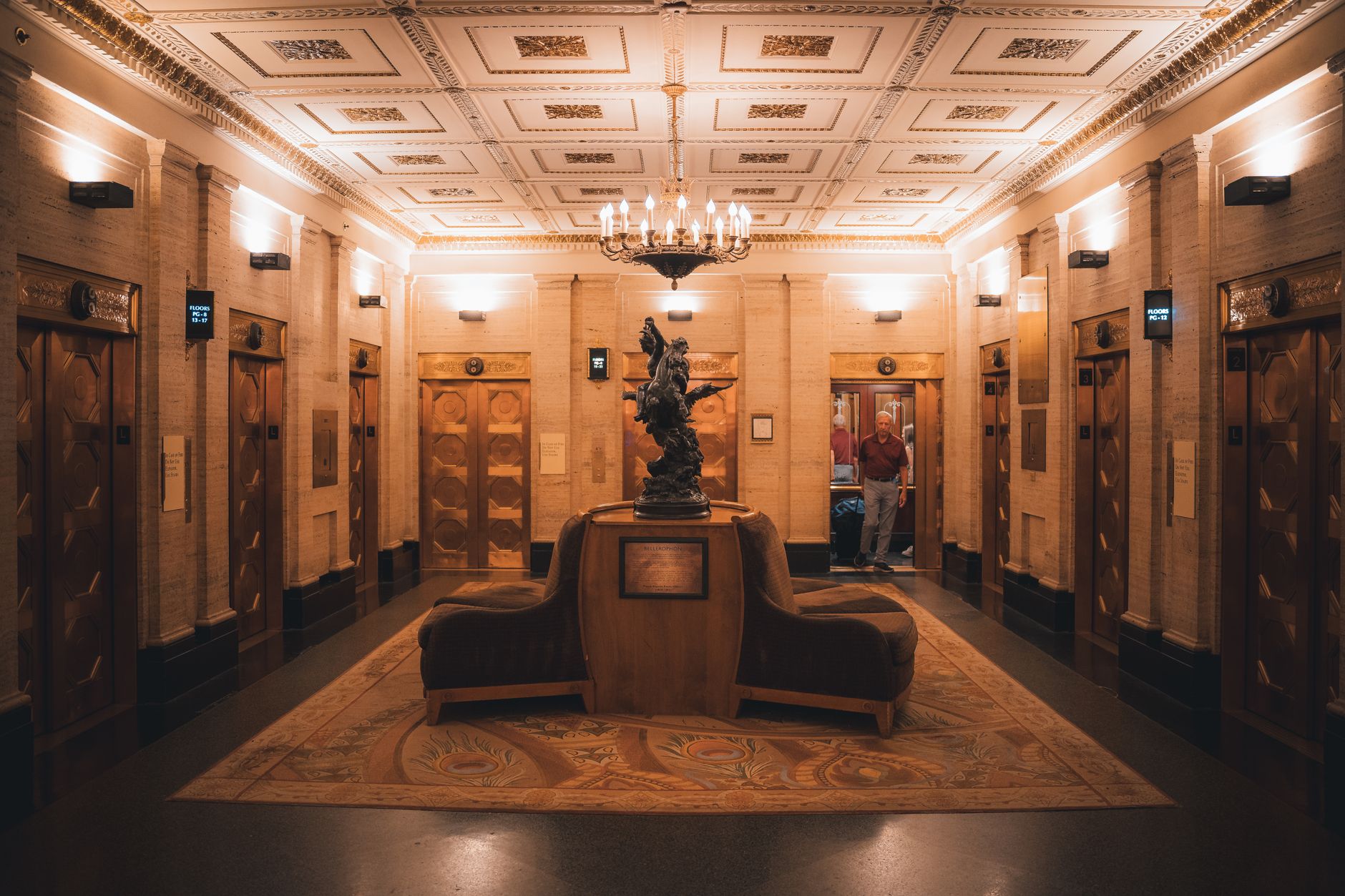
Elevators are the gating item on most campuses. You need API or relay integration with the building vendor, a fire service mode plan, and a manual override when elevators enter inspection. Robots should wait in a holding zone rather than blocking elevator lobbies during peak associate traffic.
Sky bridges and basement tunnels often beat street-level loops. Map the path that minimizes door openings and public areas, even if the distance is longer.
After-hours access is a separate program. Night missions for brief deadlines need badged doors, alarm zones, and security desk notification baked into the fleet calendar.
How should urgent requests jump the queue?
Trial prep days generate rush moves: exhibits to the war room, hard drives to litigation support, signatures to a partner floor. Fleet software needs a supervisor priority flag that preempts routine supply runs without stranding half-finished loops.
Human runners still win on true exceptions: irregular shapes, stairs-only destinations, or judges chambers with unique security. Robots absorb the predictable 80 percent so people stay available for the rest.
Courier labor data show why urgency hurts. BLS occupational estimates counted about 72,010 couriers and messengers nationally in May 2023, with mean pay near $18.44 per hour. Large firms often pay internal staff more, but the interrupt cost is billable time lost, not the wage line alone.
What about couriers, mail staff, and after-hours cleaning?
Indoor robots complement centralized mail services. Staff sort and seal; robots move. That split keeps expertise at the mail center and removes repetitive walking from the middle of the day.
After close, robots can still run supply resets or empty carrier returns while cleaning crews work. Coordinate schedules so scrubbers and delivery units do not fight for the same narrow corridors.
Industry employment in couriers and messengers reached about 1,094,000 seasonally adjusted jobs in December 2024 on BLS Current Employment Statistics, a reminder that last-mile logistics stays labor-heavy even as campuses automate indoor legs.
What should a pilot measure in the first six weeks?
Scope one origin, two destinations, and one return path. Track manual walks eliminated, average delivery time from request to dock arrival, and authentication failures that needed human help.
Survey records and office services leads on whether chain-of-custody logs are easier to produce than with sign-out sheets alone.
Expand only after elevator recovery drills succeed twice without security escalation.
Where does a full-service integrator fit?
Campus delivery touches access control, elevators, IT networks, and facilities rules. A vendor-neutral integrator selects hardware, maps routes, integrates badges and matter IDs, finances the fleet, and services units through one nationwide field program.
Service Robot Co. runs site assessment, pilot design, training for records and office services, and ongoing maintenance with loaner coverage when a unit needs shop time. Monthly programs let you prove confidentiality controls on one building before you link the whole campus.
The outcome is predictable indoor moves for files, exhibits, and supplies, with authenticated handoffs that respect how law firms already manage trust and custody.