Key takeaways
- Wilt and leak signatures often show in rough and approaches before fairways look thin to members.
- Short drone flights after irrigation nights catch broken heads faster than windshield tours alone.
- Thermal and RGB maps give irrigation techs a punch list instead of guessing which zone to dig.
- Drone scouting pairs with autonomous fairway mowing so crews stay on bunkers and presentation.
- Service Robot Co. can integrate drones with mower, sweeper, and clubhouse programs under one vendor.
Why do members see brown spots before the maintenance team does?
Golfers notice color on the playing line first. By the time a fairway stripe looks off, the stress often started in a rough collar, a bunker lip, or a sprinkler arc that never fully charged overnight.
Superintendents still drive the property every morning, but a windshield tour is sampling, not mapping. A ten-minute drone pass can cover approaches and peripherals that would take an hour on foot before the first tee.
The goal is not cinematic video for marketing. It is a repeatable scout that turns vague worry into a short list for irrigation techs and agronomists.
What should you fly first on a typical 18-hole property?
Start with zones that fail quietly: downhill approaches, shaded rough, and heads along tree lines where pressure drops are common. Those areas show moisture stress before center fairways.
Fly after a normal irrigation night, not after a heavy rain, so dry signatures stand out. Keep altitudes and routes consistent week to week so change detection is obvious.
Document no-fly pockets near housing, roads, and fuel storage. Share the map with the pro shop so staff know when a scout is scheduled and members are not surprised by a low pass.
- Irrigation-heavy rough between holes three and five
- South-facing approaches that bake in late summer
- Newly sodded areas from last season's capital project
- Perimeter rough where leaks soak cart paths

How does drone scouting fit crews that already automate fairways?
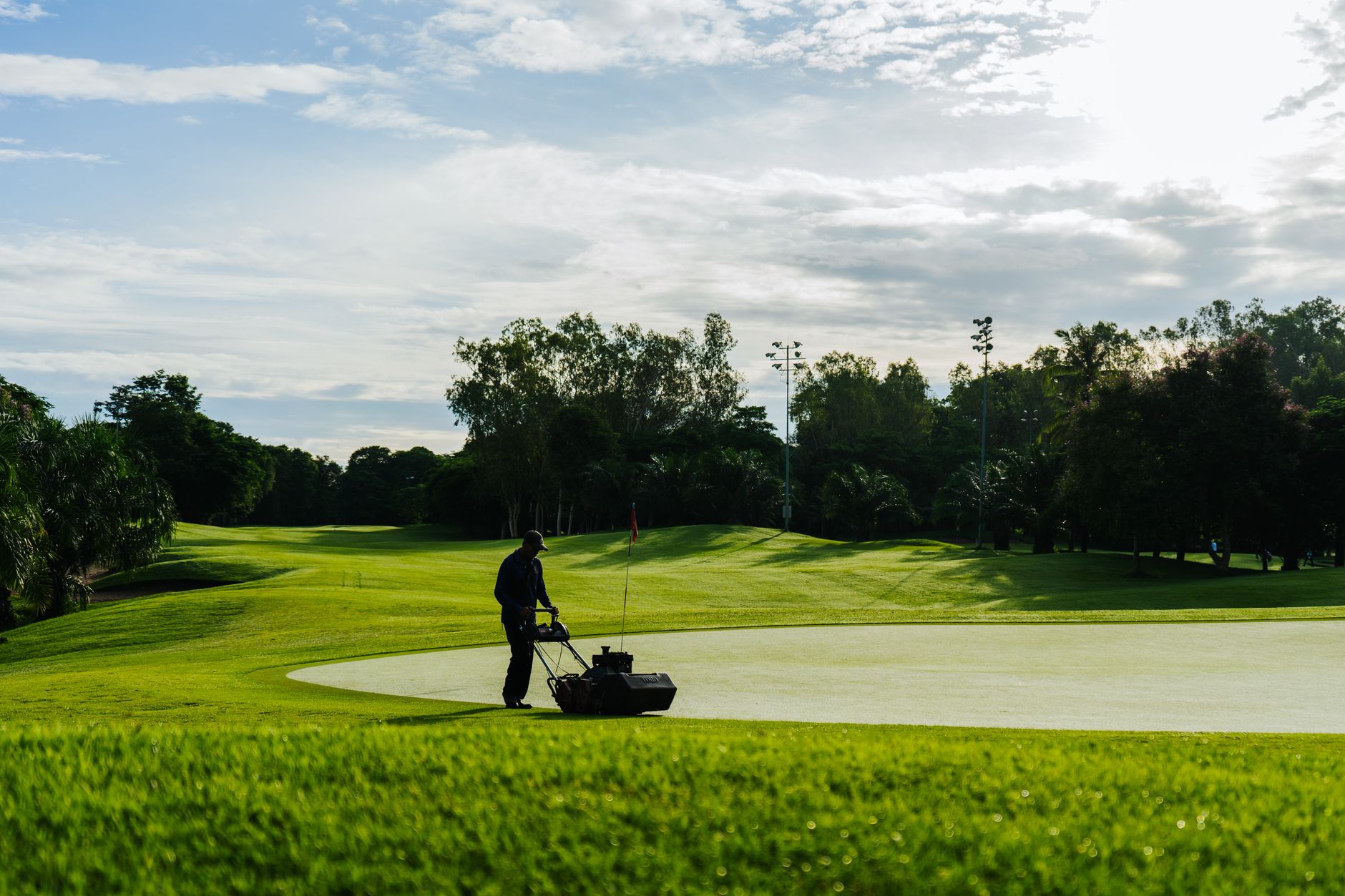
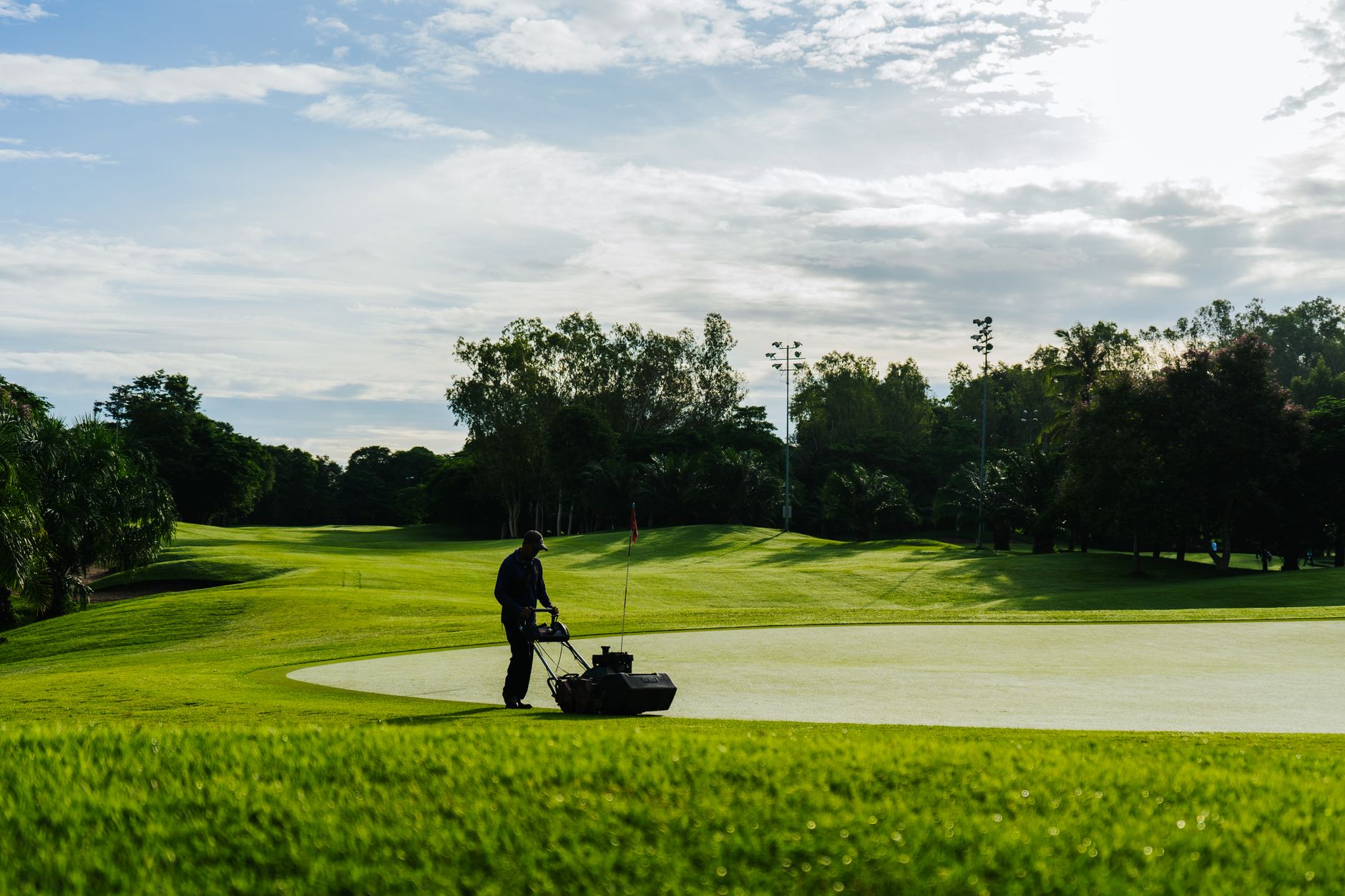
Autonomous fairway mowing redeploys people from wide cuts to bunkers, edging, and tournament prep. Drone scouting redeploys attention from guessing which zone to open to fixing the top three anomalies on a printed map.
Championship properties are publicly pairing robotic mowing with staff focus on detail work. In August 2026, Barton Hills Country Club superintendent Andrew Christesen told media covering the U.S. Senior Women's Open that robotic mowing helped healthier turf and more consistent conditions while the team concentrated on higher-value tasks across the course.
Service Robot Co. treats drones as another layer in the same integrator relationship as fairway programs, path sweepers, and clubhouse scrubbers, so escalation and service do not splinter across vendors.
What data should irrigation techs actually receive?
Give techs geotagged stills or simple heat maps, not a forty-minute video they will never watch. Circle the top suspects and note whether the signature looks like a leak, a clogged nozzle, or dry turf from shade.
Pair drone finds with flow data when you have smart controllers. A wet spot with normal flow may be a grade issue; a dry arc with high flow may be a stuck valve.
Log fixes back on the same map so next week's flight shows whether the repair held. That closed loop is what turns scouting from a gadget into a maintenance habit.
What rules and neighbors matter for daily flights?

Part 107 certification and club policy should be settled before the first member sees a drone. Train pilots on emergency abort paths and keep batteries charged away from cart traffic.
Morning flights before play reduce complaints about noise and privacy compared with afternoon joyrides. Announce the schedule during league weeks when tempers run higher.
Never fly over groups or staff without a clear operational reason. Scouting routes should hug maintenance corridors and rough, not guest patios.
How do GMs budget drones beside capital turf projects?
Drone hardware is usually a smaller line than a new fairway reel, but the savings show up in water, sod, and member complaints avoided. Finance the scout as operations insurance, not a toy.
Buy or lease structures with service included let you align drone refresh cycles with mower and sweeper programs from the same integrator instead of three separate capital requests.
Start with a ninety-day pilot on two problem zones. If techs close more tickets per flight hour than before, expand routes; if not, fix the handoff process before buying more sensors.
What stays manual even with weekly drone scouts?
Greens speed, bunker sand, and cup placement stay with trained turf staff. Drones inform where to look; they do not replace soil probes or hand watering on collars.
After-hours security on cart compounds may still need fixed or solar cameras if theft is the risk, separate from agronomic scouting.
Member communication during drought restrictions remains a GM and pro shop job. Drone maps support the story with evidence, but policy calls stay human.